
by Michael R. Allen
On Monday, the St. Louis Post-Dispatch published an article by reporter Tim Logan that raised the issue of the city’s lack of citywide demolition review. The article, which ran on the front page above the fold, took as a starting point the sudden, lonesome death of the Avalon Theater on South Kingshighway. Since the Avalon was outside of one of the city’s preservation review districts, it bit the dust — or, rather, became dust bitten by passers-by — without any review.
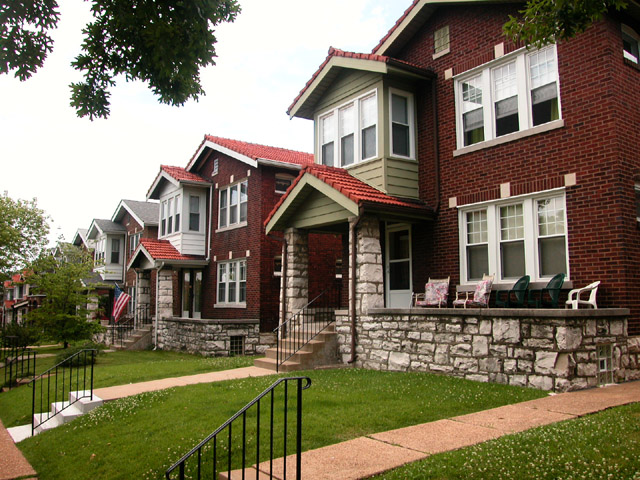
Logan’s article included a promising set of quotes from two aldermen. The first came from Carol Howard (D-14th), who represents the eastern part of the Southampton neighborhood where the Avalon was located. The demolition experience has spurred Howard to seek demolition review for her ward, one of south city’s only wards that lacks review. Howard also endorses a return to citywide review, which St. Louis had before 1999. “It’s a tool, I think, that makes for better decisions,” she told Logan.
A view that could be read as dissenting came from Alderman Antonio French (D-21st), whose constituents include this writer. French’s first bill upon being elected in 2009 put the 21st Ward into preservation review for the first time since 1999. Yet the alderman wants to remove review for part of the College Hill neighborhood added to his ward in redistricting. French wants to concentrate preservation efforts on the intact largely Penrose and O’Fallon neighborhoods in his ward. “What works for Penrose and O’Fallon may not work for College Hill,” said the alderman.
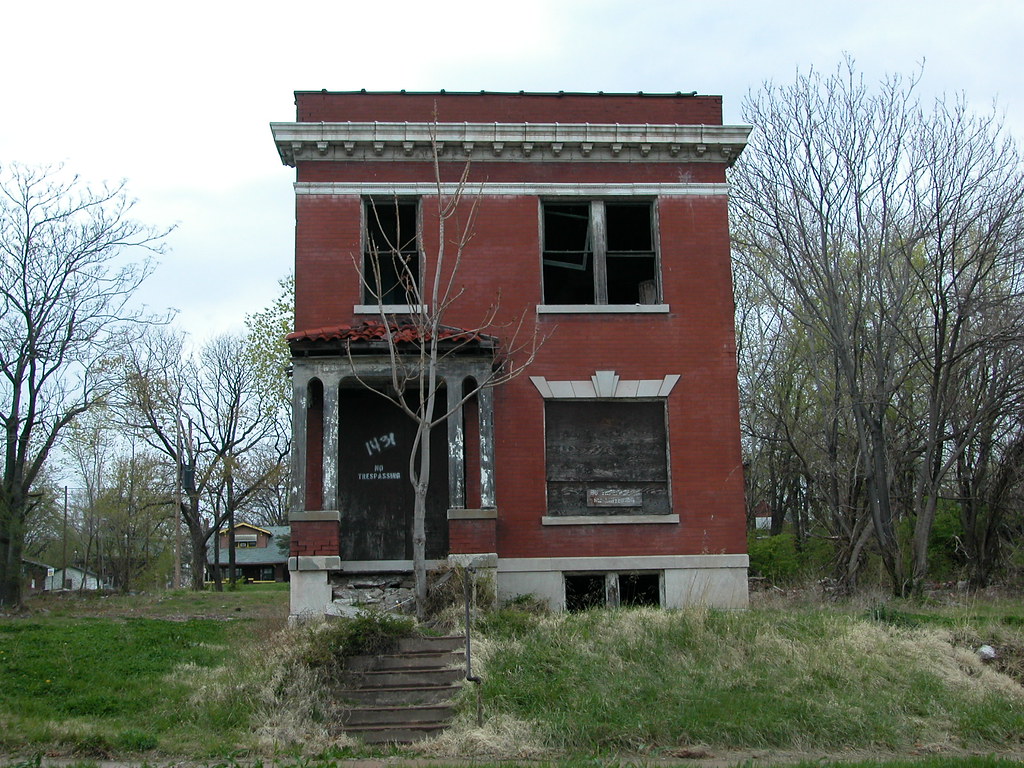
Am I the only person who sees that both Alderwoman Howard and Alderman French are right? St. Louis does need citywide review, and building conservation strategies for depleted neighborhoods like College Hill — where many blocks are devoid of more than five or six historic buildings — need not entail preserving every remaining historic building.
Yet the crux of these two points’ convergence is that these decisions need to be made by qualified professional planners working in the interest of all city residents. Aldermen who serve geographic areas whose boundaries change every ten years, who lack training in urban planning and historic preservation, and who have to seek re-election are not the best people to make decisions for the long-term interests of the city’s built environment. Yet aldermen create the legislation under which review takes place, establishing guidelines that represent the public interest.
Alderman French might be suggesting that a citywide demolition review ordinance be informed by theories of planned shrinkage. Again, having professionals examining demolition seems like the best way to make that happen. Citywide review does not mean preservation of everything in the city, it means a system in which preservation planning is made under legal criteria interpreted by professionals who are free from political motivations. Applicants for demolition, aldermen, neighbors and preservationists will have a predictable public process with the same rule for every building.
If that sounds familiar, it’s what this city had before the Board of Aldermen passed the current preservation ordinance in 1999.
8 replies on “Thoughts on Citywide Preservation Review”
On a related note, what is the process by which the City of St. Louis retains its brick-stock from demolished buildings? I assume fallen buildings which are under ownership with LRA are retrievable (and I hope the CIty fights to keep those bricks), but I think that a negligence law should exist which allows the city to retain its brick…either as partial payment for lapsed taxes or as heritage law for preservation of building stock.
The idea of right-sizing unilaterally without public input is equal in process to Team Four. Professionals, citizens, and elected officials should all be involved in these decisions. Aldermen shouldn’t be able to demolish and entire neighborhood without a hearing on the merits. That outcome sounds similar to McRee Town.
Demolition contractors almost always get salvage rights to all materials from demolitions of LRA-owned buildings. Sales of the brick make these jobs profitable.
The reality is that the “Team Four Plan” happened by default, and that St. Louis’ leadership would rather blame a mythic document than take account of city that has lost over half of its peak population. I applaud Alderman French for a realistic attitude about the state of parts of College Hill.
I don’t feel Alderman French is correct. While individual demolition of buildings might seem not to matter in certain neighborhoods, it only points to what is really lacking, which is a comprehensive understanding of how the city is going to be rebuilt. Thus a neighborhood such as College Hill may in fact require the same patterns of housing and commercial development that existed in the past. If that is the case clearly demolition in College Hill makes no sense. Instead saving all that is possible should be the goal.
St. Louis was a walkable, transit friendly city at one time. It is important to understand how that can be recreated. I just don’t think you can write off any old St. Louis neighborhood without knowing how the urban environment is going to be reconnected. Are some areas of St. Louis City going to end up with a suburban feel?, probably. But unless real alternatives are offered, including the necessary connectivity and flow patterns between neighborhoods, how can we know if buildings in College Hill should come down without establishing those broader goals?
 All of this should be in the Sustainability Plan now underway. Although chances are it may only be a repeat of the same segmented thinking that has allowed for random demolitions to occur in the first place.
By the way the “professionals” have reigned over the decline of the city. Citizen involvement is key going forward. I agree with Doug.
I don’t feel Alderman French is correct. While individual demolition of buildings might seem not to matter in certain neighborhoods, it only points to what is really lacking, which is a comprehensive understanding of how the city is going to be rebuilt. Thus a neighborhood such as College Hill may in fact require the same patterns of housing and commercial development that existed in the past. If that is the case clearly demolition in College Hill makes no sense. Instead saving all that is possible should be the goal.
St. Louis was a walkable, transit friendly city at one time. It is important to understand how that can be recreated. I just don’t think you can write off any old St. Louis neighborhood without knowing how the urban environment is going to be reconnected. Are some areas of St. Louis City going to end up with a suburban feel?, probably. But unless real alternatives are offered, including the necessary connectivity and flow patterns between neighborhoods, how can we know if buildings in College Hill should come down without establishing those broader goals?
 All of this should be in the Sustainability Plan now underway. Although chances are it may only be a repeat of the same segmented thinking that has allowed for random demolitions to occur in the first place.
By the way the “professionals” have reigned over the decline of the city. Citizen involvement is key going forward. I agree with Doug.
The Team Four Plan took a lot of inspiration from the 1947 Comprehensive Plan, which led to the demolition of Mill Creek Valley and called for entire areas of the “obsolete†North Side to be “cleared and reconstructed.†People who point to the “conspiracy†of Team Four are correct insofar as these areas have long been subject to unequal treatment in terms of public services. It could be argued that St. Louis has implemented ad-hoc planned shrinkage for decades. We see that demolishing buildings does not create demand in the city for housing. However, clearly the areas of the city which increased in population did so through rehabilitation. If anything these areas need more attention and regulation to ensure they receive the necessairy treatment. If we remove preservation review and demolish them then at best we have more vacant land without demand for redevelopment. At worst, without design guidelines, some developer brings an entirely suburban morphology. Why is this problematic? First, people across the US are moving back to cities for density. Second, the whole idea of shrinkage is to restore economies of scale. Lower density suburban development does not make it more cost effective to provide public services. Did I forget that rehab brings more jobs than new construction? If the city is going to do something with areas like College Hill then it should do so with all stakeholders on board. It should be open and transparent. One elected official should not be engaging in decisions which could be detrimental to the city at large. This is the same in process as one planner or a group of South Side aldermen deciding large areas of the city are not worth saving. The idea that people have to go “round for round†with preservationists sounds rather untrue. Our weak ordinances hardly prevent demolition, with the Preservation Board strongly benefitting elected officials and deferring to the applicant. For example, Bryant shows: “out of the 45 demolition permits reviewed in the last three months of 2011, 40 were approved.†It is understandable that people living in areas of concentrated poverty view abandoned buildings as blight and a magnet for crime. However, St. Louis and other cities have been demolishing their vacant housing for a long time and we do not see people lining up to reinvest in these areas. Demolition is not economic development.
any process that isn’t systematic and professional is subject to extranormal suasion. Â Regardless of the existence of aldermanic districts, the importance of the way a city and its neighborhoods are supposed to function transcends individual legislators. Â In 2002-3, the Chicago Tribune published a searing series on this issue. Â The standard link no longer works, but the links to the articles cited in this blog entry do: Â
http://urbanplacesandspaces.blogspot.com/2012/02/housing.html. Â It was an amazing series. Â The jumps featured dozens of photos of demolished buildings.
I am not too familiar with the ins and outs of St. Louis’ planning, other than Rollin Stanley’s journal article:Â http://escholarship.org/uc/item/7zz6s7bm
But a “legacy city” must have a neighborhood stabilization and planning initiative, with strategic plans for each neighborhood that outline stabilization, improvement, and yes, “deaccessioning”, depending.
This is a responsibility that goes beyond legislators, who likely aren’t capable of doing this, and it’s an executive function anyway.
I presume that St. Louis has a program like Baltimore’s Healthy Neighborhoods program… Â There’s a link here:Â http://urbanplacesandspaces.blogspot.com/2011/04/addressing-neighborhood-based.html