Categories
Academy Neighborhood Demolition Historic Preservation North St. Louis

Another Fine Building on Page Boulevard

by Michael R. Allen


The original version of the agenda for the January 28, 2008 meeting of the St. Louis Preservation Board included an appeal of staff denial of demolition of the commercial building at 5100 Page Boulevard. This building stands just east of another building whose fate on the same agenda, 5286-98 Page. The final agenda did not include the appeal. Whether or not it returns is up to the owner of the building, Rosie Love.

Curiosity sent me to look at the building. I was pleasantly surprised to find a sturdy three-story building with a mansard-style roof and lovely masonry details. The stepped-down parapet alongside the mansard gives the corner some pizazz, while a terra cotta cornice below the mansard has an eye-catching swag garland motif. The brick cornice on the secondary east elevation adds a less formal vertical line.
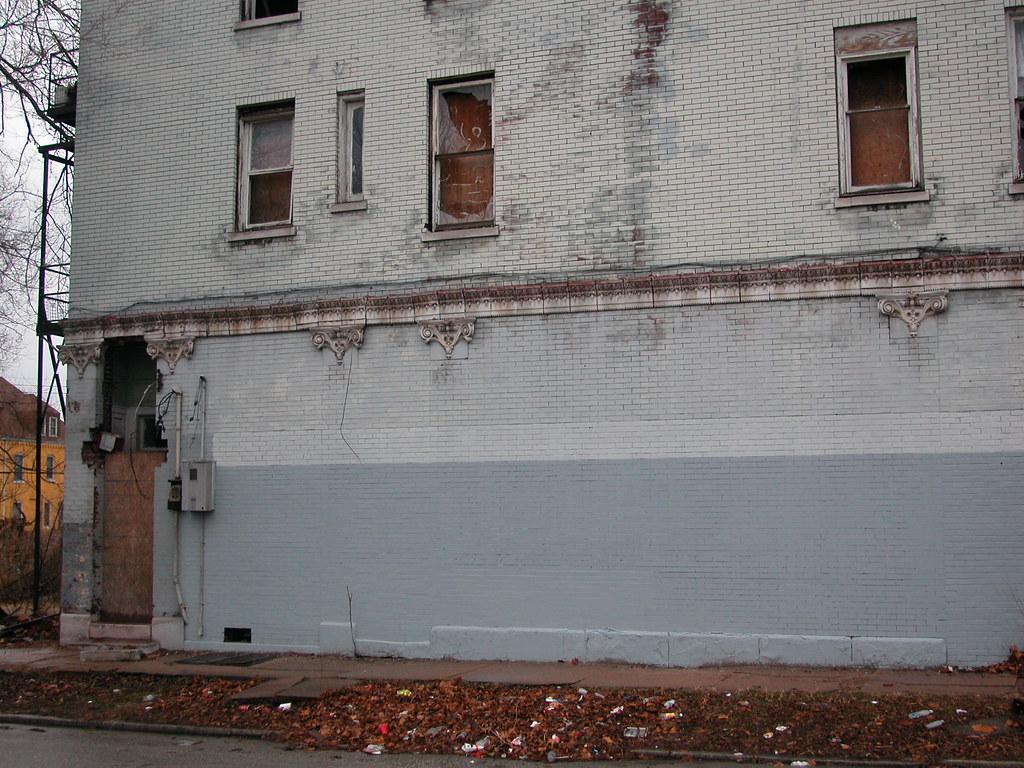

What is perhaps most intriguing is the bricked-in storefront configuration on the east wall. Under a continuous cornice with an egg-and-dart pattern are some strange capitals; these top brick false pilasters that run vertically between the storefront opening. Looking at the painted wall closely, one can see the distinct vertical lines between the pilasters and the infill. How wonderful it must have been to have the storefront opened up to both the main and side streets!

The building is, of course, vacant and deteriorating. It’s been empty for some time. Geo St. Louis shows records of an occupancy permit for a convenience store in 1995 and a permit for a “grandfathered pay phone” in 1998.

The front wall has some damage at the cornice line, while missing downspouts on the rear elevation has caused severe mortar erosion. Still, there are no collapsed wall sections yet. Numerous buildings in worse condition have been spared demolition by the Cultural Resources Office and the Preservation Board.

The Academy neighborhood (and the Mount Cabanne-Raymond Place National Historic District that encompasses much of the neighborhood) needs its commercial edges to remain strong. Delmar on the south has become a lost cause, but Page retains many corner commercial buildings like this one and the one at 5286-98 Page, which bookend rows of historic residences. With its proximity to the Central West End and its largely intact building stock, this area is bound to be an emergent rehabbing neighborhood. We need to keep the neighborhood’s buildings around for the new day ahead.
Categories
Illinois Metro East Southern Illinois Theaters

Edwardsville Plans to Restore The Wildey

by Michael R. Allen

The St. Louis Post-Dispatch reports that Alderman Rich Walker of Edwardsville, Illinois, has launched both a campaign to restore The Wildey theater and a public history project on the theater. The City of Edwardsville purchased the theater in 1999 and plans to raise an estimated $3 million for restoration work. It’s admirable to see a city government willing to invest in its cultural resources.

Categories
People

Bettis In, Stanley Out

by Michael R. Allen

The Cultural Resources Office of the City of St. Louis hired Robert J. Bettis to the newly-created Preservation Planner position. Most recently working for the Commercial Development Department of the St. Louis Development Corporation, Bob worked for several years as the Certified Local Government Coordinator for the Kansas State Historic Preservation Office. I’m gratified to see Bob’s experience and talent matched with CRO. Bob joins an office of experienced — and overworked — professionals comprised of Director Kathleen Shea, Preservation Administrator Jan Cameron, Preservation Planner Andrea Gagen and Administrative Assistant Adonna Buford. CRO once had additional full-time positions, but lost them during downsizing in 2002. It’s great to have CRO regain its capacity.

Meanwhile at 1015 Locust, Planning and Urban Design Director Rollin Stanley celebrated his last day on January 31. Stanley is off to head planning operations for Montgomery County, Maryland. No word yet on when Planning and Urban Design will begin the search for Rollin’s replacement. The agency actively seeks a Community Development Research Analyst, though.

Categories
Architecture CORTEX Historic Preservation

Old Printing Building Slated for Demolition as Part of CORTEX

by Michael R. Allen

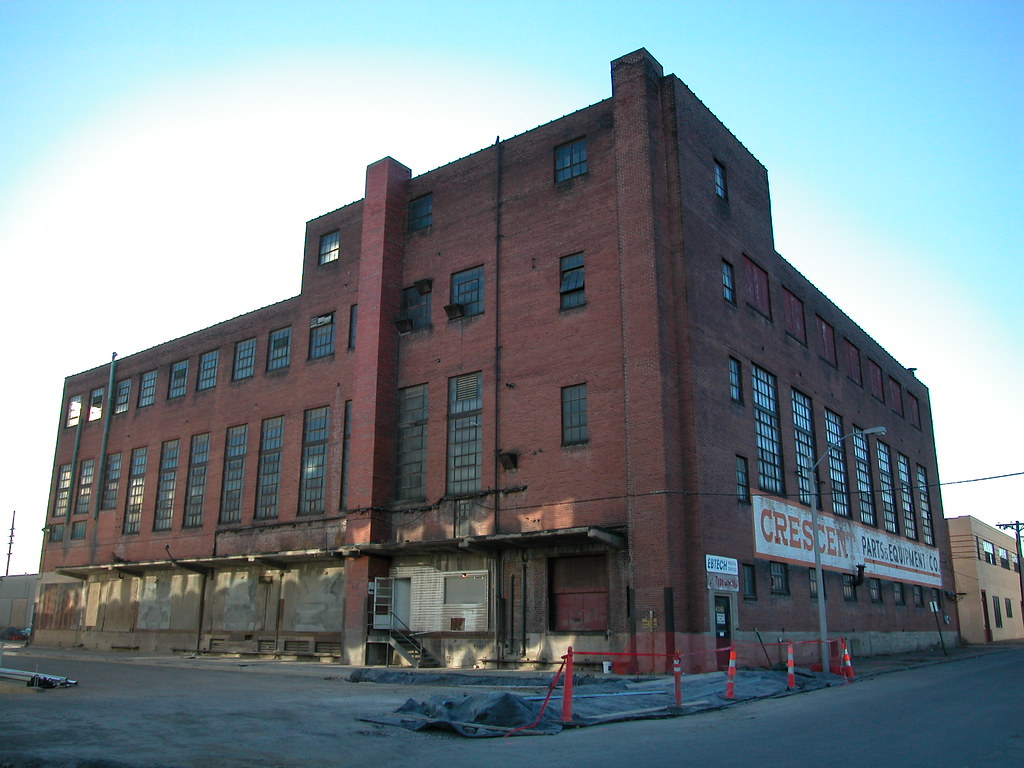
Washington University recently purchased this building, located at 4340 Duncan Avenue in the central corridor. The university’s master plan for the Medical Center calls for demolition as part of the CORTEX redevelopment project. Although unadorned, and perhaps a bit sepulchral, the brick industrial building possesses several unique architectural features. Built in 1936 for a printing company, the building is the work of the noted firm Mauran, Russell and Crowell. The firm employed its characteristic genius here. While the concrete-framed fireproof building appears as a four story building, the second and third floors are actually a second floor and mezzanine. This arrangement allowed for production using machinery with overhead components on the second floor and distribution on the first floor, with loading bays lining the east wall (see the photo above). The floor arrangement allowed for the building to have a smaller footprint, saving room and creating a more urban form. The mezzanine arrangement is reflected in tall exterior windows that call to mind the same firm’s earlier Federal Reserve Bank Building (1924) at Broadway and Locust downtown.

In 1946, the St. Louis Post-Dispatch acquired the building and put it to use printing its popular Sunday lifestyle magazines. The Post expanded the building in 1959. In recent years, the building housed Crescent Electrical Supply. The former owner recently began clearing the building in preparation of its impending demolition. The loss is a shame. The lack of lavish ornament no doubt seals the fate, but that same quality gives the building an appearance consistent with its original use. While not a masterpiece, the building is a handsome modern industrial composition that is an important part of the character of Duncan Avenue. Besides, the building is almost built with adaptation in mind. All we need is a little imagination — the sort of big thinking that led our leaders to envision CORTEX in the first place.

Categories
Downtown Events

Gateway Mall Lecture on Sunday

Michael Allen will be giving the opening lecture in this year’s Friends of Tower Grove Park lecture series.

What: “Making Parks in the Central City: The Challenges of the Last 100 Years”: I will discuss the history of various plans for introducing the Gateway Mall into downtown St. Louis, from the early City Beautiful-era Comprehensive Plan in 1907 to the current Master Plan. There will be many slide illustrations.

When: Sunday, February 3 at 3:00 p.m.

Where: Stupp Center, Tower Grove Park

FREE. Lecture will be around one hour in length.

Categories
Architecture Historic Preservation Midtown Storefront Addition

Thoughts on Storefront Additions

by Michael R. Allen

Sometimes I wonder if the mid-twentieth century practice of adding storefront sections to the front of historic homes is a St. Louis phenomenon. Certainly, we have many interesting examples here on major east-west streets like Delmar, Natural Bridge, Cherokee and Forest Park. These are symptoms of explosive population growth and changing land uses.

The example shown here is located at 3808 Olive Street, between Spring and Vandeventer, in Midtown. (The Central Apartments stood across the street.) Here we have a limestone-faced Queen Anne home dating to the 1890s. The architect may be Jerome Bibb Legg, a prolific residential architect who designed the other home remaining on this desolate block; Legg’s name appears as owner or architect on several building permits on this block.

In front we have a pressed-brick storefront from the middle part of the twentieth century. A door at right leads to the original entrance of the home. This photo does not show the quirky gesture in which the builder reused stone from the porch to build a side wall that connects the house to the storefront.

Weird? Yes. Useful? Also, yes. While not a candidate for listing on the National Register of Historic Places as a 19th century house, the hybrid building offers some interesting potential for reuse. Perhaps the alteration of the house itself could make it eligible for National Register listing. What is needed is a local survey of such storefront-bearing houses, followed by national comparison. This strange building could be a treasure!

Categories
Demolition North St. Louis Preservation Board

Preservation Board Spares Building at 5286-98 Page

by Michael R. Allen

At the meeting of the Preservation Board on Monday, January 28, the Board upheld staff denial of a demolition permit for the historic commercial building at 5286-98 Page Boulevard. Consideration of the item was somber and quick. Attorney Richard Kenney entered a compilation of all of the Berean Seventh Day Adventist Church’s exhibits, while Cultural Resources Office Director Kathleen Shea entered hers. After Kenney declined to testify, Board Chairman Richard Callow asked for a motion.

Board member David Richardson moved to uphold staff denial. Board members John Burse, Melanie Fathman, Mike Killeen and Anthony Robinson joined Richardson in voting for his motion. Board members Mary Johnson and Alderman Terry Kennedy (D-18th) voted against.

The next step may be Circuit Court, where any appeal of the Board decision would land.

Previous coverage:

Fate of Building at Page and Union Deferred Again (January 9, 2008)

Confusion at Page and Union (November 27, 2007)

Categories
Central West End Demolition Granite City, Illinois Historic Preservation North St. Louis

Demolition Threats All Over Town

by Michael R. Allen

Vanishing STL alerts us to the possibility that the Washington University Medical Center may demolish the Shriners’ Hospital and Central Institute for the Deaf buildings.

Meanwhile, Curious Feet notes two impending demolitions: a large storefront building at Page and Kingshighway in St. Louis and an old bank building in downtown Granite City.

Categories
Chicago Historic Preservation Illinois

Preservation Chicago’s "Chicago 7" List Includes City’s Landmarks Ordinance

by Michael R. Allen

Preservation Chicago just released its annual Chicago 7 list of the city’s most endangered historic resources. Topping the list is not a building or bridge but the city’s Landmarks Ordinance. According to Preservation Chicago, “several recent redevelopment projects endorsed by the city’s planning department and approved by the Commission on Chicago Landmarks call into question whether the integrity of the ordinance itself is in danger of being destroyed.”

The ordinance date sto 1968 and has led to local landmark status for 255 buildings and 49 historic districts. Yet recent decisions by the Commission on Chicago Landmarks to allow such travesties as the demolition of the landmarked Farwell Building and the reassembly of its facade on a new, much taller building call into question the level of protection the ordinance provides.

Rounding out the list are the American Book Company, Grant Park, the Devon Avenue commercial district, the Daily News Building, the Booker Building and Norwood Park. The full story is available here.

Categories
Architecture Events Louis Sullivan Salvage

Elmslie and Sullivan Exhibit Opens With Talk by Tim Samuelson

by Michael R. Allen

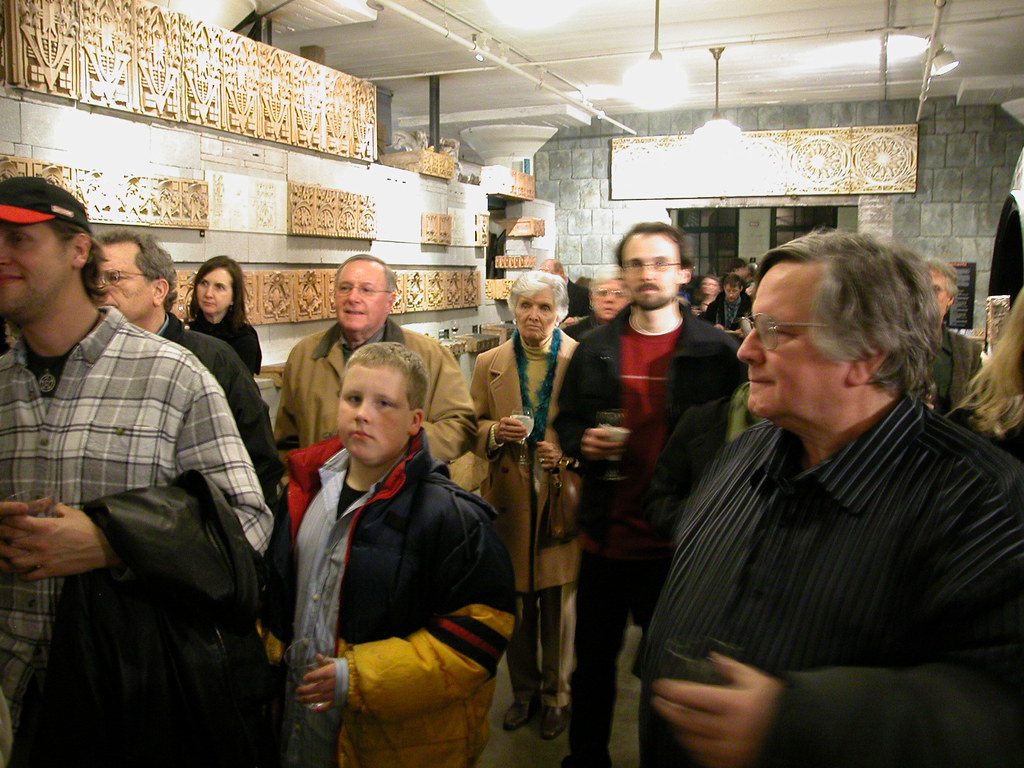
Over 150 people attended the opening.

On Friday, January 25, the Architectural Museum at the City Museum opened its new exhibit Elmslie and Sullivan to a packed house. Architectural Museum founder Bruce Gerrie curated the exhibit. While featuring terra cotta ornament from the buildings of George Grant Elmslie, once Louis Sullivan’s chief draftsman, as well as those of Sullivan himself, most of the exhibit incorporated ornament from the Morton and Thomas Alva Edison public schools designed by Elmslie that were built in Hammond, Indiana during the 1930s. The Hammond school district demolished these schools in 1991, but recovered much of the terra cotta. Some of the terra cotta ended up in use in new school buildings, but most has ended up in storage under the city’s ownership. The last exhibition of the terra cotta in the region was in 1998 when University of Illinois professors Paul Kruty and Ronald Schmitt organized an exhibit at the University of Illinois at Chicago.

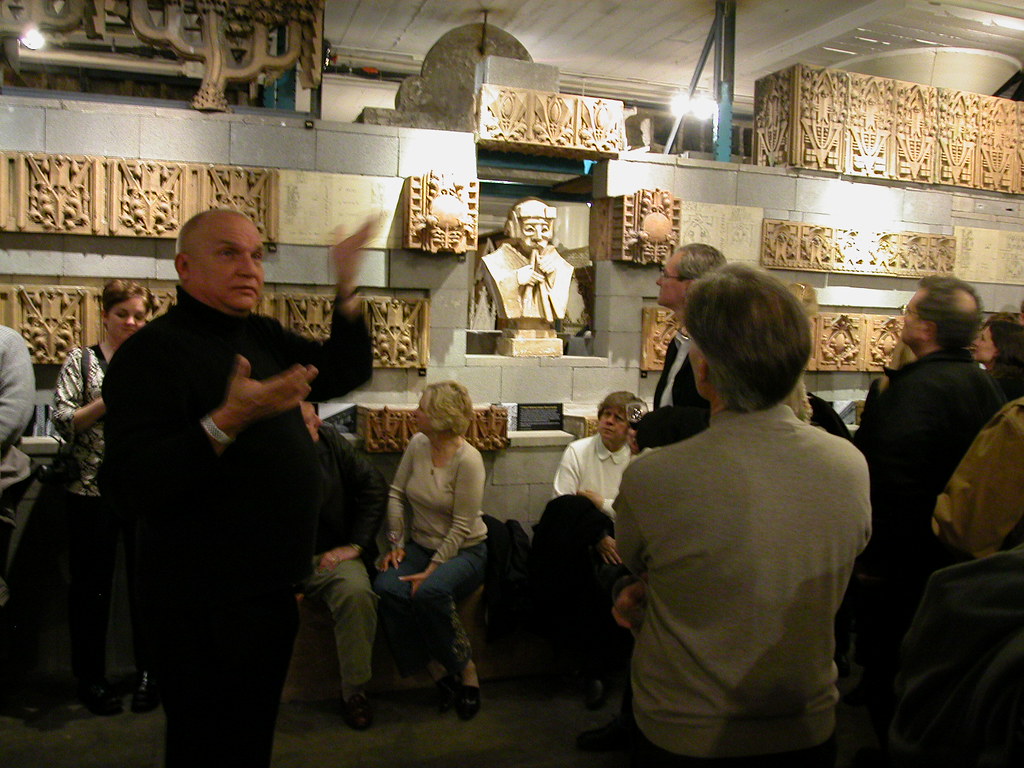
The highlight of the evening may very well have been Tim Samuelson‘s rousing welcoming speech. Tim is the Cultural Historian for the City of Chicago and one of the leading scholars of Sullivan and the Prairie School. He also is a gifted orator with a compelling imagination. Tim Samuelson feels architecture, and he has that rare gift of being able to articulate that feeling. His talk began with a summary of the architectural theory of Louis Sullivan and led to a celebration of Elmslie, a quiet man who was the subject of somewhat disparaging remarks in Frank Lloyd Wright’s autobiography. Wright was Sullivan’s chief draftsman before Elmslie, and the two shared an office for years. Seems that Wright didn’t see much beneath Elmslie’s cool exterior. Fortunately, Tim does and shared with the crowd his understanding of Elmslie’s singular vision — a vision powerfully manifest in the Hammond schools and one on par with Wright’s.

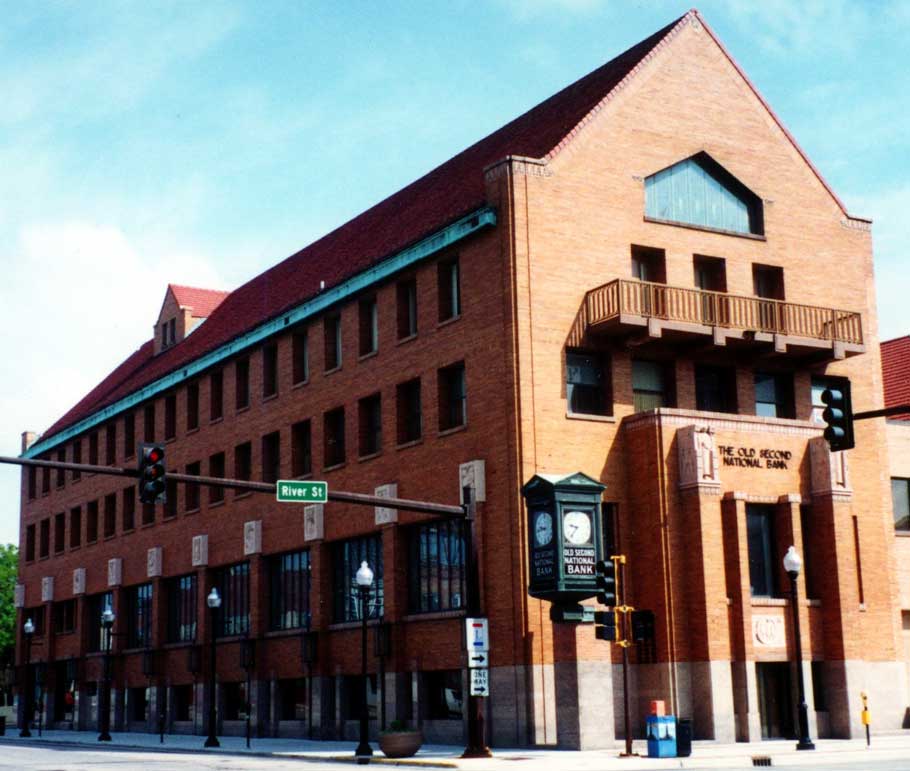
Elmslie’s unique terra cotta designs show a mind engaging both Sullivan’s principles and the machine age architectural principles of the Art Deco style. And Elmslie’s buildings reveal the conscious effort of one designer to reconcile organic lines with geometric mass. Some of Elmslie’s work, like the Old Second National Bank (1924), almost heads off the rise of Art Deco by creating an American alternative firmly rooted in both the ideals of modernism and Midwestern regionalism.

Ever-animated Tim Samuelson speaks at the opening reception.

In all, the opening demonstrates the strong continued interest in the work of Elmslie and the Prairie School as well as the large audience for architectural programming in St. Louis. While the exhibit opening was supposed to last until 9:00 p.m., people were still viewing it and conversing with each other until well past 11:00 p.m.

The exhibit will be on display through December 2008 to anyone purchasing a City Museum admission ($12). More information here.