Categories
Downtown Historic Preservation Mid-Century Modern

Dorsa’s Letters Return

by Michael R. Allen

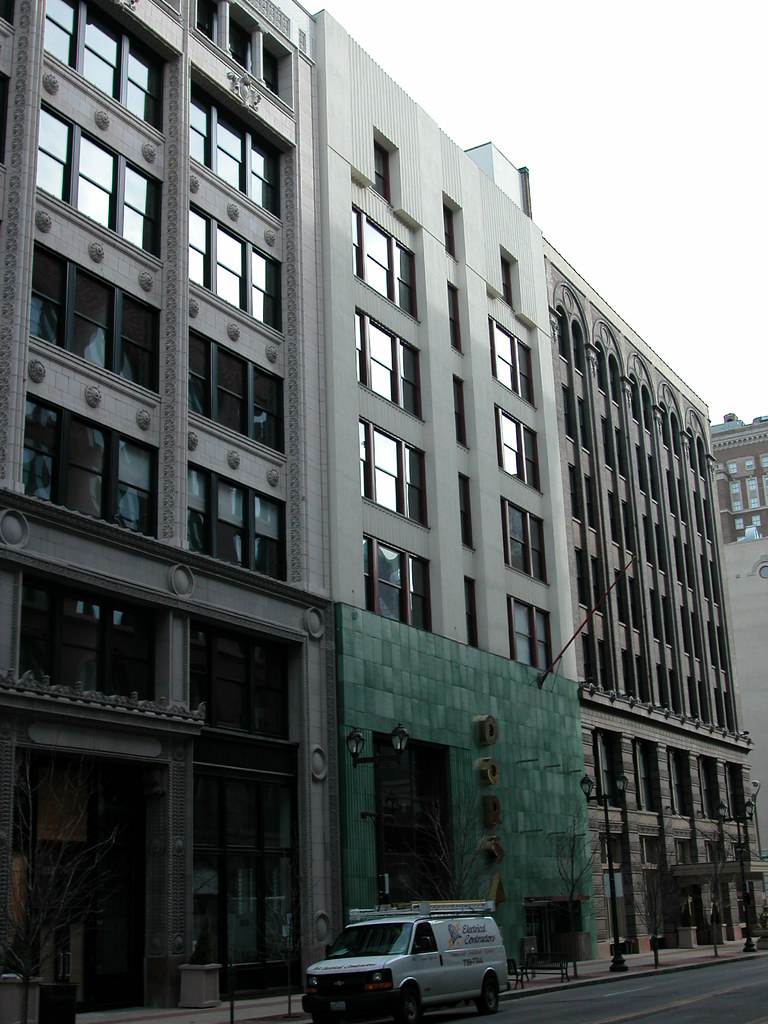
The stylized letters that spell the name of Dorsa Building at 1007 Washington Avenue in downtown St. Louis have returned. Or, rather, replicated brass letters nearly identical to the original now shine bright against the green terra cotta background of the Art Moderne landmark’s first two floors.
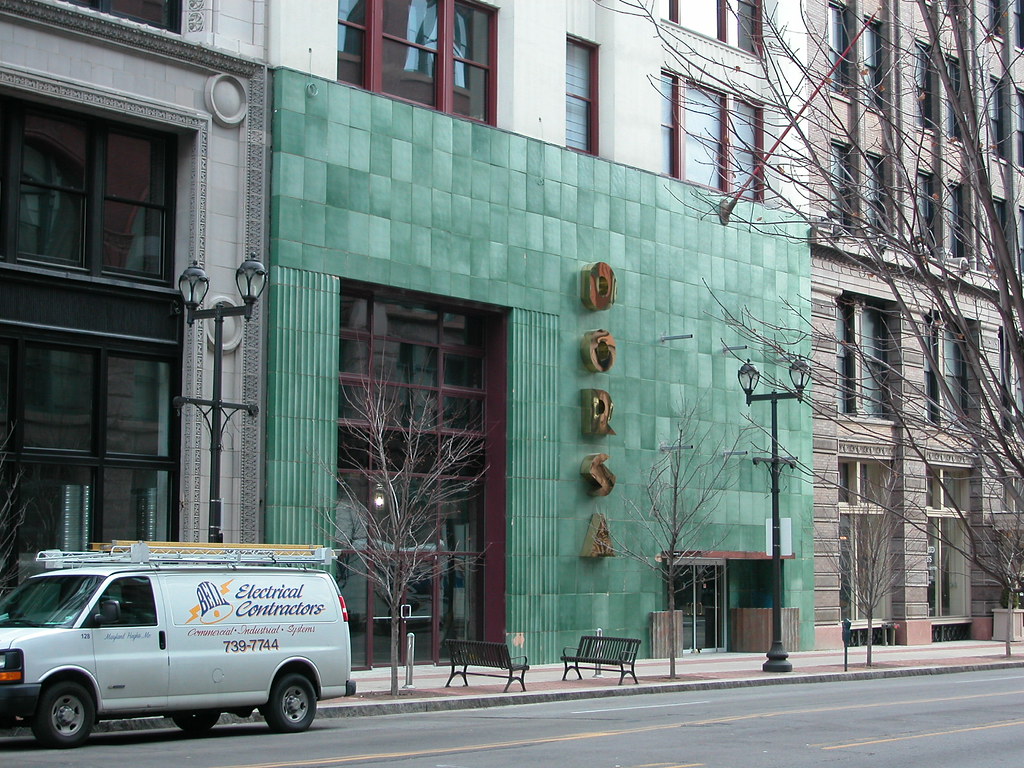
Installation of the letters is part of the rehabilitation of the building being undertaken by the Pyramid Companies. The building and its neighbor to the west are being converted into condominiums. Paul Hohmann, chief architect for Pyramid Architects, is the designer of the Dorsa project who has diligently worked to renew the appearance front elevation.

The Dorsa Building facade — literally, this is a facade — dates to 1946, when the Dorsa Dress Company hired architect Meyer Loomstein to modernize the front elevation of their Classical Revival building, which had been built in 1902 from plans by Eames and Young. Loomstein and sculptor Sasch Schnittman devised a streamline slipcover, with a striking green terra cotta base under a cream stucco body that terminated with elegant fluting at the top. The designers further adorned the building with a large recessed terra cotta “spider web,” the stylized brass lettering and three brass fins above the building’s understated entrance.

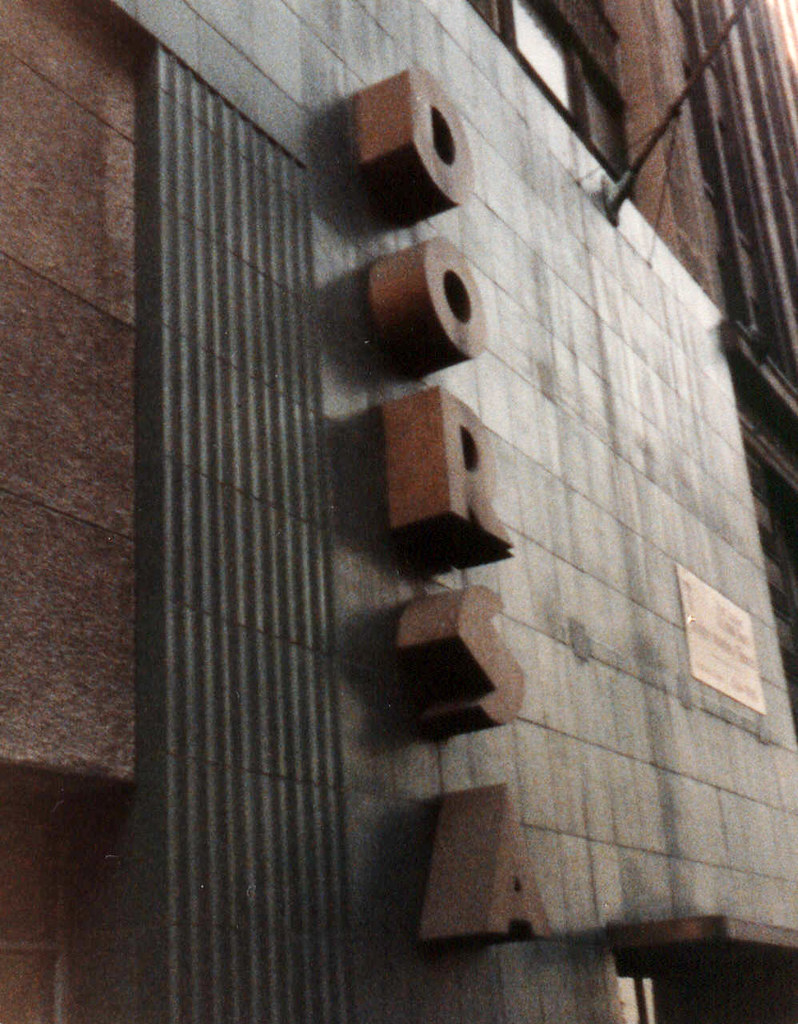
The result was a true rarity for downtown — a stunning work of Art Moderne commercial architecture that was as colorful as it was smart. The building turned many heads and sold many dresses. Inevitably, the Dorsa fell into disrepair. The upper two fins disappeared, perhaps taking a trip to the scrapyard. In the 1980’s and 1990’s, owner Larry Deutsch removed the spiderweb and later the letters.

Here is a photograph of the letters in 1984 submitted to EoA by Walt Lockley:

Here are the new letters close up (never mind the clashing lamp post):
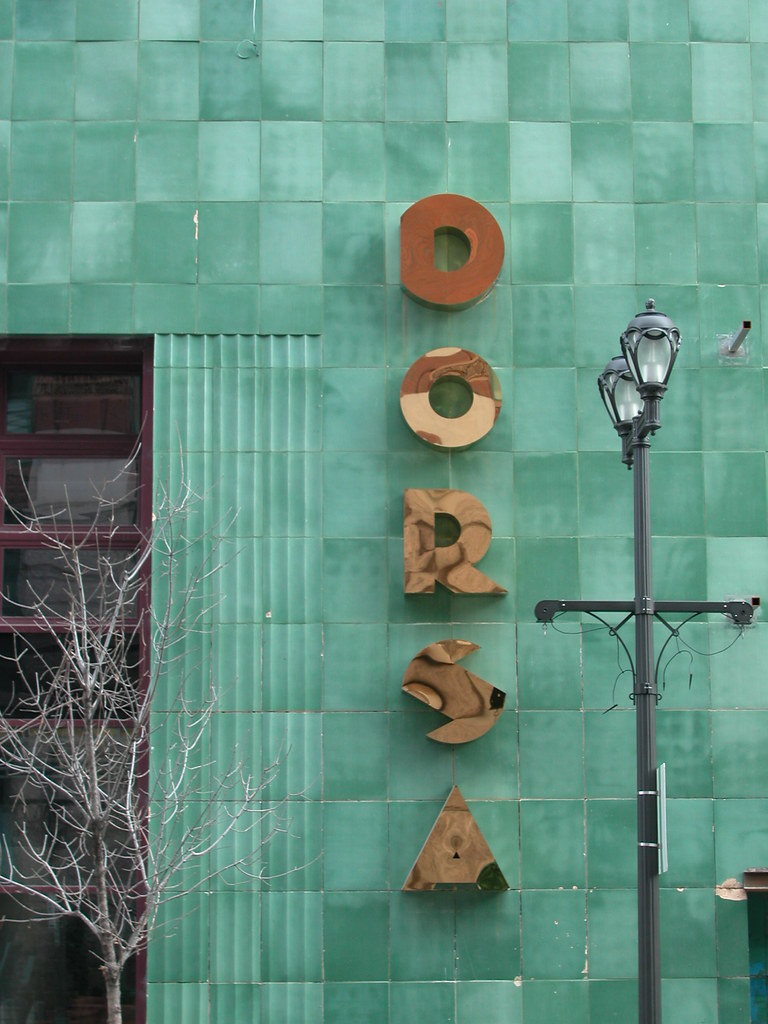

Now the building’s fortunes are better, although the fate of its sumptuous interior is uncertain. (Read more about the interior in Toby Weiss’ 2006 blog entry “The Dorsa, ‘The Ultimate in Mode Moderne.'”) The new letters are slightly more shallow than the originals, and Pyramid has opted not to return the spiderweb because they need to utilize the natural light that a large glazed opening provides. However, the return of the letters and fins (due to be installed in a few weeks!) at all is laudable. After all, rehabilitation tax credit programs don’t demand that elements of the building missing at the time of rehabilitation be returned. (Witness all of the rehabbed loft buildings whose owners have not returned long-gone cornices.)

The Dorsa was fortunate to have a caring architect. The energy of Loomstein’s design was apparent even before the return of the letters, but not realized so fully. The Dorsa building wanted to sing its name, and had no voice. Now its melody saunters up the facade in modern splendor.
Categories
DALATC Missouri Legislature Northside Regeneration Public Policy

DED Seeking Comments on Rules for Distressed Areas Tax Credit

Via Pub Def: Draft “Land Assemblage Tax Credit” Application Ready for Comments

Feel free to discuss the rules in the comments section here. I will be posting my analysis in February.

Categories
Central West End Demolition Historic Preservation

Washington University Medical Center Plans to Demolish Ettrick Apartments

by Michael R. Allen

According to an article by Tim Woodcock in today’s West End Word, the Washington University Medical Center plans to demolish the historic Ettrick Apartments at the northwest corner of Euclid and Forest Park in the Central West End. The historic apartment building was built in 1905 and designed by A. Blair Ridington.

The demolition is part of a campus expansion plan that hinges on zoning overlay legislation sponsored by Ald. Joseph Roddy (D-17th).

Categories
Downtown Green Space

Landmarks Association’s Statement on Jefferson National Expansion Memorial

The Board of Directors of Landmarks Association of St. Louis has issued a statement on the Jefferson National Expansion Memorial. Read it here.

Categories
Demolition Martin Luther King Drive North St. Louis Wells-Goodfellow

MLK in St. Louis

by Michael R. Allen

Perhaps my experience of Dr. Martin Luther King, Jr. Day in St. Louis was epitomized by watching a lone wrecker. The man was palletizing bricks and stoking a bright orange barrel fire fed by millwork and door casements of the building he was wrecking. The cold did not deter his determination to get in a day’s work. The building he was wrecking? A commercial building on Martin Luther King Drive.

The scene was a reminder of some harsh realities of this city. North side laborers, even with skills, are far more likely to find work tearing down their own neighborhoods than rebuilding them. Our city is one of many American cities who renamed a downtrodden thoroughfare for one of the greatest Americans to live, and then did nothing to staunch the decay that dishonors the name on the street. Our city’s leaders, black and white, found time on the holiday to pander and squabble while many citizens were busy earning money for food and shelter.

Further west on the street, past Kingshighway, I encountered the relatively vibrant street culture of the Wellston Loop. People were out walking, traveling from store to store. A barbeque restaurant was crowded, with patron’s cars spread out over an adjacent vacant lot. New sidewalks were in the middle of construction, and several buildings were amid major renovation projects. That’s reality on MLK, too.

Categories
Demolition JeffVanderLou North St. Louis Northside Regeneration

We’re Losing the Intersection of Glasgow and St. Louis

by Michael R. Allen

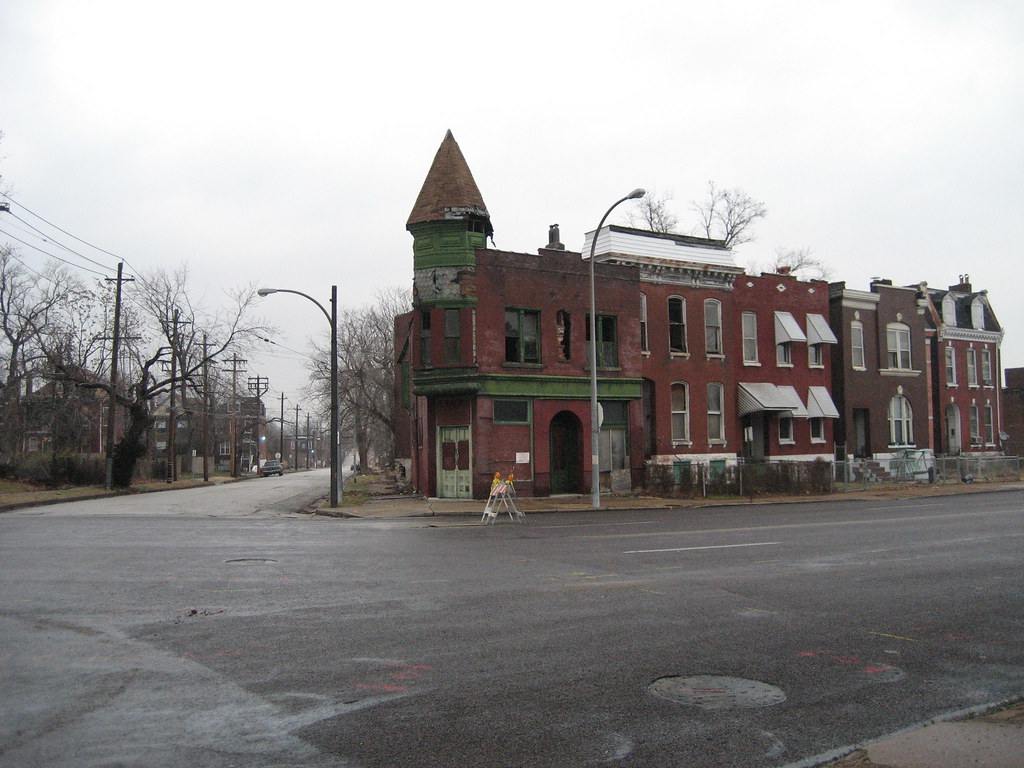
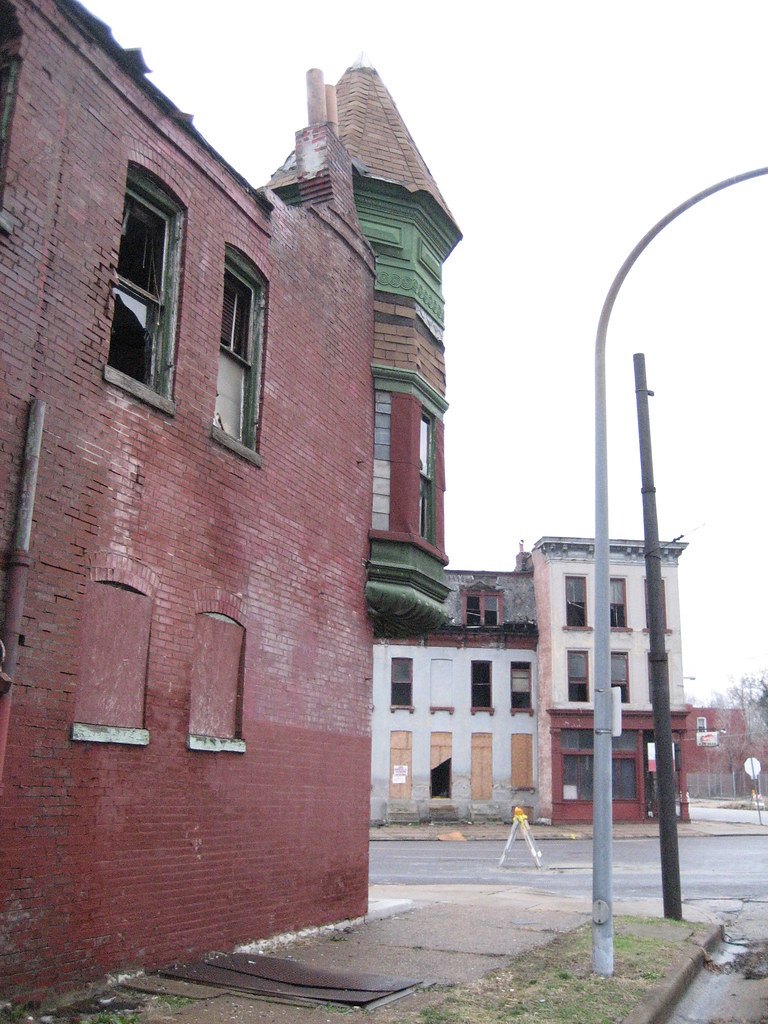
The lovely urban setting shown here (in a photograph contributed by Anthony Coffin) will soon not exist. Shown here, looking south, are the northeast and southeast corners of the intersection of Glasgow and St. Louis Avenues in the city’s JeffVanderLou and Lindell Park neighborhoods. The west corners are occupied by historic houses, creating a contrast that is visually arresting without being jarring. The east corners are marked by these commercial buildings — the iconic, turreted flatiron and the imposing three-story stone-faced mass across the street (subject of a July 2007 blog entry of mine).

Adjacent to the three-story storefront building is an elegant stone-faced tenement building with mansard roof. Behind the storefront building is a flat-roofed two-story alley house — a vestige of the neighborhoods’ historic density. The group is a complementary group of particularly refined examples of old-school St. Louis vernacular forms. Across the street, the flatiron building is almost unparalleled among surviving commercial buildings in north St. Louis. Both the shape and the metal-clad turret (with surviving detail!) are singular. While beautiful in itself, the corner building is dramatized by the fact that it bookends a largely intact row of residences. Whoever designed the corner building understood how to finesse the dynamics of its lot shape and location.

Obviously, the corner and the neighborhood have seen better days. Three out of the four corners here are vacant and owned by holding companies controlled by Paul J. McKee, Jr. After McKee bought these buildings, trouble set in. Last year, knowing that the consequences in north city are low, brick rustlers ravaged the alley house and tenement on the southwest corner. Perhaps the bricks went to a larger brick yard just a few blocks away; perhaps they went to the county. We can be sure that the bricks have long left the city and the state, and that the buildings have since suffered partial collapses.

On December 21, the city’s Building Division ordered emergency demolition of the tenement, alley house and storefront at the southeast corner. On December 26, the Building Division ordered demolition of the flatiron and the attached city-owned house to its east. One can see that the tenement was severely damaged and that the alley house was indeed in danger of collapse. But the emergency situation of the two storefront buildings seems to be that they are near the other buildings and the Building Division needs more buildings to demolish.

Sure, the flatiron building has some brick spalling evident, mostly on its St. Louis Avenue elevation where thieves stole decorative brick awhile ago. But where are the public safety issues with it and the other commercial building? Did inspectors go inside of these buildings and find hidden conditions necessitating demolition? Or are we seeing the careless attitude that continues to render north side residents second-class citizens when it comes to historic preservation?

Looking at the details of these fine buildings is heartbreaking. The flatiron’s storefront, with corner entrance to store and punctuating brick arched entrance to the stairs, is odd. The metalwork on the turret shows sharp detail over 100 years after fabrication and painting. The slight height difference between the other commercial building and tenement along with the tenement’s setback accentuates the corner building perfectly. Intact wooden cornice details on this pair draw the eye upward. One could spend hours looking at these buildings — and must do so soon. These photographs date to last week; the alley house is completely gone as of this writing. Your tax dollars are, as they say, at work.

Here are links to the demolition permits:
2845 St. Louis Avenue (flatiron)
2854 St. Louis Avenue (tenement)
2858 St. Louis Avenue (commercial building and alley house)

(All photographs by Anthony Coffin; more here.)

Categories
DALATC Kansas City Missouri Missouri Legislature Northside Regeneration Public Policy

Bill Would Lower Acreage Requirements for Distressed Areas Tax Credit

by Michael R. Allen

Missouri State Senator Yvonne Wilson (D-9th), who represents Kansas City, has filed SB 814, a bill that would decrease the size of a project eligible under Missouri’s Distressed Areas Land Assemblage Tax Credit (DALATC). Wilson’s bill would set the minimum project size at 40 acres, with an applicant required to own only 30 of those acres. The credit now requires projects to be 75 acres and applicants to own a minimum of 50 acres.

While there are numerous structural flaws with DALATC, and while 40 acres is still a fairly disruptive project size for urban areas, Wilson’s proposal is a step in the right direction.

Perhaps not coincidentally, reforming the DALATC is one of the planks in the 2008 Missouri Public Policy Agenda for the Greater Kansas City Chamber of Commerce.

Categories
Historic Preservation North St. Louis SLPS South St. Louis

SLPS Proposes Eight More School Closings

by Michael R. Allen

The St. Louis Public Schools will be closing eight additional school buildings and reopening two, pending a vote by the appointed transitional school board and public input.

The schools proposed by district staff for closure are Mitchell School, 955 Arcade Avenue; Gundlach School, 2931 Arlington Avenue; Lyon School, 7417 Vermont Avenue; Mark Twain School, 5316 Ruskin Avenue; Meramec School, 2745 Meramec Street; Shenandoah School, 3412 Shenandoah Avenue; and Simmons School, 4318 St. Louis Avenue. The closures are evenly split between south and north city.

Carver School, 3325 Bell Avenue in north city, and Roe School, 1921 Prather Avenue in south city, would reopen.

This comes on the heels of last year’s round of five closures, which has left several historic school buildings vacant. The district has yet to market some of the closed schools from last year’s round. Hopefully the district will develop a policy for swift disposition of closed schools that includes provisions for timely reuse as well as preservation. The district would do well to seek National Register of Historic Places designation for any closed school not already listed, so that the buildings are “tax credit ready” at the time of sale. While the district may elect to retain several buildings for future use, it already possesses a long roster of vacant buildings and needs to continue to be mindful of the impact of school closings on neighborhoods.

Categories
Art Demolition Salvage St. Louis County

Name Made from Place

by Michael R. Allen

Janet Zweig’s If You Lived Here You Would Be Home, a new public art project in Maplewood funded by Arts in Transit, rewards repeated viewings — even at high speeds. The work consists of two sculptures that spell “Maplewood” on each side of the MetroLink overpass bridge on Manchester Road. On the west side, which people face heading into Maplewood, the word is spelled forwards, but on the other side it’s spelled backwards. Motorists leaving Maplewood might catch a glimpse of the word spelled forwards in their rear-view mirror. In her project description (which includes many excellent photographs), Zweig announces her intention regarding this effect: “hey can read the word on the other side of the overpass in their rear-view mirrors, as if seeing an illusionistic image of Maplewood’s past.”

There are other ways that the art work conjures Maplewood’s past. The typeface used is borrowed from the long-shuttered Maplewood Theater’s sign. Like a theater marquee, the letters of the sign are outlined in light at night, a great decision. The materials used to comprise each sign, not especially evident on a drive-by visit, are bits from two historic homes demolished in 2006. The idea of having the place name literally created by pieces of the lost past is profound, and need not be smothered by my analysis. Go drive, walk and stand by Zweig’s work, and then think about it.

Categories
Historic Preservation Illinois Metro East Southern Illinois

Venice Public School Campus Disappears

by Michael R. Allen


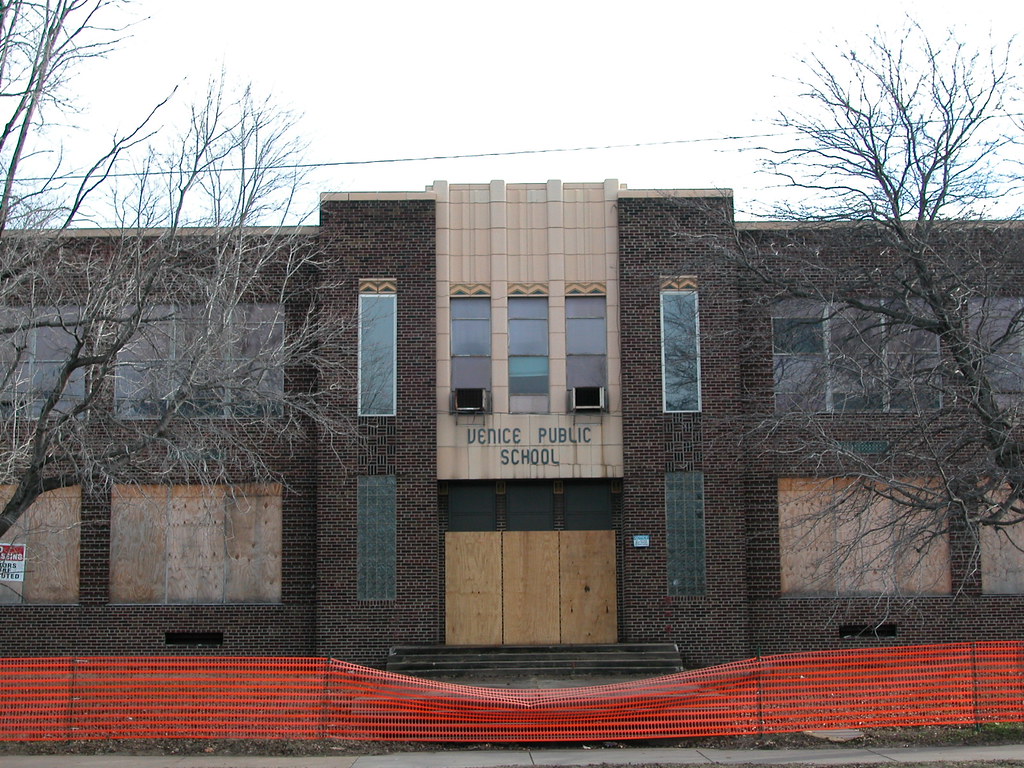
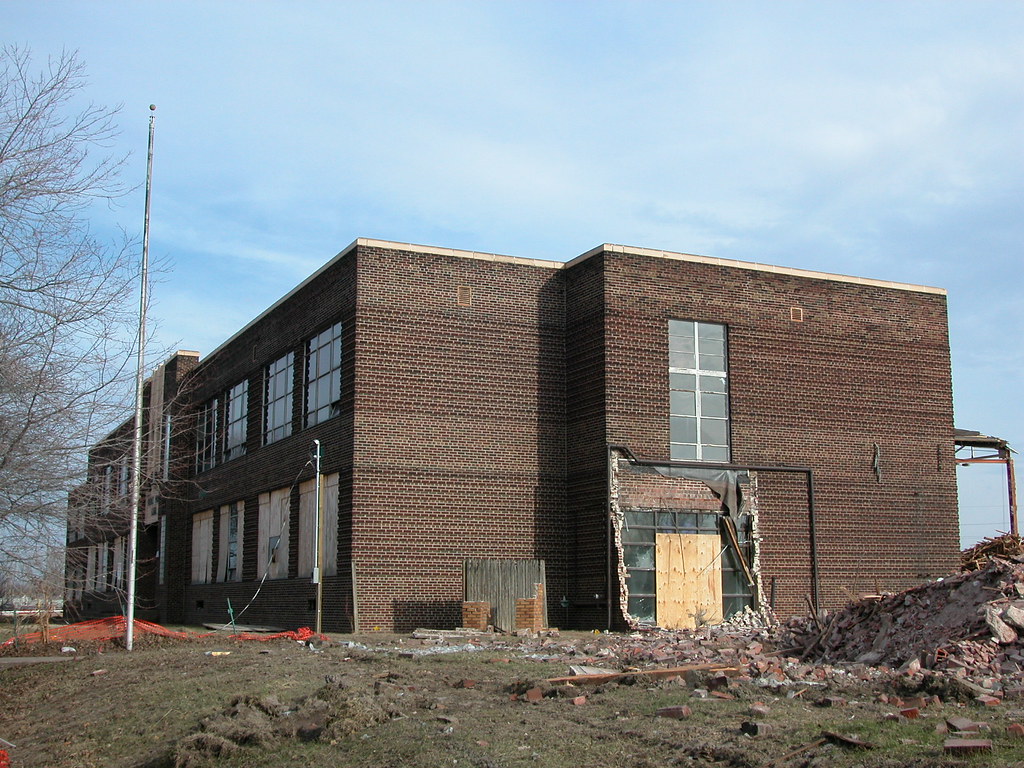
The Metro East city of Venice is continuing to demolish its historic public school campus. The 1917 Venice High School has been gone for a month now, while the adjacent 1938 addition partly remains. Once the Tri-Cities of Granite City, Madison and Venice were thriving cities with populations of workers in the numerous steel mills and metal fabrication shops of the area. Things have been different for awhile now, and Venice’s population hovers at about 2,500.

Still, the section of Broadway where the public schools buildings stood features many well-kept homes on whose lawns children play. With a moribund downtown and few noteworthy employers, though, Venice’s chief assets may be its location and its stock of small frame homes. The city has a lot of potential.


The demolition of the schools, though, erase some of that potential. The buildings are among a handful of historic landmarks. These were solid buildings with adaptive reuse potential, standing right off of the newly-reopened McKinley Bridge. New use may have been just a few years away.
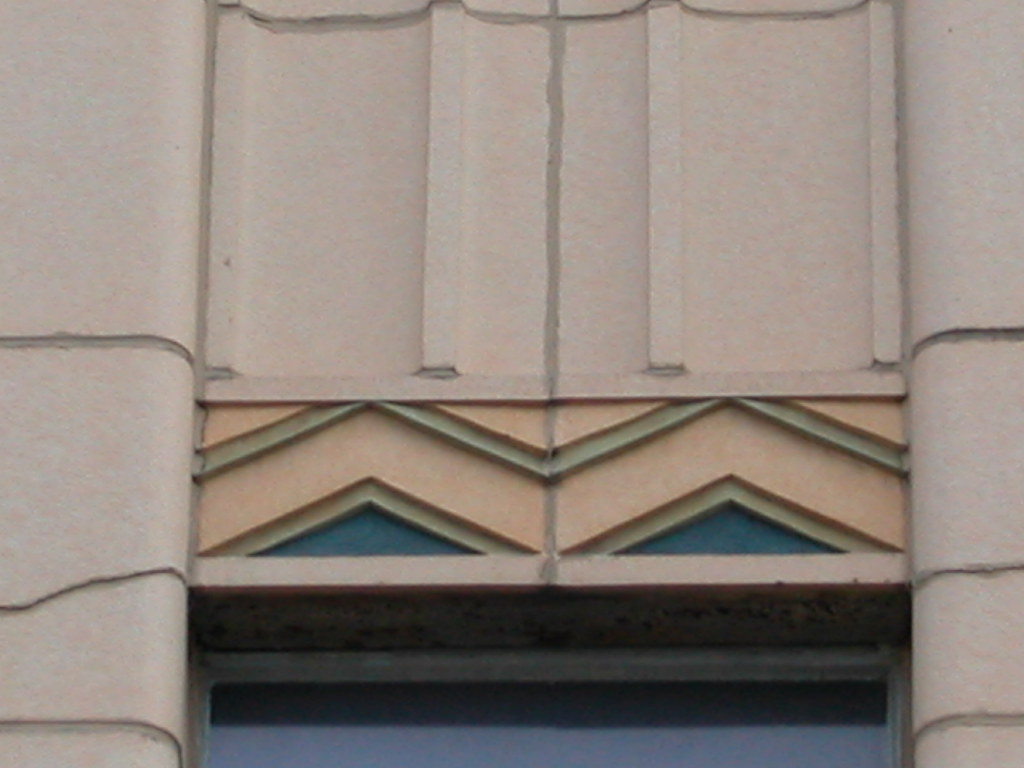
As of last weekend, when I took these photos, the 1938 addition retained its basic form enough to demonstrate how pointless its loss is. The building features a restrained art deco program of ornament, executed in polychromatic geometry that is gorgeous. The basic body of the building is unadorned machine-raked brick in different shades of brown and red. The bow-truss gymnasium at rear relieves the boxiness of the school building, providing some variation in the form.

Alas, by now the building is further diminished and reuse is a lost dream. Like its earlier neighbor, the building departs the real world to live only in the fickle realm of public memory.

As the Metro East adapts to its post-industrial and decentralized life — a process that will continue and accelerate once the new Mississippi River Bridge is built — we will continue to watch such losses. Without economic hope, there will be no concerted effort at cultural resource planning in the Tri-Cities or East St. Louis. Time is money, after all, and planning takes a lot of time. And money. What incentives exist in the Metro East for careful planning and historic preservation? Few, so long as Illinois remains one of those states without a historic rehabilitation tax credit.

(Kudos to 52nd City, Curious Feet, St. Louis Patina and Metropolitan Rural for covering the Venice High School demolition earlier.)