Categories
Demolition North St. Louis Preservation Board

Preservation Board Spares Building at 5286-98 Page

by Michael R. Allen

At the meeting of the Preservation Board on Monday, January 28, the Board upheld staff denial of a demolition permit for the historic commercial building at 5286-98 Page Boulevard. Consideration of the item was somber and quick. Attorney Richard Kenney entered a compilation of all of the Berean Seventh Day Adventist Church’s exhibits, while Cultural Resources Office Director Kathleen Shea entered hers. After Kenney declined to testify, Board Chairman Richard Callow asked for a motion.

Board member David Richardson moved to uphold staff denial. Board members John Burse, Melanie Fathman, Mike Killeen and Anthony Robinson joined Richardson in voting for his motion. Board members Mary Johnson and Alderman Terry Kennedy (D-18th) voted against.

The next step may be Circuit Court, where any appeal of the Board decision would land.

Previous coverage:

Fate of Building at Page and Union Deferred Again (January 9, 2008)

Confusion at Page and Union (November 27, 2007)

Categories
Central West End Demolition Granite City, Illinois Historic Preservation North St. Louis

Demolition Threats All Over Town

by Michael R. Allen

Vanishing STL alerts us to the possibility that the Washington University Medical Center may demolish the Shriners’ Hospital and Central Institute for the Deaf buildings.

Meanwhile, Curious Feet notes two impending demolitions: a large storefront building at Page and Kingshighway in St. Louis and an old bank building in downtown Granite City.

Categories
Chicago Historic Preservation Illinois

Preservation Chicago’s "Chicago 7" List Includes City’s Landmarks Ordinance

by Michael R. Allen

Preservation Chicago just released its annual Chicago 7 list of the city’s most endangered historic resources. Topping the list is not a building or bridge but the city’s Landmarks Ordinance. According to Preservation Chicago, “several recent redevelopment projects endorsed by the city’s planning department and approved by the Commission on Chicago Landmarks call into question whether the integrity of the ordinance itself is in danger of being destroyed.”

The ordinance date sto 1968 and has led to local landmark status for 255 buildings and 49 historic districts. Yet recent decisions by the Commission on Chicago Landmarks to allow such travesties as the demolition of the landmarked Farwell Building and the reassembly of its facade on a new, much taller building call into question the level of protection the ordinance provides.

Rounding out the list are the American Book Company, Grant Park, the Devon Avenue commercial district, the Daily News Building, the Booker Building and Norwood Park. The full story is available here.

Categories
Architecture Events Louis Sullivan Salvage

Elmslie and Sullivan Exhibit Opens With Talk by Tim Samuelson

by Michael R. Allen

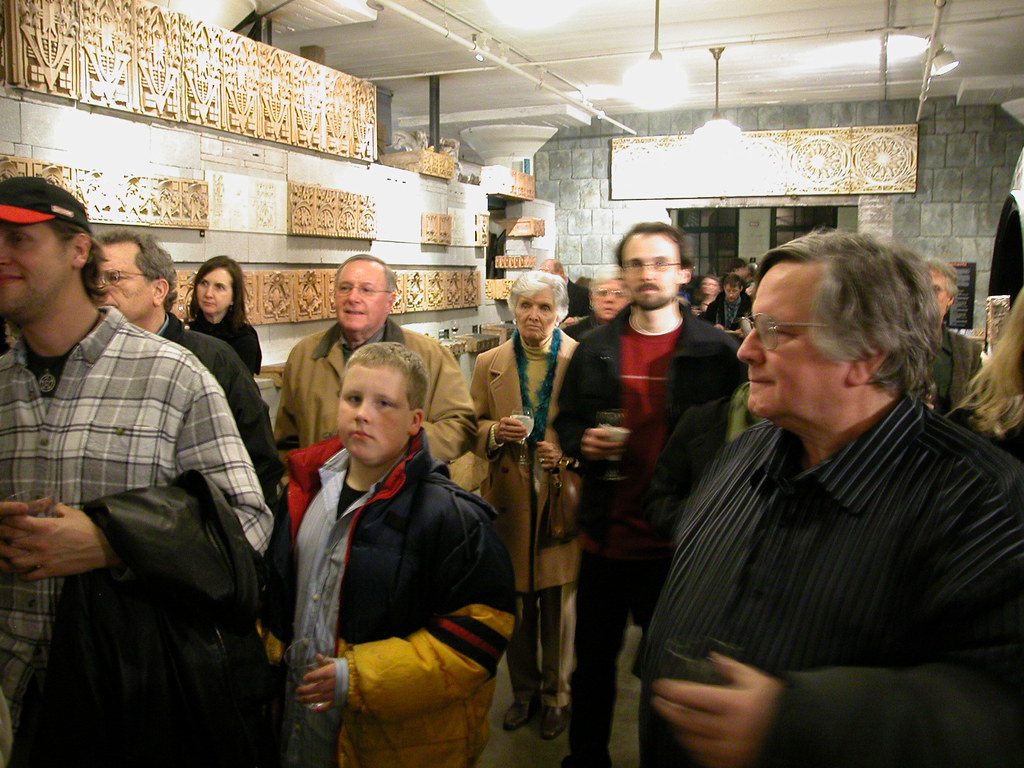
Over 150 people attended the opening.

On Friday, January 25, the Architectural Museum at the City Museum opened its new exhibit Elmslie and Sullivan to a packed house. Architectural Museum founder Bruce Gerrie curated the exhibit. While featuring terra cotta ornament from the buildings of George Grant Elmslie, once Louis Sullivan’s chief draftsman, as well as those of Sullivan himself, most of the exhibit incorporated ornament from the Morton and Thomas Alva Edison public schools designed by Elmslie that were built in Hammond, Indiana during the 1930s. The Hammond school district demolished these schools in 1991, but recovered much of the terra cotta. Some of the terra cotta ended up in use in new school buildings, but most has ended up in storage under the city’s ownership. The last exhibition of the terra cotta in the region was in 1998 when University of Illinois professors Paul Kruty and Ronald Schmitt organized an exhibit at the University of Illinois at Chicago.

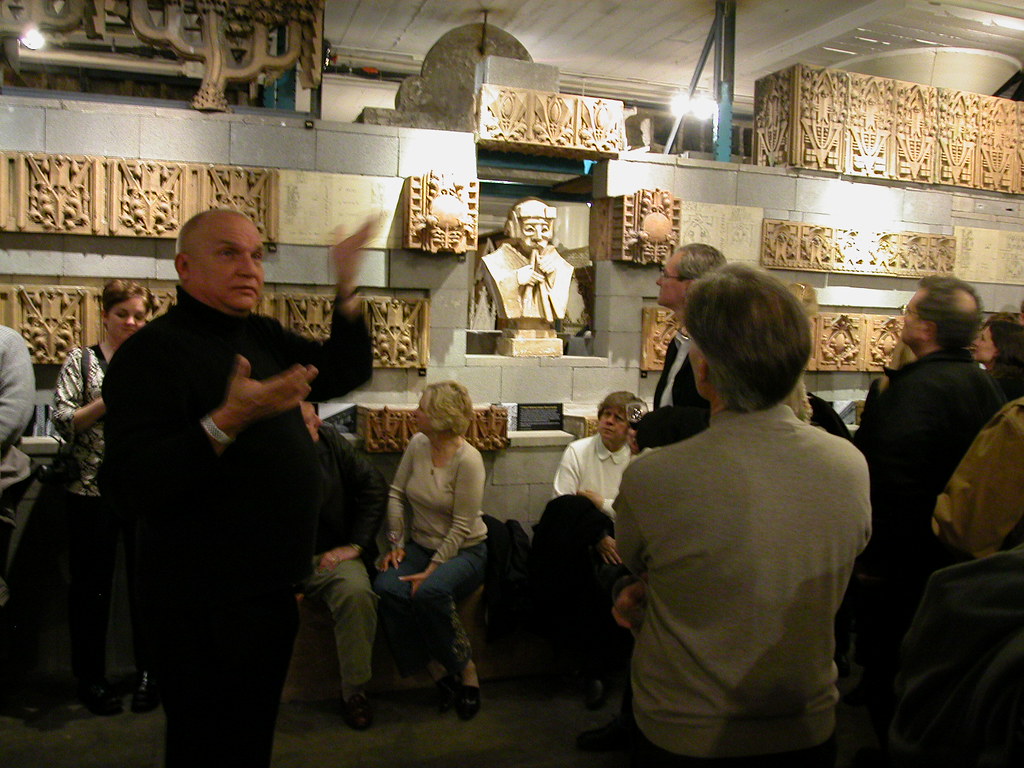
The highlight of the evening may very well have been Tim Samuelson‘s rousing welcoming speech. Tim is the Cultural Historian for the City of Chicago and one of the leading scholars of Sullivan and the Prairie School. He also is a gifted orator with a compelling imagination. Tim Samuelson feels architecture, and he has that rare gift of being able to articulate that feeling. His talk began with a summary of the architectural theory of Louis Sullivan and led to a celebration of Elmslie, a quiet man who was the subject of somewhat disparaging remarks in Frank Lloyd Wright’s autobiography. Wright was Sullivan’s chief draftsman before Elmslie, and the two shared an office for years. Seems that Wright didn’t see much beneath Elmslie’s cool exterior. Fortunately, Tim does and shared with the crowd his understanding of Elmslie’s singular vision — a vision powerfully manifest in the Hammond schools and one on par with Wright’s.

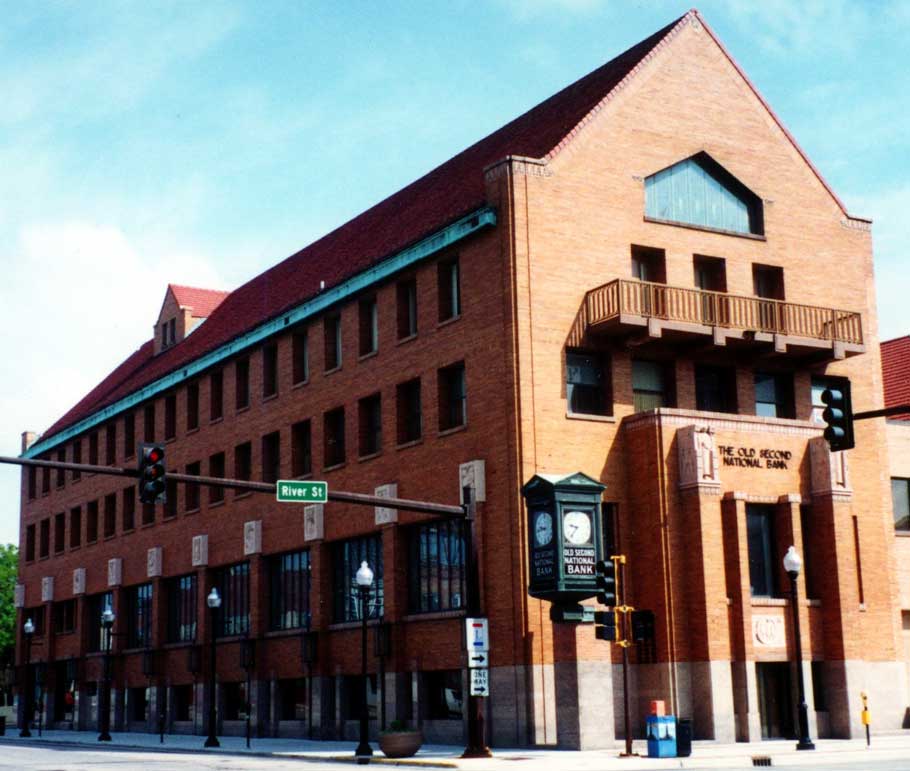
Elmslie’s unique terra cotta designs show a mind engaging both Sullivan’s principles and the machine age architectural principles of the Art Deco style. And Elmslie’s buildings reveal the conscious effort of one designer to reconcile organic lines with geometric mass. Some of Elmslie’s work, like the Old Second National Bank (1924), almost heads off the rise of Art Deco by creating an American alternative firmly rooted in both the ideals of modernism and Midwestern regionalism.

Ever-animated Tim Samuelson speaks at the opening reception.

In all, the opening demonstrates the strong continued interest in the work of Elmslie and the Prairie School as well as the large audience for architectural programming in St. Louis. While the exhibit opening was supposed to last until 9:00 p.m., people were still viewing it and conversing with each other until well past 11:00 p.m.

The exhibit will be on display through December 2008 to anyone purchasing a City Museum admission ($12). More information here.

Categories
Downtown Historic Preservation Mid-Century Modern

Dorsa’s Letters Return

by Michael R. Allen

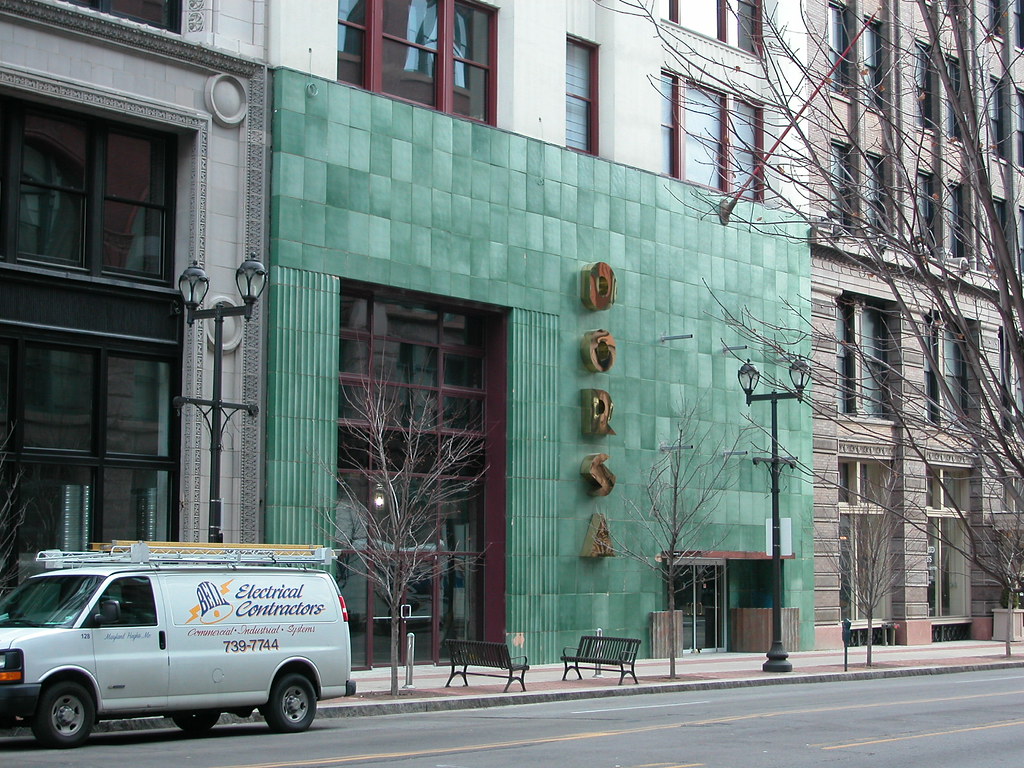
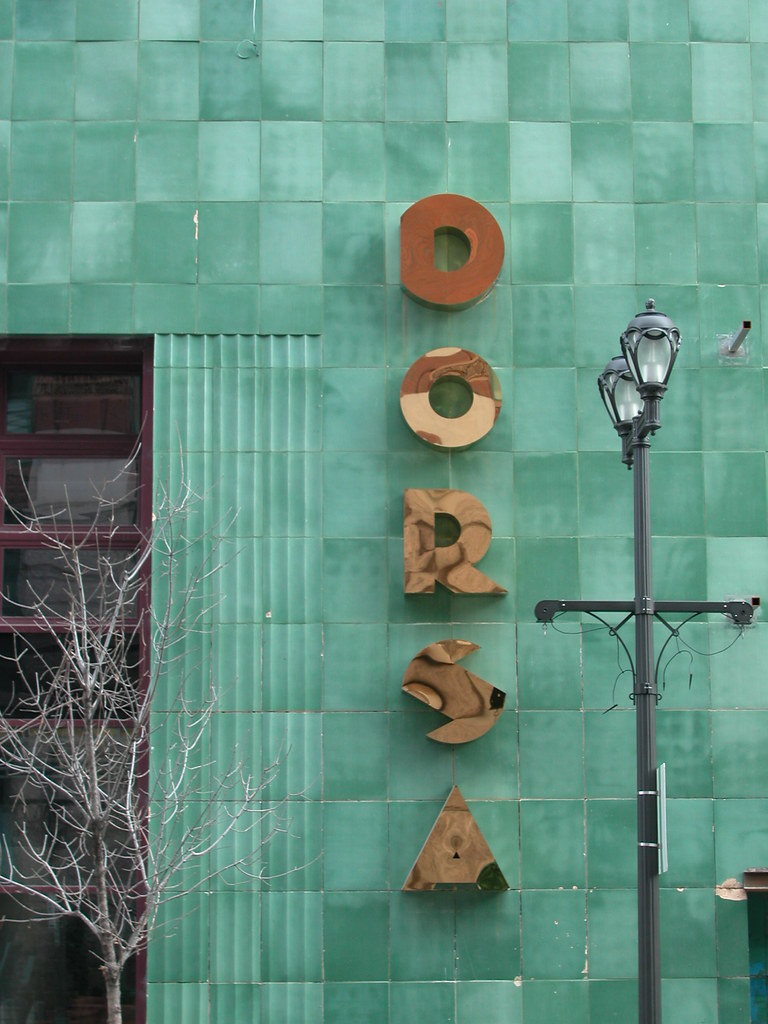
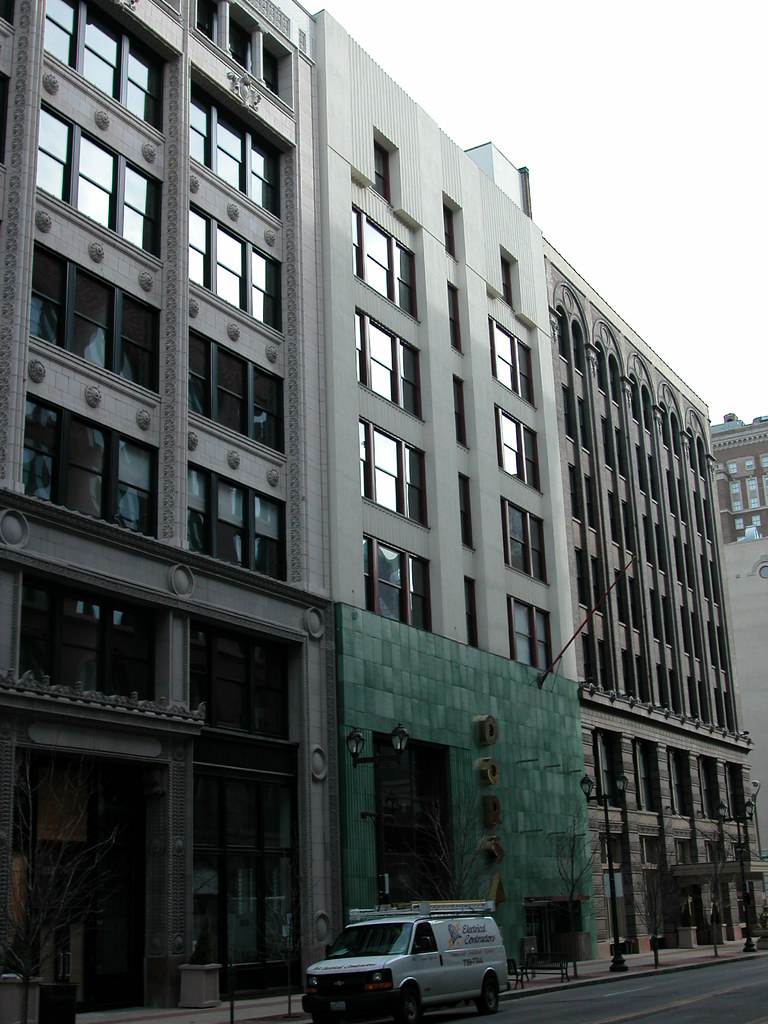
The stylized letters that spell the name of Dorsa Building at 1007 Washington Avenue in downtown St. Louis have returned. Or, rather, replicated brass letters nearly identical to the original now shine bright against the green terra cotta background of the Art Moderne landmark’s first two floors.

Installation of the letters is part of the rehabilitation of the building being undertaken by the Pyramid Companies. The building and its neighbor to the west are being converted into condominiums. Paul Hohmann, chief architect for Pyramid Architects, is the designer of the Dorsa project who has diligently worked to renew the appearance front elevation.

The Dorsa Building facade — literally, this is a facade — dates to 1946, when the Dorsa Dress Company hired architect Meyer Loomstein to modernize the front elevation of their Classical Revival building, which had been built in 1902 from plans by Eames and Young. Loomstein and sculptor Sasch Schnittman devised a streamline slipcover, with a striking green terra cotta base under a cream stucco body that terminated with elegant fluting at the top. The designers further adorned the building with a large recessed terra cotta “spider web,” the stylized brass lettering and three brass fins above the building’s understated entrance.

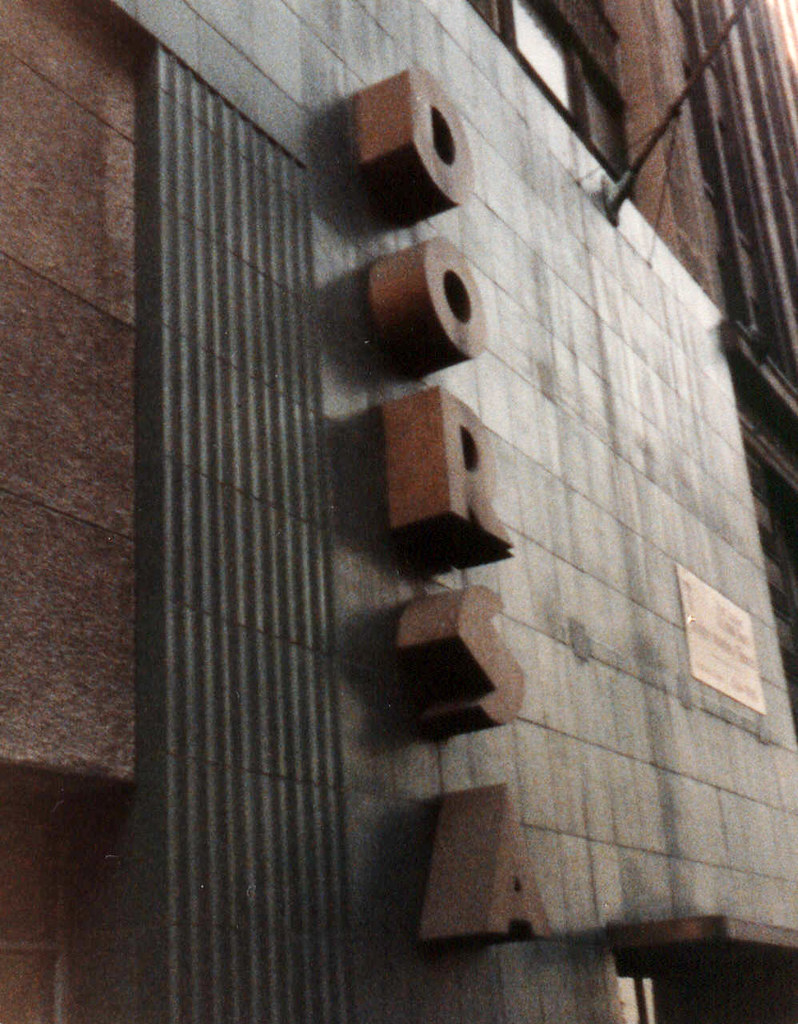
The result was a true rarity for downtown — a stunning work of Art Moderne commercial architecture that was as colorful as it was smart. The building turned many heads and sold many dresses. Inevitably, the Dorsa fell into disrepair. The upper two fins disappeared, perhaps taking a trip to the scrapyard. In the 1980’s and 1990’s, owner Larry Deutsch removed the spiderweb and later the letters.

Here is a photograph of the letters in 1984 submitted to EoA by Walt Lockley:


Here are the new letters close up (never mind the clashing lamp post):


Now the building’s fortunes are better, although the fate of its sumptuous interior is uncertain. (Read more about the interior in Toby Weiss’ 2006 blog entry “The Dorsa, ‘The Ultimate in Mode Moderne.'”) The new letters are slightly more shallow than the originals, and Pyramid has opted not to return the spiderweb because they need to utilize the natural light that a large glazed opening provides. However, the return of the letters and fins (due to be installed in a few weeks!) at all is laudable. After all, rehabilitation tax credit programs don’t demand that elements of the building missing at the time of rehabilitation be returned. (Witness all of the rehabbed loft buildings whose owners have not returned long-gone cornices.)

The Dorsa was fortunate to have a caring architect. The energy of Loomstein’s design was apparent even before the return of the letters, but not realized so fully. The Dorsa building wanted to sing its name, and had no voice. Now its melody saunters up the facade in modern splendor.

Categories
DALATC Missouri Legislature Northside Regeneration Public Policy

DED Seeking Comments on Rules for Distressed Areas Tax Credit

Via Pub Def: Draft “Land Assemblage Tax Credit” Application Ready for Comments

Feel free to discuss the rules in the comments section here. I will be posting my analysis in February.

Categories
Central West End Demolition Historic Preservation

Washington University Medical Center Plans to Demolish Ettrick Apartments

by Michael R. Allen

According to an article by Tim Woodcock in today’s West End Word, the Washington University Medical Center plans to demolish the historic Ettrick Apartments at the northwest corner of Euclid and Forest Park in the Central West End. The historic apartment building was built in 1905 and designed by A. Blair Ridington.

The demolition is part of a campus expansion plan that hinges on zoning overlay legislation sponsored by Ald. Joseph Roddy (D-17th).

Categories
Downtown Green Space

Landmarks Association’s Statement on Jefferson National Expansion Memorial

The Board of Directors of Landmarks Association of St. Louis has issued a statement on the Jefferson National Expansion Memorial. Read it here.

Categories
Demolition Martin Luther King Drive North St. Louis Wells-Goodfellow

MLK in St. Louis

by Michael R. Allen

Perhaps my experience of Dr. Martin Luther King, Jr. Day in St. Louis was epitomized by watching a lone wrecker. The man was palletizing bricks and stoking a bright orange barrel fire fed by millwork and door casements of the building he was wrecking. The cold did not deter his determination to get in a day’s work. The building he was wrecking? A commercial building on Martin Luther King Drive.

The scene was a reminder of some harsh realities of this city. North side laborers, even with skills, are far more likely to find work tearing down their own neighborhoods than rebuilding them. Our city is one of many American cities who renamed a downtrodden thoroughfare for one of the greatest Americans to live, and then did nothing to staunch the decay that dishonors the name on the street. Our city’s leaders, black and white, found time on the holiday to pander and squabble while many citizens were busy earning money for food and shelter.

Further west on the street, past Kingshighway, I encountered the relatively vibrant street culture of the Wellston Loop. People were out walking, traveling from store to store. A barbeque restaurant was crowded, with patron’s cars spread out over an adjacent vacant lot. New sidewalks were in the middle of construction, and several buildings were amid major renovation projects. That’s reality on MLK, too.

Categories
Demolition JeffVanderLou North St. Louis Northside Regeneration

We’re Losing the Intersection of Glasgow and St. Louis

by Michael R. Allen

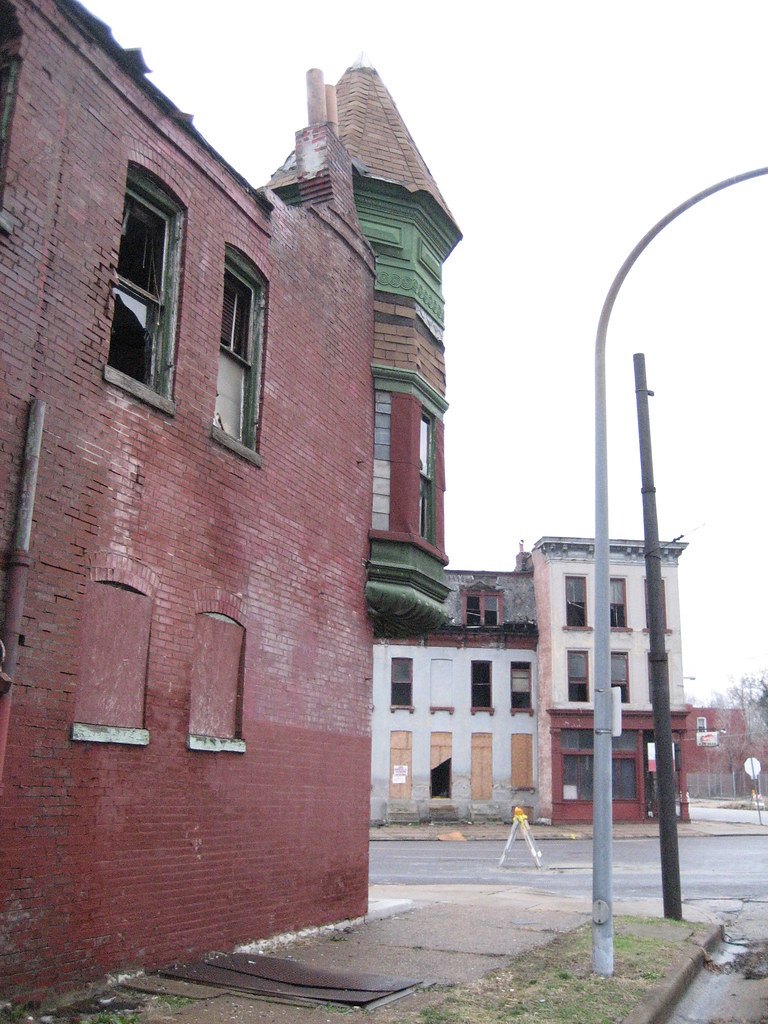
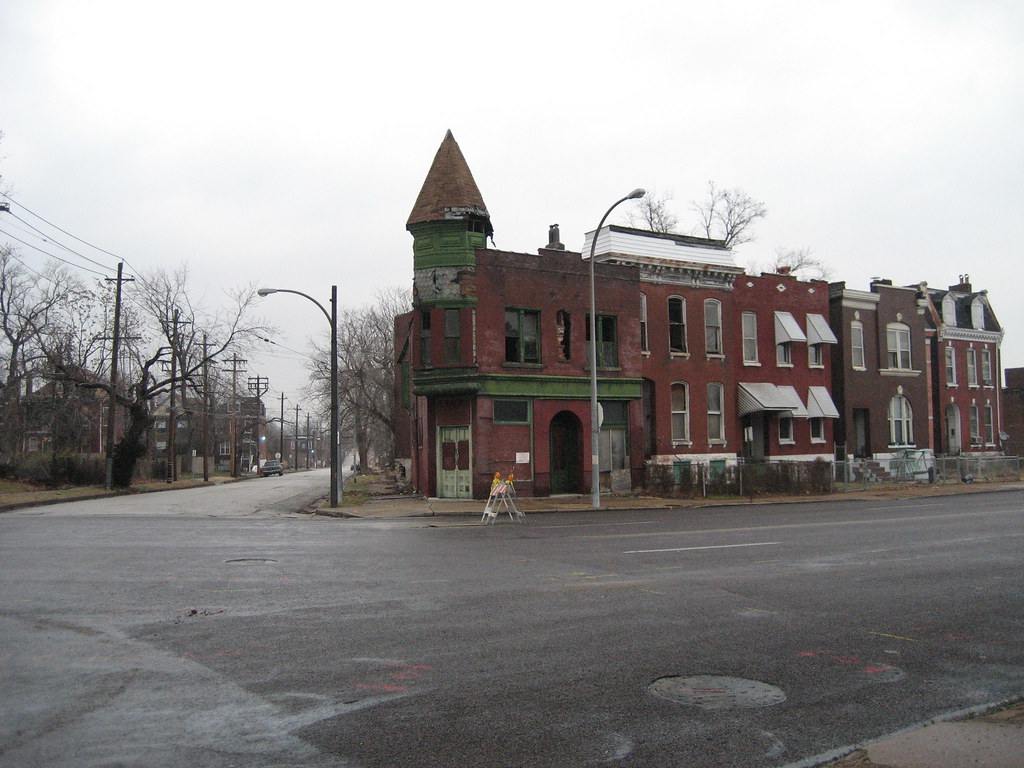
The lovely urban setting shown here (in a photograph contributed by Anthony Coffin) will soon not exist. Shown here, looking south, are the northeast and southeast corners of the intersection of Glasgow and St. Louis Avenues in the city’s JeffVanderLou and Lindell Park neighborhoods. The west corners are occupied by historic houses, creating a contrast that is visually arresting without being jarring. The east corners are marked by these commercial buildings — the iconic, turreted flatiron and the imposing three-story stone-faced mass across the street (subject of a July 2007 blog entry of mine).
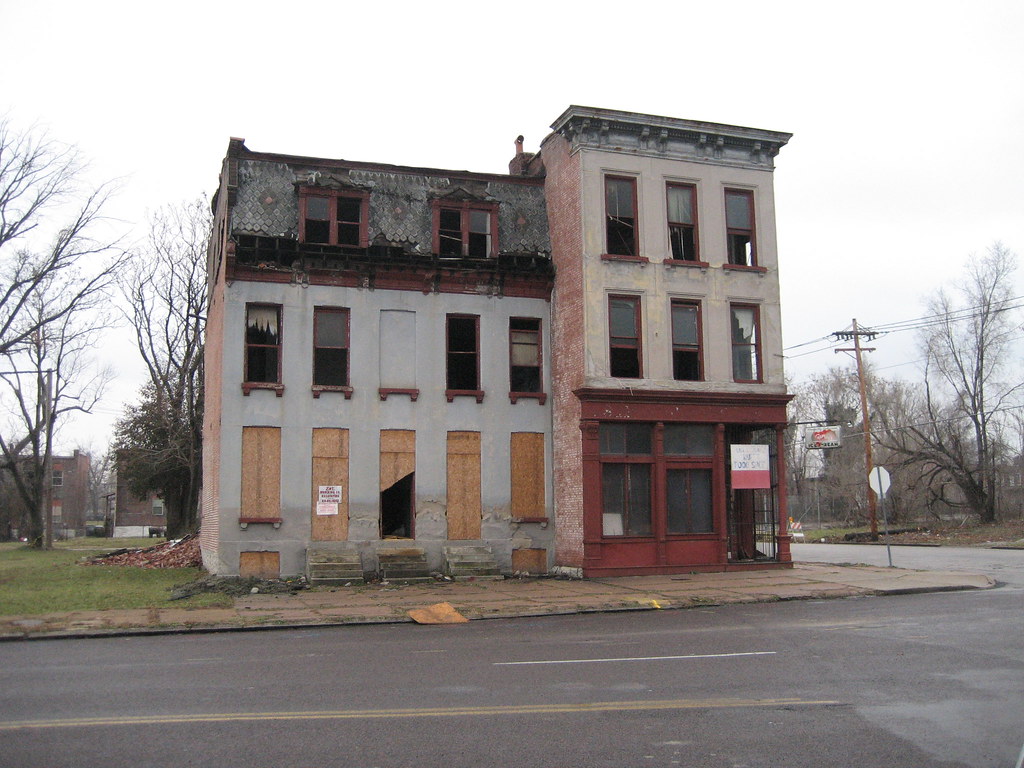
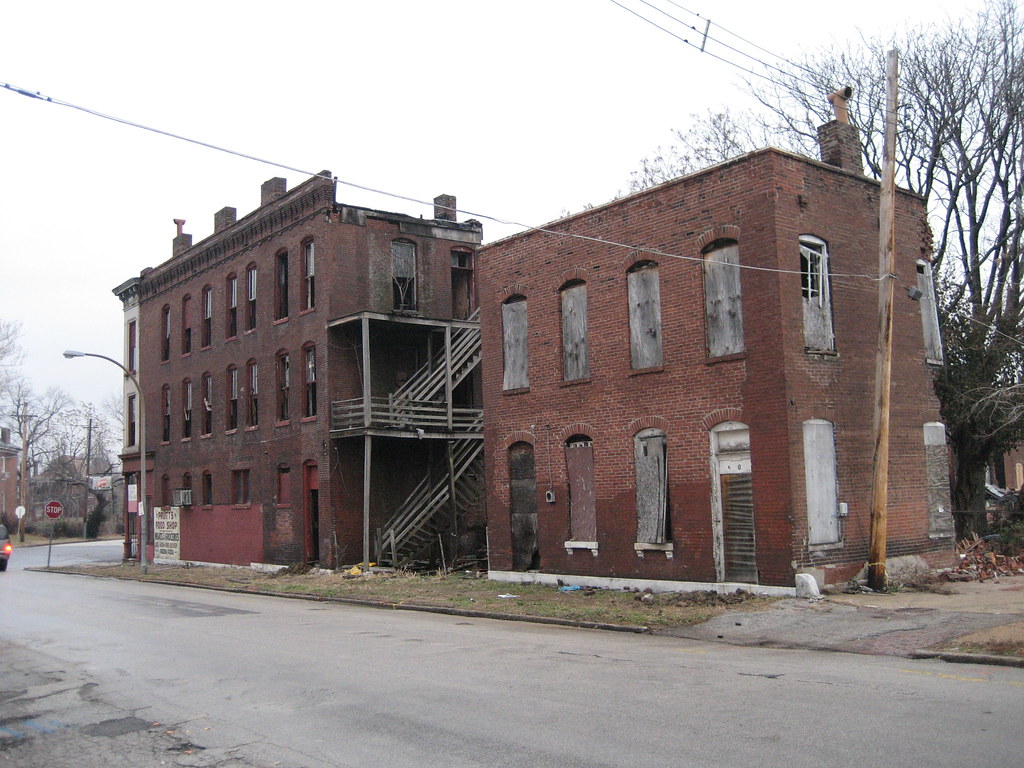
Adjacent to the three-story storefront building is an elegant stone-faced tenement building with mansard roof. Behind the storefront building is a flat-roofed two-story alley house — a vestige of the neighborhoods’ historic density. The group is a complementary group of particularly refined examples of old-school St. Louis vernacular forms. Across the street, the flatiron building is almost unparalleled among surviving commercial buildings in north St. Louis. Both the shape and the metal-clad turret (with surviving detail!) are singular. While beautiful in itself, the corner building is dramatized by the fact that it bookends a largely intact row of residences. Whoever designed the corner building understood how to finesse the dynamics of its lot shape and location.

Obviously, the corner and the neighborhood have seen better days. Three out of the four corners here are vacant and owned by holding companies controlled by Paul J. McKee, Jr. After McKee bought these buildings, trouble set in. Last year, knowing that the consequences in north city are low, brick rustlers ravaged the alley house and tenement on the southwest corner. Perhaps the bricks went to a larger brick yard just a few blocks away; perhaps they went to the county. We can be sure that the bricks have long left the city and the state, and that the buildings have since suffered partial collapses.
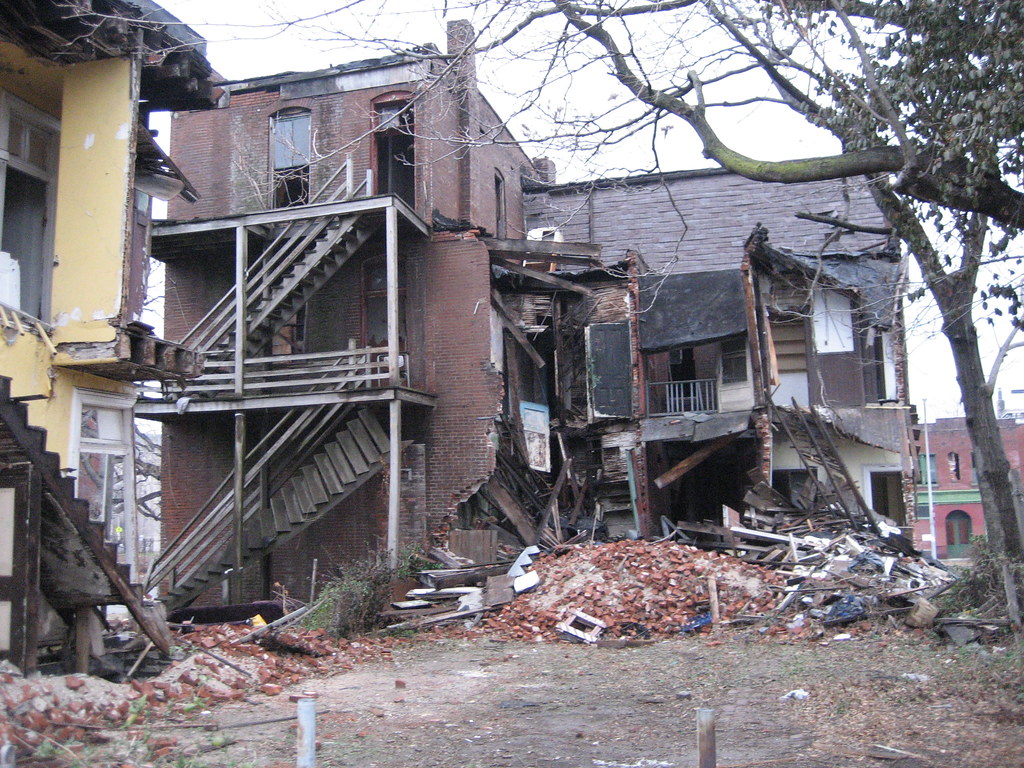
On December 21, the city’s Building Division ordered emergency demolition of the tenement, alley house and storefront at the southeast corner. On December 26, the Building Division ordered demolition of the flatiron and the attached city-owned house to its east. One can see that the tenement was severely damaged and that the alley house was indeed in danger of collapse. But the emergency situation of the two storefront buildings seems to be that they are near the other buildings and the Building Division needs more buildings to demolish.

Sure, the flatiron building has some brick spalling evident, mostly on its St. Louis Avenue elevation where thieves stole decorative brick awhile ago. But where are the public safety issues with it and the other commercial building? Did inspectors go inside of these buildings and find hidden conditions necessitating demolition? Or are we seeing the careless attitude that continues to render north side residents second-class citizens when it comes to historic preservation?

Looking at the details of these fine buildings is heartbreaking. The flatiron’s storefront, with corner entrance to store and punctuating brick arched entrance to the stairs, is odd. The metalwork on the turret shows sharp detail over 100 years after fabrication and painting. The slight height difference between the other commercial building and tenement along with the tenement’s setback accentuates the corner building perfectly. Intact wooden cornice details on this pair draw the eye upward. One could spend hours looking at these buildings — and must do so soon. These photographs date to last week; the alley house is completely gone as of this writing. Your tax dollars are, as they say, at work.

Here are links to the demolition permits:
2845 St. Louis Avenue (flatiron)
2854 St. Louis Avenue (tenement)
2858 St. Louis Avenue (commercial building and alley house)

(All photographs by Anthony Coffin; more here.)