Categories
Adaptive Reuse City Hospital South St. Louis

From Laundry Building to Palladium, From Great Depression to New Recession

by Michael R. Allen


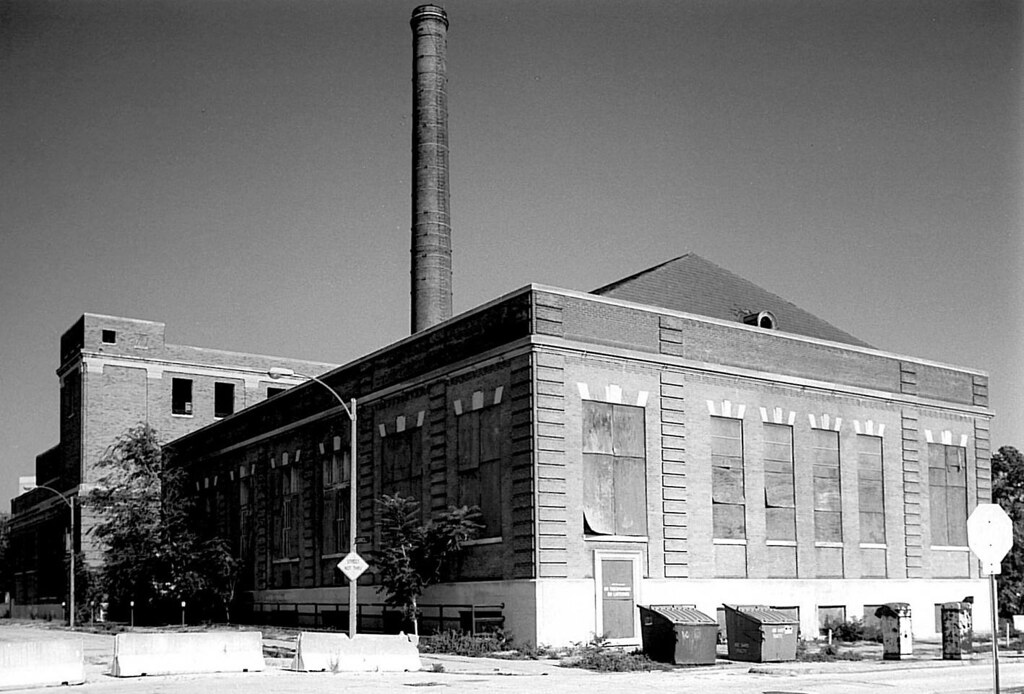
Photograph by Lynn M. Josse taken in 2000.

The 50th anniversary gala for Landmarks Association of St. Louis this past weekend took place at a venue called Palladium St. Louis but better known as the Laundry Building at the former City Hospital complex. Since 2003, Gilded Age Development has been working on rehabilitating the remaining buildings of the long-vacant municipal hospital. Thanks to the Butler’s Pantry, which built a new building next door for its headquarters, the Laundry Building is now complete.

Landmarks’ choice of venue for its half-century birthday was fitting; without an active preservation movement, City Hospital would not have survived nearly twenty years of abandonment to find new investment and new uses. There is another timely coincidence with the re-opening of the Laundry at this time. The National Register of Historic Places nomination for City Hospital by Lynn M. Josse reminds us that the Laundry Building was part of a Depression-era modernization of City Hospital funded by a combination of local and federal funds. Voters approved municipal bond issues in 1933 and 1934 to fund major expansion, and the Federal Emergency Administration of Public Works provided several matching grants. According to Josse, federal funds covered 45% of the costs of the 1939 round of construction that included the Laundry Building as well as a now-demolished 14-story hospital building. Albert Osburg, Chief Architect of the Board of Public Service, probably designed these new buildings.

The following photograph, taken by Dr. George W. Salmon, shows the corner of the newly-completed Laundry Building amid a modernized hospital complex and a dense, if smoky, metropolis.

Public investment amid economic downtown led to the creation of the Laundry Building in the first place. The rebirth comes in a time when such public investment is viewed through an engrained, misplaced anti-government lense. However, Missouri’s state historic tax credit program — an incentive, of course, rather than a public investment — returned the Laundry Building to life. In this recession, St. Louis doesn’t have the impressive public investment of the New Deal era, but it does have a proven incentive that does a lot of good.

And what good has been done at the Laundry Building! Here’s a look at the changes using photographs that I took in 2004 and photographs taken this weekend after the gala.
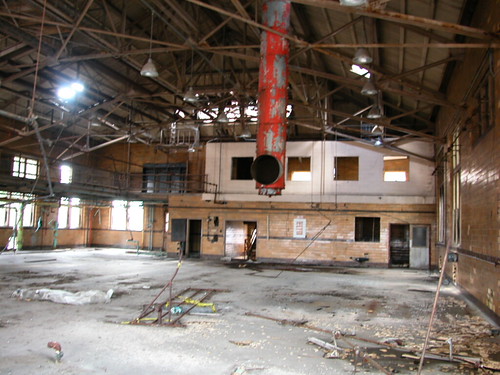
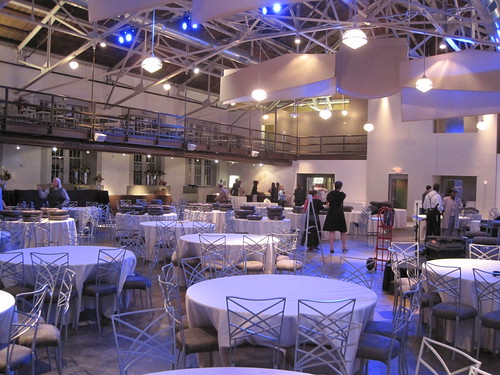
The two views above are looking west inside of the building. The two images below are aimed at the northwest corner. What a change! (The fate of that laundry machine is unknown.)

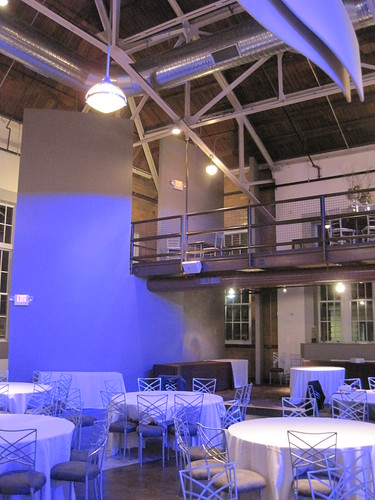
As the photographs above show, the steel balcony running on the south and west walls remains in place. A lot of the glazed structural clay tile has been covered by drywall, but some exposed sections in the corners show off the lovely old walls. Some of those walls needed repair.

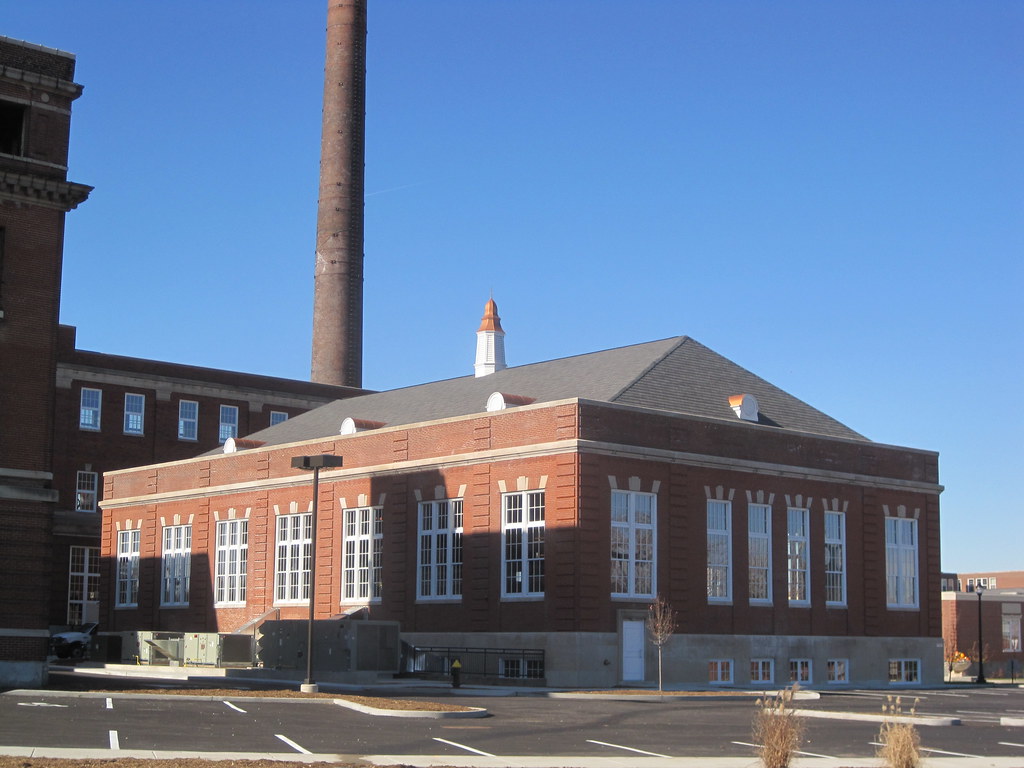
For years, the Laundry Building’s windows were boarded with ugly boards painted City-Owned Red. The cupola that echoes the cupolas of the Administration Building and Ward Wings on Lafayette Avenue was destroyed by thieve sin the 1980s. Now, the composition’s elegant strength is fully evident. Designed in the Georgian Revival style to blend with the rest of the historic hospital complex, the Laundry Building is really a functional modern box. Yet its architect gave this utilitarian building the dignity and hopeful beauty demanded by a city hospital building built amid a major national public works effort.

Categories
JeffVanderLou North St. Louis Northside Regeneration Old North St. Louis Place

Near North Neighborhoods Standing Strong

by Michael R. Allen

My latest commentary for St. Louis Public Radio of the same title aired today; read and listen to it here.

Categories
Theft

Stained Glass Theft On the Rise Again

by Michael R. Allen

This morning, there were three messages posted on Rehabbers Club list serve about recent theft of stained glass windows. Three of the five incidents reported were in Tower Grove South. All of the thefts took place in the last month.

Owners of vacant and for-sale buildings with stained glass windows should protect the windows by boarding them up. Architectural antique dealers should ask for proof of legal ownership before buying stained glass windows.

We all should be vigilant when we are at local antique stores. Are the windows for sale legally obtained? Find out. If you have doubts, call the police.

Categories
Historic Preservation Public Policy

Minnesota State Senator: Historic Tax Credit Needed to Create Jobs

by Michael R. Allen

Yesterday’s issue of the Minneapolis Star-Tribune carried a commentary by State Senator Tom Bakk. Bakk’s commentary focused on ways to get Minnesotans back to work. Among his ideas is a state historic rehabilitation tax credit.

Writes Senator Bakk:

A historic building rehabilitation tax credit would create jobs immediately, spur economic development in our communities and help develop affordable housing — not to mention preserve some of our state’s most beautiful heritage.

Missouri legislators should be pleased that a state often cited as more progressive than us wants to emulate one of our economic development incentives.

Categories
Adaptive Reuse Historic Preservation Midtown National Register

Transformation on Forest Park Avenue

by Michael R. Allen

Step one: Take one leap of faith to believe that underneath an ugly slipcover is a building that can be rehabilitated. Take a peak under that cover.

Step two: Utilize historic rehabilitation tax credits, get your drawings and permits in hand, find financing and start the recovery of a badly-remuddled building.

Step three: Keep going.

Step four: Complete work and enjoy the good work done.

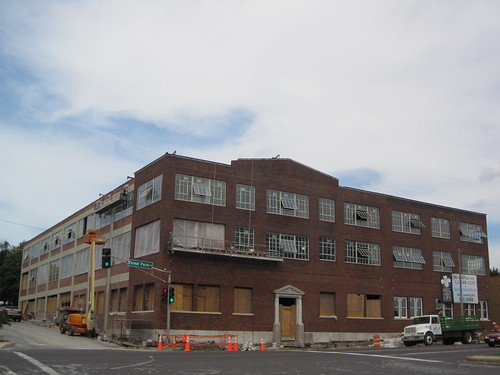
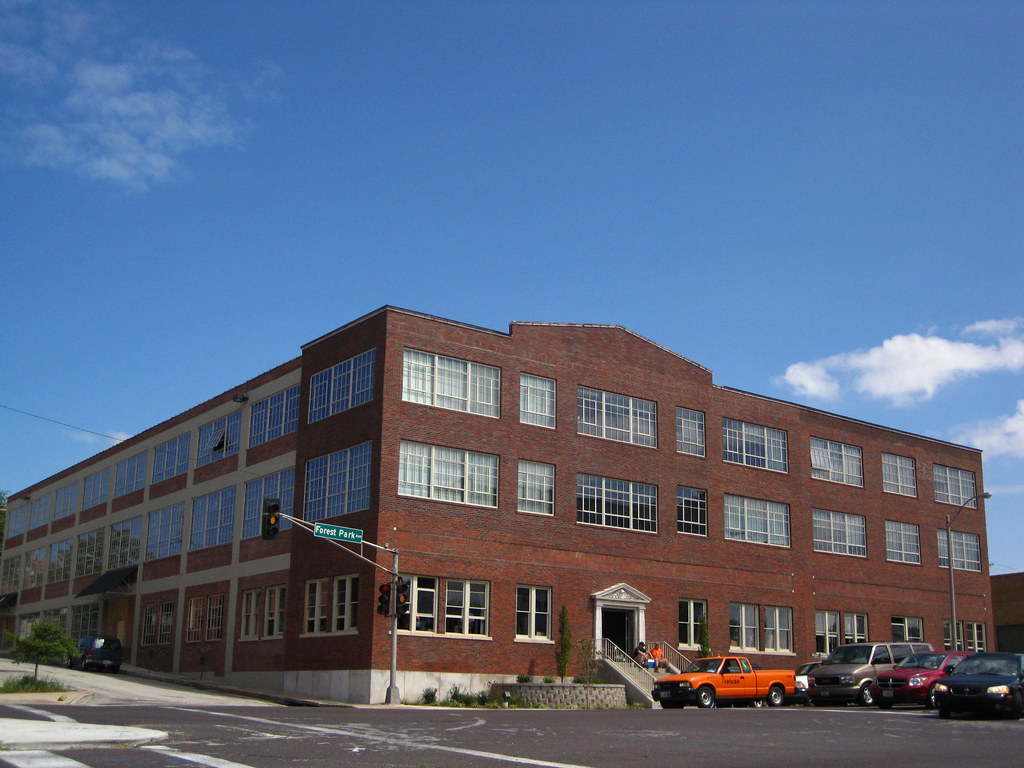
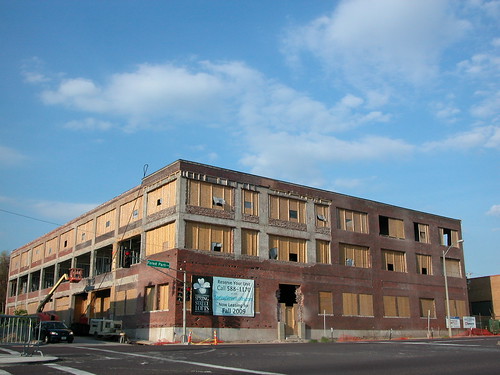
I’m oversimplifying the many steps that went into the transformation of the building at 3963 Forest Park Avenue (at Spring Avenue) into the lovely Spring Street Lofts. The story actually started back in 1923, when the Davis Boring Machine Company built the west side of the three-story factory. Designed by C.G. Schoelch, this fine brick factory building originally was symmetrical. The shaped parapet, classical terra cotta entrance and decorative brickwork on the front elevation gave a basic concrete box some style.

By 1929, the Davis company ceded the building to the Ramsey Accessories Manufacturing Company. This was a shift from one automobile-related factory to another; the Davis company manufactured machine tools for engine boring and the Ramsey company made piston rings. Both businesses were part of a vibrant St. Louis automotive industry centered around the Midtown area with showrooms and distributors on Locust Street and large-scale manufacturing on Forest Park and adjacent streets. In the late 1920s, St. Louis was in a close second behind Detroit as the center of American automobile manufacturing.

Ramsey expanded the building in 1934 from plans by Brussel and Vitterbo. Later, in 1969 after the automotive heyday, Victoria Products company “modernized” the building with a stucco veneer. Help arrived in 2006, when McGowan Brothers Development sized up a diamond in the rough. Complications ensued with the developers not wanting to remove the slipcover without some certainty on use of historic tax credits. The National Register of Historic Place designation that would allow tax credits to be used on the rehab required architectural integrity of the building. Fortunately, the slipcover did not destroy the original front elevation. Historian Matt Bivens’ persistence with a draft nomination and Karen Bode Baxter’s assistance allowed for eventual listing on April 16, 2008 — in time for the depth of recession.

The McGowan Brothers plunged ahead, though, and the project today is complete. Only five of the 48 apartment units are available, according to the building’s web site. A bar is set to open in the first floor. St. Louis University gains more urban activity just a block away, and a historic building again looks historic.

Of course, this dramatic transformation is not new to Forest Park. Just across Spring from the Spring Street Lofts is the home of the Aquinas Institute. Built in 1903 as the home of Standard Adding Company (G.N. Hinchman was the architect), the building had been partially clad in corrugated metal siding. The Institute opened its doors in the beautifully rehabilitated space in 2006, and the project won one of Landmarks Association of St. Louis‘ Most Enhanced Places awards that year.

Categories
Brick Theft JeffVanderLou LRA North St. Louis Northside Regeneration

NorthSide Depletion Continues

by Michael R. Allen

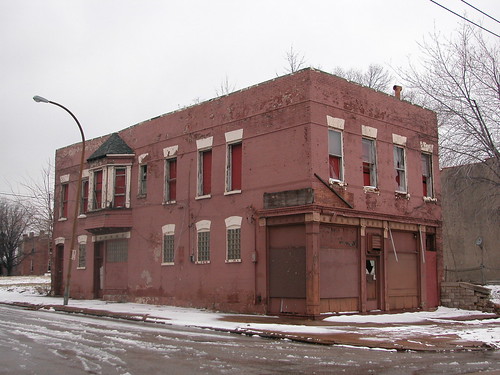
The corner commercial building at 2501 Glasgow Avenue in better days, 2007.

Call it collateral damage, block busting, destruction or just the cost of large-scale development — the term doesn’t matter. The reality is that within the boundaries of McEagle Properties’ NorthSide project, historic buildings continue to disappear at an alarming rate. Natural forces have claimed a few buildings, but brick thieves and scavengers are slaying the rest.

Let us look at the loss of buildings on a single city block in the last two months. Our city block is 2539 in JeffVanderLou, which is bounded by Montgomery, Slattery, Benton and Glasgow streets. Now, the condition two months ago was not great: in the sixty years preceding, some 75% of the historic building fabric on the block was lost. Yet what was left three years ago was nearly all occupied. McEagle’s purchases changed that.

Two months ago, enough of the block’s historic fabric remained for at least the possibility of inclusion in a historic district. Even if a district was impossible or undesired, the block’s remaining owners — including the St. Louis Equity Fund — are keeping their buildings in good shape. The Equity Fund is rehabbing its building on Glasgow Avenue. Building loss through neglect is an insult to the owners and residents keeping this block alive.

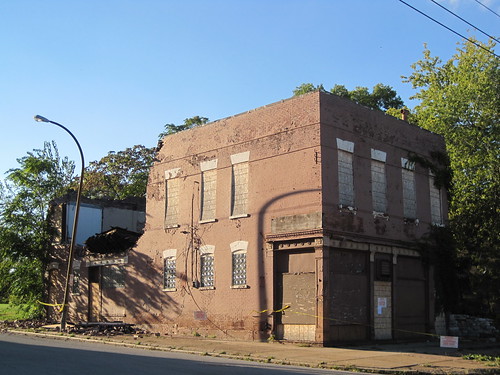
At the start of this essay is an image of the corner storefront building at 2501 Glasgow (at Benton) in 2007. Owned by a McEagle affiliate, this building suffered a partial collapse in storms in September. Brick thieves have started picking, and the photo above taken in early October looks idyllic compared to the current scene.

Up the block to the north stands an imperiled row of three historic houses owned by the city’s Land Reutilization Authority (LRA). The front has been altered to shrink the size of window openings, but a magnificent wooden cornice remains. However, the back and sides of the row were part of this fall’s brick harvest at the hands of thieves.

Across the alley on Slattery Street, both the houses at 2616 (owned by Carmen McBride) and 2614 Slattery (McEagle) have been brazenly damaged by thieves. The front walls are being picked apart in plain view of the few remaining residents of the block. Conditions like these explain the continued fear and resentment expressed toward McEagle by north side residents. While there are many residents of the project area hoping for McEagle’s development to transform their blocks, there are many who look at scenes like this one and find little good faith effort on the developer’s part.

During the aldermanic committee hearing on the first bills relating to the NorthSide redevelopment agreement, Paul J. McKee, Jr. stated that his company could not deal with problems like the brick-rustled buildings until after he received the Distressed Areas Land Assemblage Tax Credits later this year. Of course, those credits reimburse 100% of demolition and maintenance costs, so both security of intact buildings and clearance of destroyed ones could happen now. Why didn’t McKee direct his companies to engage in clean-up before seeking the largest tax increment financing deal in city history?

McKee and his consultants talk a lot about preservation, urbanism and sustainability. In no way is willful neglect of once-occupied historic buildings compatible with any of those values. Depletion of historic housing stock destroys urban character, wastes precious and irreplaceable natural resources and robs neighborhoods of affordable housing and small business spaces. We are losing solidly built, easily rehabilitated buildings for the uncertainty of a multi-phased project that places areas of St. Louis Place and JeffVanderLou dead last in order of development attention.

Don’t get me wrong: Much progress has been made toward making the NorthSide project better for everyone. I am willing to applaud — and have applauded — real steps that safeguard north side neighborhoods. The redevelopment agreement binds McEagle to identify buildings for preservation and demolition by the end of 2010 — albeit without professional preservation planning. While the contracts and ordinances contain hopeful language, however, the reality is contradictory — and it’s a long way toward the end of 2010.

Categories
North St. Louis Northside Regeneration Public Policy St. Louis Board of Aldermen

Alderman French Looking Toward the Future of North City

by Michael R. Allen

This video footage from Friday’s meeting of the St. Louis Board of Alderman shows Alderman Antonio French (D-21st) stating why he would vote against both board bills 218 and 219 which enable the McEagle NorthSide project. French’s words on the problem posed to the rest of north city by the Distressed Areas Land Assemblage Tax Credit are right on.

Categories
Downtown

Have You Seen Our Downtown Model?

by Michael R. Allen

Recently, I received an email from a person living on another continent asking me if St. Louis had a model of the city and, if not, what organizations would sponsor such a model. Before I sent my first response, I did not think to mention the model of downtown St. Louis that once sat in the storefront window of Downtown Now! at 16th and Washington (now the TrailNet office).

Perhaps one of the reasons for forgetting is that the model is now tucked away out of the sight of the general public. Our downtown model, updated through 1999, now sits in the entrance lobby of the Planning and Urban Design Agency on the 11th floor of the office building at 1015 Locust Street. That space is public, but few people know that the model is there on display. I don’t know the particulars, but my guess is that the city took it because it had space for it.

The Chicago Architecture Foundation maintains a scale model of the Loop in the ArchiCenter that is a continual draw of tourist traffic. Would our downtown model generate such interest? I think so. Storefront window space is a lot more precious now than it was in 1999, but we have obvious gathering spaces — the Old Post Office atrium, the St. Louis Visitors Center, a window at a remodeled Macy’s — where the model might edify downtown visitors.

Categories
Adaptive Reuse Best Practices Industrial Buildings Nashville

Adaptive Reuse of Nashville Iron Works

by Michael R. Allen

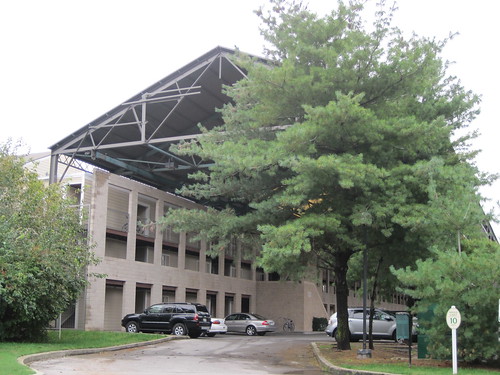
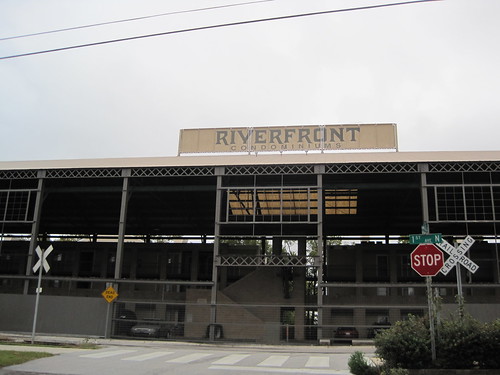
While in Nashville recently, I spotted the Riverfront Condominiums along the Cumberland River just south of the Jefferson Street Bridge in the old stockyards area. From a distance, I thought that I had spotted a former fabrication shed, and I was right. Perhaps the recent demolition of much of the General Steel Casting foundry, with its magnificent sheds, in Granite City was on my mind. While lacking a river view, that complex was ripe for creative reuse.

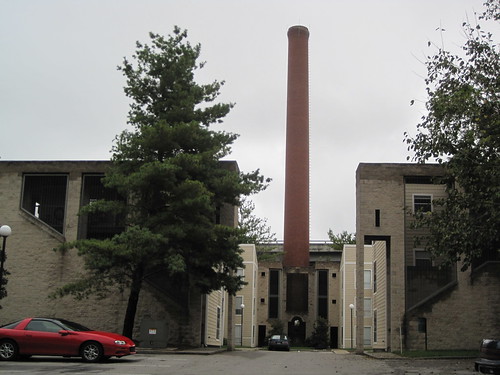
The Riverfront Condominiums utilize what was the main shed of the Kerrigan Iron Works (which was actually a steel fabricator, not a foundry). While the shed is not restored, it and a smokestack on the site were both incorporated into the redevelopment. In 1985, a developer built new apartment buildings along the river and around the smokestack base, deciding to retain the industrial structures in the new project.


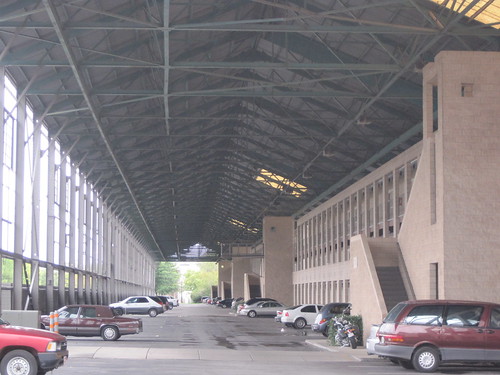
Since the foundry sat back from the river, the main new building — converted into condominiums in the 1990s — is adjacent to the shed, not inside of it. The shed is used as covered parking.

Here is one flaw — this interesting covered space is the primary entrance into the condominiums, and it is used only for parking cars. There is not much decoration or lighting here.

On the First Avenue North side, where one enters the project, the side wall was stripped of cladding with some steel window sash left in place. However, the impact is not as stunning a sit could be. Again, having the undershed area devoted only to parking mitigates the “wow” factor.

The buildings around the smokestack, however, form a pleasant courtyard — again, mostly devoted to parking. While the Riverfront Condominiums have a few design issues relating to placement of parking and approach, the actual living spaces on the river face are unique in Nashville. The developer who sought to retain the foundry shed and the smokestack did so with little incentive. There is no income tax in Tennessee and hence no state development tax credits. According to a local architectural consultant, development culture in Nashville long ago embraced creative contemporary design. The Riverfront Condominiums, however imperfect, demonstrate that mindset. St. Louis developers dealing with industrial property should take heed.

Categories
Chicago Demolition Historic Preservation Mid-Century Modern

In Chicago, Walter Gropius’ Work is Fair Game

by Michael R. Allen

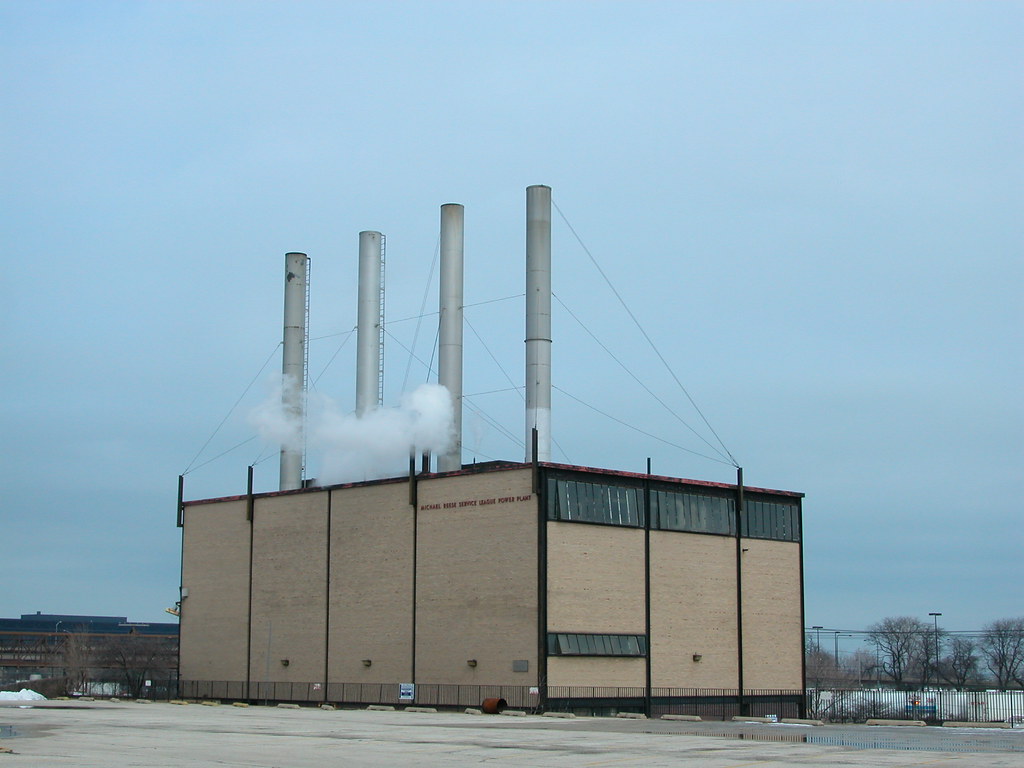
The power plant at Michael Reese Hospital dates to 1953.

Readers know the story: Modern buildings targeted for demolition by powerful interests. Preservationists work to publicize the beauty and reuse potential of modern buildings. Apologists for power claim that modern buildings’ architectural significance is unclear. Back, forth. A few concessions on “major” buildings. Every major preservation voice and even the major newspaper calls for preservation. Then demolition of the “unimportant” buildings begins.

This story is not happening in St. Louis, but in Chicago. The modern buildings are those that comprise the postwar campus of Michael Reese Hospital on the city’s south side. The planner who designed the campus and collaborated on designing eight of the campus buildings is Walter Gropius. (The close proximity of a Gropius-planned campus to a Mies van Der Rohe-planned campus, that of the Illinois Institute of Technology, is unique in North America.) Strange that there would be any confusion over the work of an internationally-renowned modern designer, but in Chicago under the administration of Mayor Richard Daley, such obvious contribution to the worldwide evolution of architecture is no brake on the acts of power. Demolition started yesterday.

Apparently, common sense is also being wrecked, because the original reason for the City of Chicago’s acquisition of the Michael Reese campus was to prepare a residential village for the 2016 Olympic Games. After that bid failed — and many residents of the south side breathed a sigh of relief — the city ramped up the push for demolition with no real development plan. There is vague talk of “mixed use” development, but nothing that compels demolition now other than the absurd conviction that sticking to a senseless plan is righteous. Only two concessions for “major” buildings have been made — one early and one, for Gropius’ Singe Pavilion, last week. Context eludes the ham fists at Chicago City Hall, however.

Landmarks Illinois even offered a preservation compromise that would have targeted some buildings for preservation and allowed others to be wrecked. Daley’s administration had no interest. Never mind that there is a pending National Register of Historic Places nomination for the campus prepared by Grahm Balkany and the Gropius in Chicago Coalition, which will be considered by Illinois state government on December 10. Since no state and federal funds are being used to directly pay the wreckers, there will be no government review of demolition any way.

Showing a better form of conviction than the city of Chicago, the Gropius in Chicago Coalition trudges onward. Although the landscape by Sasaky DeMay and Associates is ruined, and one of the eight Gropius buildings is now lost, there is still something to be spared.

In a move unsurprising to preservationists, the City of Chicago early on decided to spare the main hospital building from 1907 by Schmidt, Garden & Martin from demolition. Widely hailed as a landmark in Chicago’s beloved Prairie School style, the main building would have engendered a preservation war.

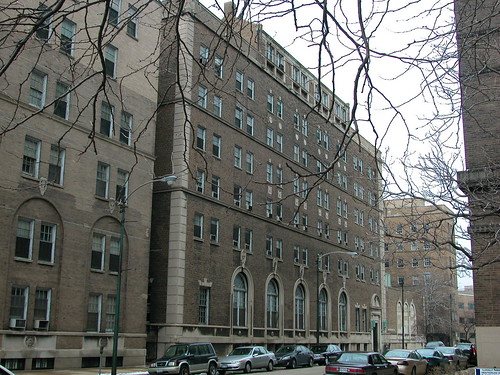
However, some perfectly sound pre-Gropius buildings are also threatened, including the one pictured here:

While organized primarily to protect Gropius’ legacy, the Coalition has fought to preserve these buildings too. In fact, I expect Grahm to work until every last part of the complex is torn down. To date, his work has resulted in the sounding of every major Chicago voice on architecture, from the Tribune editorial board to the National Trust for Historic Preservation’s Midwest Office, in support of preservation. Just this week a letter with impressive signatories went out.

It’s not too late to make a difference. Contact information for Mayor Daley and key city officials is posted here. Raise your voice for internationally significant modern architecture.