Categories
Academy Neighborhood James Clemens House North St. Louis St. Louis Place

MHDC Approves Two Major North St. Louis Projects

by Michael R. Allen

Last Friday, the Missouri Housing Development Commission met and approved financing for two projects involving large historic buildings in north St. Louis.

The former Blind Girls Home at 5235 Page (1908; J. Hal. Lynch, architect) will receive 4% low-income housing tax credits for Places for Page. Places for People states that the residents of the building will be “individuals living with severe mental illness who can and want to live independently, but who may need the attention and support provided by on-site staff.” Places for Page is a project that would not happen without these credits, and not devised by a developer because of the incentive program (some applications seem to be, but usually aren’t approved).

The second major north side project involving a large historic landmark approved last week was the James Clemens House at 1849 Cass Avenue (1860-1896; Patrick Walsh and Aloysius Gillick, architects). McEagle Properties and Robert Wood Realty requested and received approval for MHDC to issue tax-exempt bonds for the rehabilitation of the buildings into senior apartments as well as museum space. The Clemens House, at long last, will be rehabilitated!

Categories
Benton Park West South St. Louis

Ribbon Cutting at Gravois & Michigan Friday

From Alderman Craig Schmid:

Advanced Environmental Services, an environmental remediation firm specializing in abatement services for asbestos, lead, and mold, as well as fire & water restoration and demolition, is showing off its new headquarters in the Benton Park West Neighborhood —

THIS FRIDAY, AUGUST 27, AT 11 A.M.
3100 GRAVOIS AT MICHIGAN/JUNIATA
RIBBON CUTTING CEREMONY.

The event will be the culmination of a year of breathing new life into this old, abandoned warehouse in the Benton Park West Neighborhood. Dennis Ruckman, CEO of Advanced Environmental Services, and H & A Restoration & Development have focused on the historic details of this $1.2 million dollar investment. The building has been restored to look as it did in the 1940s (see Fabick CAT history with a great photo at url:
http://www.fabickcat.com/history.html).

The project will result in the retention of 17 jobs in the City of St. Louis with growth opportunities and includes Brownfield Tax Credits and Historic Tax Credits. Leadership in Energy & Environmental Design (LEED) certification at the Silver level is being sought.

Mayor Francis G. Slay is scheduled to attend the ribbon cutting ceremony.

Categories
Fire West End

Lost: Wabash Triangle Café

by Thomas Crone

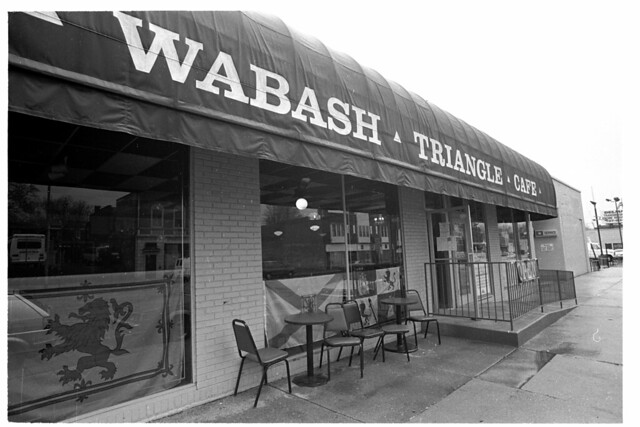
The Wabash Triangle Café. Photograph by King Schoenfeld.

The Wabash Triangle Café burned on Friday, March 18, 1994, its last day of business. Though that date’s one I needed to look up, the timing’s also quite vivid in my memory. I was in Austin, TX, on that morning, attending the South by Southwest Music Festival. Though I’d have a couple more days of music, Shiner Bocks and cavorting ahead of me, I distinctly remember that the phone call from home, a co-worker at the RFT detailing only the barest facts about the Wabash fire. It was a call that pretty well squashed any fun for the rest of the weekend.
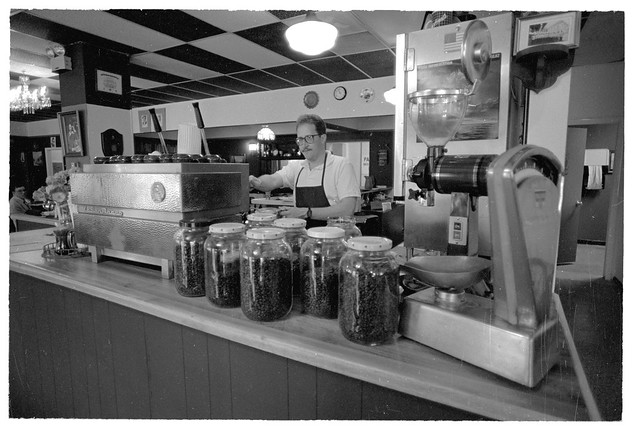
Calvin Case behind the espresso machine. Photograph by King Schoenfeld.

For a chunk of my early 20s, the Wabash Triangle was my default destination, a venue that brought nightly music and culture to the very footprint that would eventually become the Halo and the Pageant. In the golden days before cell phones and instant communication of all sorts, it was the kind of place you could roll into with the reasonable assumption that something interesting was happening and someone you knew would be home. And “home” is the feeling that the place gave off. Part diner, part coffeehouse, part bar and full-time oasis to the misfits, the Wabash allowed for interesting conversations to blossom and for friendships to grow in a room that never quite felt like the rest of that moment’s St. Louis.

Partially, that disconnection was a result of location. Though owner Calvin Case had a building found just east of the University City Loop on Delmar, the mental and physical geography of Delmar in the early-’90s was different than today. Few, if any, of the Loop’s regulars walked as far east as the Wabash. If you bought books at Paul’s, or caught a movie at the Tivoli, or headed to Cicero’s for a band-and-pizza, you tended to stay on the west side of Skinker. Without the Metrolink stretching the block, and with east-side-of-Skinker destinations like Pi and Big Shark Bicycle far-off in the future, the Loop really was limited to University City’s piece of the map. And those heading from down the busier end of Delmar often drove the few blocks, rather than heading there on foot.

The area may’ve been a smidgen rough, but once inside the mood was always upbeat. Except when it wasn’t. On some nights, slam poets took over the entire space and the energy was raw and palpable. Other days, especially in the early evenings, you’d find just a couple people playing board games in a corner, while Calvin held court with his tiny cast of workers at the bar. Most days, Calvin was up; some days, Calvin was down. Kinda depended upon business. And on a lot of business days, the dozen customers each buying a cup of coffee didn’t exactly keep the register ringing.
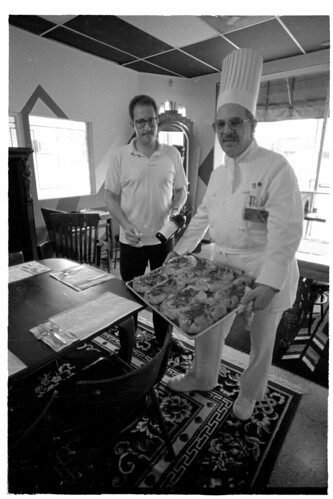
Calvin Case and the chef. Photograph by King Schoenfeld.

Even before the fire, there was always the vague sense that the Wabash Triangle could be gone. Calvin tried everything to make the space click. Early morning hours. Late hours and some Sundays. Menu changes a’plenty, along with “a real chef” in the kitchen. Matching the crazy-quilt interior, musicians of every possible stripe were booked, with varying degrees of success, from Calvin’s preferred folk to hardcore to indie.

In that space, they performed to an odd cast of regulars and an equally odd decor. Dozens of Michael Draga photographs ringed the ceiling of the former automobile showroom. A huge painting of western pioneers dominated the wall behind the stage. And throughout the venue, a mish-mash of retro furniture, true antiques and alley-rescued castoffs provided all the bohemia any post-collegian could want. The odd, low-slung building was even attached to an auto glass business, which seemed odd at the time, but now seems just right. Describing the look’n’feel of the Wabash is tough, but if you’ve been to a show at the old Frederick’s Music Lounge, or the newer Fred’s Six Foot Under, you’d have an idea of the vibe, with the substitute of Calvin Case for Fred Friction. Calvin was the constant, consistently tossing out ideas, suggestions and bits of collected wisdom.

And while Calvin provided the room’s heartbeat, there were many elements of the space that made it what it was, from the staff (Beth, Rich and Brett), to the crazy clientele, to the impression that you were crashing a space that not everyone knew about. Just blocks from the center of alterna-culture in St. Louis, there you were, in the City’s true underground.

To date, I’ve shamefully not yet seen David Dandridge’s new documentary, The Roof is on Fire, a look-back at the room and its then-prolific slam scene. Maybe it’s because I have a feeling that the memories would be a little bit too… much. With due respect to the Way Out Club, the self-professed “home away from home,” there are only so many places you can truly call that in your lifetime.
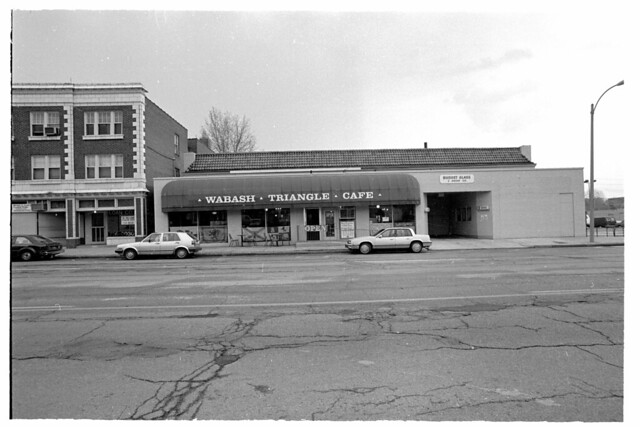
The Wabash Triangle Café. The three-story building at left still stands, Photograph by King Schoenfeld.

For a couple of too-brief years in the early ’90s, the Wabash Triangle Cafe was my home.

I miss that special place, still.

Thomas Crone publishes creativesaintlouis.com; and hosts “Silver Tray” on KDHX, Fridays @ noon.

Categories
Fox Park Lafayette Square North St. Louis Old North Preservation Board South St. Louis

Preservation Board Approves Fox Park Expansion, Denies Old North Demolition

by Michael R. Allen

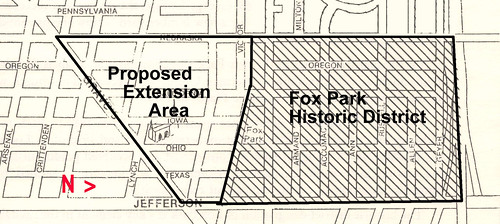
Yesterday the St. Louis Preservation Board met with members Richard Callow, Melanie Fathman, Mike Killeen, David Richardson, Anthony Robinson, David Visintaner and Alderwoman Phyllis Young present. The most likely contentious matter on the agenda was consideration of the expansion of the boundaries of the Fox Park Local Historic District accordint to the boundaries below.

Fox Park Neighborhood Association President Ian Simmons explained the purpose of the expansion simply: to put the entire neighborhood on equal footing for design review and development potential. Four other people spoke in favor, including DeSales Housing Corporation Executive Director Tom Pickel. Mark Whitman spoke against the expansion with great conviction, stating that he found the expansion to violate the United States Constitution and to represent gentrification of the southern part of the neighborhood.

The Preservation Board voted unanimously to recommend that the Board of Aldermen approve the boundary increase. The next step is introduction of the boundary increase as an ordinance at the Board of Aldermen by Alderwoman Young and Alderwoman Kacie Starr Triplett. The ordinance will get a committee hearing before the full board considers it.

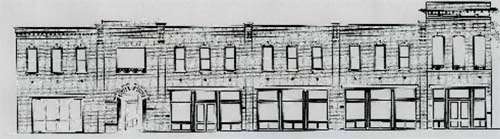
The Preservation Board also unanimously approved on a preliminary basis the above design for new construction at the southeast corner of Lafayette and Mississippi avenues in Lafayette Square (1922-24 Park Avenue). Designed by architect Paul Fendler, the new two-story building would combine retail on the first floor and residential space above. The board approved a different plan for the site two years ago.
Another interesting case was the return of a front door replacement at 2841 Shenandoah Avenue in Fox Park. After last month’s stalemate on the matter, Andrea Gagen on the Cultural Resources Office staff located a supplier who could provide an acceptable paint-grade wooden door for less than the cost of a door that the owner wanted to install that did not meet the Fox Park Local Historic District standards. The owner asserted that the supplier contacted by Gagen could not make the door he wanted for the cost she stated, and that installation using his contractor would cost $500 regardless (an amount that is incredible for such worl). The Board then voted 4-1 to uphold staff denial of the first application.

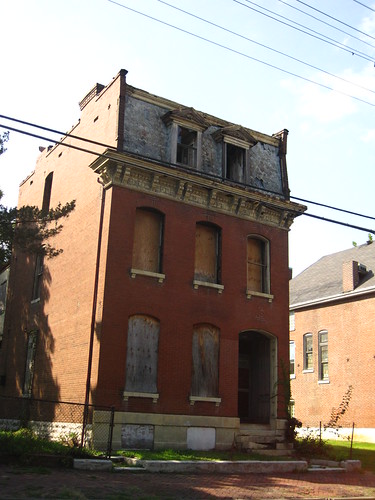
The Preservation Board also unanimously upheld the appeal by Louis Ford of denial of a demolition permit for 3219-21 N. 20th Street, pictured above. Located in Old North and the Murphy Blair Historic District, the house has been vacant for years. Ford purchased the house to keep it secured from criminal activity. Ford stated that he would save the house if he could find money for work, but he had no interest in endlessly keeping it boarded and stable. Perhaps the Old North St. Louis Restoration Group would be able to accept the house as a donation.

Categories
Historic Boats

Goldenrod Showboat Under New Ownership

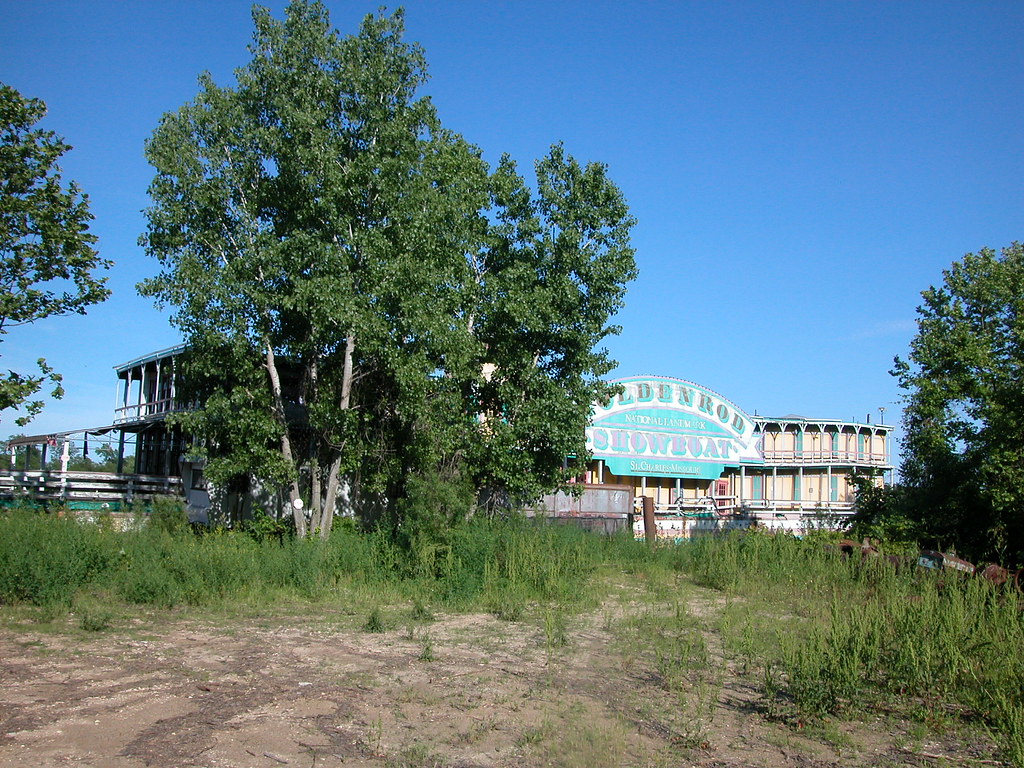
The Goldenrod as it appeared last June moored on the Illinois River near Kampsville.

Yesterday, Donna Perrino left the following comment on our post “Goldenrod Showboat Celebrates Its Centennial” (June 3, 2009):

Hello. I am the Project Manager of the GOLDENROD SHOWBOAT RESTORATION PROJECT/2010. We have just begun the long journey into the process of determining the necessary repairs needed to get this beauty back in business.

The company that currently owns this boat is the Historic Riverboat Preservation Association. It’s President is Steve DeBellis, also owner of the Globe Democrat newspaper in St. Louis, MO. We are dedicated to this effort so please give us your help and support. A new website is on the way and many fundraisers will be held. We welcome your input and information.

Please contact me, Donna Perrino, at my email address until we develop the site: donnastephens69192sbcglobal.net.

Categories
LRA

Towards an Ecology of Innovation: Reimagining the Land Reutilization Authority

by RJ Koscielniak

They were discarded like lepers, and then collected for bureaucratic internment. They make up an archipelago of crumbling concrete, contaminated plain, and overgrown fields; many have been forgotten, while some have passed on from a famine of purpose. As the city population leaned at the edge, abandoned buildings became grave markers — lots devolved into cemetery stillness. In this unfortunate tale of urban decline, the St. Louis Land Reutilization Authority emerged to play the role of Charon — carrying those lost souls of the built environment away from the world of the living. St. Louis vacancy — then and now – rivals Detroit; total population decline has found easy parallel with Cleveland. As a city, we have escaped very little of the Rust Belt strife – factories scheduled fewer and fewer shifts, schools graduated less students, and work became history. Yet, while the pulse of the city slowed, many lepers lived silently on.

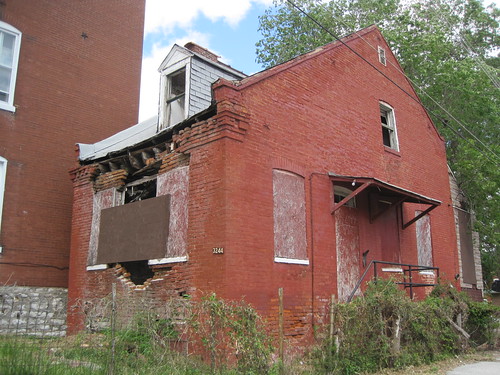
The LRA-owned house at 3244 Iowa Street in Benton Park West.

In its current iteration, no one wants to manage the Land Reutilization Authority, it functions as a symptom of inconsolable civic grief – the mark of a city consigned to an unenviable fate, a place wholly dumped to its own disastrous designs. Decisions spanning the spectrum of society contributed to the collapse, pervasive prejudice and fear, an orthodox us vs. them worldview that was exhibited in every wasted opportunity to recognize similarity between residents. LRA is, therefore, an agent of memory, a parcel-by-parcel chronicle of unwanted and undesired people and property. Until now, LRA has been purgatory while we wait out doubts of urban investment, a social balm until creeping economic development can mete out salvation for eroded husks of industrial, commercial, and residential space. Yet, with the right guts and guile, LRA can be a generator of community change. It has the potential to be an activator of expansive urban progress.

Categories
Downtown East St. Louis, Illinois Green Space JNEM

PRO Proud to Serve on the SOM/Hargreaves/BIG Team

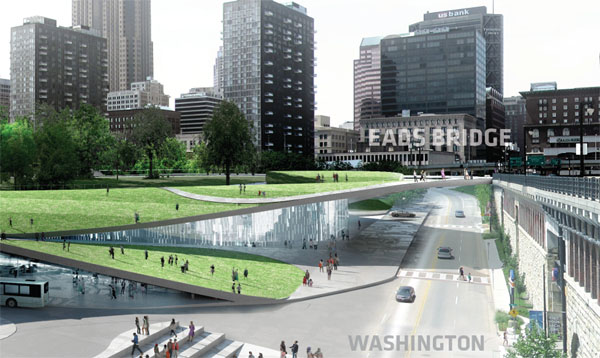
Renderings from the SOM/Hargreaves/BIG submission in The City + The Arch + The River 2015 design competition.

The Preservation Research Office is proud to be a part of the SOM/Hargreaves/BIG team in The City + The Arch + The River 2015 design competition, and urge readers of this blog to examine our team’s proposal as well as those of the other teams. PRO Director Michael Allen provided architectural history and research for the SOM/Hargreaves/BIG team as well as cultural resource management suggestions. The experience has been exciting and rewarding, and PRO commends its fellow team members for many hours of hard work and amazing creativity.

We recommend taking the team to at least skim the narrative statements on the competition website, because the boards only hint at the full scope of all of the submissions.

Categories
Downtown

Deadline for City’s Arcade Building RFP is September 30

On July 28, the Land Clearance and Redevelopment Authority (LCRA) of the City of St. Louis issued an Request for Proposals for the historic Arcade Building at 812 Olive Street in downtown St. Louis. After a previous rehabilitation project undertaken by the Pyramid Companies collapsed, the Arcade Building ended up at foreclosure auction in April 2010. Environmental Operations Incorporated placed the winning bid, and sold the Arcade to LCRA for $2 million.

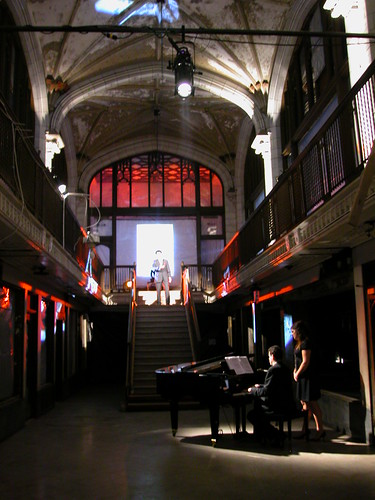
The ribbon cutting event hosted by the Pyramid Companies on May 31, 2007 featured an opera performance inside of the Arcade.

The deadline for responses to the RFP is September 30. LCRA wisely requires all proposals to follow the Secretary of the Interior’s Standards for Rehabilitation, basic standards for retaining the historic character of buildings required by all historic rehab tax credit programs. The RFP can be found here.

Lynn Josse and Stacy Sone wrote the National Register of Historic Places nomination for the Arcade Building; that document is online here.

The last major downtown development RFP issued by LCRA was issued in 2005 for rehabilitation of the Syndicate Trust Building at 915 Olive Street one block west. LoftWorks LLC, owned by Craig Heller, won that bid.

Categories
South St. Louis Southampton Theaters

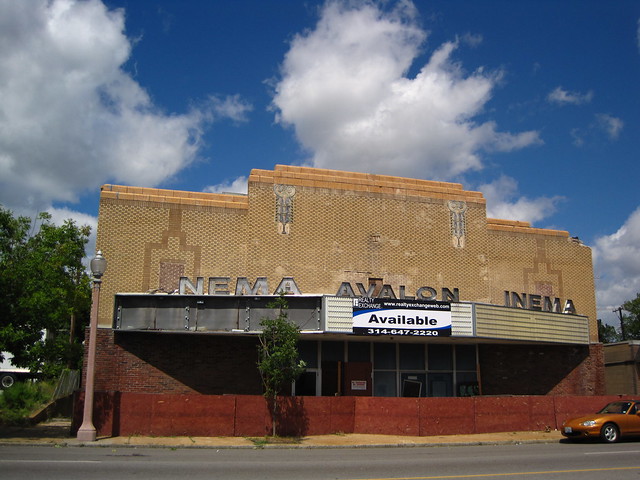
Change in Alderpersons Will Impact the Avalon Theater

by Michael R. Allen

The recent resignation of Alderman Stephen Gregali (D-14th) could have an impact on the future of the Avalon Theater at 4225 S. Kingshighway in Southampton. The languishing Art Deco neighborhood movie house, built in 1937 and designed by A.F. and Arthur Stauder, faces an uncertain fate. The owner is a defunct corporation, the Sopo Corporation, although for years Greg Tsevis — son of the deceased Sopo Corporation owners — asserted ownership rights. The last film screening at the Avalon was in 1999, and in subsequent years damage to the roof and terra cotta on the north parapet has occurred. Alderman Gregali and the city’s counselor’s office pushed forward a suit in 2009 that sought to name the City of St. Louis as successor trustee for the Sopo Corporation and give the city power to dispose of the property.  (The judge named an individual as successor.)

On April 20, 2010, Judge Robert Dierker, Jr. entered an order in the case that the parties were willing to settle for a quit-claim deed of the Avalon to the city. However, the deed was not filed by a July 12 deadline. Judge Dierker has set a hearing in the case for August 30th.

If the settlement can be reaches, or if the case results in the city’s being names successor trustee, the future of the Avalon rests with city government. And that means that Gregali’s successor, who will be elected this November in a special election, will have substantial power to determine the fate of one of our city’s few remaining Depression-era neighborhood movie houses.

Categories
Downtown East St. Louis, Illinois Green Space JNEM Riverfront

Final Designs Submitted in Arch Design Competition

Yesterday, the five finalists entered in the City+The Arch+The River 2015 design competition submitted their completed designs. Among these is the team headed by SOM and Hargreaves Associates that includes the Preservation Research Office. PRO has provided conceptual planning for both preservation of cultural resources within the competition boundary and creation of new cultural tourism plans for the Jefferson National Expansion Memorial. That is all that we can divulge until next week.

See our team’s submission and all of the others starting on Tuesday. Here is a calendar of upcoming events in the exciting final stretch of the competition.

Opening of the Public Exhibition of the Design Concepts of the Five Finalist Teams
Tuesday, Aug. 17
o 9:00 a.m.: Welcome at the Arch Grounds (in the event of inclement weather, event will be held in Arch Lobby)
Remarks by: St. Louis Mayor Francis G. Slay; Tom Bradley, Park Superintendent, Jefferson National Expansion Memorial; Lynn McClure, National Parks Conservation Association; Donald G. Stastny, Competition Manager

o 9:15 a.m. – 11:00 a.m.: Open House in the Arch Lobby
Park Superintendent, Competition Manager and others will be on hand to answer your questions about the competition

Design Concepts Exhibition at the Arch and in the Community*

Aug. 17 – Sept. 24