Categories
Events North St. Louis Old North

See Cool Rehabs Underway in Old North Tomorrow

The Rehabbers Club is hosting a great Old North tour tomorrow — these are some of the most exciting projects in the neighborhood!

Saturday, March 21 at 9:30 AM
Meet at 1303 North Market

We’ll begin at 1303 North Market, 63106, the old 6,000 SF Ford Charcoal plant currently being renovated into a live/work space by sculptor Graham Lane and his wife Viveca; next we’ll get a behind-the-scenes peek at some of the $35 million Crown Square renovations [formerly the 14th Street Mall]; and finally we’ll take a look at Ben and Heidi Sever’s original three-wall LRA project, well on it’s way to being finished. Thankfully, it has four walls now, and much more!

Join us for a very interesting morning as we see these urban transformations take shape!

Consider staying in the area for lunch at Crown Candy at 1401 St. Louis Avenue, 63106 or Cornerstone Cafe at 1436 Salisbury Street, 63107.

Categories
Hyde Park North St. Louis

Grand Avenue Water Tower in 1957

This view looking east at the Grand Avenue Water Tower dates to February 1957 and was taken by the City Plan Commission.

Categories
Demolition Hyde Park North St. Louis

Treasurer’s Office Takes Down More of Hyde Park History

by Michael R. Allen

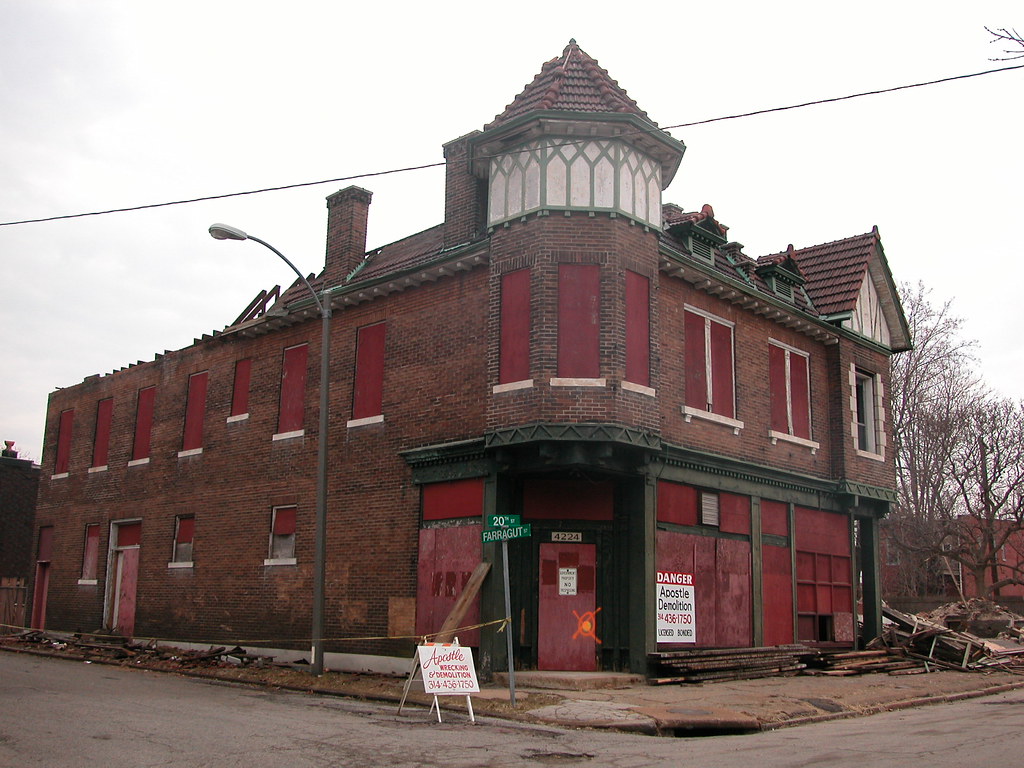
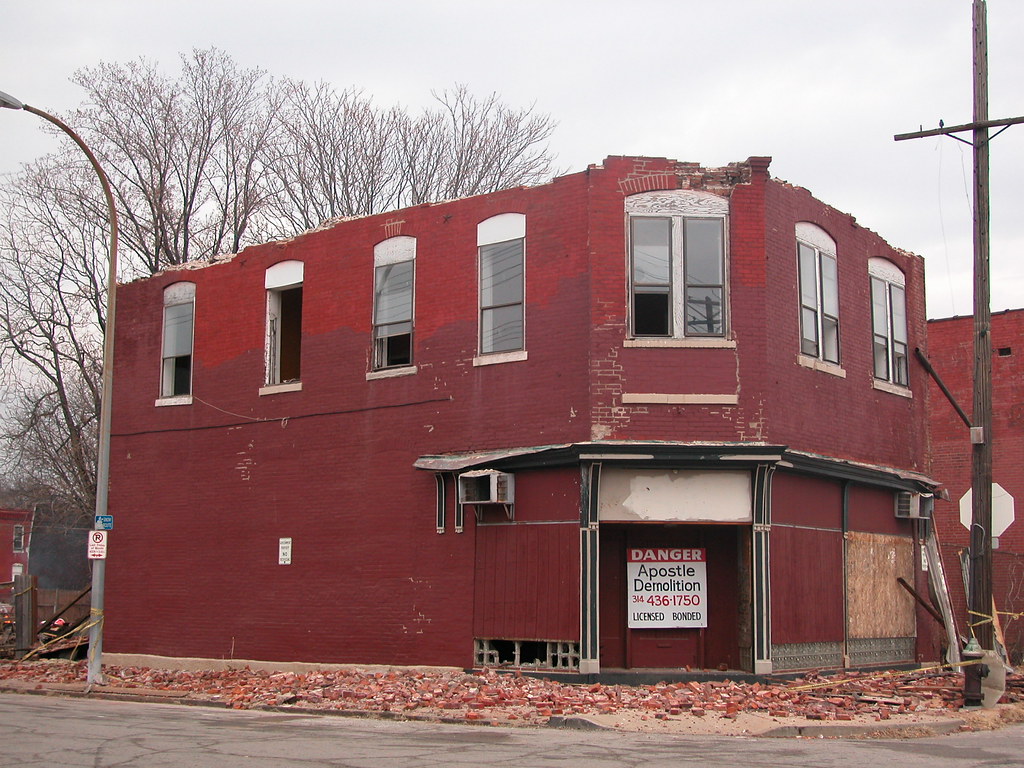
Did you ever see this lovely building at the southeast corner of 20th and Farragut streets? Too late now. While you soon can park on top of the site in a city-funded parking lot, you won’t be able to ever look at this corner store in Hyde Park again. Demolition of this building and two others on north 20th street between Penrose and Farragut — all contributing resources top the Hyde Park Historic District — started in February and wrapped up this week.

How did demolition pass by the Cultural Resources Office and the Preservation Board? As is often the case, the Building Division issued an emergency demolition order (on December 16, 2008) that trumped preservation review. Never mind that these buildings were sound under both the city’s preservation ordinance and public safety laws. The Building Division deemed that their sound condition somehow was an imminent danger to public safety. Or, perhaps, imminent danger to the neighboring occupant of the old Penrose Police Station at 1901 Penrose: the parking meter division of the City Treasurer’s Office.

The building at the northwest corner of Penrose and 20th streets.

The City Treasurer’s Office has owned the lots on which the buildings sat for years. While these buildings could have been sold to tax-paying developers, the Treasurer’s Office decided to instead wreck them, remove taxable improvements from the land and keep the land under city ownership. Perhaps there is an ultimate development plan (hopefully not a parking lot, which would be absurd). For now, though, there is just another vacant lot in an area where there seem to be more vacant lots than buildings.

The lost buildings formed a remarkable group worthy of protection, and I regret never photographing them until demolition had commenced. The corner storefront at 20th and Penrose dated to 1895 and, while not overly ornamented, had a handsome cast iron storefront and chamfered corner. I don’t recall much about the house across the alley to the north, but its history was interlocked with its lavish neighbor to the north, shown in the first photograph above. That house, located at 4220 N. 20th, was home of Charles A. Roettger, who developed the storefront at 4222-24 N. 20th in 1907. According to its permit, the new building cost $9,800 to build — no small sum then.

To design this building, Roettger employed a distinguished north St. Louis architect, Otto J. Boehmer. Boehmer designed the perpendicular Gothic sanctuary of Friedens United Church of Christ (1908) nearby at the southwest corner of 19th & Newhouse streets. Boehmer also resided at 3500 Palm Street in Lindell Park from 1914 through 1933 — the house now occupied by former mayor Freeman Bosley, Jr., son of the alderman who represents the site of the new parking lot. The contractor for the new building was also a north side of German ancestry: Leo Motzel of 2217 College Avenue.

The corner storefront was a masterpiece of vernacular use of the Tudor Revival style. The corner turret, tiled roof with its false dormers, half-timbering and copper cornices are all fine decorative elements that created one of Hyde Park’s most picturesque corner stores. The building housed Frank C. Roettger’s (Charles’ brother) meat shop at the corner for decades following its construction. Another early tenant was Flora Loewenthal’s cigar shop at 4222 N. 20th.

The city directory listings name tenant after tenant in these buildings. The names shift from German-American to African-American at some point, until the word “vacant” pops up. Reading the names in the city directory and thinking about the loss of the buildings, one tracks not simply a loss of architectural stock, but a loss of life — lost names, lost uses and lost activity.

Categories
North St. Louis Storefront Addition

Storefront Addition: Hudson’s Embassy

by Michael R. Allen

I don’t have much to write about the architectural character of the storefront addition located at 3818 Page Boulevard. The building, with a storefront dating to 1924, could definitely have more of its historical character. That’s obvious. What I want to point out is how cool the name “Hudson’s Embassy” is for a record store, and how there is a certain thrill I get from looking at the proud lettering announcing the store’s name to passers by like myself. Hudson’s Embassy was one of many “one stop” retail/wholesale record dealers that emerged in the 1960s to sell records from labels like Atlantic and Stax to department stores and radio deejays alike. The store is a link with a golden era of American urban music — it ought to have a proud sign.

Categories
JeffVanderLou North St. Louis Northside Regeneration Storefront Addition

Storefront Addition: A Corner in JeffVanderLou

by Michael R. Allen

Here is another corner storefront addition in located at 2800 James Cool Papa Bell (at Leffingwell) JeffVanderLou. This is made for high density, with a storefront on James Cool papa Bell and two additional (although now filled) storefront bays on Leffingwell. Although vacant and now owned by Union Martin LLC, the house and the addition are in good condition. Note the dentillated cornice on the storefront, and the intact dormer details on the main house.

Categories
Historic Preservation Mid-Century Modern North St. Louis Old North Schools SLPS

Adams Recommends Keeping Ames School Open

by Michael R. Allen

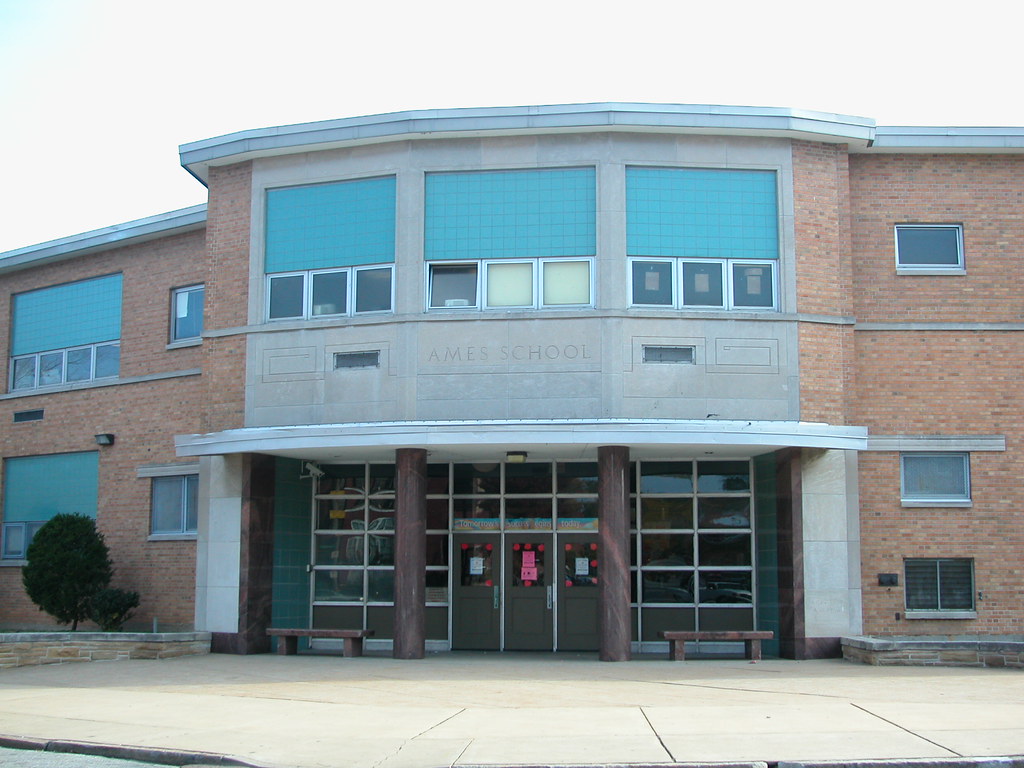
St. Louis Public Schools Superintendent Kelvin Adams is recommending that Ames Visual and Performing Arts (VPA) Elementary School at 2900 Hadley Street in Old North St. Louis remain open. On Thursday, February 26, Adams recommended to the Special Administrative Board (SAB) that the Board reject the proposal from consultants MGT of America that Ames combine with Shaw VPA Elementary School at the Blewett Middle School on Cass Avenue, and the two schools’ buildings close.

While the SAB will not approve Adams’ recommendations until March 12, the shift from the consultants’ recommendations is welcome in Old North, a neighborhood that remains beset by an earlier school closure. In 2007, the Board of Education closed Webster Middle School at 2127 N. 11th Street. Webster is a large historic school whose site encompasses an entire city block. Since its closure, which came after the opening of charter school Confluence Academy in Old North, the district has not placed Webster for sale nor determined its future use. The building sits vacant in a neighborhood saddled with many large, vacant historic buildings, including the partly-stabilized Mullanphy Emigrant Home, the Meier and Pohlmann factory and the burned-out Fourth Baptist Church. The neighborhood did not need another building added to that list.

Opened in 1956, Ames is a fine mid-century building that provides a pleasant contrast with its 19th-century red-brick surroundings. Ames closes eastward views down both Wright and Sullivan streets. In 1992 under the Capital Improvement Program, Ames was expanded with a substantial addition. Later, in 2006, Ames closed for a period to be fully air-conditioned. Ames is a polling place, community meeting space and has been a source for student volunteers in neighborhood garden programs.

Categories
Demolition JeffVanderLou North St. Louis

Corner Storefront No More

by Michael R. Allen

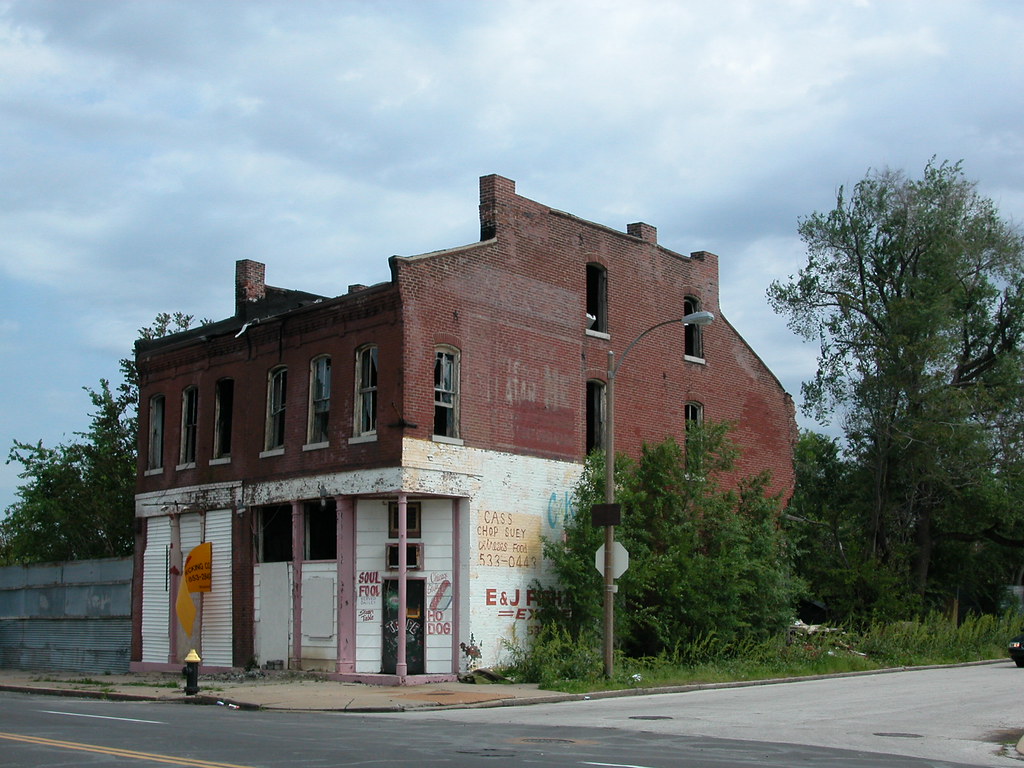
The corner storefront at 2742 Cass Avenue, subject of the previous post “Corner Storefront on Cass Avenue” (May 14, 2008), is under demolition.

There is little left of the once-beautiful building.

Categories
Demolition North St. Louis Old North St. Louis Place

Crown Mart Plaza is a Missed Opportunity

by Michael R. Allen

City Block 599 is bounded by North Fourteenth Street on the west, Cass Avenue on the south and North Florissant Avenue on the east and north. Starting with the construction of Florissant Avenue in 1935, the block was slowly cleared across the 20th and early 21st centuries. Once a dense near north residential and commercial mixed-us block, by the 1980s the block only held two buildings. By October 2005, when I took the photograph above, the block was fully clear of buildings.

Since November, the block has risen with construction again. This time, the building that will occupy City Block 599 will be a strip mall and gas station known as Crown Mart Plaza. While a strip mall is better than an empty block, and the area desperately needs stores, the site deserves something better. The photograph above shows the Mullanphy Emigrant Home (before the April 2006 storm struck) and buildings in the Old North St. Louis neighborhood in the background. This site is a visual gateway to Old North and St. Louis Place. While Tucker Boulevard and North 13th Street are currently closed, that combined major thoroughfare will open again. When it reopens, the new Mississippi River Bridge will be completed, with its ramps dropping cars on Cass Avenue just one block east. Thousands of people will pass by this block on their way to the historic neighborhoods of the near north side.

The Crown Mart Plaza is a missed opportunity to build something on the site that is an appropriate architectural entrance to great north city neighborhoods. The first impression of north city made on many people will be another gas station rather than a building that is distinct and proclaims community support for high design standards. Some day, the Emigrant home will be rehabilitated, and Old North and St. Louis Place will begin seeing infill construction. MetroLink will pass by City Block 599 on Florissant Avenue. The Crown Mart Plaza does not anticipate the changes to come, or encourage them.

Crunden Branch Library photograph by Rob Powers, Built St. Louis.

Of course, many of us anticipated such a future for the block when the former Crunden Branch Library, owned by the city’s Land Reutilization, abruptly disappeared in August 2005. Students at Washington University recently had submitted a nomination to the National Register of Historic Places of the landmark building when the city’s Building Division wrecked the Crunden Library building. Built in 1909 and designed by Eames and Young, the Crunden Branch Library served the educational needs of area residents until 1954, when the branch moved west and the building was remodeled for use by Pulaski Bank. This building signaled the greatness of its surrounding neighborhoods, and its loss was a huge blow to the Cass Avenue street scape.

Just north of the Crunden Branch Library on Fourteenth Street stood a bus maintenance garage that dated to the 1930s. This building was a utilitarian building, and not an outstanding work of architecture, but a building that could have been adapted to many uses — including a retail strip. Since the land between this building and North Florissant was vacant, its footprint is remarkably similar to that proposed for Crown Mart Plaza.

The bus garage was destroyed in a large fire on September 15, 2005, so soon after the Crunden Library demolition that bits of terra cotta from the old library still littered the straw-covered earth. Since that fire and the garage’s subsequent demolition, City Block 599 has stood vacant as rumors of retail development have swirled. If only the planned retail use could have aligned with an effort to improve the architectural character of Cass and North Florissant avenues, the tone for great development on these streets could have been set.

Categories
Central West End Demolition Historic Preservation Midtown North St. Louis

Commercial Rows Fall On Vandeventer

by Michael R. Allen

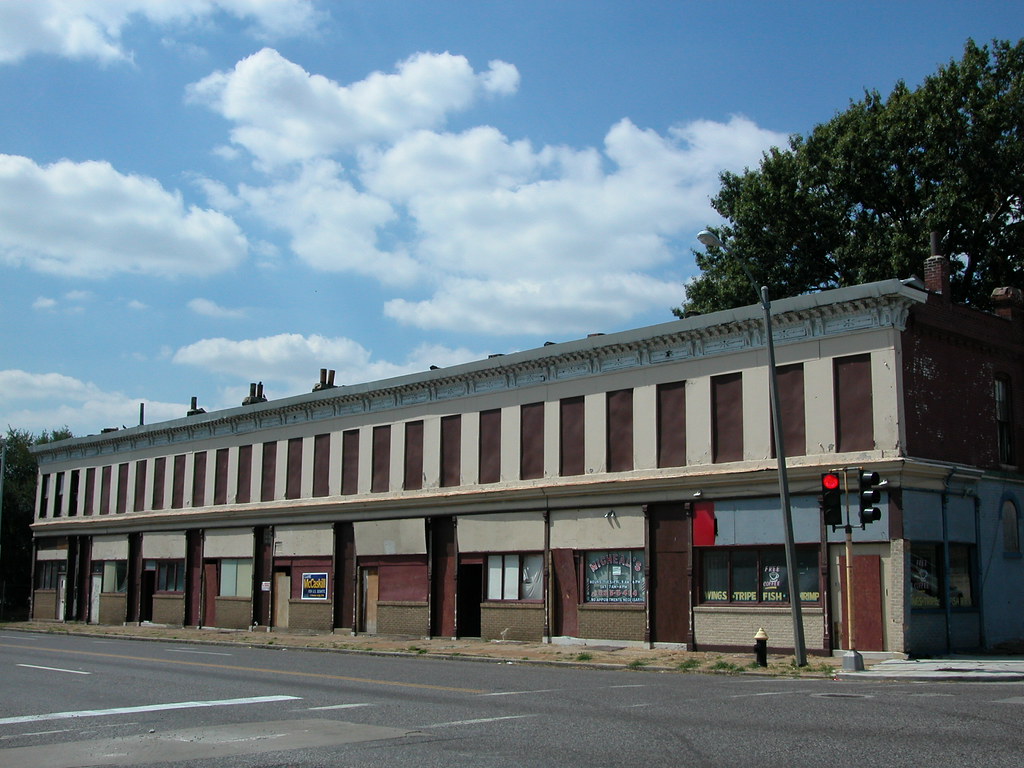
Once upon a time, on April 21, 1886, the city government issued a building permit for a continuous row of seven adjacent stores with flats above at 1121-33 N. Vandeventer. P.G. Gerhart was the developer of the $12,000 project. The result was a graceful building in the Italianate style. Striking cast iron columns supported the spans of each wide storefront opening. A wooden cornice capped the stone-clad front wall, and decorative brick corbelling continued the cornice line to a side entrance on Enright, above which the parapet wall formed a pediment to mirror the surround of the entrance. The handsome commercial row was located at a prime corner in the sought-after Midtown neighborhood, home of the city’s wealthy and middle class movers and shakers.


This was not the only such endeavor on Vandeventer, a major north-south artery here. Nor was it the Gerhart family’s only commercial row on the street. The presence of a street car line on Vandeventer along with the residential population of the area drew developers to an intensive building boom that lasted between 1875 and 1900. During that time, at least sixteen rows of adjacent stores like the Gerhart row went up. Most of these were two stories. Vandeventer must have had an urban character like no other street in the city, what with the effect of so many well-designed rows of shops.

Flash forward over 120 years, and the row is facing its demise in December 2008. After sitting vacant for a half-decade, the old row had ended up owned by someone who wanted it gone. The condition at the time of demolition was good, with no structural failures and all of the character-defining pieces still in place. The rise and fall and rising-again of Midtown had taken its toll on Vandeventer, depleting the stock of such rows to a handful by the dawn of the 21st century. Now the oldest survivor met its demise, and the street is poorer for it. Vandeventer north of Lindell Boulevard is marked by vacant lots and low-density new construction, with a handful of surviving historic buildings. This row was keeping its block on the good side of architectural wasteland status. Today, the site is yet another muddy lot adorned by spindly grass blades and blowing debris.

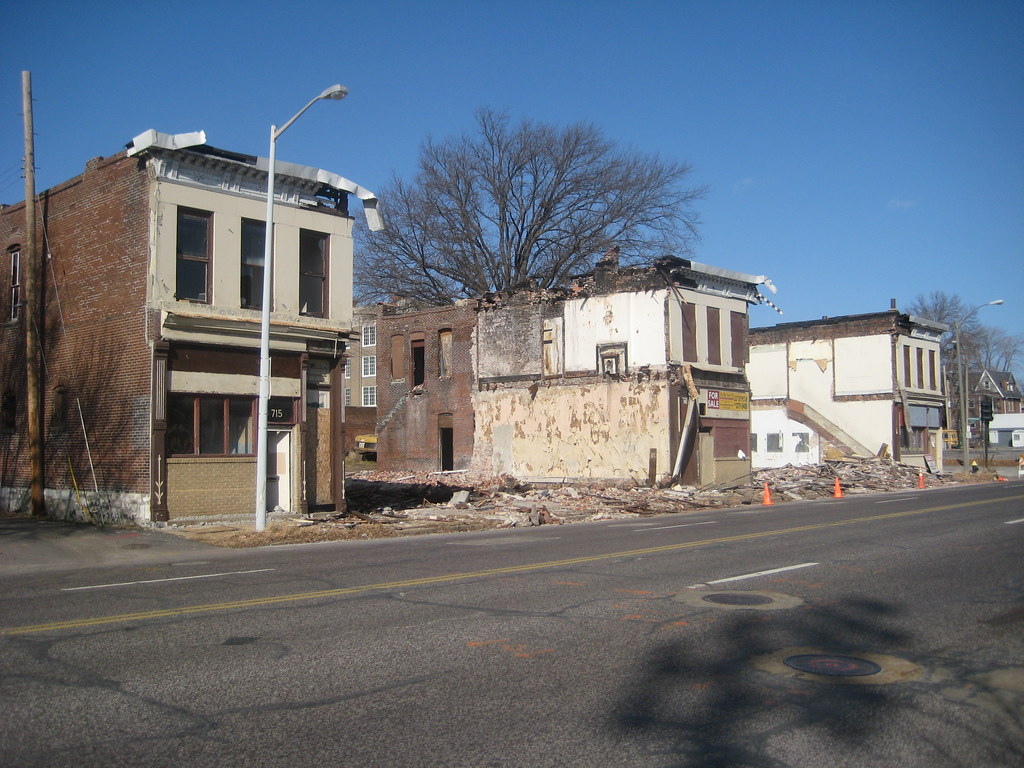
During demolition, wreckers from Bellon Wrecking staged work in accordance with the building’s party walls, leaving isolated sections standing untouched between areas that were demolished.
Photograph by Paul Hohmann.

Architect Paul Hohmann photographed the demolition while it was underway, and has posted an extensive number of photographs here.

The loss of the row at Vandeventer and Enright delivered a sharp blow, but it was not the only one in 2008. In July, demolition commenced at the third of the surviving rows on Vandeventer, located at 1121 N. Vandeventer. The Guardian Angels purchased the site for construction of a new facility earlier in the year.


This row contained six storefronts arranged symmetrically along Vandeventer. The storefronts also had fine cast iron columns with Ionic capitals, and the second floor had arrangements of Roman-arched windows as book ends. This row dates to a permit issued on October 18, 1895 to Mrs. L.A. Crosswhite for six adjacent stores and flats. A.M. Baker served as architect, and Thomas Kelly was contractor. The row was totally vacant when I photographed it in 2006, but its loss was still jarring. Again, this stretch has lost its landmarks, and the site of this row is now another vacant lot with a sign promising new construction in the future.

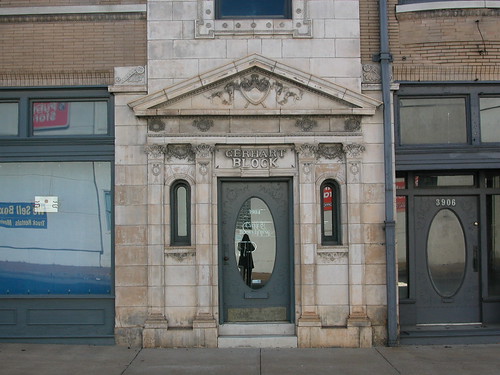
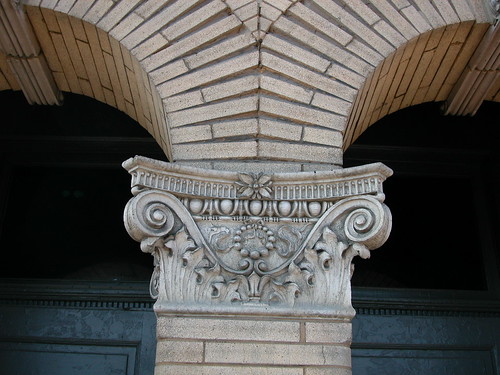
Now the only remaining commercial row on Vandeventer is the Gerhart Block, developed by another Gerhart, at the southwest intersection of Vandeventer and Laclede. The Gerhart Block dates to 1896 and was designed by August Beinke. Its French Renaissance style has strongly eclectic traits and its historic integrity is stunning. The Gerhart Block and an adjacent building on Laclede Avenue were listed in the National Register of Historic Places in 2003; read the nomination by Lynn Josse here.
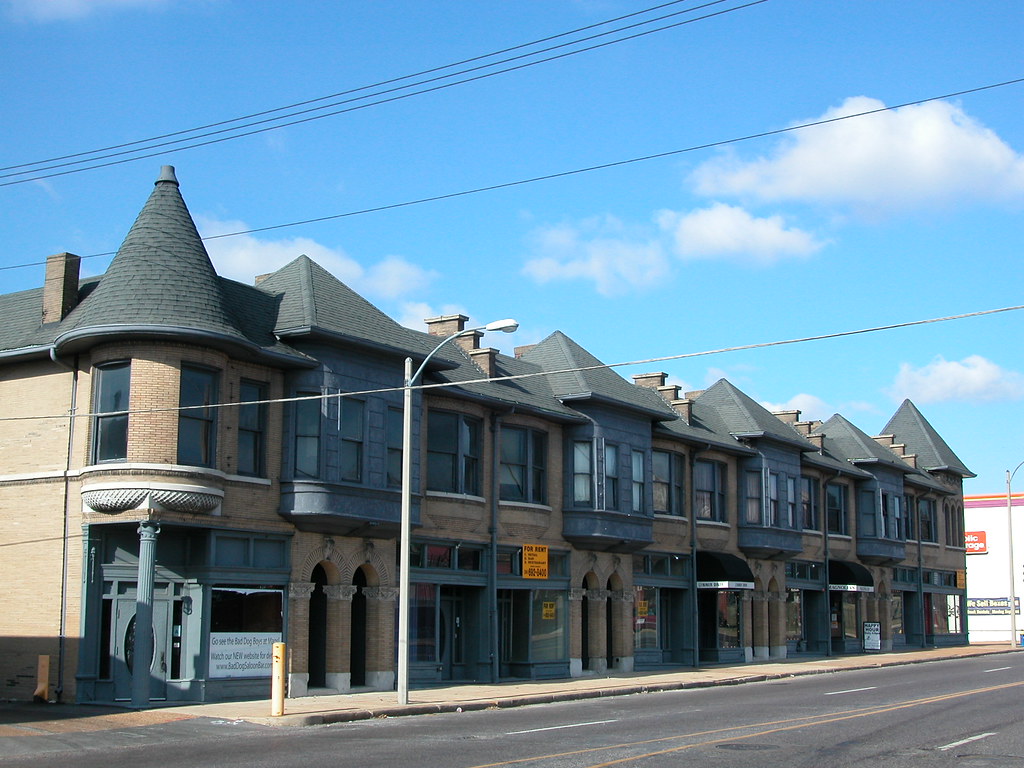

The sad fact is that this all that remains of the commercial rows of Vandeventer. There is some solace in that what survives is one of the most exquisite and well-preserved rows on the street, with landmark designation, demolition protection and tenants.

Categories
Architects Architecture North St. Louis West End

Lost: St. Ann’s Orphan Asylum

by Michael R. Allen

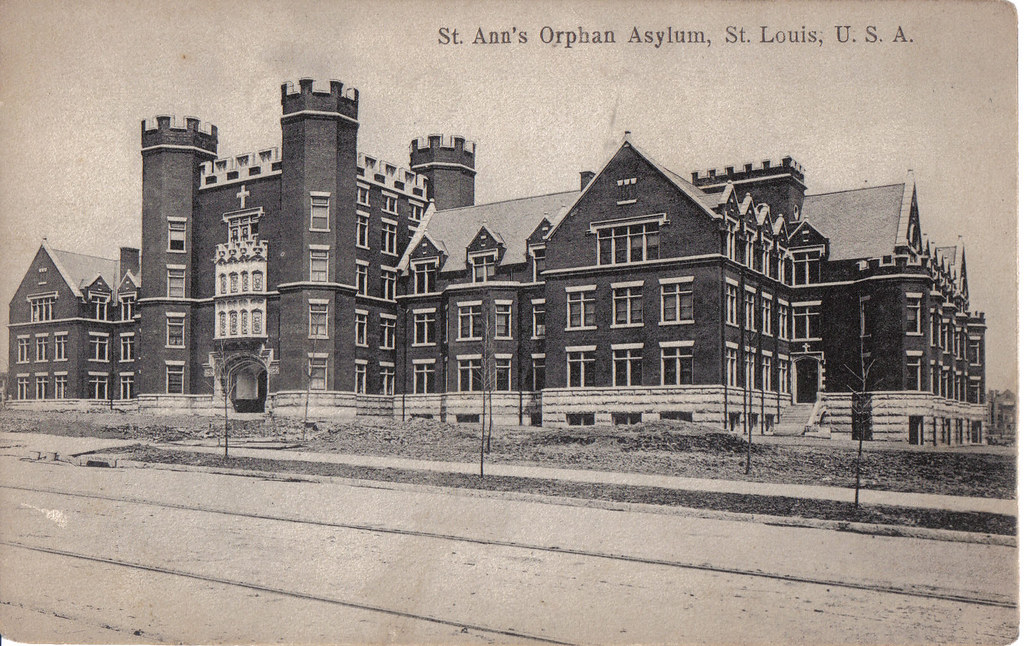
St. Ann’s Orphan Asylum stood at the northwest corner of Page and Union from 1904 until the late 1970s, when it was demolished. Operated by the Roman Catholic Church, the asylum relocated to the city’s west end from a downtown location at 10th and O’Fallon streets. The building permit dates to June 22, 1904 and lists a construction cost of $200,000 and the architects as Barnett, Haynes and Barnett.

The high cost went for high quality. The 3 1/2 story asylum was large, and its Elizabethan Gothic architecture was elegant. The building featured an expansive lawn on four sides, affording the orphans with grounds for recreation surpassing the modest court at the downtown location. Here we see the late Victorian ideals — lovely architecture masking a function of social utility as well as a belief in the social and health benefits of planned open space. The asylum rose as the World’s Fair was taking place not far to the south in Forest Park. The fair reinforced the faith in planned open spaces and architectural grandeur found in the asylum. Coincidentally, the architects of the orphan’s asylum also designed the Palace of Liberal Arts at the fair.

In 1904, Barnett, Haynes and Barnett was one of the city’s best-known and most revered firms. The firm’s principals were George D. Barnett, John Haynes and Thomas P. Barnett, and together the men had already designed many homes and commercial buildings in the thriving west end. The firm also enjoyed a good relationship with the Archdiocese, an had designed the romantic Visitation Convent (1894, demolished) located at Belt and Cabanne in the West End, Sacred Heart Church (1898, demolished) at 25th and University in St. Louis Place, and the Scholastic Building at St. Louis University (1896). On Page Boulevard alone, the firm was responsible for designing St. Ann’s Church at Whittier and Page (1897) and St. Mark’s at Page and Academy (1901). The pinnacle of the working relationship would be the firm’s design of the great Cathedral Basilica on Lindell Boulevard. The firm’s institutional work shows a tendency toward the romantic, with picturesque buildings placed on landscaped lawns, and St. Ann’s Orphan Asylum fits in that range. Stylistically, however, the Elizabethan Gothic is unique for a large institutional building by the firm but parallel to the contenporary work of school architect William B. Ittner.

The asylum eventually became a retirement home before being demolished by the Archdiocese. The site today is occupied by the Annie Malone Children and Family Service Center and the Peace Villa, which maintain to some extent the site’s devotion to social service. The eastern end of the site is used by a grocery store.

(Postcard courtesy of the St. Louis Building Arts Foundation Library.)