Categories
Architecture Churches Fire North St. Louis Old North

Beautiful Fourth Baptist Church

by Michael R. Allen

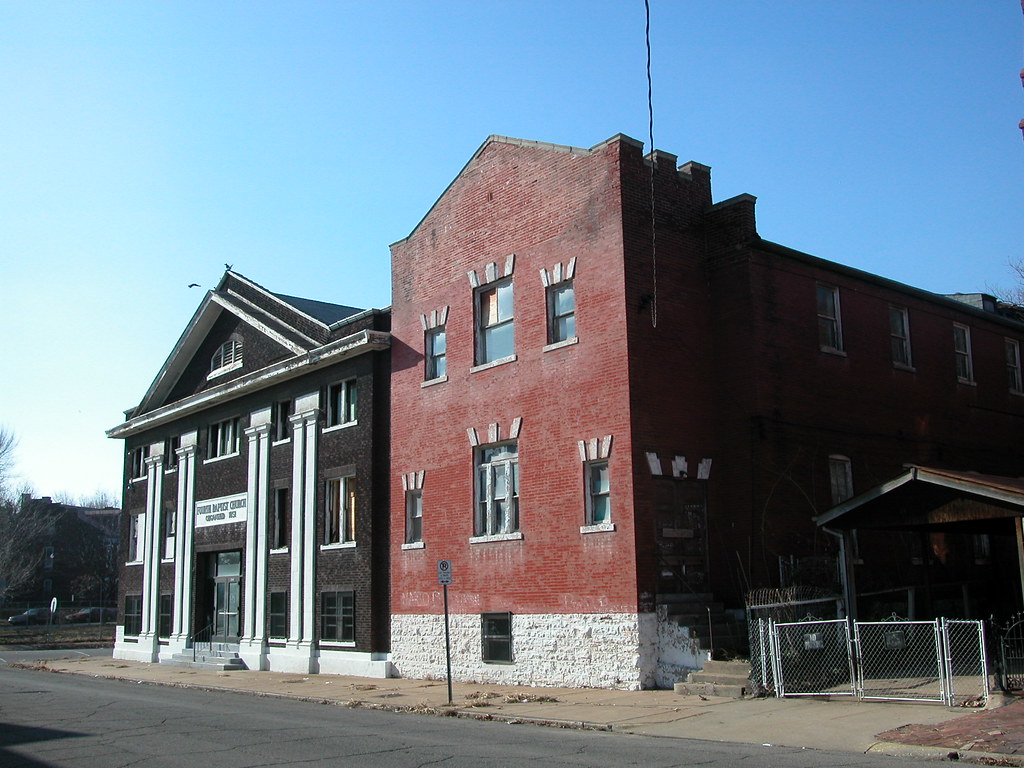
Here are photographs from December 2005 of beautiful Fourth Baptist Church at the northwest corner of 13th and Sullivan in Old North St. Louis. The church’s presence truly anchors the immediate area.


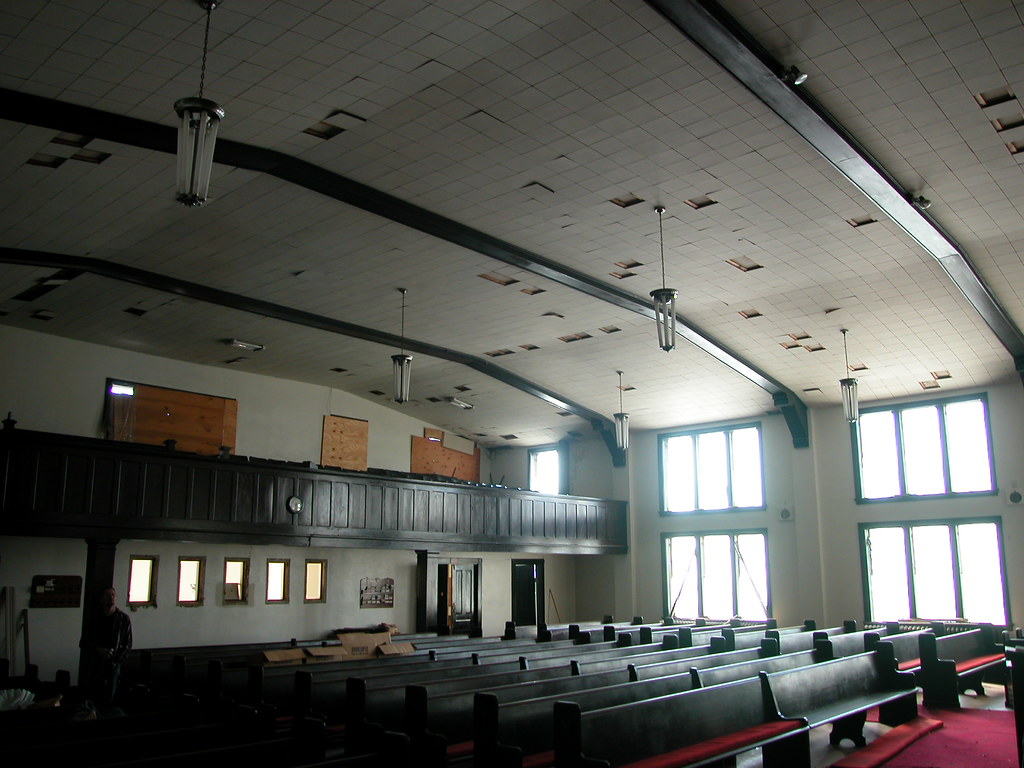
The interior was as wonderfully austere as the exterior, with the sanctuary auditorium a voluminous space lit by large southern windows. Here are images from October 2006.


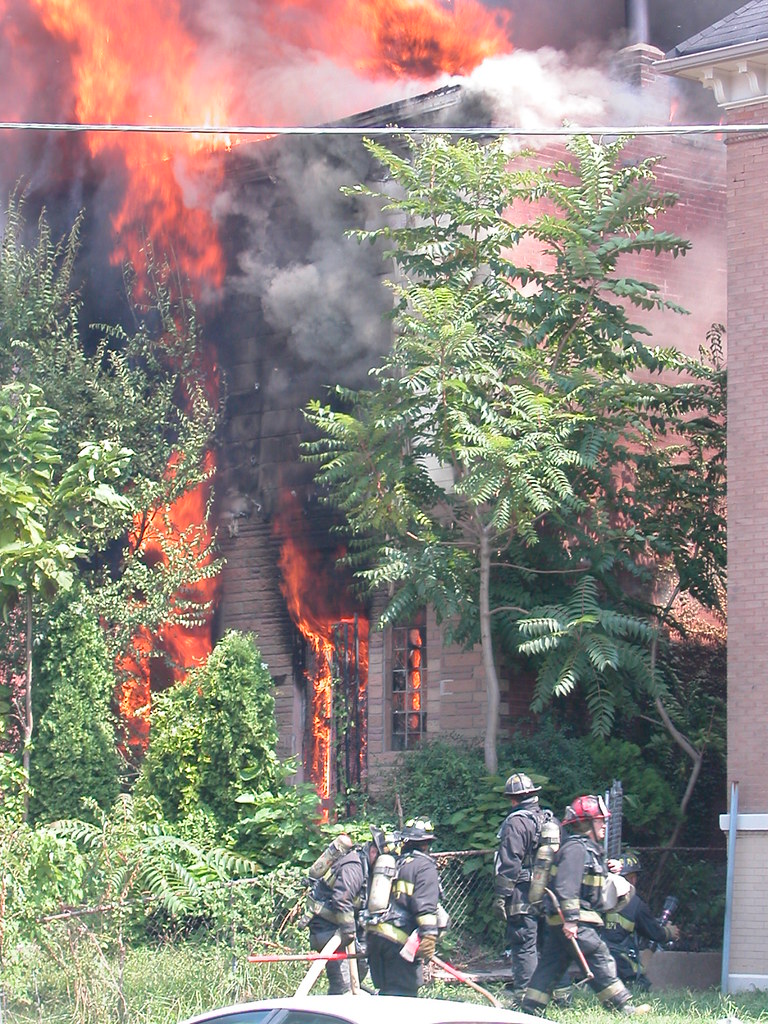
No matter what the fate of the church, all who passed through or by its doors saw in it the incarnation of certain faith and a wonderful sense of architectural economy. The building served well and long, and was awaiting a new call to service when struck by fire on September 20, 2008.

Categories
Abandonment Historic Preservation LRA North St. Louis Old North

A Dead House on Clinton Street

by Michael R. Allen

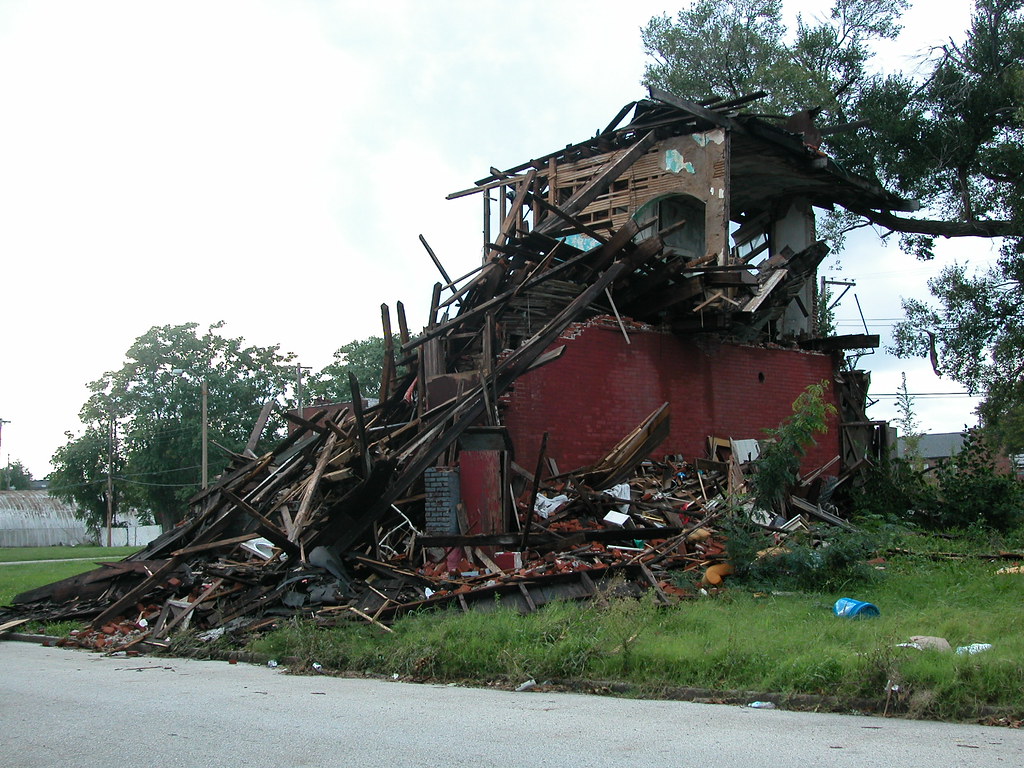
One gets the sense that the city of St. Louis cannot get a high wind without having a historic north side building crippled. This weekend, the remnants of Ike struck Old North St. Louis, causing more damage. Oddly, soon afterwards a truckload of St. Louis firemen arrived and struck the buidling with pressurized water spray for minutes, delving the final blow to the long-suffering house at 1219 Clinton Street. No one knows why the Fire Department showed up and performed pointless and destructive work. The vacant house had its first major blow back in the freak storm of July 2006. (See “A Dying House on Clinton Street”, July 11, 2008.)

Whereas some semblance of the front elevation remained intact throughout years of eroding fabric, now the house is a barely recognizable pile of materials destined for demolition. The loss had been inevitable for some time, although the opportunity for prevention was within reach until quite recently. The trouble with old buildings is that their economic rescue is calculated in price per square of rehabilitation, and once a building slips past a certain price it passes beyond the point of profit or even break-even. If a developer cannot break even, the only imperative for rehabilitation is a moral one. Even those who wish to lose money doing the right thing cannot do so if they don’t have the money. No bank will finance a project that creates negative equity, no matter how much money the building could be worth in ten years.

The house on Clinton had passed the reasonable price-per-square-foot point awhile ago. Compounding its problems is the fact that it’s the last house left on its block, and the other side of its block is faced with residences built in the 1980s.

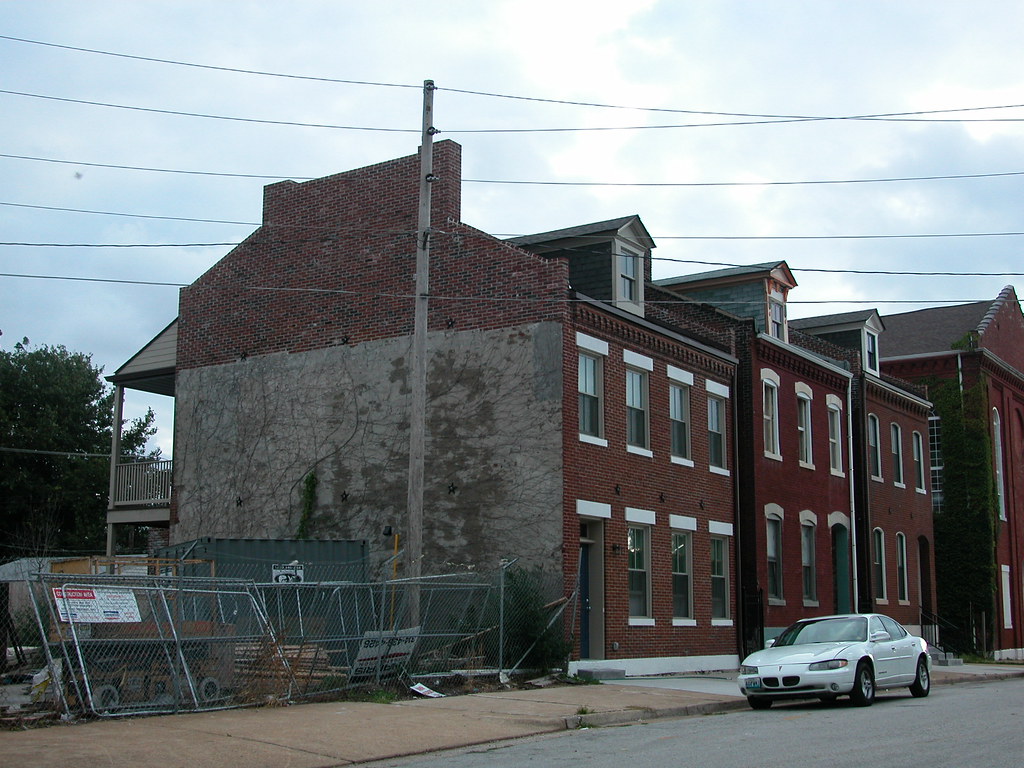
Contrast the house on Clinton with some of the recent products of the ongoing Crown Square project. Four buildings on the 1300 and 1400 blocks of Warren Street are completed. Looking at the photographs below, one sees that these houses fit into streetscapes of other historic buildings. While these blocks are not fully intact, they are intact to the extent where further loss would be much more harmful than the loss of a single house on a block.


With limited funds available and the rules of finance at play, most developers are going to select to rehab buildings like those on Warren over the house on Clinton. By doing so, these developers aren’t doing anything wrong. In fact, many bankers and developers would not even touch houses like those on Warren. The developers who did were non-profit organizations (the Regional Housing and Community Development Alliance and the Old North St. Louis Restoration Group). If it takes a non-profit to rehab the houses on Warren right now, it would have taken a charity to tackle the house on Clinton.

None off this explanation justifies the loss of a great house like the one on Clinton Street. Really, the loss could have been prevented if a new roof and boards had been installed three years ago. But who would have picked up the tab? Back then, the house had a private owner who had stopped paying taxes on the property. Alter, the city’s Land Reutilization Authority owned the house. The first part was unwilling to do the right thing, the second unable.

Preservationists would be willing, be we aren’t able. St. Louis lacks a bridge over the the preservation gap between the right thing and the possible thing. Can we build one?

Categories
Fire Fountain Park North St. Louis Urbanism

Fire in Fountain Park

by Michael R. Allen

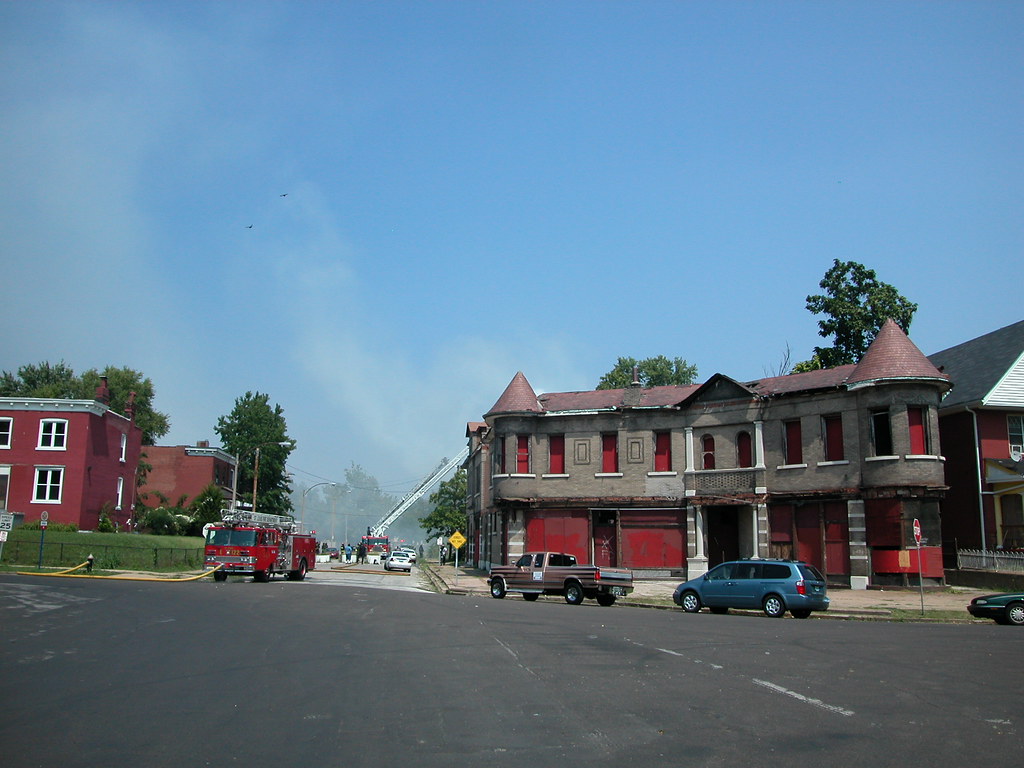
A sweltering, humid afternoon yesterday broke what had been a string of some of the most pleasant St. Louis summer days in recent years. In the Fountain Park neighborhood, the dog day brought more than just unpleasant weather. At around 12:40 p.m., a fire broke out at the abandoned home at 1124 Bayard Avenue. The blaze roared through a modest two-story home that has experiences fire twice before, according to a neighbor.
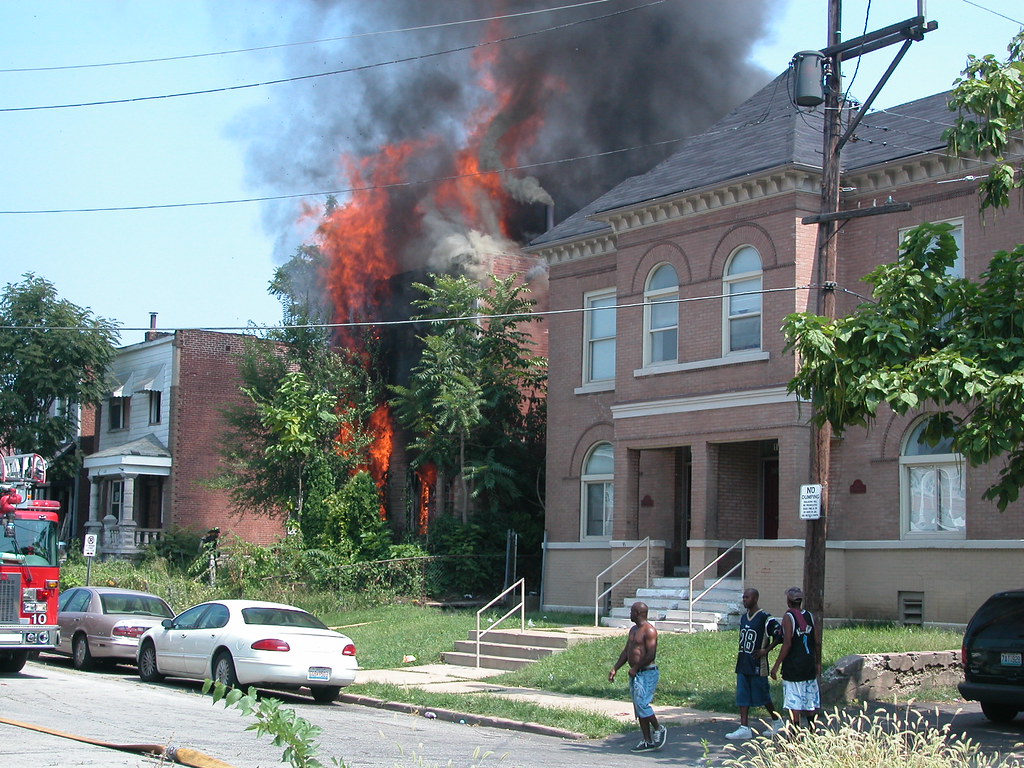
Neighbors who had been hanging out indoors in search of air conditioning came outside to watch a mid-day spectacle that is unfortunately a common occurrence in much of north St. Louis. Firefighters were quick to respond, and had the fire under control quickly. The firefighters surely earned the respect of the assembled crowd on Labor Day afternoon.

The house was not one of the stunning homes that line Fountain park proper, nor was it the nearby “castle” building. (The sight of dark smoke coming from near that structure made me shiver.) The brick home has acquired permastone on the first floor and flimsy siding above. Still, it had been a solid residence until going vacant two years ago. Its altered facade still made up part of a street scape wall that joins others to form the architectural context of life in Fountain Park. The house had a supporting role to the fancier buildings, but its loss will make the drama a little less full.

The neighborhood atmosphere yesterday was a far cry of the vision of John Lay, the Virginia farmer who platted 158 acres of his land just west of the city limits in 1857. Dubbing the subdivision “Aubert Place,” Lay envisioned a fashionable middle-class enclave centered on an elegant park, like those he had seen in London. Early advertisements suggest that Aubert Place was a country retreat, and certainly the character of this area supported that assertion. Development was slow, even though half of the lots sold at auction in 1857. One reason for slow growth was the distance for public transit, which would not come for nearly another twenty years.
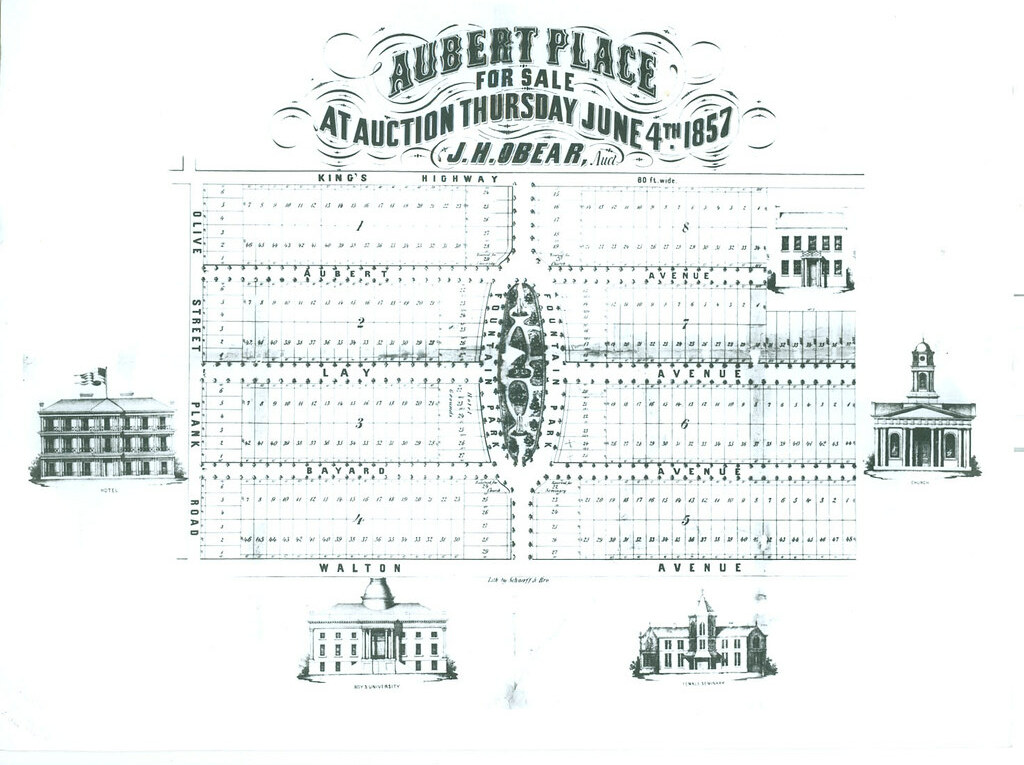
Most early homes here were frame, and only forty had been built by 1883. Still, annexation into the city in 1876 encouraged growth, as did the continued westward growth of the city. Streetcars came down Delmar to the south and Easton to the north, with a line also running straight down Euclid through the heart of the development. Development of the Central West End in the early 1890s coincided with the city’s investment in the park in 1889. The city took the undeveloped central feature of Aubert Place and built amenities, including the fountain that would lead to the gradual name change of the neighborhood. Lay’s charming suburb had been missing the elegance of a well-planned park. With lots reserved for single-family homes and a required twenty-foot set-back, Aubert Place was destined to be genteel. Building was rapid between 1892 and 1897, when two brothers named Davis built many homes. A second boom covers the years of 1903 through 1925, when unrestricted blocks around the original subdivision were developed with two-flats and other multi-family properties. Now known as Fountain Park, the neighborhood thrived with middle-class residents.

In the 1940s, Africa-Americans began piercing the housing restrictions in Fountain Park, at the time when many whites were leaving for more fashionable addresses west and north. A renewal took place, and the community remained strong for several decades until signs of decay crept in. To this day, there is amazing dichotomy in Fountain Park. Many blocks are very well-kept and retain their original beauty, while other blocks are marked by vacant lots, boarded buildings and vestiges of vice. Not surprising, the original Aubert Place is stronger than the outer tier of multi-family buildings. The posh Victorian middle-class suburb is now a problem-ridden 21st-century American urban neighborhood. That is to say, that for every day like yesterday, it has another good day. And for every beautiful home on Fountain, there’s a house like 1124 Bayard.
More coverage:

  • STL Streets
  • Random Talk on Urban Affairs
  • Akita Video Network
  • Categories
    Historic Preservation Housing North St. Louis Old North Rehabbing

    Changes

    by Michael R. Allen

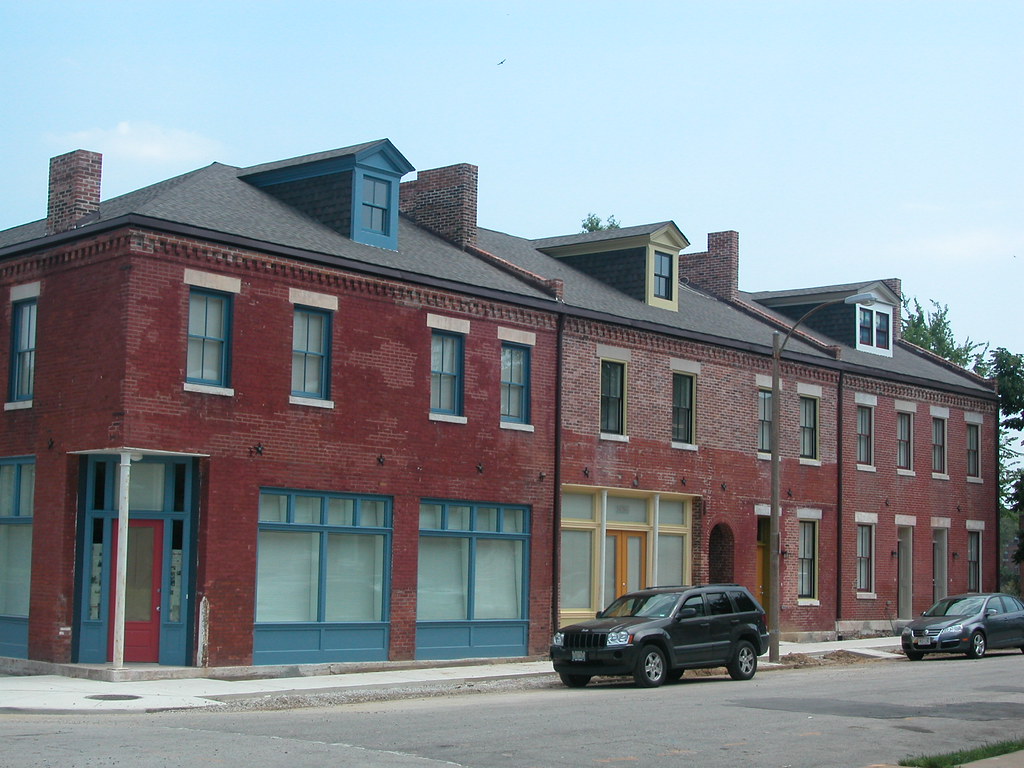
    Entitled “Changes,” my latest commentary for radio station KWMU aired this morning. The piece reflects on changes both physical and social taking place literally across the street from my house in Old North St. Louis. New residents have moved into the colorfully-painted buildings seen above, which were rehabbed as part of the ongoing Crown Square project transforming the center of the neighborhood. Read or listen to the commentary here.

    Categories
    Architecture Housing North St. Louis Northside Regeneration St. Louis Place

    Quirky Gem on University Street

    by Michael R. Allen

    The house at 2314 University Street in St. Louis Place is one of the strangest 19th century houses on the near north side. Built in 1878, the house’s central feature is a wide round turret rising the full height from the foundation to the pointed round roof.

    The builder could not be trifled with convention on any point of the design — form, style, floor plan and ornamental detail. I love how the windows on the turret are dwarfed by its sheer volume and their exaggerated wide lug-sills, emphasizing the castle-like quality of the turret. The stepped up brick cornice and projecting window surrounds give the building a heavy feeling. However, the heaviness is at odds with the delicate wooden parts — the little trapezoidal bay window over the front door and the ornate side porch.

    The later flat-roofed rear addition adds another interesting element with its slate siding, including multi-color lozenge patterns on each side of the lone second story window. All in all, this quirky home is gorgeous and another unique part of the unique St. Louis Place built environment. It is occupied and owned by an individual, so hopefully its future is secure. The house is located on the same block where we just lost a home owned by a McKee-related holding company, and lacks any landmark designation or demolition review protection, so nothing can be certain.

    Categories
    JeffVanderLou North St. Louis Signs

    Chuck Berry Shopped Here

    by Michael R. Allen

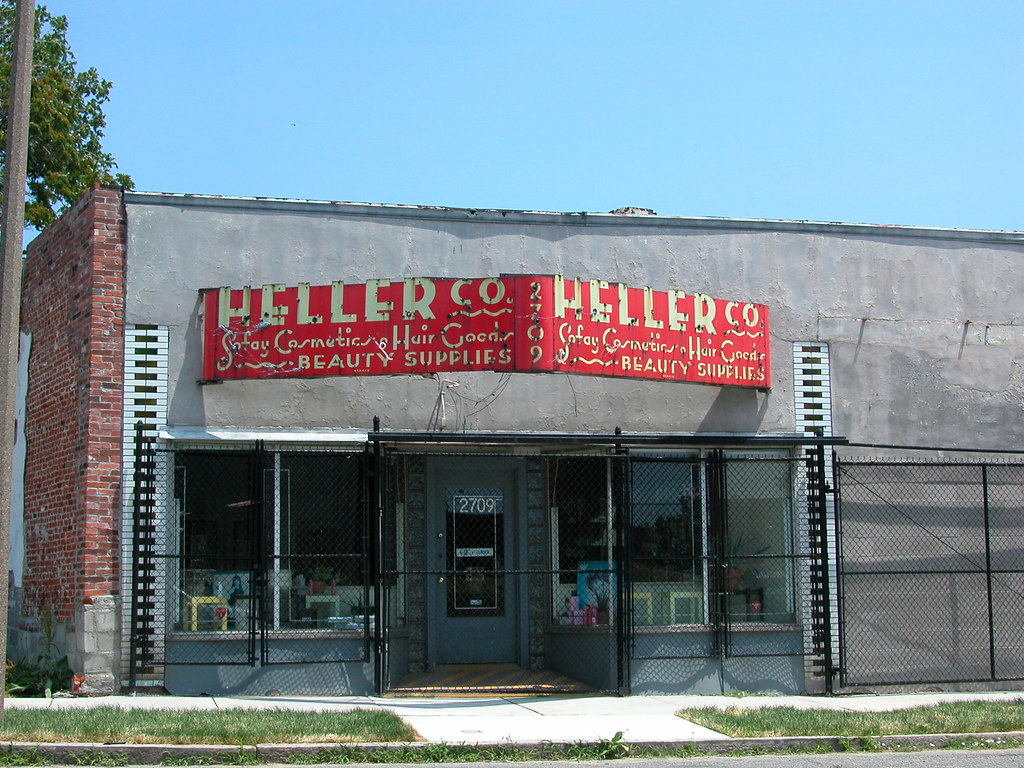
    The old brick building, already refaced with glazed brick after street widening in the 1920s, has a mess of stucco across the front. The storefront is covered by chain link gates. The exquisitely-lettered enamel sign board has long lost its neon tubing. This block has lost most of its buildings and businesses, and blocks east and west of here are equally forlorn. Yet the Heller Beauty Supply Company has remained in operation since 1908 at the same location, 2709 Martin Luther King Drive (once Easton Avenue) in JeffVanderLou (once Yeatman).

    The sign’s exaggerated moderne letters read: HELLER CO.; Sofay Cosmetics – Hair Goods; BEAUTY SUPPLIES. (That reading leaves out the squiggles.) Sofay Cosmetics was a line of cosmetics and colognes distributed exclusively by the family-run Heller Distributing Company. The Hellers distributed their own products here and elsewhere. The store has always sold a wide line of cosmetics and, most famously, wigs. According to family members, Ike and Tina Turner as well as Chuck Berry were customers of the shop over the years. Shriner clowns and Muny makeup artists also frequented the business.

    Long-time owner and manager David Heller passed away in 1999, but his children still operate the business. This is still “the place” for wigs on the near north side, with a clientele from across the region.

    Categories
    Historic Preservation North St. Louis Old North Rehabbing

    Every Day There’s More Progress on 14th Street

    by Michael R. Allen

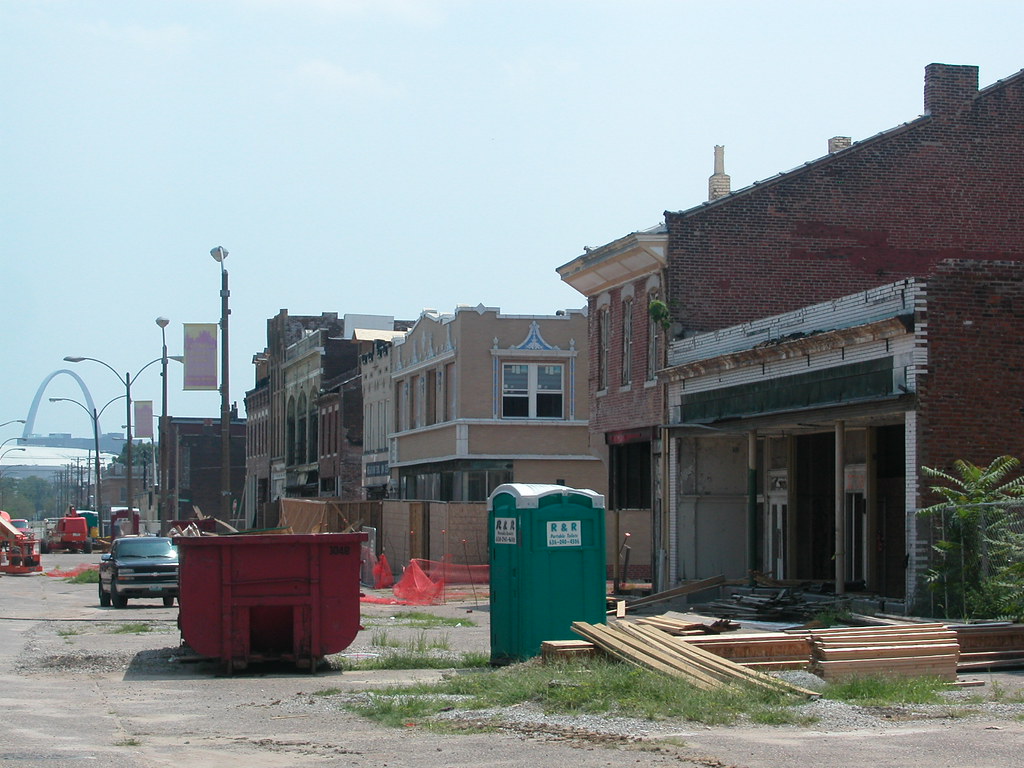
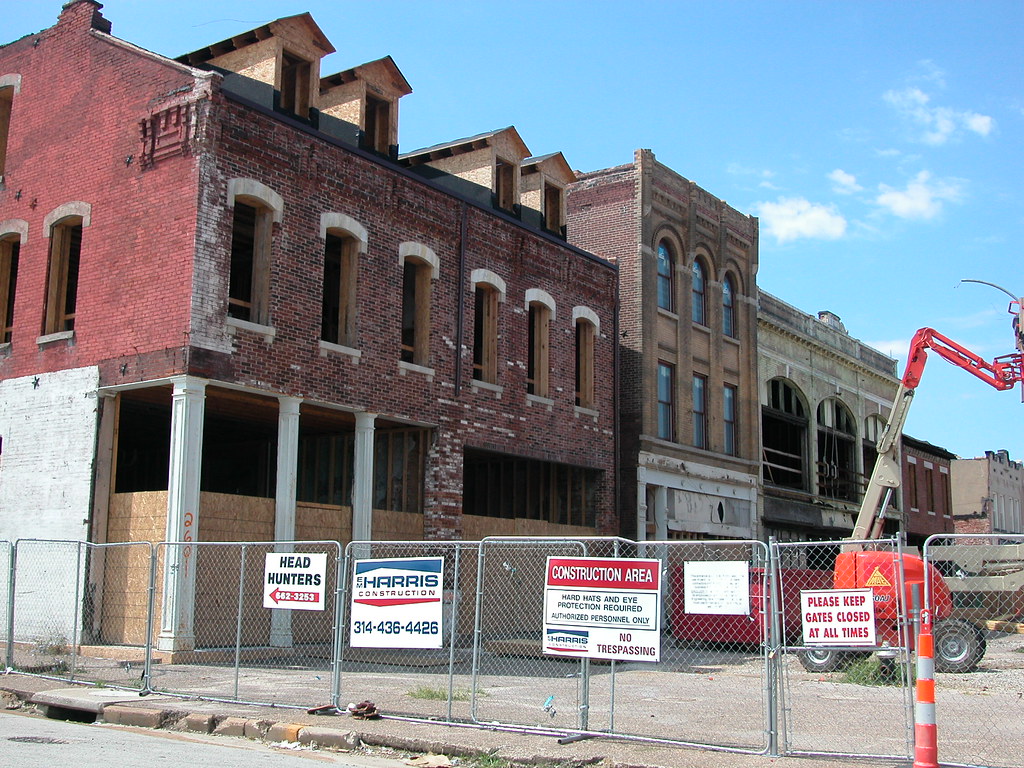
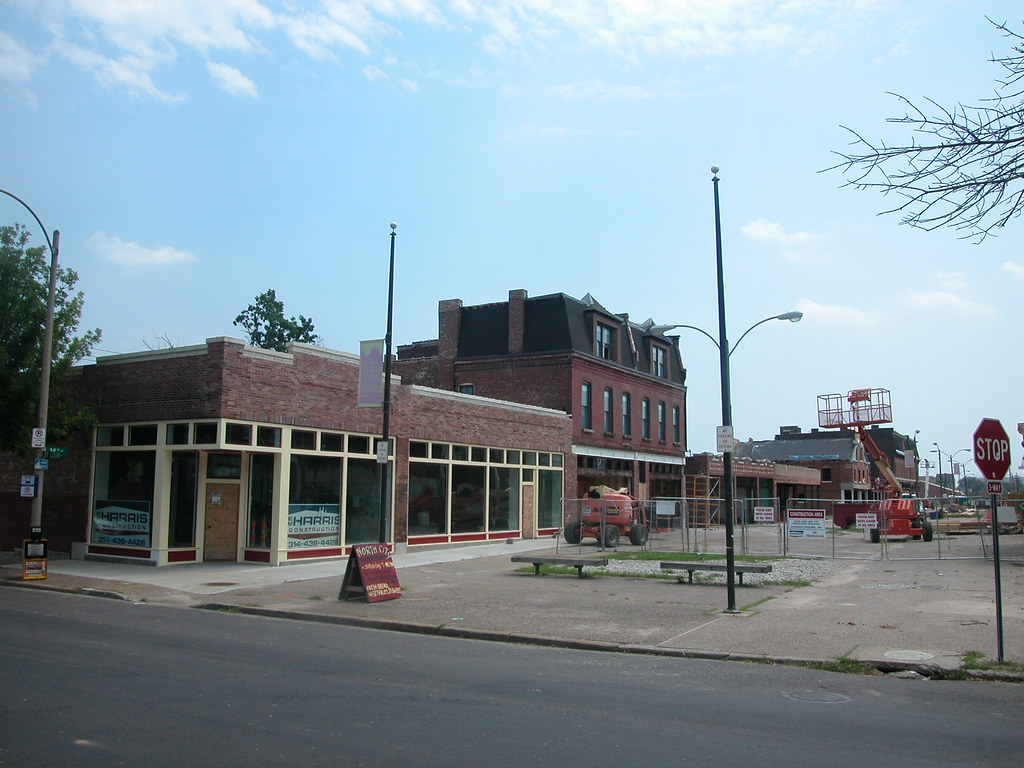
    The Crown Square project (once known as the “14th Street Mall”) marches along in Old North St. Louis, and it’s hard to keep up with construction. These photographs are already a few days out of date, but worth sharing.

    A view of the west side of 14th street, looking south.

    A view of the northwest corner of Warren and 14th streets; the second building in from the corner was well-known in recent years because almost all of its front elevation lay on the sidewalk in front of it.

    Here’s the storefront building at 2717 N. 14th Street.

    Visitors to Crown Candy Kitchen once gazed upon fabulous urban ruin, and now look southeast across St. Louis Avenue and see glorious renewal.

    Categories
    Brick Theft North St. Louis Northside Regeneration St. Louis Place

    Brick Theft Suspect Charged With Felony

    by Michael R. Allen

    This morning was a momentous event in efforts to crack down on the plague of brick theft that has hit the north St. Louis neighborhoods of St. Louis Place, JeffVanderLou and the Ville. This morning Judge Cale Stovall-Reid held a preliminary hearing in the case of the City of St. Louis vs. Samuel K. Ivory.

    Ivory, known as a demolition crew worker, faces the misdemeanor charge of Theft/Stealing (Value Of Property Or Services Is Less Than $500) and, most important, a felony charge of Property Damage 1st Degree. Judge Stovall-Reid has also ordered Ivory confined to the city of St. Louis pending trial. Earlier this year, police from the Fifth District arrested Ivory at the scene of 2569 Montgomery Street, where allegedly Ivory and others were taking down a house owned by one of Paul J. McKee Jr.’s holding companies. The house has since been demolished due to its destabilization by brick thieves (see “Cut Off, Cut Down”, July 25).

    North side residents have been demanding justice against the brick thieves for the last two years. That justice may be coming, at least to one of the perpetrators.

    Categories
    Adaptive Reuse Historic Preservation Mullanphy Emigrant Home North St. Louis Old North Streets

    Moonlight Ramble Included the Mullanphy Emigrant Home

    by Michael R. Allen


    Early Sunday morning, cyclists on this year’s Moonlight Ramble made a north turn to ride by the historic Mullanphy Emigrant Home in Old North St. Louis. The Ramble, organized each year since 1964 by the Gateway Council of Hostelling International USA, is a midnight bike ride held on the Saturday night nearest the full moon in August. Over 15,000 riders participated this year, and each one got to see first-hand what could be an exciting new home for Hostelling International’s local chapter.
    While the route of the ride was a secret, word had already spread that this year’s ride proceeds would benefit the Mullanphy Emigrant Home, envisioned as a world-class hostel by the Gateway Council. Hostelling International hopes to continue rehabilitation of the Emigrant Home, hit by devastating storms in 2006 and 2007 and now largely stabilized through the efforts of the Old North St. Louis Restoration Group.

    The hostel plan would both restore the historic architecture of a building built in 1867 from plans by renowned architects George Barnett and Alfred Piquenard and also rededicate the building to housing the itinerant. The Emigrant Home originally housed immigrants headed westward through St. Louis from New York and other eastern ports. Hosteling International would provide lodging for a different sort of migrant — travelers exploring the United States. If the hostel opens it would be a serendipitous revival of the building’s original purpose.

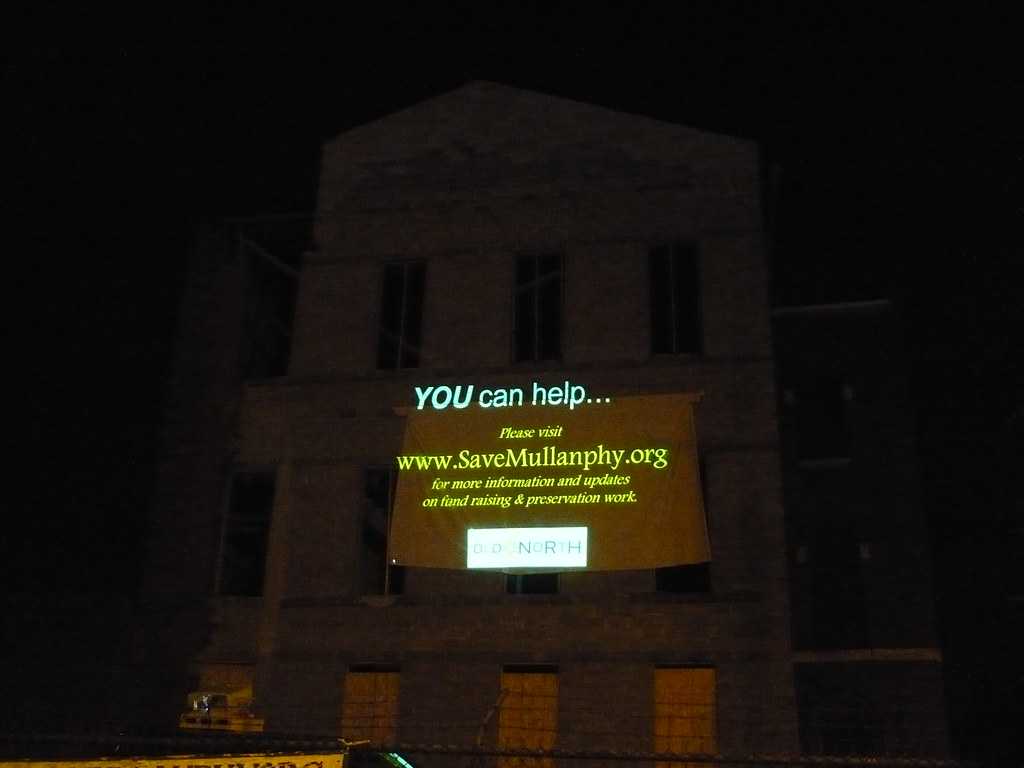
    Meanwhile, residents of Old North are enthusiastic about the prospects for the building’s future, and the legions of travelers who might come through their neighborhood as they travel this country. That enthusiasm was on display in full force last night, and a throng of neighbors (including people from the block facing the Emigrant home) welcomed thousands of riders for well over an hour. To learn more about the Mullanphy Emigrant Home, visit SaveMullanphy.org.

    All photographs by Lynn Josse.

    Categories
    Historic Preservation JeffVanderLou North St. Louis Storefront Addition

    Remuddled Row in JeffVanderLou

    by Michael R. Allen

    Continuing to explore storefront additions to houses in St. Louis, I came across these three buildings at 1349-53 Garrison Avenue in JeffVanderLou. While the storefront additions add character, I’m not sure that’s good character. Then again, these old houses have been remuddled past the point of recognition, and far beyond being able to contribute to any historic district. We have original dormers and cornices removed, mansard roofs clad in weatherboard (although apparently over the slate tiles!), window openings altered and a whole front stone elevation relaid in concrete block.

    What a mess! No doubt the buildings are still sturdy and salvageable, but historic restoration would be challenging. Not impossible, but challenging. Who is up to that challenge? And what other ways of rehabilitating the buildings beyond a historic-tax-credit rehab exist?