Categories
Abandonment Historic Preservation Housing North St. Louis Old North

The "Mini Mansion" Over Thirty-Five Years Ago

by Michael R. Allen

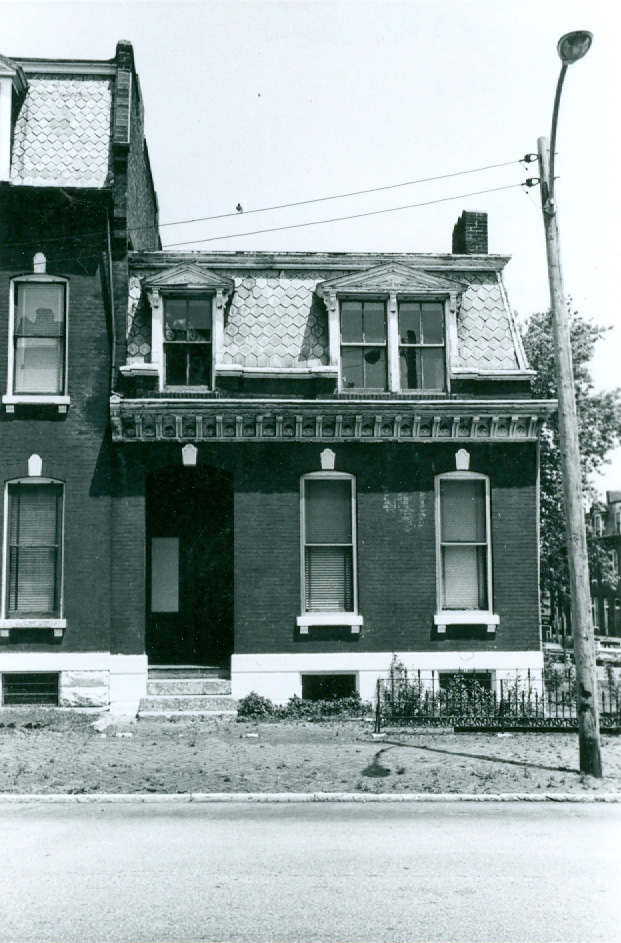
Here’s the “mini mansion” at 1501 Palm Street in Old North in better days. Rather, here it is in slightly better days. The photograph dates to July 1972, and was taken by a volunteer surveyor working on the Heritage/St. Louis project. Heritage/St. Louis was an all-city architectural survey coordinated by Landmarks Association of St. Louis that nearly succeeded in documenting every historic building in the city (and many others) with a photograph and short evaluation sheet. Between 1970 and 1975, volunteers surveyed thousands of buildings, leading to more intensive later surveys and eventual National Register historic district nominations across the city.

As the photograph shows, the house was then occupied and not boarded. Wooden sash are intact, as is a recessed entrance foyer. The cornice is in place, as is part of a cast iron fence. However, the surveyor who took this photograph noted that the condition was only “fair” and the future was uncertain. This was long before Paul McKee’s holding company purchased the house, and even before it sat vacant for 16 years. Even while occupied, the house was not in great shape.

The reality of the near north side sinks in: the work needed goes beyond remediation of recent dereliction. Many of these houses have been in disrepair for thirty years or longer. Most houses in Old North marked “fair” or “poor” in the Heritage/St. Louis survey are gone, and many that would have been were gone before the surveyors arrived. What we now have is a remainder of building stock, and the vacant buildings we now have require extensive repair. Fortunately, this odd little house has survived to an age where there finally is massive rehabilitation efforts underway in Old North.

(For more information on this house, read “The “Mini Mansion” on Palm Street Needs Urgent Assistance,” November 26)
Categories
Historic Preservation Housing Preservation Board South St. Louis

Dutchtown Center Hall House on December 22 Preservation Board Agenda

by Michael R. Allen

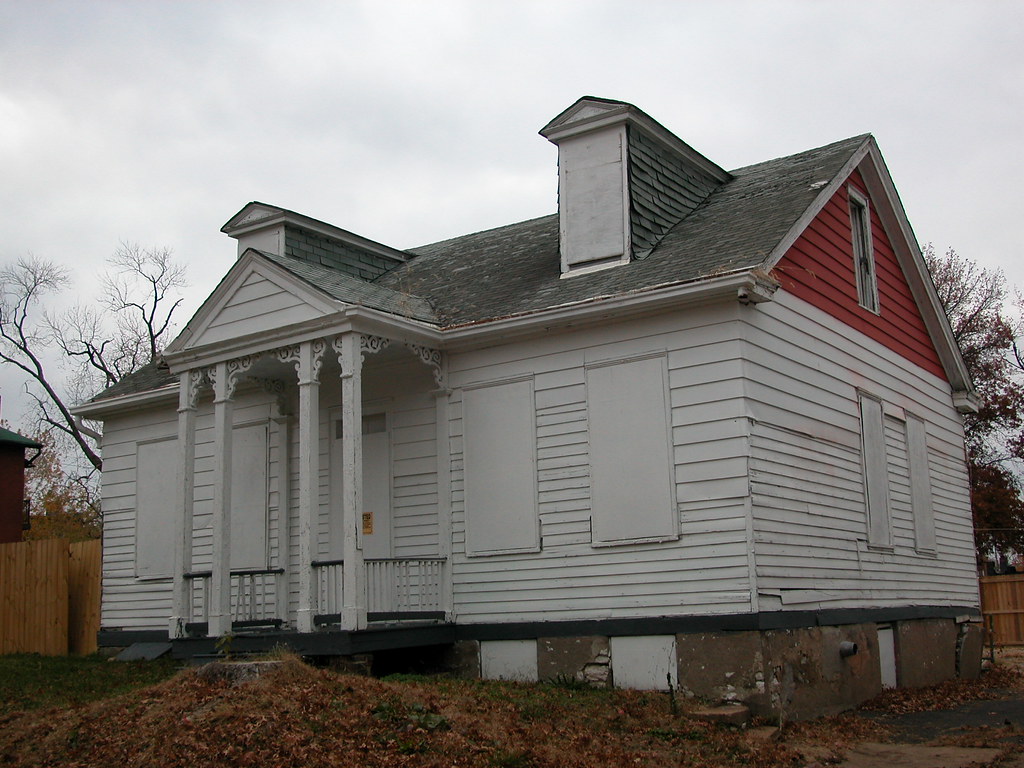
On Monday, December 22 the St. Louis Preservation Board will again consider demolition of the frame center-hall house at 4722 Tennessee Avenue in Dutchtown. New Life Evangelistic Center (NLEC) applied for a demolition permit in the fall that the city’s Cultural Resources Office denied. NLEC appealed the denial to the board, which was set to consider the matter at its November 2008 meeting. (See “NLEC Seeks Demolition of Frame Center Hall House on Tennessee,” November 23.) NLEC obtained a deferral, and the item was moved to the current agenda.

The Preservation Board previously denied an appeal of a staff denial in 2007. NLEC purchased the house after this denial. Alderwoman Dorothy Kirner (D-25th) is opposed to demolition, and many neighbors are opposed to NLEC’s presence in Dutchtown. Seems like the smart path would be for NLEC to act on Kirner’s opposition to find assistance in rehabilitating the historic house.

At the last Preservation Board meeting, the NLEC representative who attended testified that NLEC might want to explore rehabilitation of the house. I have no knowledge if NLEC has decided to suspend plans for demolition or not. As far as I know, the Board will be considering the appeal on Monday, and citizens need to be prepared to testify on behalf of preservation then.

The Preservation Board meets Monday, December 22 at 4:00 p.m. in the 12th floor conference room at 1015 Locust Street downtown. Written testimony can be sent to the board via Adonna Buford, BufordA@stlouiscity.com.

Categories
Housing National Register North St. Louis The Ville

Chuck Berry House Listed in National Register of Historic Places

by Michael R. Allen

Photograph by Lindsey Derrington.

On Friday, the National Park Service listed the Chuck Berry House at 3137 Whittier Avenue in the National Register of Historic Places. The listing is the result of the diligence of my colleague Lindsey Derrington, Researcher for Landmarks Association of St. Louis. Last year, Lindsey identified the house and its National register eligibility. She pursued the nomination against long odds — the National Park Service has a long-standing policy to not list properties whose significance comes from association with living people.

Lindsey demonstrated that the significance of the house lay in the work Berry wrote while living there some fifty years ago — not recent achievement but music that has long been recognized as foundational in American rock and roll. The staff of the State Historic Preservation Office, especially reviewer Roger Maserang, joined the cause and persuaded the federal staff to review the nomination. Now the house has its official place in history, and a modicum of protection against demolition. The owner of the vacant one-story house is a holding company based in Washington state with no discernible intent to rehab the house. The next step is finding a responsible owner for the important house. Meanwhile, we can celebrate the big step taken through Lindsey’s work.

Categories
Adaptive Reuse City Hospital Historic Preservation Hospitals South St. Louis

City Hospital Laundry Building Rehabilitation Moving to Completion

by Michael R. Allen

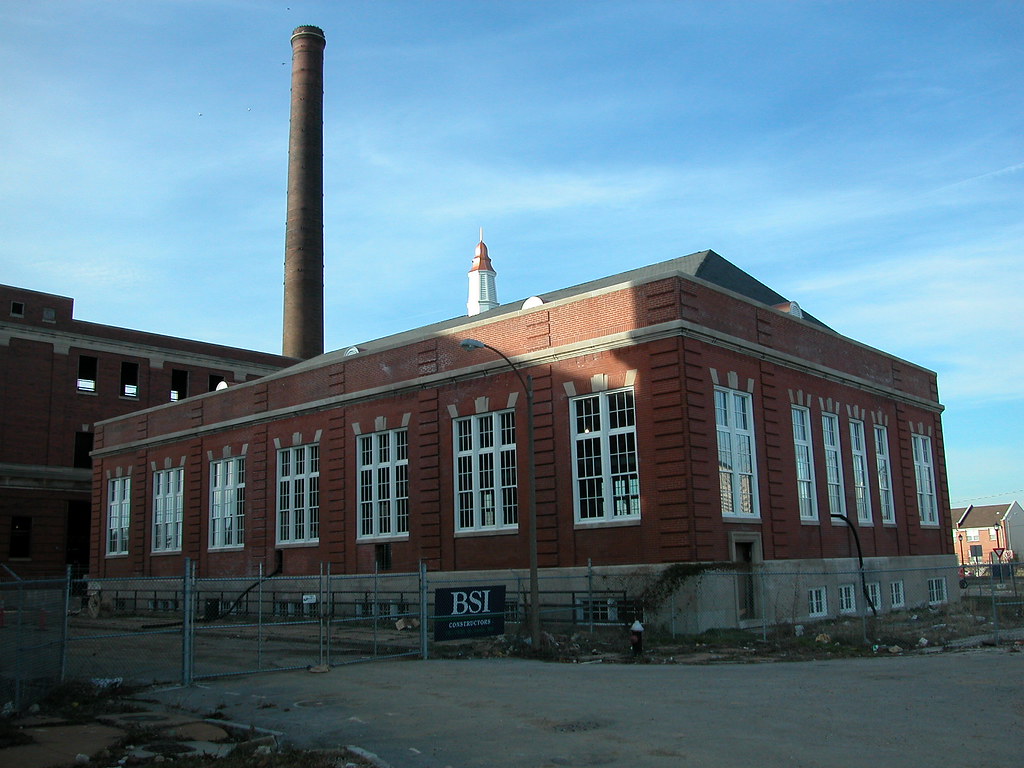
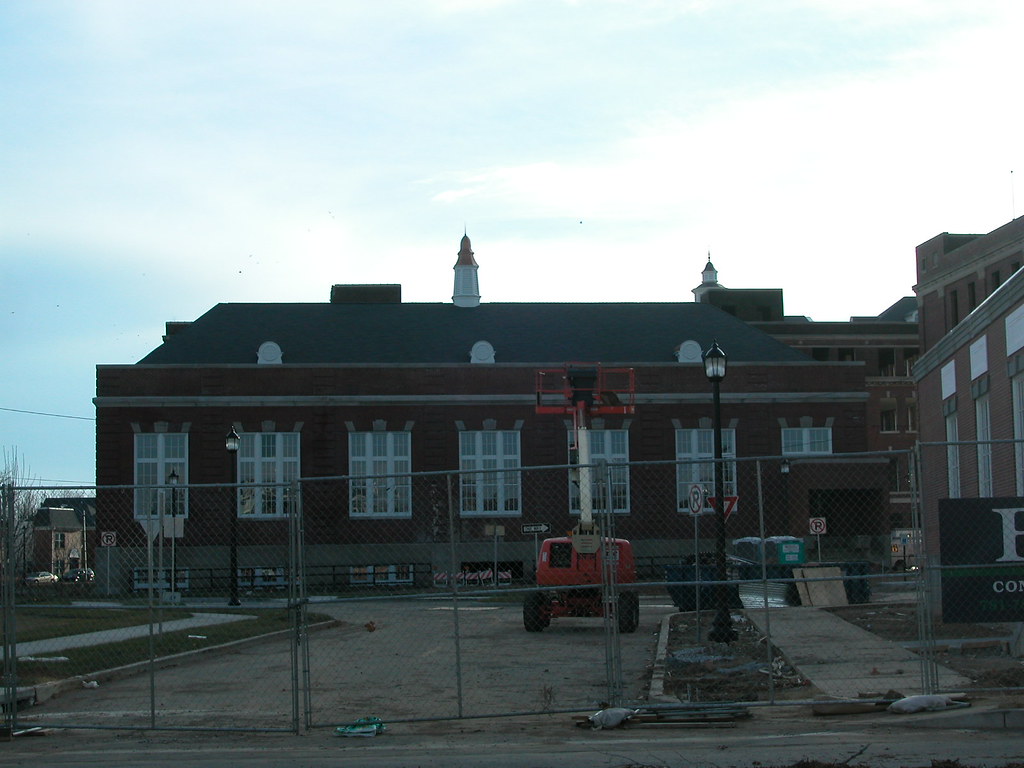
One encouraging recent turn in local development is nearing completion: the start of the second phase of rehabilitation of the remaining buildings at City Hospital. Gilded Age, the developer, has embarked on a $27 million project that involves rehabilitation of the Laundry Building as an event space operated by Butler’s Pantry, construction of a new headquarters for Butler’s Pantry on Park Avenue and renovation of the Power Plant as a restaurant and office building. The Laundry Building is nearing completion, with the exterior sporting a cupola for the first time in decades.

Built in 1939 and designed by Albert Osburg, chief architect for the city’s Board of Public Service, the Laundry Building was once a hub of activity at the municipal hospital. The spacious, tile-walled interior housed a bustling laundry operation that kept thousands of linens used for bedding as well as staff uniforms clean and suitable for a medical environment. This efficient interior was artfully concealed behind a Georgian Revival exterior that referenced the earlier buildings of the hospital.

The large multi-paned windows, now replicated in aluminum, have always given away the building’s use. Those are industrial windows, made to light a work space. The town homes of Georgian London did not have such prosaic glazing. Here the modern meets the classical, and the Laundry Building melds the two with style. The dormers and cupola on the hipped roof add a welcome note of whimsy. While the hospital complex lost some fine buildings as part of the redevelopment, luckily the utilitarian Laundry and Power Plant buildings were spared. Buildings such as these can be hard to adapt, but when the right use comes along preservation seems completely logical. The Laundry Building will be a wonderful event space, and watching it regain its beauty is very satisfying.

Categories
Architecture Central West End Demolition Historic Preservation Midtown

SLU Purchases Mansion on Washington Boulevard, Plans Demolition

by Michael R. Allen

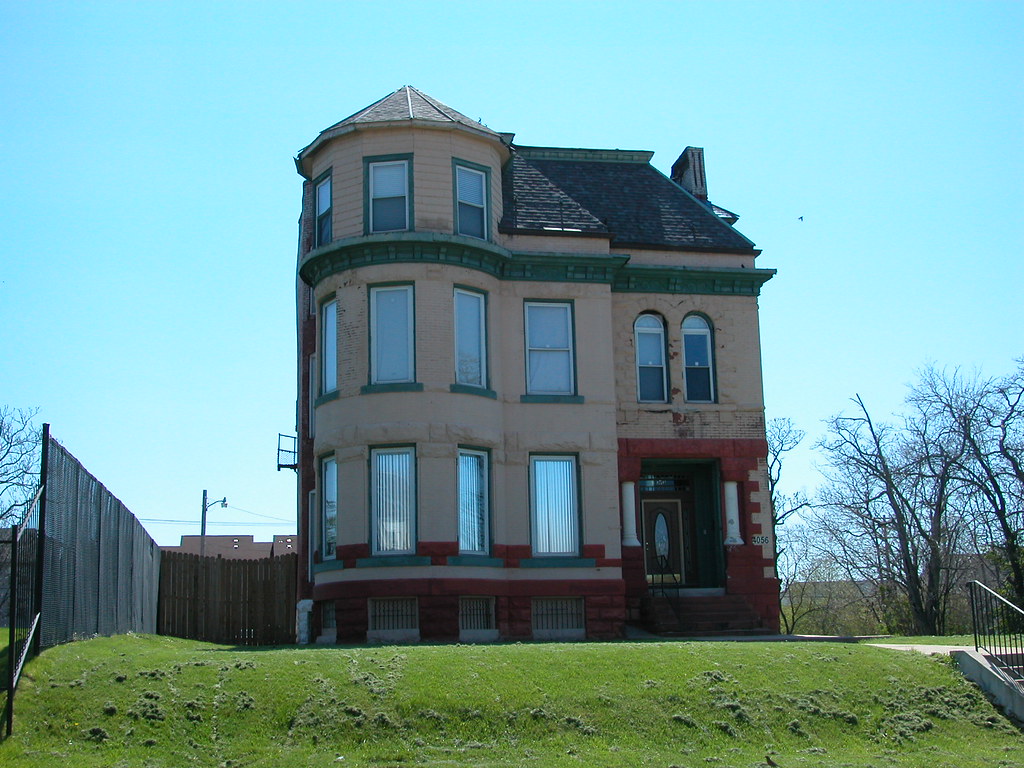
The house at 4056 Washington in 2007.

In October, St. Louis University paid $150,000 for the mansion at 4056 Washington Boulevard. The house was in foreclosure. Underneath layers of paint are the lines of idiosyncratic gilded age St. Louis architecture. Built in 1891, the house was clearly influenced by the popular Romanesque Revival style, evinced here through rusticated stone lintels and window surrounds. However, the wooden cornice has qualities of the Italianate style and the mansard roof and turreted bow evokes the French Renaissance Revival style seen in the design of St. Louis City Hall, the Frederick Judson House to the east and other buildings from the period. What a delight!

The mansion stands just west of the University’s Manresa Center, an interesting complex that originally was the site of the stately McPherson Mansion and later the Marydale convent before becoming the St. Bonaventure Franciscan friary. Since 2000, the University has owned the complex and maintained it as a retreat space. Since acquisition, the university marked the entrance with an inappropriate version of its signature gate. SLU has also purchased all lots between the Manresa Center and the mansion at 4056 Washington.

Demolition of the Saaman-owned houses underway in April 2007.

This block was once an elite street in the emerging Central West End, but the glory days have long since passed. Most of the block’s parcels are now devoid of buildings. In 2007, Saaman Corporation infamously wrecked three houses on the north face of the block to deal a huge blow to the historic character of the street. Hopefully SLU will not make a similar move with its newly-acquired building. Perhaps the university could incorporate the house into the Manresa Center, adding extra space and helping to retain some of the center’s dwindling historic context.

UPDATE: As Vanishing STL discovered, the university applied for a demolition permit on December 4. Alas.

Categories
Historic Preservation Media SLPS

Historic Schools Given Short Shrift in Facilities Management Planning

by Michael R. Allen

Over at the Post-Dispatch Eddie Roth has posted a blog entry on the short shrift that historic schools are getting in the current St. Louis Public Schools facilities management planning process. Roth quotes at length an e-mail that I sent him outlining what’s wrong with the approach being taken by the district and its consultants, MGT of America.

Categories
Century Building Downtown Historic Preservation

Richard Moe on Obama’s List for Secretary of Interior

by Michael R. Allen

National Trust for Historic Preservation President Richard Moe is reported to be on a short list of candidates for the position of Secretary of the Interior in Barack Obama’s administration.

St. Louisans best remember Moe for his role in directing the National Trust to allocate New Market tax credits to the Old Post Office rehabilitation project while supporting demolition of the historic Century Building. This unprecedented move — having the National Trust actively support demolition of a historic building against the stance of a local preservation organization — cost the Trust hundreds of members around the nation. The National Trust has not condemned a pending lawsuit filed by the Old Post Office developers against citizen preservation activists Marcia Behrendt and Roger Plackemeier, whose own lawsuit to halt the Old Post Office project was rejected in 2004.

Last month, Moe pleased St. Louis preservationists by sending a strongly-worded letter to Missouri Senator Claire McCaskill calling for preservation of the intregrity of the Jefferson National Expansion Memorial grounds and opposing HR 7252, a bill that would have leased the Memorial grounds to a private group.

Categories
Historic Preservation Illinois

Illinois Hires 89 Prison Guards One Week After Closing Historic Sites

by Michael R. Allen

UPDATE: The governor himself is now in jail!

If the administration of Illinois’ Democratic Governor Rod Blagojevich is aiming to be the most confusing one in state history, it is doing well. Just one week after closing 12 historic sites and laying off 100 employees of those sites, the state has hired 89 prison guards for a prison transfer that may not take place. While the prison guard hiring had long been planned, the operation of the 12 state historic sites had been in the state budget as far back as 1913, when Illinois acquired Fort de Chartres. If Blagojevich seriously wanted to tighten the state’s fiscal belt, he could have deferred the guard hiring to save money until the Pontiac Prison transfer lawsuit is resolved.

In January, expect the state legislature to again find funding for the shuttered historic sites. Also expect the governor to continue to cling to the ludicrous assertion that the closures have helped balance the state budget. Meanwhile, 100 workers whose work skills are hard to place in Illinois face uncertain futures. The twelve sites face doubtful prospects of reopening. Many communities will lose tourism dollars, and many tourism-boosted businesses will face failure. Meanwhile, other states that fully invest in their historic sites will capture a healthy number of visitors and their spending dollars.

If Blagojevich thinks the future he’s setting into motion makes sense for Illinois, he has a lot of explaining to do.

The sites that closed on November 30 are the following:

  • Apple River Fort, Elizabeth
  • Black Hawk Site, Rock Island (Hauberg Indian Museum to be half-closed)
  • Bishop Hill Museum, Bishop Hill (Colony Church and Bjorklund Hotel)
  • Cahokia Courthouse, Cahokia
  • Dana Thomas House, Springfield
  • Fort de Chartres, Prairie du Rocher
  • Fort Kaskaskia, Ellis Grove
  • Jubilee College, near Brimfield
  • Lincoln Log Cabin, near Charleston
  • Pierre Menard Home, Ellis Grove
  • Old Statehouse, Vandalia
  • Carl Sandburg Home, Galesburg
  • Categories
    Granite City, Illinois Illinois Metro East Transportation

    Relic of Early Anheuser-Busch Empire in Granite City

    by Michael R. Allen

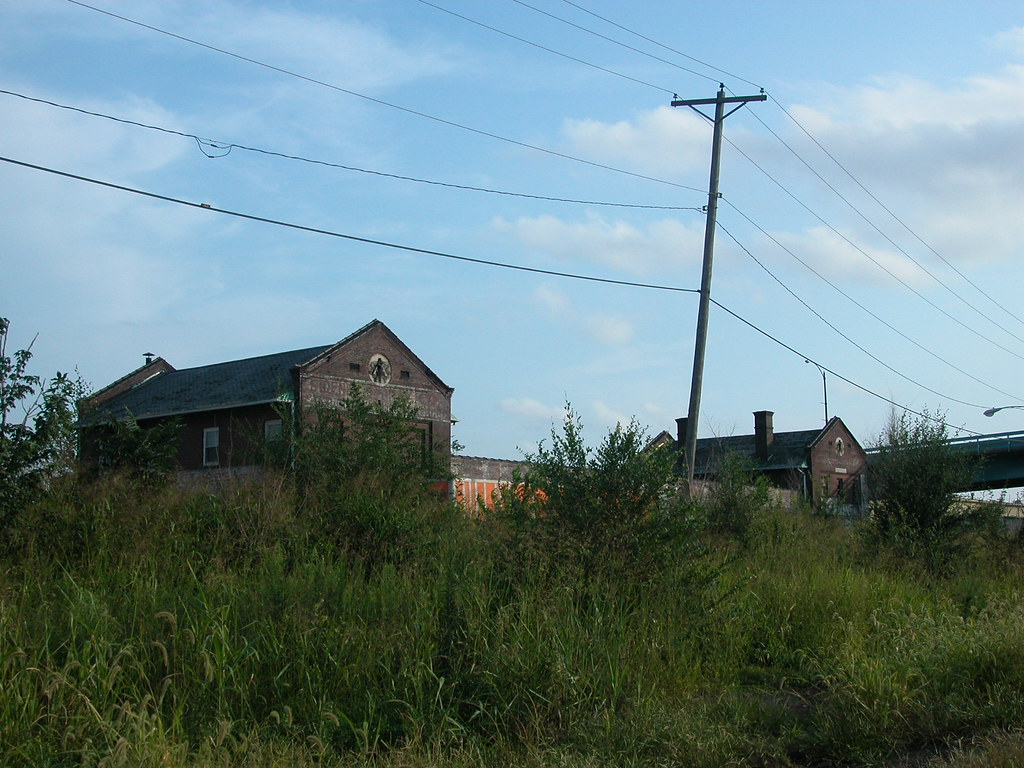
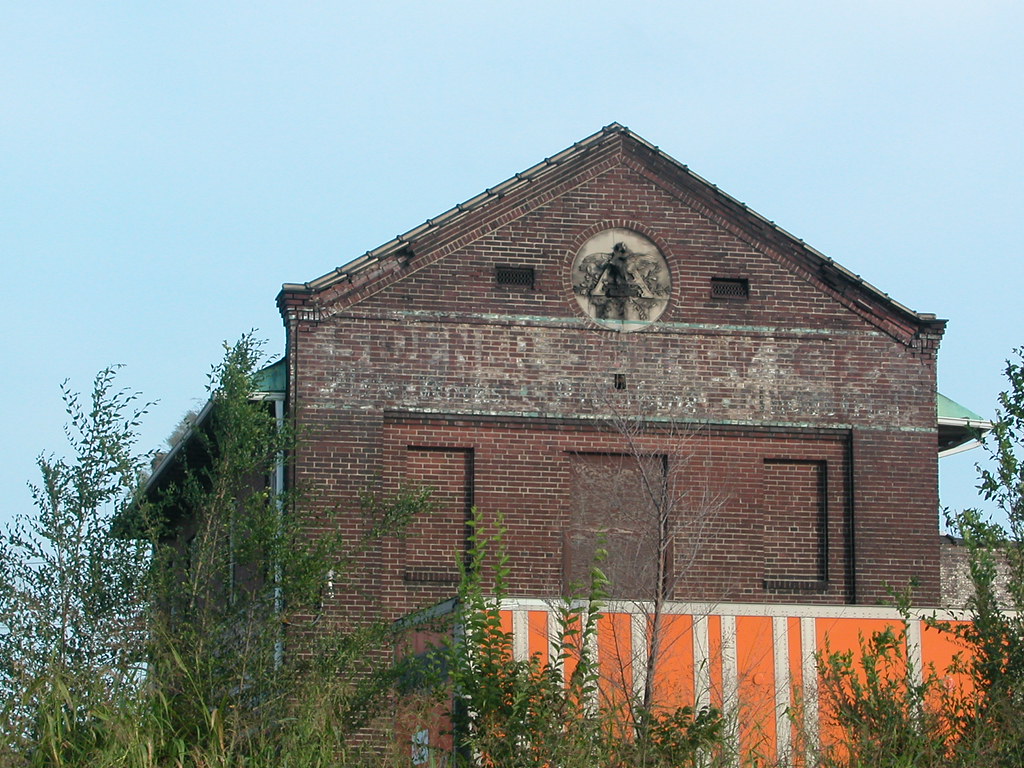
    Under the 20th Street viaduct bridge in Granite City, Illinois stands a reminder of previous changes within the Anheuser-Busch empire. On Adams Street is a transfer terminal for the brewer built in the 1911 before the onset of prohibition. The brewer sent train loads of beer to Granite City by rail across the Merchant’s Bridge, and the trains delivered the beer to this building. From here, teams of Clydesdales and later trucks carried smaller deliveries to local restaurants, taverns and lodge halls.

    Anheuser-Busch closed the transfer terminal after World War II, when it became more feasible to simply truck the beer from St. Louis over roads. The transfer terminal remains, and is still in use as a transfer facility. Nowadays, truckloads are switched out here. At each of the four gable ends is a terra cotta medallion bearing a relief of the Anheuser-Busch eagle. The adjacent rail line does not have a spur to the old Anheuser-Busch transfer terminal. The terminal’s use passed with time, then the railroad spur and finally the brewer itself.

    Categories
    Housing Hyde Park North St. Louis O'Fallon Old North The Ville

    "Junction" Not Among Projects Recommended by MHDC Staff

    by Michael R. Allen

    The Missouri Housing Development Commission (MHDC) has published staff recommendations for tax credit allocations to be made at the December 12 MHDC meeting. Noteworthy is that the Junction development in Old North (“‘The Junction’ and Old North’s Housing Balance,” November 29) is not among the projects recommended for approval of 9% federal low income housing tax credits. St. Louis projects recommended for approval are the Dick Gregory Place project in the Ville and new phases in the North Newstead Association’s ongoing project in O’Fallon and Better Living Communities’ project in Hyde Park.