Categories
Events Historic Preservation

Preservation Week Begins This Friday

Landmarks Association of St. Louis kicks off this year’s Preservation Week on Friday with a ribbon cutting at 3:30 p.m. LoftWorks’ Ludwig Lofts at 1004-6 Olive Street downtown. This event includes an open house until 6:00 p.m. From there, the week progresses with house tours in old North St. Louis, Skinker-DeBalivere and the Central West End; a walking tour in St. Louis Place led by yours truly; the Eleven Most Enhanced Places awards ceremony; bowling at Saratoga Lanes; a trivia night hosted by Patrick Murphy; a book sale to benefit the Chatillon-DeMenil House; and more.

I will feature some of the events here, but the full calendar is available on Landmarks’ website.

Categories
Architecture Historic Preservation LRA North St. Louis St. Louis Place

Passage of a Block Face: 1900 St. Louis Avenue, North Face

by Michael R. Allen

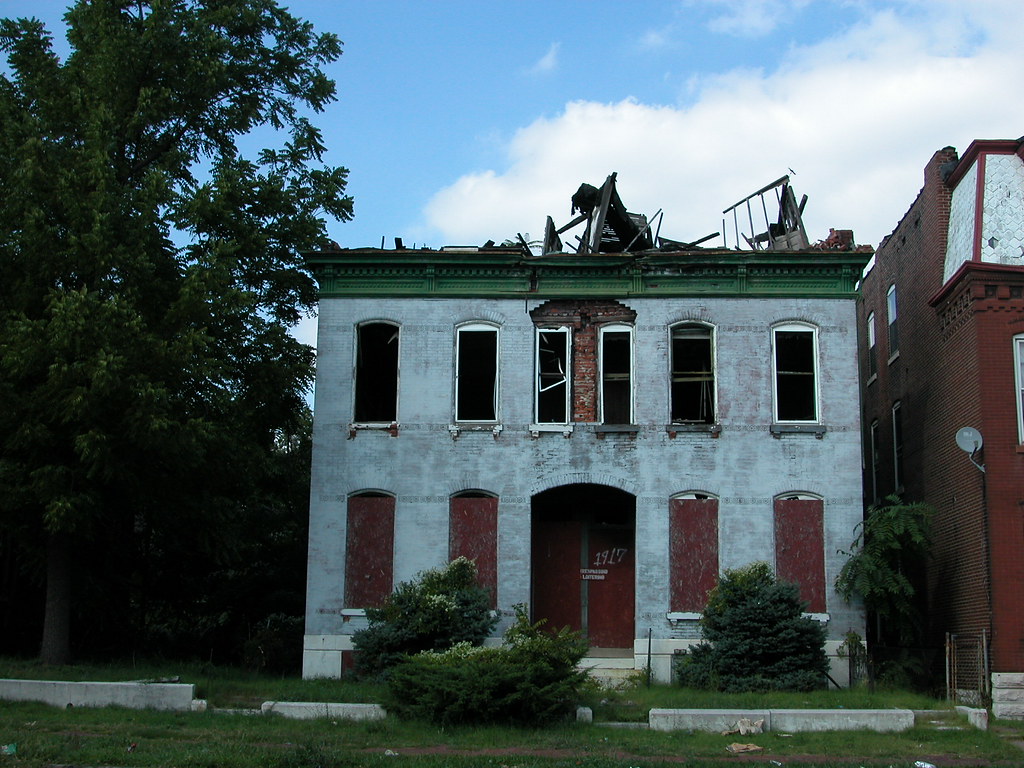
Following the trail from the recently-demolished house at 1951 St. Louis Avenue, let’s examine the rest of the block two years ago. Here were the thee buildings east of that house.
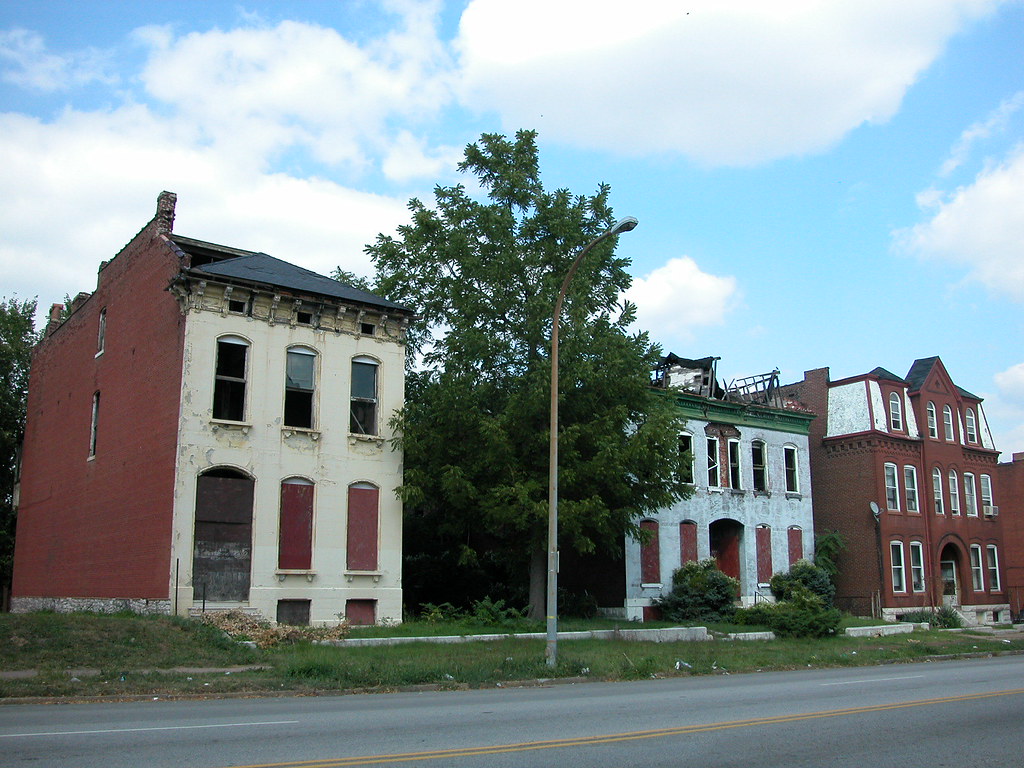
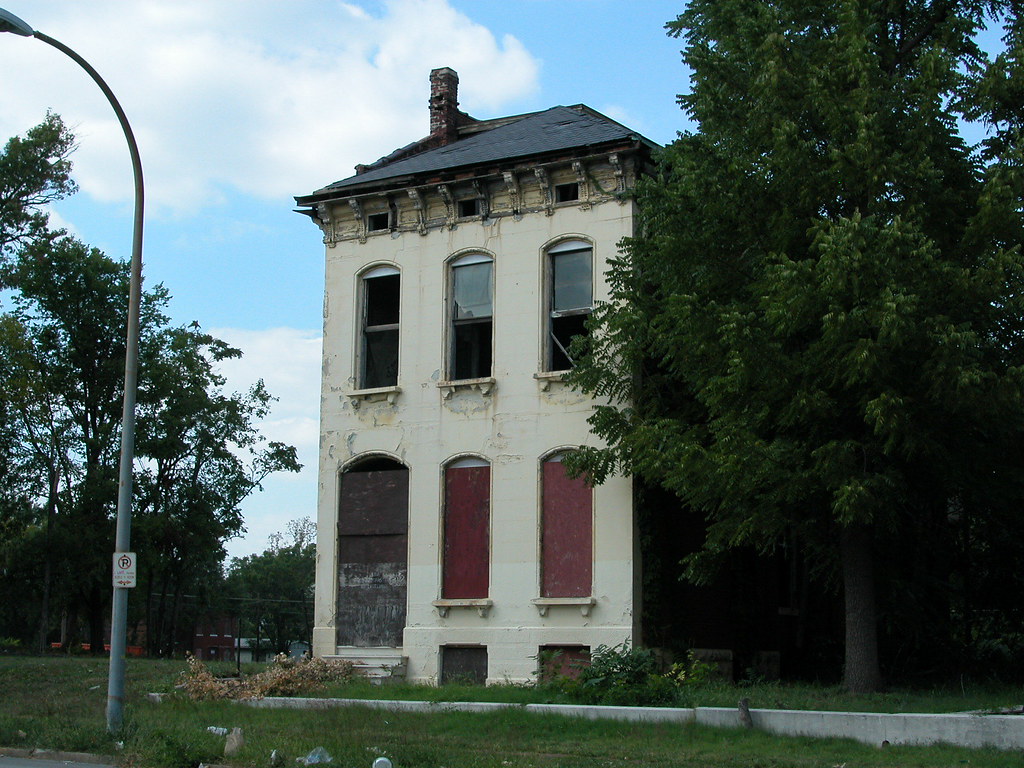
At the left, see a very stately Italianate single-family home. In the center is a brick tenement, with thew front wall painted and a likely mansard roof destroyed by fire; this building was razed in 2007. Both buildings were owned by the city’s Land Reutilization Authority. These represent common styles and forms for the 1880s. The building at the right is an apartment building that is occupied to this day. This building demonstrates the near north side architectural sensibility of the 1890s — the mansard roof form remains, but it is divided by a prominent brick dormer. The cornice is brick, not wood, and the entrance is formed by a generously wide Roman arch.

The Italianate home today stands vacant, and the east wall of the rear ell is starting to lose bricks fast.

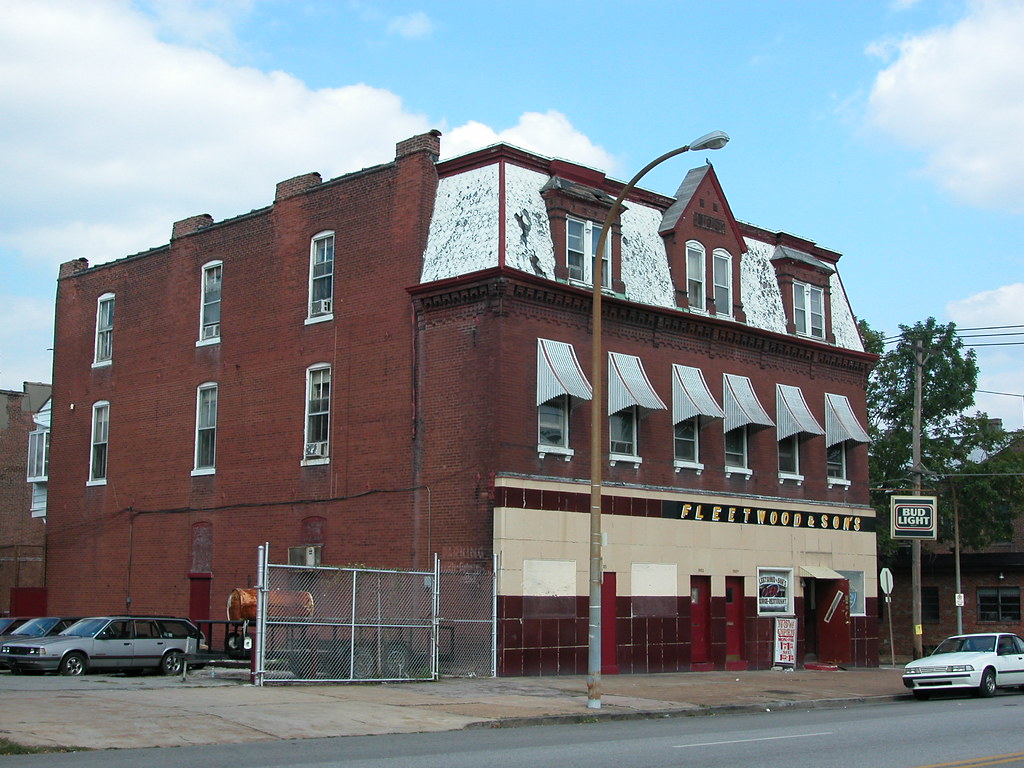
Anchoring the block faces eastern end is another 1890s building, a solid three-story storefront building housing Fleetwood and Son’s. Behind the sleek modern vitrolite facade is one of the north side’s coolest bars. (Warning: Fleetwood’s is a 30-and-over establishment, so young punks should hang elsewhere.)
A 1909 Sanborn fire insurance map shows eight buildings on this (north) side of the 1900 block of St. Louis Avenue. Three of these, long gone, were large buildings. Just west of Fleetwood’s stood the North Branch of the Young Men’s Christian Association. Between the house at the other corner and that Italianate house were St. Paul’s Methodist Episcopal Church and a large mansion enjoying a generous side yard between it and the church.
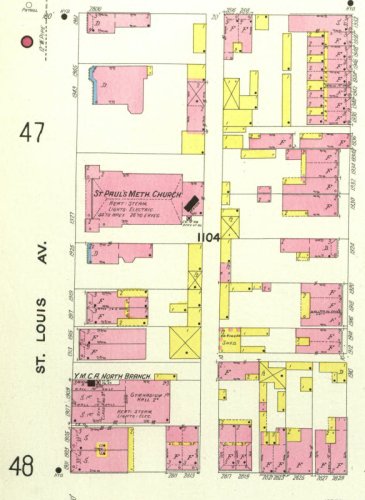

The 1964 Sanborn fire insurance map shows that the North Branch and the mansion were gone. The Romanesque Revival St. Paul’s, which had been built in 1902 and designed by Matthews & Clarke, survived until 1998 when it was senselessly demolished by its owner (LRA).

Last year, all of the remaining buildings on the north side of this block (across the alley) were decimated by brick thieves operating with rapacious precision. This spring, those damaged buildings came down. What does the future hold for this block?

The Italianate house seems destined for demolition next. (May that not be the case.) The apartment building and Fleetwood’s, though, are going to be around for a long time to come. What fills in around them is anyone’s guess. Will it be new homes or shops that express the sense of place that the fallen buildings did? That depends on what our sense of this place is when we building — or, more likely, the sense of who does the building and who delivers a vision for rebuilding St. Louis Place to that builder.

It’s easy to shudder at the prospect. After all, the current sense of St. Louis Place held by many is confused and beneath the dignity of the neighborhood’s generations of residents, past and present. Once a certain sense emerges, rebuilding will lead to a block face as engaged in the values of its age as this block face once was. Although we have seen tragic loss of this block, let us not neglect to lay out the blueprints for a rebuilding that will honor our heritage.

Categories
landbanking North St. Louis Northside Regeneration

Larmer LC Rapidly Buying Property in JVL, St. Louis Place

by Michael R. Allen

I had been waiting for the north side holding companies controlled by Paul McKee to make a move in 2008. Surely the lull of autumn would lead to spring purchases in this buyer’s market. None of the companies have made a single purchase since December.

However, a new company has been quite busy buying property in north city. Larmer LC, incorporated on December 3, 2007 by third-party registrars at the CT Corporation System, has purchased at least 45 properties in JeffVanderLou and St. Louis Place since its incorporation (see them all here). Readers may recall that CT Corporation System registered McKee’s holding companies before registration was transferred to McEagle Properties.

Larmer LC’s tax bills go to the address of 2854 Keokuk Avenue in south city, a building owned by F & B Properties LLC. That connection seems a coincidence. What may not be coincidental is that Larmer has started buying property after the other companies stopped.

Categories
Demolition Historic Preservation North St. Louis St. Louis Place

The House at 20th and St. Louis

by Michael R. Allen

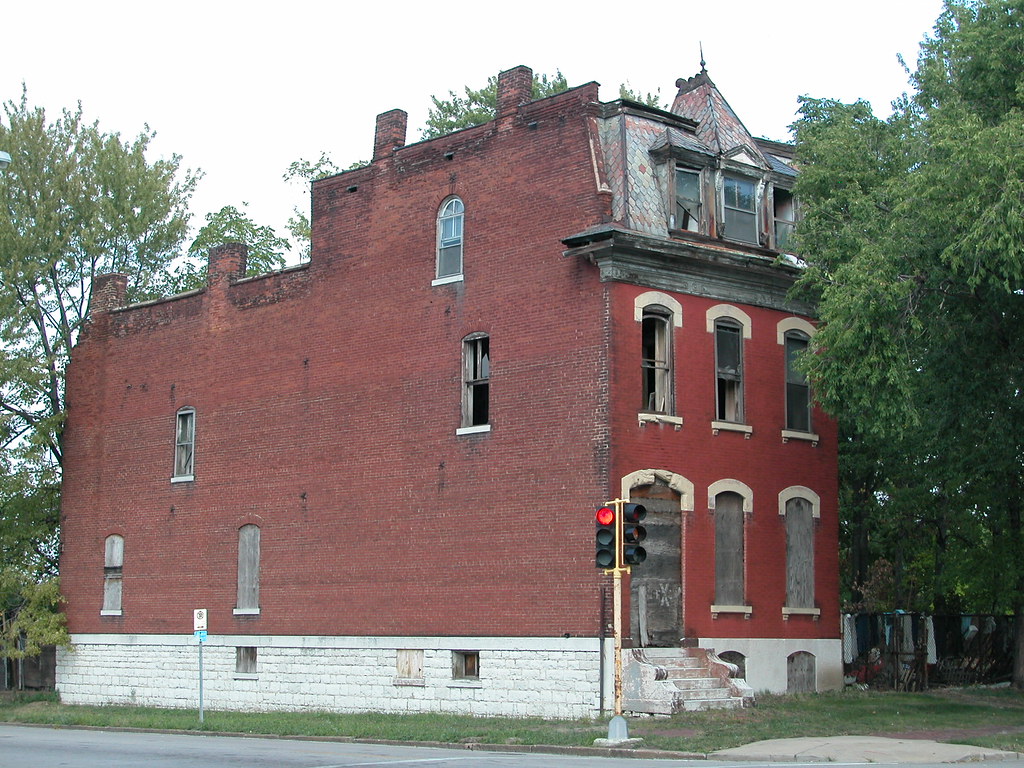
We shall never again see this beautiful house at the northeast corner of 20th Street and St. Louis Avenue in St. Louis Place, just north of the boundary of the Clemens House-Columbia Brewery National Historic District. Wreckers took down the house last week as part of a city demolition package. The house had fallen on hard times. Vacant for years, the house lost its roof through collapse and sections of the western wall were beginning to collapse inward. Its owner was an elderly man who lived in the ruins; he was apparently on a bus downtown to try to stop the demolition when the wreckers started their work. The home was mostly gone when he returned.

Nonetheless, the beauty shone through the devastation. This was one of the few early large corner houses on St. Louis Avenue. Notice the shallow setback from St. Louis Avenue and the lack of any setback at all from 20th Street. Originally a single-family home possessing the same grandeur of its peers on the avenue, the house is resolutely urban in character. St. Louis Place had an order of fine houses, and homes on St. Louis Avenue were more prosaic than the slightly more expensive ones that lined both sides of the St. Louis Place park. Hence this house balances the expression of wealth its owners intended with a conventional placement of the home typical of the street. No one could have expected seclusion on a main thoroughfare.

What was most striking about the home was its intact features. Although derelict, the house was never painted and kept its wooden windows, the cornice, dormer, slate shingles and even its roof cresting. The eclectic mix of Second Empire and Italianate features was restrained by the purity of expression typical of its time (likely the early 1880s). The front wall was brick, the lintels simple stone arches. There was little pretense despite its stylistic impurity.

Standing vacant, the home was almost frozen in time. While the home remained immobile, the forces of water, gravity and time moved forward against the house.

Categories
Chicago Infrastructure Streets

STOP

by Michael R. Allen

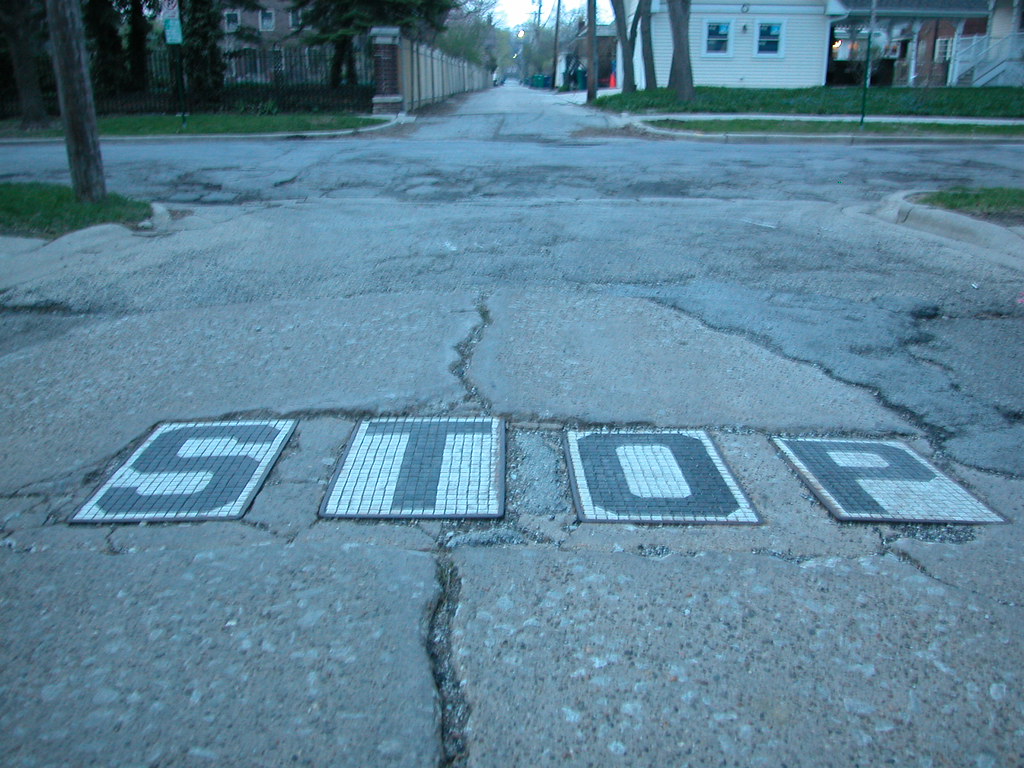
This neat feature alerts drivers in an alley headed north toward Ontario Street between Linden and Euclid avenues in Oak Park, Illinois. Embedded tiles form a sturdy, enduring stop sign.

Categories
Central West End Demolition Flounder House Historic Preservation North St. Louis Preservation Board South St. Louis The Ville Tower Grove East

Preservation Board Approves Flounder House Demolition, Denies Demolition in The Ville

by Michael R. Allen

Here’s a quick report of some actions at yesterday’s St. Louis Preservation Board meeting.

2915 Minnesota Avenue: Preliminary approval for demolition of flounder house granted 4-2. Terry Kennedy, Mary Johnson, David Richardson and Anthony Robinson in favor; Melanie Fathman and Mike Killeen opposed.

4477 Olive Street: Unanimously deferred until the July meeting to provide more time to explore alternatives.

4568 St. Ferdinand Avenue: Demolition permit denied 4-3. Killeen, Fathman, Robinson and Richard Callow in favor of motion to deny; Johnson, Kennedy and Richardson opposed.

Categories
Downtown

Downtown’s Retail Needs

by Michael R. Allen

An article in today’s Post-Dispatch (“Retailers say downtown area will catch on”) includes this puzzling spin:

Although more retail shops are opening their doors, merchants are concerned that most of the businesses currently under construction are not the type of unique specialty stores that would boost downtown’s image as an eclectic, artsy shopping area.

That’s strange because the biggest complaint I hear from downtown workers and residents alike is that there are not enough regular plain old businesses to meet daily needs. There is no office supply store downtown. No pharmacy. No donut shop. No general new book store.

Not sure what merchants want, but other people using downtown want it to function as a place where necessities can be procured without driving to Hampton Avenue or further west. Most people buy an imported vase once a year, if that. Everyone needs paper clips, a toothbrush or a quick meal more frequently.

I’m glad that downtown is a retail destination, but I’m disappointed that its retail options don’t meet the needs of many of its daily users. While workaday shops don’t make for the most exciting ribbon cuttings, they make a sustainable neighborhood.

Categories
Demolition Flounder House Historic Preservation Housing Preservation Board South St. Louis Tower Grove East

Fate of Flounder House on Monday’s Preservation Board Agenda

by Michael R. Allen

On Monday, the Preservation Board will determine the fate of this old city-owned flounder house at 2915 Minnesota Avenue in Tower Grove East. The 710-square-foot home lies outside of the boundaries of the Tower Grove Heights Historic District, making it ineligible for rehab tax credits without landmark designation. Clearly, the building is eligible in its own right — there are fewer than 30 flounder houses left in the city, and the building type is indigenous. Alderwoman Kacie Starr Triplett (D-6th) is seeking demolition, while the Tower Grove East Neighborhood Association strongly opposes demolition. Triplett’s application was deferred by the Board two months ago to provide the Cultural Resources Office (CRO) time to develop a pro forma showing that rehabilitation is feasible.

Working with developer Will Libermann, who recently rehabbed a flounder house at 3330 Missouri Avenue in Benton Park, CRO has arrived at an impressively economical budget; see its report here. Liebermann’s plan would restore the derelict home to former beauty while creating badly-needed affordable fully-rehabbed, historically-sensitive housing. (His other flounder sold for $125,000.) With the neighborhood behind preservation, there should be a clear outcome but Triplett remains stridently in favor of demolition.

Should the Preservation Board approve demolition, there would be yet another decision creating a housing gap between upper-income residents who can afford fully-rehabbed historically-sensitive homes and lower-income residents who largely cannot. Here is the rare opportunity to cut against the gap. While the home is smaller than your average multi-family conversion, it is a great size for a single person or a childless couple.

The Preservation Board meets Monday, April 28 at 4:00 p.m. in the 12th floor conference room at 1015 Locust Street downtown. See the full agenda here.

Categories
Central West End Demolition Historic Preservation Preservation Board

Same Old Story?

by Michael R. Allen

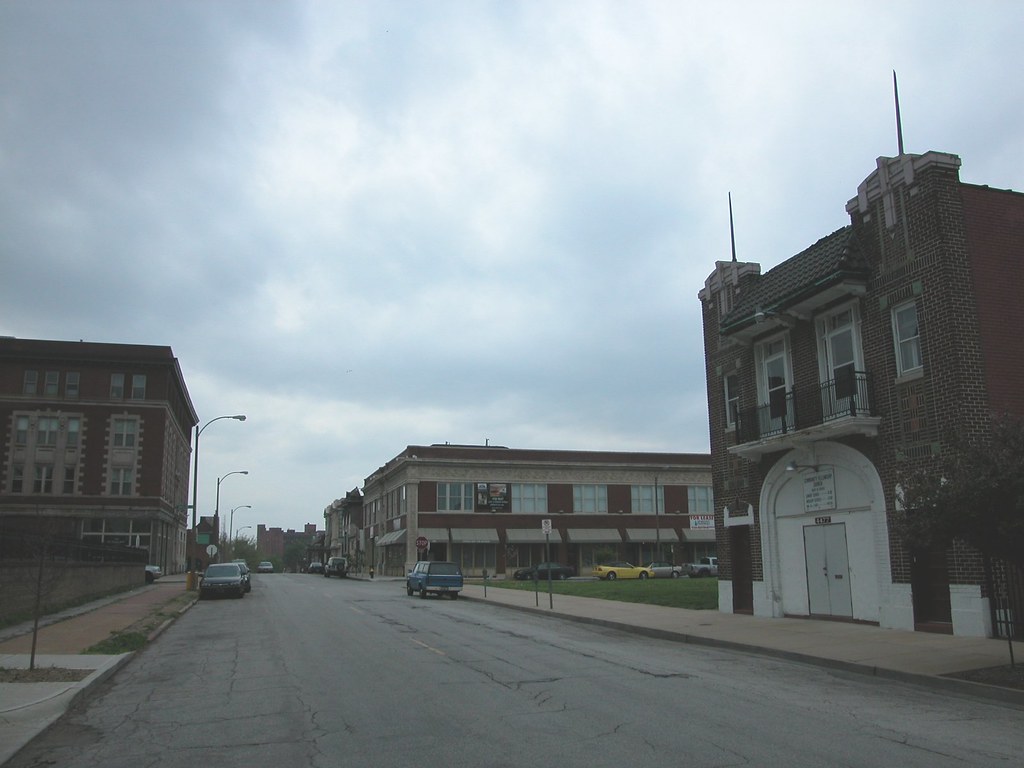
Same old story: the owner of the lovely building at 4477 Olive Street pictured here is applying for a demolition permit. The city’s Preservation Board will consider the demolition on preliminary review at its regular meeting on Monday; the city’s Cultural Resources Office is recommending that the board deny the application.

Next-door neighbor Youth Technology Education Center wants to demolish the building immediately for green space, but anticipates eventual expansion. (Again, same old story.) While Alderman Terry Kennedy (D-18th) supports demolition in deference to the center’s laudable accomplishments, the Central West End Association is opposed to the demolition.

The Craftsman style storefront building was built in 1917 and designed by architect Edward H.A. Volkmann, who designed several other buildings in this vicinity. Several unusual elements, like the finials atop the raised parapet sections, the balcony and the former arched center display window have led to all sorts of guesses about the building’s origin. One story had the building as a fire station. The truth is a bit more mundane — the building was built for the St. Louis Cleaning Company and used as by the clothing cleaners at least through the 1930s. Cleaners were an important new business type in the early twentieth century, catering to the city’s newly-mobile middle and upper classes. The Central West End has several old cleaners’ buildings, with the most resplendent being the Anderson Laundry on Washington Boulevard west of Euclid.

Last year, the commercial district on Olive Street between Pendleton and Walton was added to the city’s Central West End Historic District. With historic rehabilitation tax credits now available, the street is being remarkably transformed. Before that, Central West End Builders had already obtained National Register of Historic Places designation for and rehabbed the Lister Building, Taylor-Olive Building and Eugene Field School (directly across the street) around the intersection of Taylor and Olive. (The following photograph shows the Lister and Taylor-Olive buildings’ proximity to the building at 4477 Olive.)

Apparently there is a developer interested in rehabbing the building, which until recently was used as storefront church. (Same old story, huh?) In the last two years, developers have rehabbed or are rehabbing almost all of the other buildings on this block, and there is even new construction including the Center. Good things aren’t just coming — they are here, and this finely-detailed building should be a part of them.

The Preservation Board meets Monday at 4:00 p.m. in the 12th floor conference room at 1015 Locust Street downtown. The full meeting agenda is available here.

Categories
Churches Demolition Historic Preservation North St. Louis

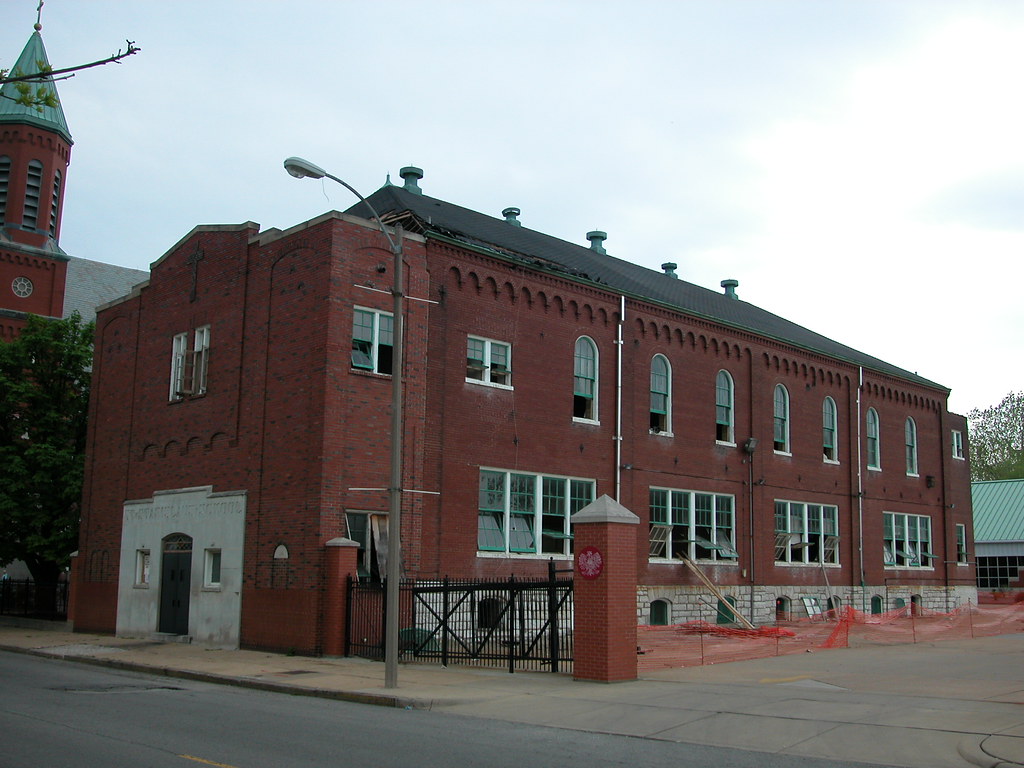
Demolition of St. Stanislaus Kostka School Underway

by Michael R. Allen

Demolition of the St. Stanislaus Kostka School at 1413 N. 20th Street is now underway (see “St. Stanislaus Kostka School Deserves a Reprieve,” April 6). Aalco Wrecking is the demolition contractor and Bruce Gerrie has salvage rights.