Categories
Historic Preservation Mullanphy Emigrant Home North St. Louis Old North

A Good Day for the Mullanphy Emigrant Home

by Michael R. Allen

I just received this note in my inbox from Karen Heet, Development Coordinator for the Old North St. Louis Restoration Group:

On your way home tonight, be sure to drive by the Mullanphy Emigrant Home where John Smith Masonry had a crew and a crane working to install CMU block on the south wall. They’re almost to the third floor now!

This is great news. This winter’s cycle was so erratic that masonry work was almost impossible to schedule. Since John Smith Masonry is donating their labor on the side from paid work, getting a good day for work has been difficult. This is in contrast to last winter, with the warm streak from November through January.

Categories
Churches Demolition North St. Louis

St. Stanislaus Kostka Poised to Demolish Historic School

An article in today’s Post-Dispatch reports that St. Stanislaus Kostka parish is planning to demolish its historic school, possibly starting as early as Monday. The public is invited to tour the school tomorrow from 11 a.m. until 5 p.m.

Categories
Chicago Churches Fire Historic Preservation Illinois Louis Sullivan

Pilgrim Baptist Church in Chicago Awaits Reconstruction

by Michael R. Allen

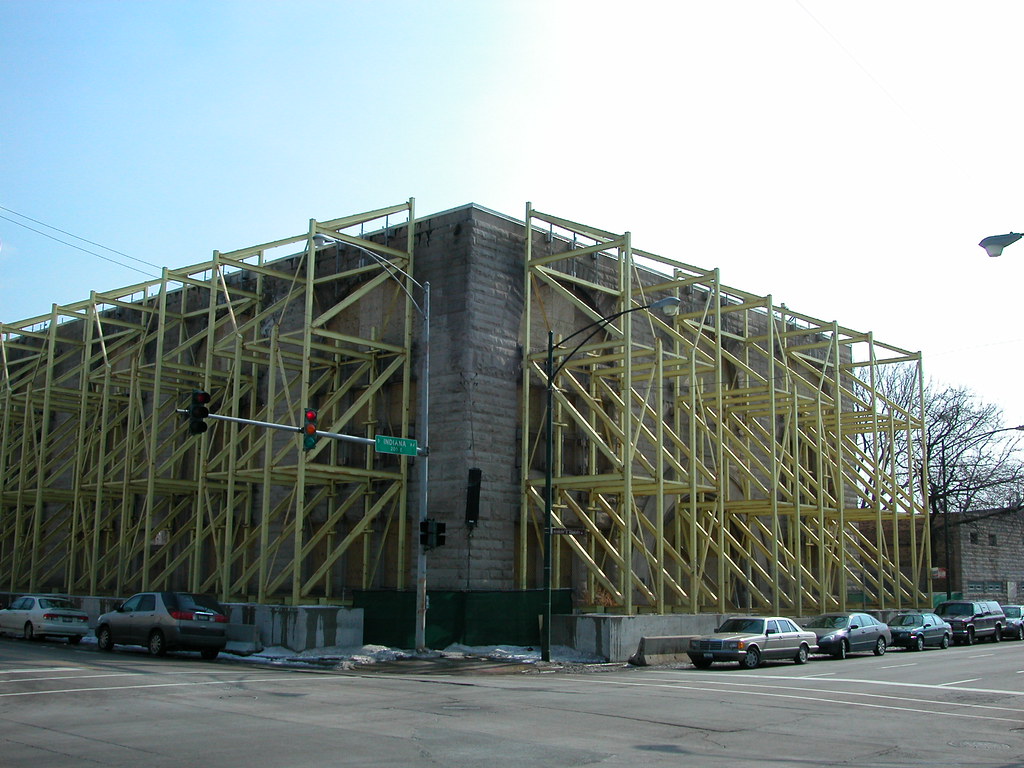
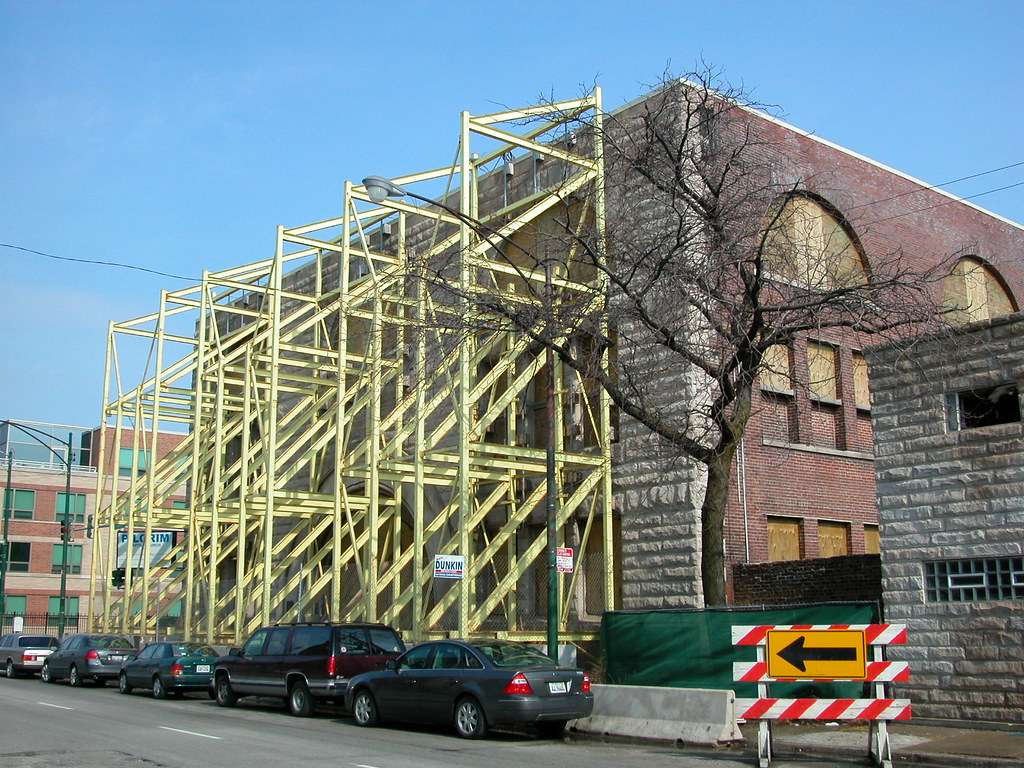
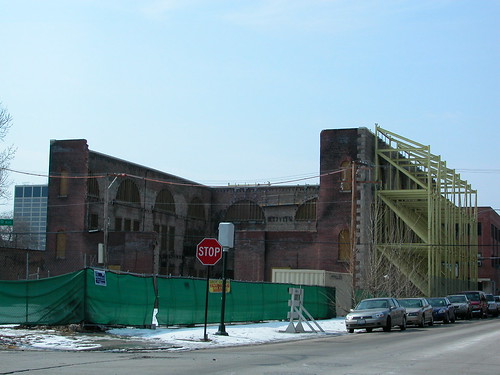
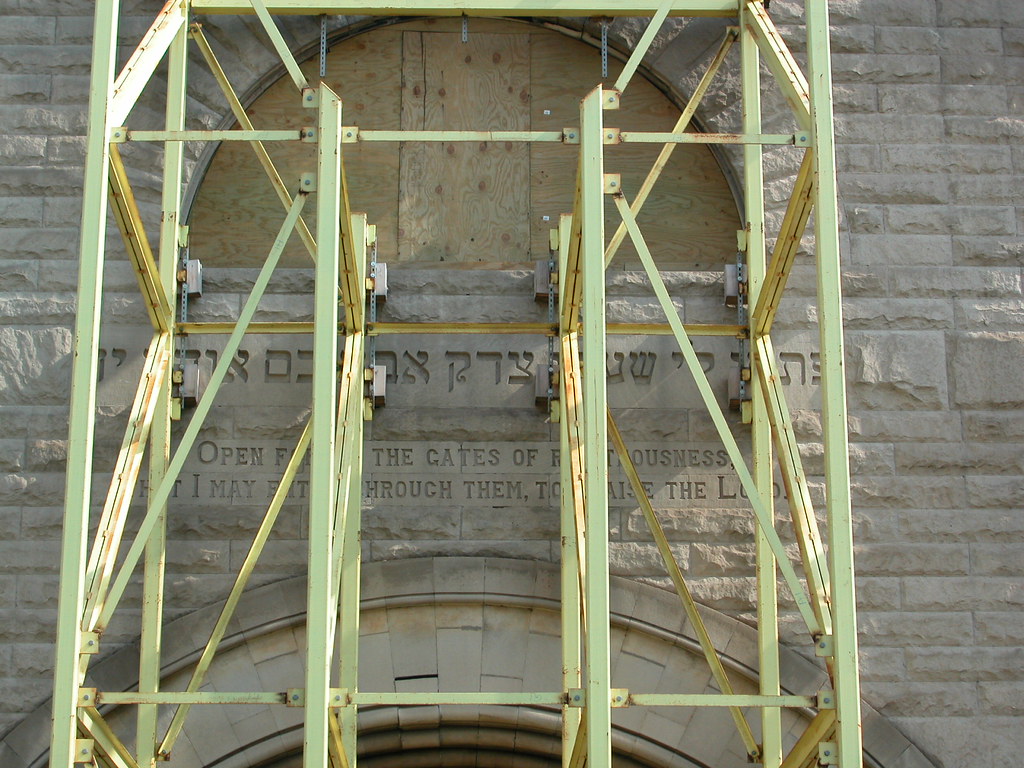
Last month while I was visiting Chicago I stopped by the Pilgrim Baptist Church at Indiana Avenue and 33rd Street in the Bronzeville neighborhood. Built in 1891 as the Kehilath Anshe Ma’ariv Synagogue, this Prairie School masterpiece was designed by Louis Sullivan and Dankmar Adler. In January 2006, a devastating fire struck the building, leaving nothing intact save the limestone and brick walls. The photos below show steel bracing against the street-facing walls. The bracing was required by the Chicago city government to prevent collapse into the public right-of-way. Engineers have determined that collapse is unlikely since the walls remain sound.

Although the church has yet to be able to start reconstruction, they have made some progress with raising money and securing the structure. In 2006, Illinois Governor Rod Blagojevich pledged $1 million in state funds to the church school (since the state can’t directly fund the church) to rebuild. Earlier this month, after his administration gave the money to the wrong school, the governor pledged an additional $1 million on top of the previous pledge. Last year, Pilgrim Baptist chose architects Johnson & Lee of Chicago and Quinn Evans of Ann Arbor, Michigan, to design the reconstruction of the ornate Sullivan building. How much of the intricate interior gets rebuilt is undetermined, but the exterior should be brought back fully to original appearance.

Categories
Media North St. Louis Northside Regeneration

Two Important Articles on North St. Louis

by Michael R. Allen

Two important articles on north St. Louis went to press this week:

Once again the Riverfront Times‘ Kathleen McLaughlin is a football field ahead of other reporters. In “More North St. Louis Smoke Signals from Paul McKee and McEagle Properties” she not only gets quotes from a McEagle spokesman, she gets this one: “I don’t think there’ve been any decisions made on whether there’s even a project.” This is pivotal information, and unfortunately the RFT buried this story on its blog rather than publish it as a front-pager. Please read it.

In the St. Louis American, Team Four principal William Albinson has a commentary clearing up a lot of the myths surrounding the “Team Four Plan.” Albinson’s conclusion — that the myth is a convenient and polarizing excuse — should resonate with a lot of readers here. Hopefully his words will also provoke readers of the American to rethink the narrative of development in north St. Louis.

Categories
Events Housing LRA

Big Big Tour In a Buyers’ Market, This Sunday

For real estate, we have a buyers’ market at the moment. Why not go shopping?

If you are looking for real estate to buy, rehab or just admire, the free annual city housing tour known as the Big Big Tour is back this Sunday, March 30. Founded by Marti Frumhoff, the tour is actually a coordinated open house day for properties available in the city of St. Louis. People start at Central Reform Congregation between 11:00 a.m. and 4:00 p.m., where they get the map of open houses and peruse the Homebuyers’ Fair that includes booths and information from mortgage brokers, neighborhood organizations and real estate businesses. This year’s Homebuyer’s Fair will include a booth where Old North resident Barbara Manzara will have information on how to purchase real estate from the city’s Land Reutilization Authority. That alone is worth a visit — but so are the dozens of houses you can inspect and, yes, even buy on Sunday.

Categories
Brick Theft North St. Louis Northside Regeneration St. Louis Place

Brick Rustlers Decimate Wright Street Block

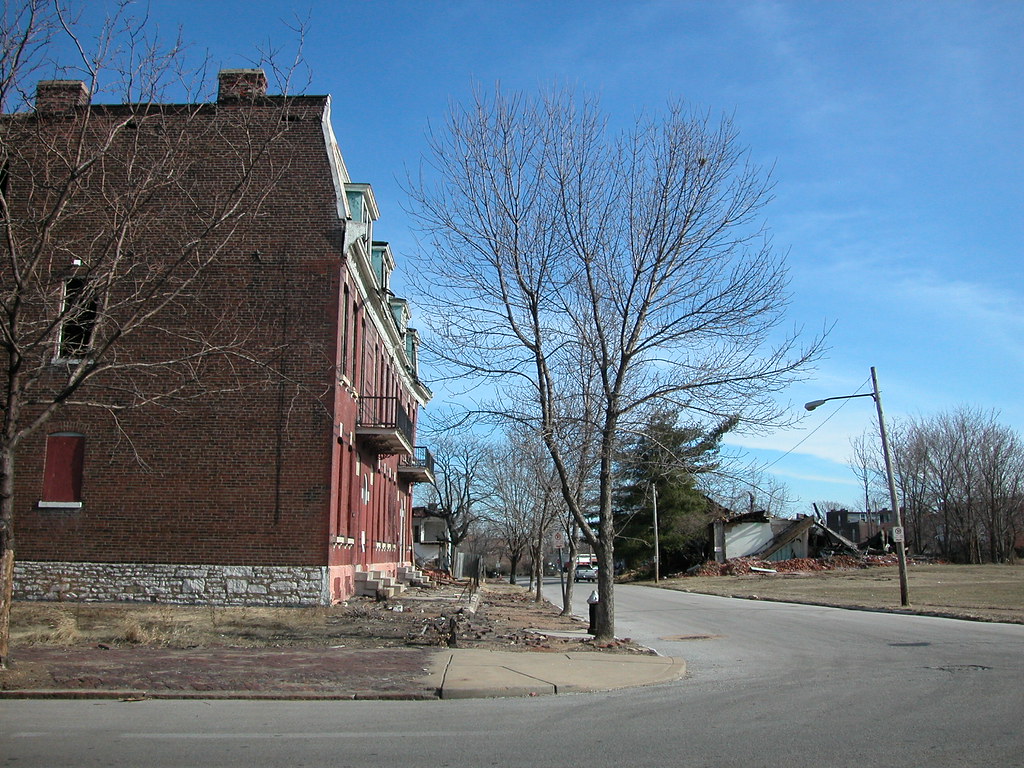
Five years ago, almost every residential unit on the 1900 block of Wright Street in St. Louis Place was occupied. These units were rentals in conditions ranging from good to poor. None of this housing was rehabilitated, but the buildings on the block were in solid condition with average deterioration for their age.
The buildings formed a balanced array of different vernacular styles. On the south side of the street, east of a vacant lot, was a brick-faced, mansard-roofed, three-story former single-family home. That house was vacant. East of that, a side-gabled two-story two-flat. East of there was a row of flats — two stories with attic, side-gabled brick with striking and simple details.
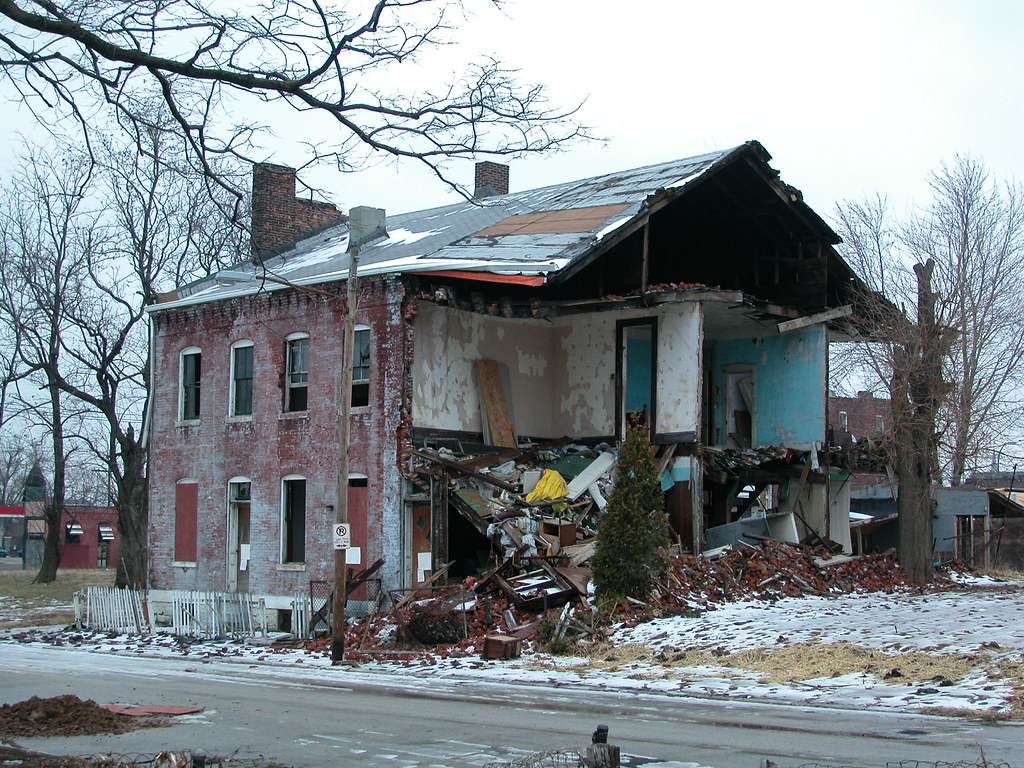

Across the street was a flat-roofed two-flat probably built a little later than its neighbors. (See photgraphs of this side of the block before rustling.) This building had a Romanesque Revival arched window on the first floor and a dentillated tin cornice above terra cotta garlands. To the west was a two-story alley house reconfigured to face Wright Street, probably after the demolition of the house that stood in front of it.

West of that, another house set back — three stories, dormer on the front of the roof, corbeled brick cornice. That house stood next to a few vacant lots. Completing the north street face was a three-story half-flounder two-flat with a front dormer. The house had brick corbels at its cornice, perhaps replacing an earlier wooden cornice. This house was very typical of late 19th century vernacular tenement buildings in the city. It shared a wall with the block’s crown jewel, a three-story row of flats with mansard roofs, cast iron balconies, detailed limestone keystones and decorative brickwork.

The block’s architecture was amazing, yet typical of the stock of the near north side. The conditions of the buildings were likewise typical. The block needed improvement, and the houses rehabilitation, but in many ways the block was doing a lot better than most in the neighborhood.

Then, in 2005, came an investor from St. Charles County. Not Paul McKee, but another notorious large-scale developer named Doug Hartmann. Hartmann bought the ornate row on the north side of the street, relocated the tenants and started rehabbing the building. Then his mortgage scheme caught up with him, work stopped, and the building sat open and empty.

Later that year, the other big developer came to the block. McKee’s holding companies started with the flat-roofed house and evicted the tenants. The holding companies took another 18 months to acquire the rest of the block, save Hartmann’s property and the vacant house. Everyone moved out. A small glimmer of hope emerged when the titles to Hartmann’s properties were cleared and some of his investors acquired the row, but no work resumed. Last spring, illegal dumping started at one of the McKee houses (see my post “Silence is Golden” from May 2007). Then a plague descended on this block and all over St. Louis Place — brick thieves.

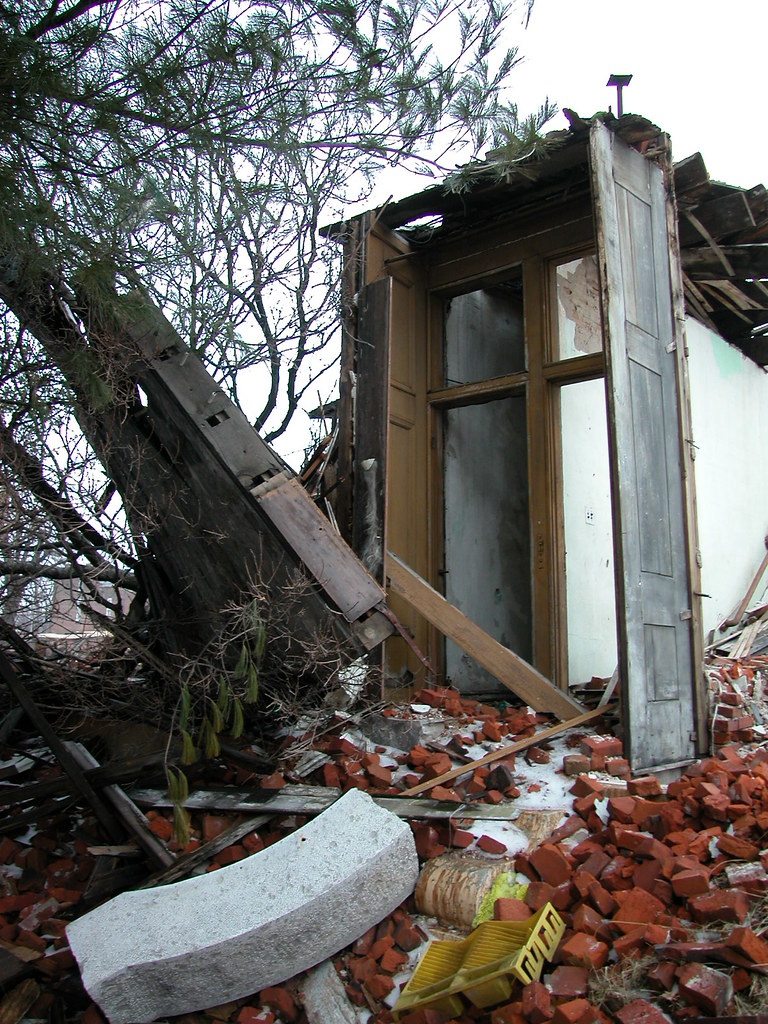
Never before had north city seen such a geographically-concentrated amount of brick rustling. Brick rustling is the activity in which unlicensed workers demolish abandoned properties solely to steal the bricks and sell them to brick yards for quick cash. What happened on Wright Street happened on Montgomery, St. Louis, Coleman, Garrison and many other streets in St. Louis Place and Jeff VanderLou. The rustling began in early 2007 and continues to this day. The targets seem to primarily be McKee-owned property. While the buildings are easy opportunities, and many of these buildings had been occupied only recently and thus unavailable for rustling, the timing has prompted much suspicion of a concerted effort on someone’s part.

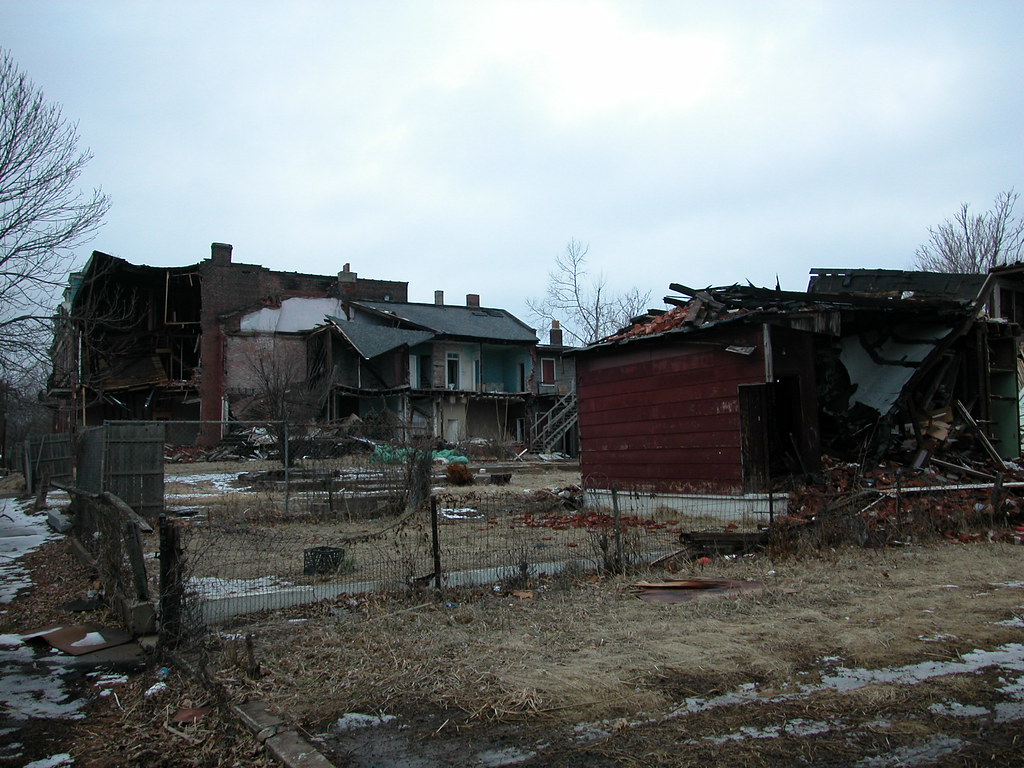
Earlier this year, the thieves had made their way through most of the buildings. The flat-roofed building and the exquisite row were standing intact until this February, when rustlers hit hard and fast, taking out pivotal front corners. For some reason, the thieves didn’t tackle the alley house. On a vacant block, brick rustling goes undetected. Even when someone sees it happening, chances are good that the person will dismiss the work as legitimate — or simply not care. Those who do need to call 911 at every instance; some reported instances have indeed led to arrests of thieves.

In February, Alderwoman April Ford-Griffin (D-5th) responded to the situation on this block by ordering emergency demolition of all of the buildings, including the alley house. Demolition is nearly complete. Who can blame her? With no hope for the buildings, their condition posed a public safety hazard as well as a sign of neglect. No one wants to live near the spectacle of a group of rustled buildings — it’s a frightening sight, one that drives visitors and homeowners alike to prettier places. The rewards of rustling to the thieves are small and immediate, but the reward to anyone wanting to buy out more residents of St. Louis Place is large and enduring.

The irony is that under the Distressed Areas Land Assemblage Tax Credit, McKee can receive tax credit money for the emergency demolition work that Alderwoman Ford-Griffin ordered, should he pay his bills before applying. Demolition work is reimbursed 100% by the credits. Attractive nuisances, indeed.

Additional coverage is available at St. Louis Patina: “St. Louis Place Blockbusting” (March 8, 2008) and “I Would Have Lived There” (March 6, 2008).

Categories
Architecture Central West End Infrastructure

Kinloch Telephone Company Delmar Exchange

by Michael R. Allen


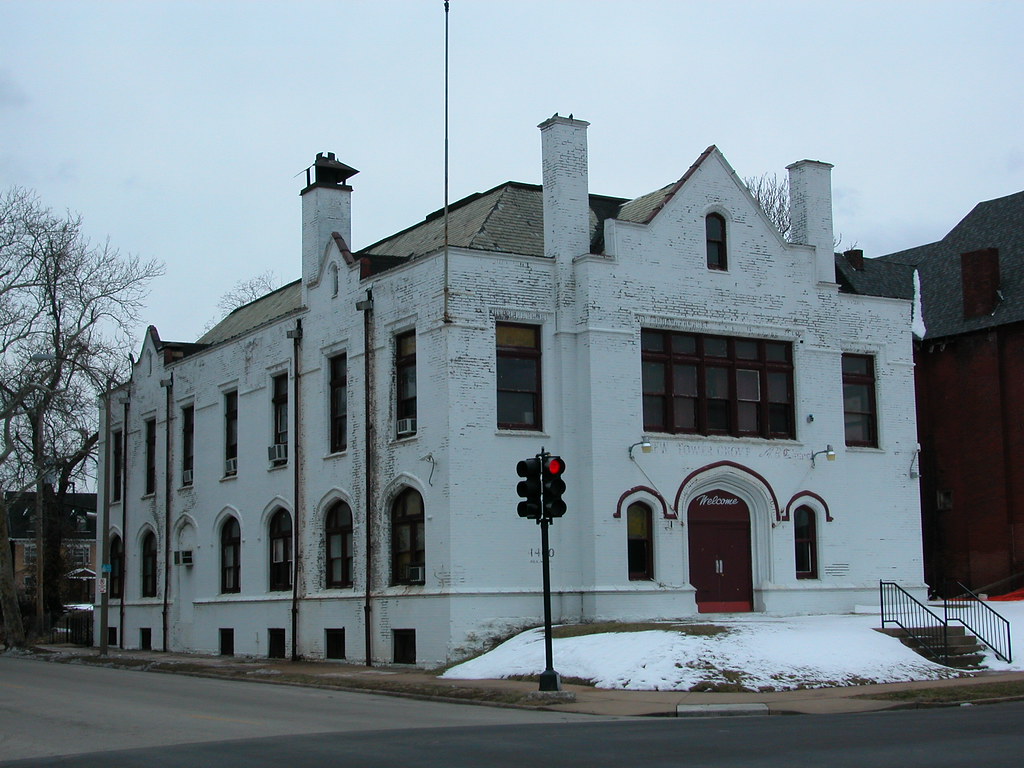
People driving down Delmar Boulevard may not known the history of the building pictured above, which is located at 4400 Delmar (southwest corner of Newstead & Delmar). With its hipped roof, almost Gothic window profiles and prominent entrance, the building may look like a church or social hall of some kind. In fact, currently the building is home to the New Tower Grove Baptist Church. Yet underneath the layer of white paint and the exotic style lies an intriguing but somewhat mundane building.

This building is the Delmar Exchange of the old Kinloch Telephone Company. At the turn of the twentieth century, St. Louis had two major telephone companies: Kinloch and Missouri Bell, which eventually secured a statewide monopoly. Kinloch served the entire city and St. Louis County; the company built four “exchanges” in the city where calls were repeated and switched to local lines. Kinloch survives as the name of a north county municipality near the airport, but little else. Kinloch’s last company headquarters stands downtown at the northwest corner of 10th and Locust streets, with its brick and terra cotta covered in a 1950s concrete skin. That building became the Farm and Home Building in the 1950s.

The architect of the repeater and switching building is Isaac Taylor, who also designed the first downtown headquarters on Seventh Street, served as chief architect of the 1904 World’s Fair and design numerous important downtown buildings. The building permit for the Delmar building dates to April 14, 1902, with the cost listed as $30,000 and Edward Steininger as contractor. A second major permit issued July 16, 1923 reports $20,000 in repairs with Southwestern Bell as the applicant and Steininger as contractor. The station had been subsumed when Bell purchased Kinloch Telephone Company earlier that year.

Categories
Architecture Columbus Square Demolition Housing Mid-Century Modern Pruitt Igoe

Cochran Gardens Demolition Nearing Completion

by Michael R. Allen

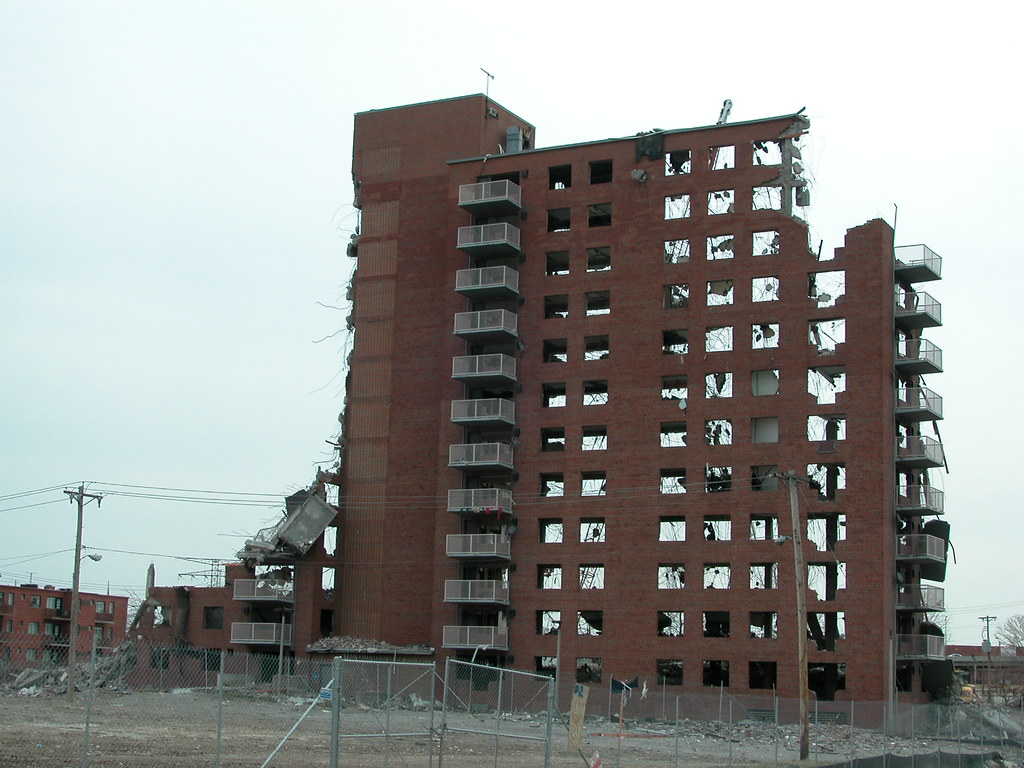
Demolition work at the Cochran Gardens housing complex north of downtown is nearing completion. After demolition of three low-rise buildings, wreckers are working to finish demolition of one of the two tall buildings at the former public housing complex.


Completed in 1953 and designed by architectural firm Hellmuth, Yamasaki & Leinweber, Cochran Gardens was the first project built by the St. Louis Housing Authority that made use of high-rise buildings. However, the complex balanced three tall buildings with low-rise buildings. Cochran included twelve buildings, and six were six stories each, two were seven stories, and four were twelve stories. Nevertheless, Cochran Gardens set the stage for the Pruitt, Igoe, Darst, Webbe, Vaughn and Blumeyer housing complexes that were composed exclusively of tall buildings. In time, all of these projects have been cleared and redeveloped, most using the federal HOPE VI program.


Cochran Gardens will retain its second tower, transformed in 1980 into elderly housing. That tower will remain as the first and last tall public housing building in St. Louis.

Categories
Demolition Midtown

SLU Demolished Wagner House Last Week

by Michael R. Allen

As of last Friday, the two-story Italianate house at 3438 Dr. Samuel Shepard Drive in Midtown, known as the Wagner House, was gone.

Here’s the time line of the demolition:

February 29: St. Louis University closes on the sale of the house.

February 29: St. Louis University applies for demolition permit.

March 4: Building Division approved demolition permit. Since the house stands outside of the Midtown National Historic District and within the Nineteenth Ward, which has no preservation review, the city’s Cultural Resources Office did not get to review the permit.

March 12: Workers begin removing interior fixtures and millwork.

March 17: Demolition of the house begins.

March 21: Demolition complete.

Read more at Vanishing STL: SLU Strikes Again! Destroying the Wagner House at 3438 Samuel Shepard.

Categories
Abandonment Demolition Historic Preservation LRA

Just Couldn’t Make It

by Michael R. Allen

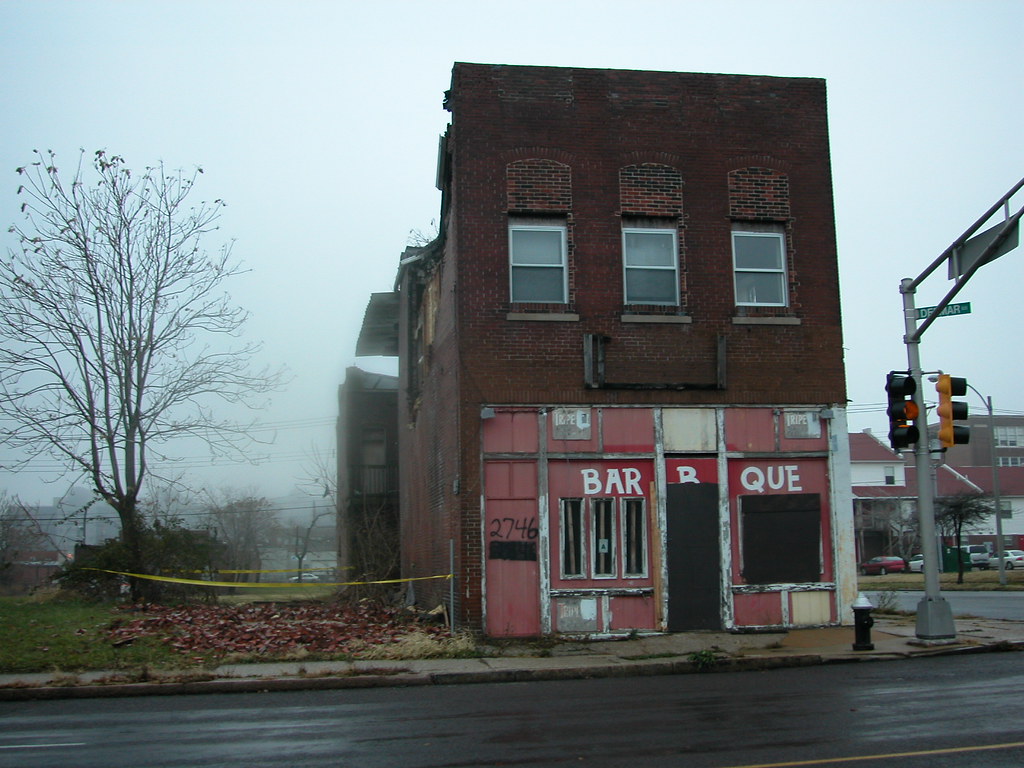
Until last month, this modest storefront building stood at the southeast corner of Delmar and Leffingwell avenues. According to city building permits, the building dates to 1881 and was originally four stories tall. Looking carefully at the building, I detected evidence of infill of the third floor sills and window openings just below the parapet wall, which lacks a creasing course. The shortened height and partly-filled windows are obvious, marring the building’s appearance. Still, handsome details like the iron storefront and arched side windows remained evident.

Once part of a robust, dense urban neighborhood just north of Mill Creek Valley, the building and an alley house behind it fell into the hands of the city’s Land Reutilization Authority. All of its neighbors were gone. Across Leffingwell stands a large housing project, while adjacent to the east is a lot owned by N & G Ventures LC, a holding company controlled by Paul McKee. South of here is the hulking campus of Wachovia Securities, formerly A.G. Edwards & Sons. Any semblance of the historic walking neighborhood in which this building played a commercial role was long gone. The city itself lost the mometum needed to keep even diminished buildings in use.

Befitting, the building’s east wall partly collapsed in December. On February 6, the Building Division approved a demolition permit and wrecking commenced. The neighborhood could have used a corner anchor, even as one small representation of its old form. Yet the building just couldn’t make it. Besides, would the time have ever come again for this lopped-off old building?