Categories
Events North St. Louis Old North

Architect Discusses Crown Square Project Tomorrow Night

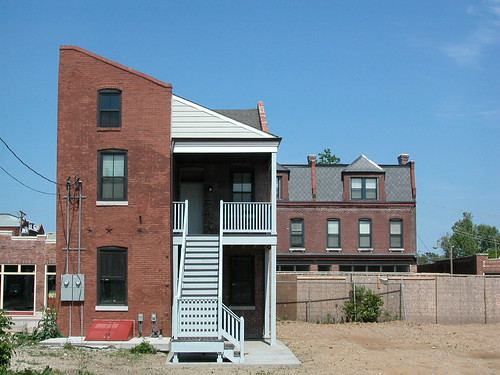
14th Street rehabilitation underway in May 2009.


What: Discussion on the Crown Square Redevelopment
When: Thursday, March 25 at 7:00 p.m.
Where: St. Louis Artists Guild, 2 Oak Knoll Park (directions/map)

The new Architecture Section of the St. Louis Artists’ Guild hosts its next meeting tomorrow night.

The featured speaker is architect Rob Wagstaff of Rosemann Associates, who will speak about the challenges faced in the Crown Square project (better known as the 14th Street Mall).

14th Street rehabilitation underway in May 2009.

Categories
Compton Heights Historic Preservation Preservation Board South St. Louis

Another Chance for the South Grand YMCA?

by Michael R. Allen

In August 2006, the St. Louis Preservation Board approved demolition of the former YMCA building at 2232 S. Grand Avenue (built in 1936 and designed by Study & Farrar). Yet in March 2010, the building stands alive and well. This recession has led some owners to preservation by default as financing for new commercial construction is difficult to obtain. Meanwhile, the consistency of historic tax credits and the state and federal level provide a reliable financing component. The YMCA building is a contributing resource to the Compton Hill Historic District.

Perhaps the current owner of the YMCA will rethink the past plan to demolish the building and construct a new three-story mixed-use building in its place. The owner is trying to develop a large area that includes a significant parking lot and the old Pelican’s restaurant building at Shenandoah and Grand. There certainly is ample room in this larger site for a smaller new building, parking and retention of both historic buildings. Advocacy failed to save the YMCA in 2006, but economy may do the trick. We’ll see.

Categories
Abandonment Missouri

Light Post in Winfield

by Michael R. Allen

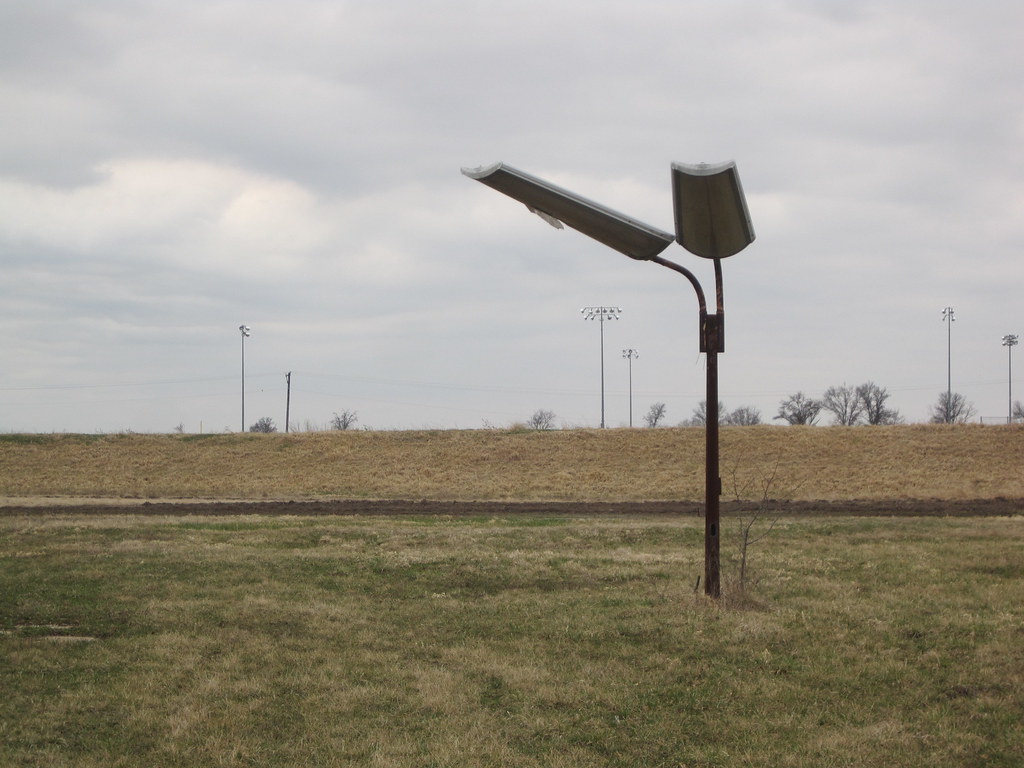
Winfield, Missouri occupies the far end of a flood plain ravaged in 1993 and many other years. On Highway N, behind an athletic field stands this inexplicable two-headed light post — the last vestige of a phantom gas station.

Categories
Carondelet Central West End Preservation Board

A City Neighborhood Can Never Have Too Many Storefronts

by Michael R. Allen

UPDATE Monday, March 22 at 7:21 p.m.: The Preservation Board voted to uphold staff denials for both 414-18 N. Boyle and 6102 Michigan.

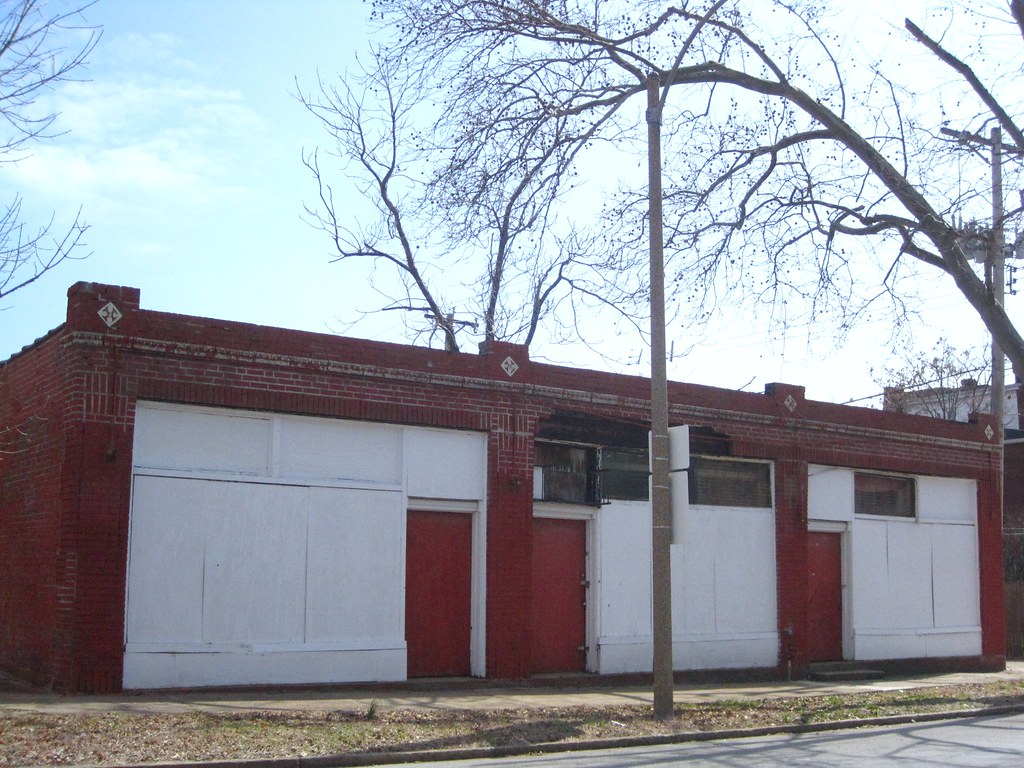
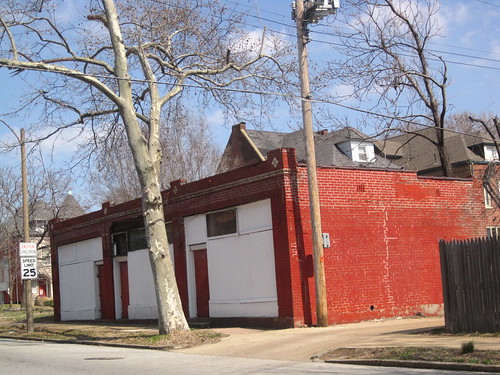
The little storefront row at 414-18 N. Boyle in the Central West End is one of a few commercial buildings left in the area once known as “Gaslight Square” — but not for much longer. Owner Core Holdings LLC applied for a demolition permit in January. The Cultural Resources Office denied the permit, and the owner has appealed to the city’s Preservation Board. The appeal is on the agenda for the Monday, March 22 meeting of the Preservation Board. The proposed reuse for the site? None.

At first glance, the row seems easily forgettable and somewhat damaged. Yet the little row is both a reminder of the past streetcar-fueled development of the Central West End and an asset for the surrounding area, which is full of rehabbed existing buildings and the new houses that now occupy Olive Street to the east. The neighborhood could use a few retail outlets. Anyone who has been to the strip around the Gaslight Theater one block south and around the bend knows that the neighborhood can support commerce.

The little row was built behind a large house that once stood facing Westminster. The first section was a small one-room brick carpenter’s shop built at the alley in 1910; the row expanded at some point in the next decade. The Maryland Avenue streetcar line went north along Boyle to connect to the Olive Street line; this little backyard was too valuable not to build up. In fact, the owner of the house to the south built a similar row at 408-10-12 N. Boyle across the alley — now long gone.

Sculptor Sheila Burlingame (1895-1969), whose works include the sculpture on the front of Nagle and Dunn’s St. Mark’s Episcopal Church (1939) at 4714 Clifton, maintained a studio in the storefront at 412 N. Boyle. The existing row’s tenants were less glamorous but also indicative of a vibrant urban fabric. The 1940 city directory shows Jacob Shaikewitz offering shoe repair at 414, barber Frand Bond at 416 and Georgia Gunn’s beauty shop at 418. By 1959, at the onset of the Gaslight Square heyday, 414 N. Boyle was home of the Handy Shopperdeli, 416 housed the Boyle Avenue Barber Shop (Frank Bond still around?) and 418 was now Dorothy’s Beauty Shop. The row would be vacant within a few years, and later used as a church before going vacant again.

It would not take much to bring back the commercial bustle to this stretch of Boyle. The streetcar is gone, but residential density remains. Yet the demolition of the Olive Street commercial buildings renders remaining storefronts as precious resources. Judging from recent decisions, the Preservation Board is unlikely to approve a permit for an out-of-town owner with no redevelopment plan. Common sense suggests a different course of action: Preservation Board denial and a for-sale sign.

Also on Monday’s Preservation Board agenda is the appeal of a Cultural Resources denial of a demolition permit for 6102 Michigan Avenue in the Central Carondelet Historic District. I’d be very surprised if any Board member votes to overturn the appeal.

The Preservation Board meets at 4:00 p.m. Monday on the 12th floor of the building at 1015 Locust Street downtown. Written comments may be submitted to the Board via Adona Buford, Secretary, at BufordA@stlouiscity.com.

Categories
Downtown

St. Louis Centre

by Michael R. Allen

With work starting on the conversion of St. Louis Centre into a parking garage, I thought that it would be fitting to publish this vintage postcard from the mall’s glory days. I purchased the postcard at St. Louis Centre around 1994. Back then, the light-bathed white atrium seemed pretty darn cool!


In the too infrequently-quoted guide Seeing St. Louis (1989) — a sheer joy to read, especially for the lovely contrarian swipes — Barringer Fifield compared the mall to an ocean liner after delightfully dismissing the green and light gray panels with one word, “infelicitous.” “Nautical white, with ship’s railings and prowlike balconies, it even has a blue-green body of water below,” wrote Fifield. Fifield concluded: “Everything is shipshape, and a certain carefully crafted artificiality adds to the luxury-liner effect.” For all of the flaws in design — ranging from the terrible exterior design, the bizarre sloping first floor areas and the obscenely thin floor plates — the mall had a distinct charm because of the interior. Soon it shall be gone forever.

Categories
Adaptive Reuse East St. Louis, Illinois Historic Preservation

Broadview Hotel Rehabilitation Getting Underway

by Michael R. Allen

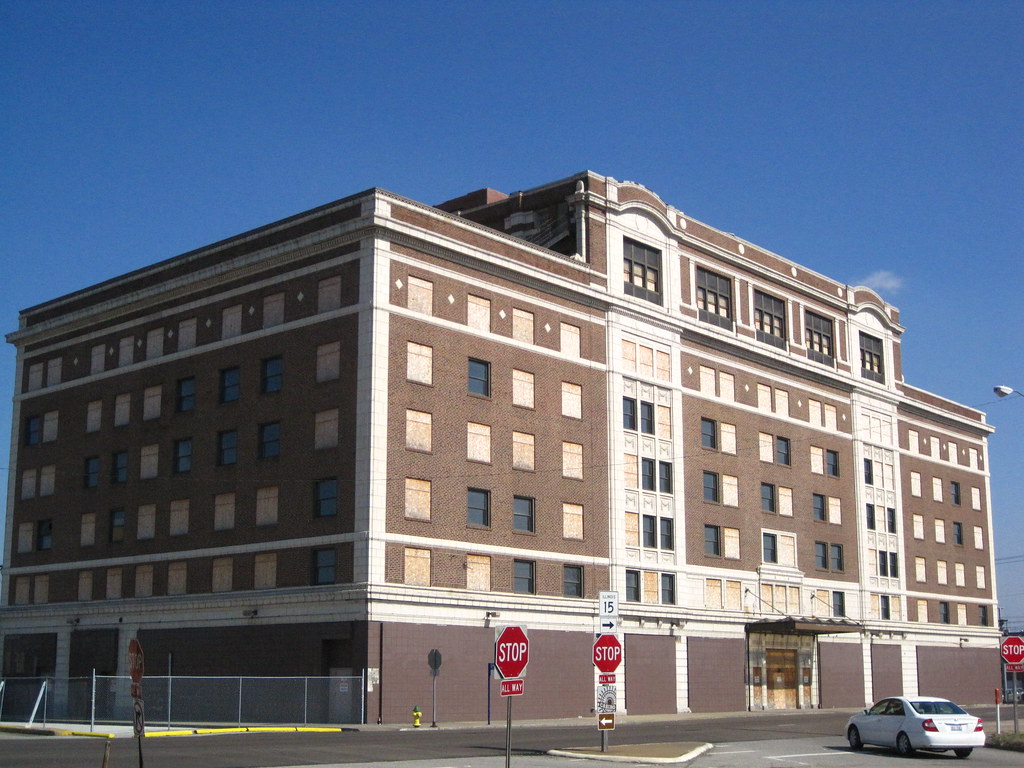
The seven-story Broadview Hotel at 5th and Broadway in East St. Louis is one of several tall buildings that anchor downtown. The 13-story Spivey Building is the tallest, the adjance Murphy Building and Majestic Theater are wonderfully ornate and the First National Bank Building is a solid red-brick corner building that is still occupied. Through demolition, the Broadview sits away from the concentration of other large downtown buildings. Through placement of the 4th Street exit ramp from Interstate 55/64/70, is the first major building greeting motorists entering East St. Louis.

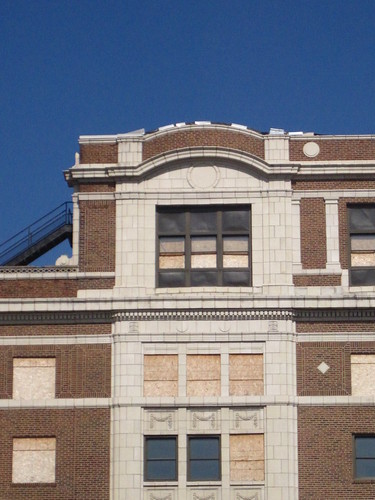
Built in 1927, the Broadview has the characteristic elegance of pre-crash 1920s hotel design. The symmetrical brown brick body contrasts with buff terra cotta forming two bays and providing other ornament. Unlike some of the exuberant foliate terra cotta seen on contemporary St. Louis hotels like the Chase and Coronado, the design here is a rather sober interpretation of Renaissance Revival themes. Still, the hotel is powerful, especially through the rise of the terra cotta bays to form a temple-like top story that towers over the city.


For many years, this temple was the crown of a palace of night life, conventions, dinners and even a radio station (WTMV 1490 AM was located here). As East St. Louis’ fortunes drowned in a powerful current of American industrial reorganization, so did the those of the Broadview. The Broadview ended up housing a branch of Southern Illinois University – Edwardsville (SIUE) until 2004. The first floor’s storefronts, once open to a bustling business district, have long been clad in forbidding granite blocks.

In 2006, SIUE ceded the Broadview to the City of East St. Louis. The city has long been dealing with the other big vacant downtown buildings, but lacked clear title to the others. The Broadview was not boarded up for long. In 2009, East St. Louis awarded development rights to CDC Development Corporation, headed by Donald J. Johnson. CDC plans a $35 million renovation ofthe hotel into 88 loft-style apartments. Preliminary work is now underway, and many of the hotel’s windows are again unboarded.

Categories
Rehabbing

ReStore Offers $1 Wooden Window Sashes

For the next few days the ReStore is selling all wooden window sashes (including screen window sash) for $1 each. There is quite a lot of stock right now. In fact, the store frequently receives more in donations than it can sell. That’s why the cost is low. Take advantage of the sale for your project!

The ReStore is located at 3763 Forest Park Avenue (between Vandeventer & Spring). The hours are Tuesday: 8am – 5pm; Wednesday-Friday: 8am – 4pm; Saturday: 8am – 5pm.

Categories
Demolition Marine Villa Preservation Board South St. Louis

Carnival Supply Building Demolition Underway

by Michael R. Allen

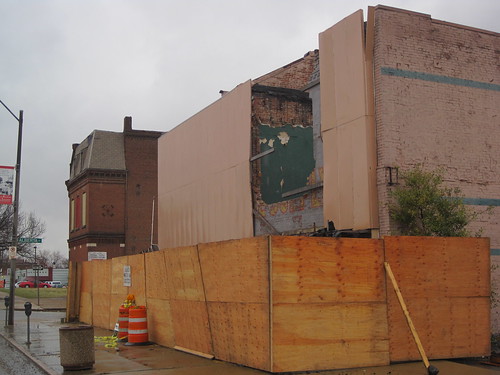
The weary old St. Louis Carnival Supply building — or, rather, buildings since two buildings comprise the structure — is being pushed into the Big Sleep. The south St. Louis landmark, located at 3928 S. Broadway in Marine Villa, is being demolished this month to make way for expansion of a parking lot serving a strip retail center next door. In December 2009, the St. Louis Preservation Board unanimously approved demolition on the condition that the owner, KOBA LP, first obtain a building permit to make facade improvements to the three-story commercial building to the north, which was originally proposed for demolition.
At this point, readers would learn very little from any further complaint about the demolition. How easy is it to take a stand against something that already happened? Oh, easier than tying your shoes — but not as useful. There is a bigger lesson to be learned for ever-wired local preservationists: politics is still local.

When I spoke on historic preservation matters at a meeting of the Chippewa-Broadway Business Association (CBBA) in August 2009, the proposed demolition was a hot topic. Nearly all local parties were opposed to the demolition, although not simply on the basis of architectural merit or urban character. There was considerable concern that the proposed Grace Hill clinic slated to move into the retail strip center will draw patients away from St. Alexius Hospital across the street. St. Alexius has been a neighborhood fixture for over a century, and active in local affairs, including the Business Association.

The community rallied around the hospital, and the first attempt by KOBA LP to secure a demolition permit from the Preservation Board in August — for both buildings — was denied. Aldermen Ken Ortmann (D-9th) and Craig Schmid (D-20th) as well as the CBBA were opposed. Things changed, though, and agreements were reached. The opposition withered. the Preservation Board’s action made it clear that KOBA LP would not be able to get a permit for the building at 3928 S. Broadway, so they withdrew plans to wreck it. By the time of the December Preservation Board meeting, I was the only person to speak against demolition. The game had changed, at the community level.
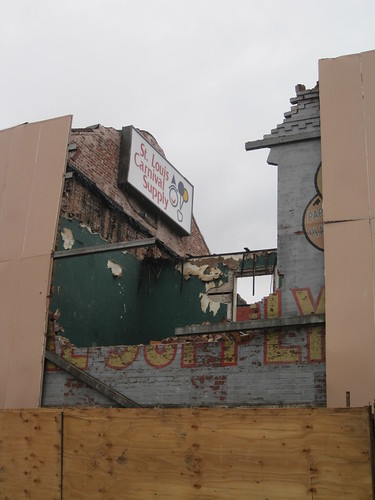

The demolition contractors did not remove the 1960s metal panels from the 1890s-era commercial building, so the only glimpses of the colorful older signs on the facade come through big holes. The old signs look playful and fun; hopefully there is a photograph of the building before cladding somewhere.
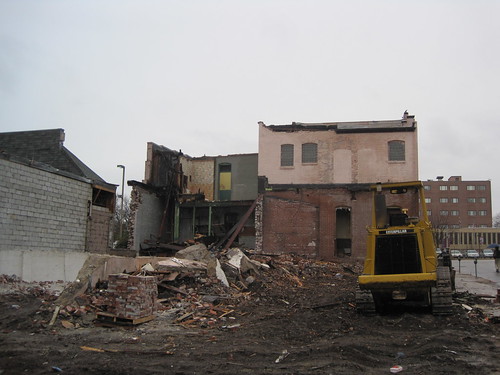
Of course, the buildings are both sound and without the later concrete block addition at the rear of the property, there is now plenty of space for extra parking behind the historic buildings.

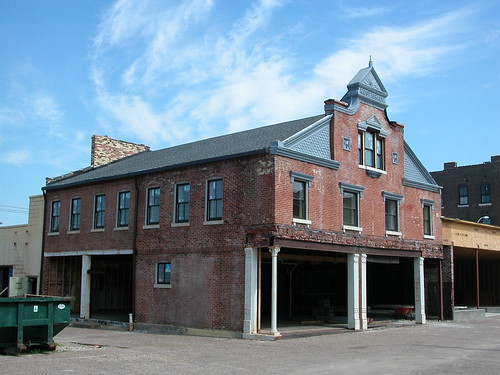
Alberta Street runs between the building under demolition and the building being preserved. This intact street is typical of Marine Villa. Vernacular brick houses of varied form, height and setback create a delightfully organic streetscape. Alas, the solid frame of two corner commercial buildings will soon be gone, and a parking lot exit will spill out onto this quiet residential street.

Categories
Downtown Events Riverfront

Play on Sunday Tells the Story of the St. Louis Riverfront

Plate showing central riverfront from Pictorial St. Louis, 1875.

What: “Voices of the Riverfront”
When: Sunday, March 21, 2:00 p.m.
Where: Old Courthouse
Cost: Free

Voices of the Riverfront will bring to life some of the characters who shaped and chronicled the development of St. Louis’ riverfront — from Auguste Chouteau to Ernst Kargau to Hubert Humphrey. Written by sisters Nini and Sheila Harris, the play will be performed as a radio-style reading. The cast includes Jennifer Clark, Charlie Clark, Bill Hart, Doug Dunphy, Bob Officer, Jennifer Halla Sindelar, Craig Schmid, Jenny Heim and Michael Allen. Jim Mayhew will provide instrumental accompaniment.

The play lasts about one hour. Refreshments to follow.

Categories
Infrastructure Tower Grove South

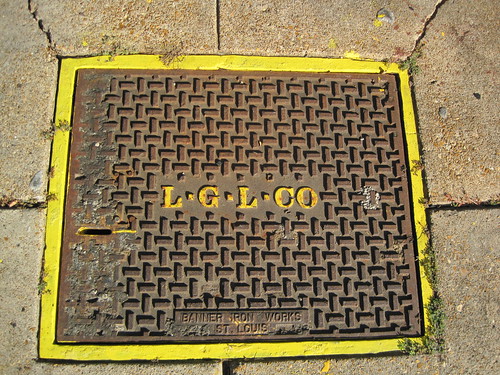
L-G-L-CO

by Michael R. Allen

From its founding in 1857 — just a few days ahead of the Supreme Court’s decision in the Dred Scott Case — through 1950, Laclede Gas Company was named Laclede Gas Light Company. A few sidewalk service entries, like this one in Tower Grove South, retain metal covers with the old company’s initials. Bill Beck’s volume Laclede Gas and St. Louis: 150 Years of Working Together, 1857-2007 (St. Louis: Laclede Gas Company, 2007) is an invaluable source of Laclede Gas’ corporate history.