Categories
Demolition Downtown Parking

Lost: Lucas Avenue Warehouse Meets the Dart

by Michael R. Allen


Photograph from the collection of Landmarks Association of St. Louis.

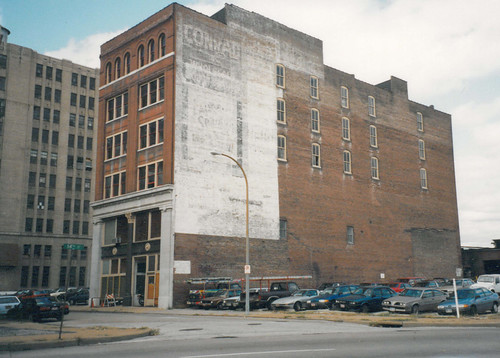
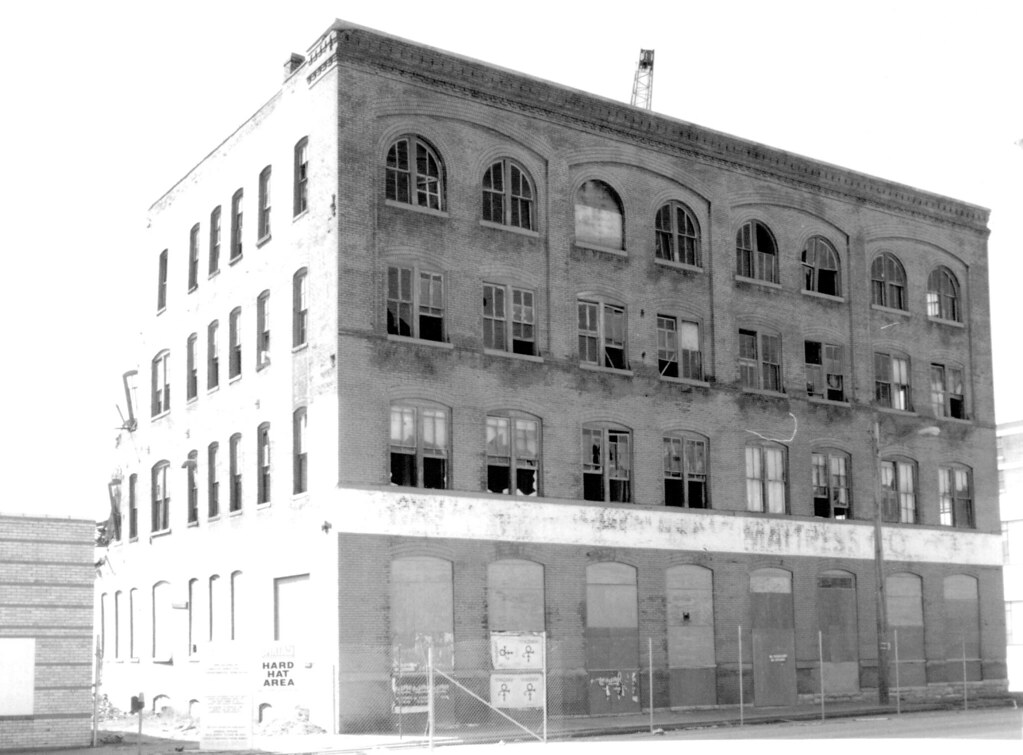
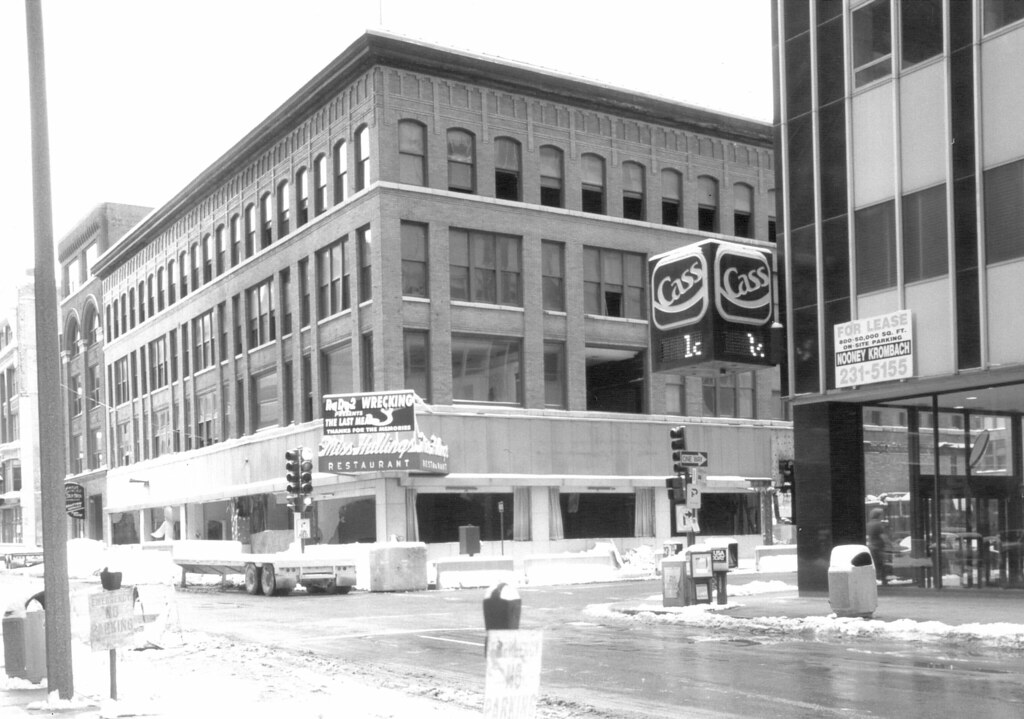
Following through the recent downtown demolitions with some link to the Miss Hullings Building tragedy, here are photographs of the slender commercial building that once stood at 1427 Lucas Avenue just a block north of Washington and a block east of the City Museum. The link to Miss Hullings? This building was also designed by prominent architect John Ludwig Wees. The visual link to Miss Hullings is clear: a tripartite division into ornamental base, a more prosaic center and a crown featuring an arcade of Roman windows beneath a brick cornice.

Sure, these weren’t the buildings that Wees put in the front of his portfolio, but they were hardly throwaway designs. Every architect has a way of designing when the budget is lavish, or when it’s severely restricted. Where the architect’s hand comes through the most is in the middle — the work that he or she designs day in and day out. Wees certainly gave his commercial buildings a strongly modern sensibility, meted through a classical screen. The first two floors — the public interface at the sidewalk — exhibits a restrained classicism through a limestone surround, a central cast iron column with Corinthian capital, lion heads inside of wreaths above each storefront and an egg and dart cornice in the limestone surround above the whole assembly.
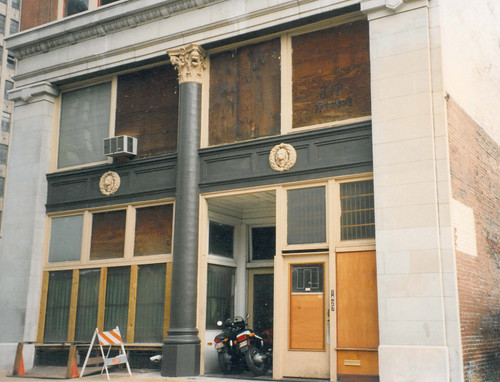
Photograph from the collection of Landmarks Association of St. Louis.

The egg and dart is every building’s sad nod toward fate. That pattern enshrines the life cycle of creation and death in a succinct, poetic metaphor. Egg brings life. Dart takes it away.

Alas, the dart of death frequently comes in the form of heavy metal. The wrecking ball took down this splendid essay in commerce around the last months of 2000, when St. Louis Auto Sales successfully obtained an “emergency” demolition permit from the Building Division. A building that once housed Continental Shoemakers and countless dry good companies ranging from leather wholesalers to garment retailers met the dour economics of parking. Not quite an egg there, eh?
Categories
North St. Louis Old North

Old North Makes the News Again

KMOV took notice of the Crown Square project, which is nearing completion in Old North St. Louis. Larry Conners’ report aired this week and features great footage of the rejuvenated buildings in the center of the project, the two blocks once known as the 14th Street Mall.

Categories
Demolition Downtown JNEM

Lost: Claes and Lehnbeuter Mfg. Co. Building

by Michael R. Allen

Photograph by Cindi Longwisch for Landmarks Association of St. Louis.

The Claes and Lehnbeuter Manufacturing Company Building stood at 2128-30 Washington Avenue from construction in 1891 through demolition in March 1997 (just a month after the Miss Hullings Building). Claes and Lehnbeuter manufactured store, office, bank and saloon fixtures. According to E.D. Kargau’s Mercantile, Industrial and Professional St. Louis (1894), the company was founded by Caspar Claes and Joseoph Lehnbeuter in 1861 and the company’s first home was on the south side of Market Street between Second and Third (inside of the present boundaries of the Jefferson National Expansion Memorial). After moving to a large home on Seventh Street between Walnut and Clark, the firm built its own “massive building” where over 300 workers were employed.

The site is now a vacant lot.

Categories
Demolition Downtown Parking

Lost: Miss Hullings Building

by Michael R. Allen

Steve Patterson’s post “Stealing a Sidewalk” shows how the parking lot at the northwest corner of 11th and Locust streets invades the public right of way by paving over what legally is sidewalk space. The post takes me back to the doom and gloom days of the mid-1990s, when the so-called Miss Hullings Building at that site fell to the wrecking ball at the hands of owner Larry Deutch.

Here’s a photograph of the Miss Hullings Building in February 1997, a few weeks after demolition started, taken by Lynn Josse.


The four-story commercial building dated to 1905, and John Ludwig Wees was the architect. The second and third floors’ robust window grid was softened by a more traditionally Romanesque third floor window arcade and corbelled cornice. The scale of the building was a nice complement to the taller buildings on the other three corners of the intersection — the Alverne, Louderman and 1015 Locust buildings.

Miss Hullings operated a famous cafeteria in the building from 1931 through 1993, when Larry Deutsch sought a demolition permit. The staff of the city’s Heritage and Urban Design Commission (now the Cultural Resources Office) first denied the permit, but on appeal to the Commission recommended approval. Commission staff member Jan Cameron laid out reasons for original denial, but added that the building was not among Wees’ finest. Deutsch proposed leaving the first floor walls of the building in place to screen the parking lot!

At a September 22, 1994 meeting, the Commission voted 4-3 to deny the appeal. Commissioners Karl Grice, Fred Andres and Jeff Brambila spoke strongly against demolition. Acting Chairman Susan Taylor joined these three to vote to deny the appeal. Voting against denying the appeal were Sarah Martin, Renni Shuter and Brad Weir.

Brambila said that “this building has a very definite presence and its context to me is extremely strong.” Andres reminded his fellow commissioners that “the [1993] downtown plan specifically says that there should not be further surface parking lots in the core of downtown.” Reading the transcript from this meeting, one finds many quotes that could have come out of the recent Preservation Board meeting on the Robert Brothers’ plan to demolish two buildings that stand two block east at the corner of 10th and Locust. There are great arguments about context, the importance of adhering to downtown planning documents and the imbalanced trade between building space and car space.

The owners next filed suit against the Commission. On December 13, 1995, Circuit Court Judge David Mason ruled in favor of Deutsch’s company, citing the statements by the Commission staff that the parking lot plan met their criteria for redevelopment and that the building lacked sufficient architectural merit for staff to recommend denial of the appeal.

According to Judge Mason’s ruling, “[the building] by virtue of HUDC staff’s representation to the HUDC, had no architectural merit, had an acceptable development plan, had no neighborhood effect nor reuse potential and had no urban design effect.”

The good sense of the Heritage and Urban Design Commission was overturned. Later appeal of Judge Mason’s decision by the Commission was denied, and demolition commenced in January 1997. Years later, we are still living with the court ruling against common sense.

Categories
Bohemian Hill South St. Louis

Bohemian Hill Walgreens Will Sit on Sidewalk Line

by Michael R. Allen

Residents of the Georgian Condominiums at City Hospital report that Koman Properties unveiled plans for the new Walgreens on Lafayette Avenuye last Thursday night at the residents’ meeting. The store will come up to sidewalk on Lafayette, with a corner entrance at the northeast leading both to the street and a parking lot to the east. The front of the building will be designed to appear as a two-story Georgian Revival commercial building. Walgreens won’t release plans for “unique” stores like this one, so we don’t have any images of the store.

The store’s parking lot will connect to an access road leading eastward to 14th Street. There are no immediate plans to build out the rest of the proposed retail development on Bohemian Hill. While the Walgreens will be fairly urban, Gilded Age says that they can find no grocery store willing to locate in a store built up to the sidewalk line on Lafayette. The developers should keep looking and wait for the credit crisis to diminish — there are plenty of chains, including Whole Foods and Trader Joe’s, that have built urban stores without parking in front. If Walgreens can do it, so can others.

The Bohemian Hill retail development remains a great case for a form-based zoning code. There would be no doubt that the site plan would be appropriate for the location if the zoning mandated urban placement. Retailers wouldn’t be able to drive a hard bargain for parking in front if they were constrained by zoning laws.

Categories
Housing Hyde Park North St. Louis Rehabbing

Shifting the Balance in Hyde Park

by Michael R. Allen

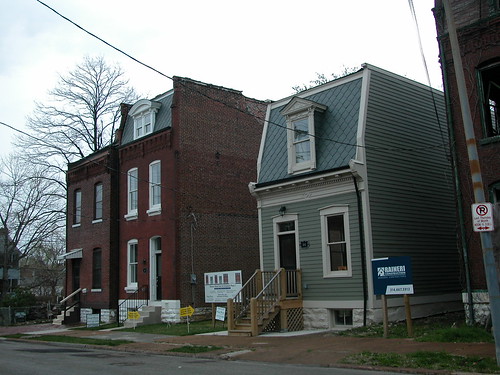
Blue Shutters Development has ambitious plans for the Hyde Park neighborhood. Eventually, the developers would like to rehabilitate dozens of historic buildings in the neighborhood, including the damaged Nord St. Louis Turnverein on Salisbury Avenue. So far, the firm’s efforts have been concentrated on the 2000 block of Mallinckrodt Street. Two homes, shown here, have been fully rehabilitated and offered for sale at market rate.

The house on the right is a great project because it’s the type of house many developers would write off — it’s frame, it’s small and it has a limited return on investment. Blue Shutters and its principal Peter George deserve credit for preserving it early on.

This work would be impossible without the state’s historic rehabilitation tax credit. Relatively small projects like these would have a tough time competing for credits if there was a blanket cap on the program.

Hyde Park often seems like a world of bad news, but a few projects lately have slowly shifted the balance. Let there be more.

Categories
Architects Central West End Never Built

Never Built: Million-Dollar Hotel

by Michael R. Allen

This rendering for a “$1,000,000 Hotel” at the corner of Maryland and Kingshighway appeared in the Realty Record and Builder in 1906. The architect was Isaac Taylor, whose already-wide renown grew even wider after his stint as Director of Works for the World’s Fair. The design is noteworthy for its exotic classicism, seen especially in the central dome crowning the enormous building.

Never built, the site is today occupied by Straub’s grocery store. An even larger hotel, the Park Plaza, would be built by 1929 across Maryland.

Categories
Historic Preservation Illinois Southern Illinois

Illinois Historic Sites Reopened Today

by Michael R. Allen


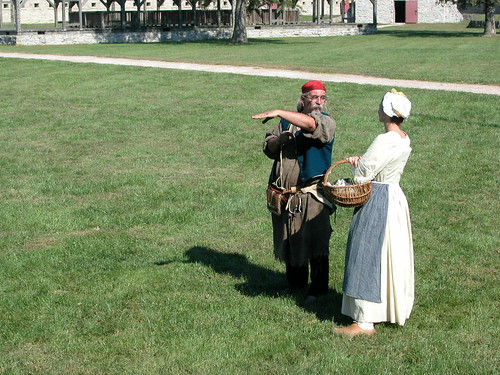
Scenes like these captured at Fort de Chartres this fall will return to Illinois’ closed historic sites. Today the sites, closed by former Illinois Governor Rod Blagojevich (Delusional-Chicago), opened once again.

This is good news for the entire state of Illinois as well as St. Louis. Fort de Chartres, the Pierre Menard Home and the Vandalia Statehouse are within 100 miles of St. Louis. They bring tourism dollars into the wider regional economy.

Planning a celebration with a friend whose husband is returning to work at one of the sites, I was happy to hear that Saturday might be a tight fit because he’ll be back at work — on the weekend, with beautiful weather and plenty of visitors!

Categories
Downtown Green Space JNEM

Still Trying to Make Sense of the Gateway Mall

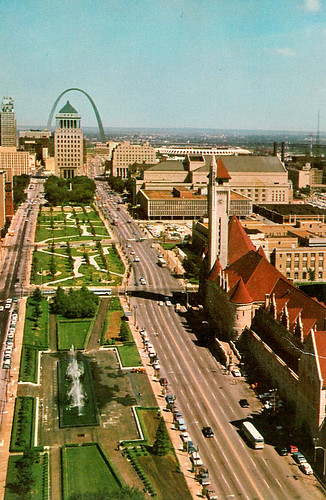
The western end of the Gateway Mall in 1970.

This week Landmarks Association presents a lecture and a tour related to the impact of the City Beautiful movement on downtown park space:

Lecture: “Making Parks in the Central City: The Evolution of the Gateway Mall”
When: Thursday, April 23, 2009 at 7:00 p.m.
Location: Architecture St. Louis, 911 Washington Avenue, Suite 170

Michael R. Allen will give a provocative illustrated lecture on the evolution of the Gateway Mall, the never-finished downtown park mall. Starting in the early 20th century with the local City Beautiful movement and the idea of creating parks in the crowded central city, the mall project moved through various plans, revisions and missed opportunities. The city’s 2007 Gateway Mall Master Plan is only the latest attempt to make sense of an idea gone astray in its implementation. Recent discussion about “activating” the Arch grounds renews attention on downtown’s park problem: more open space than activity. Free.

Walking Tour of Memorial Plaza
When: Saturday, April 25, 2009 at 1:30 p.m.
Location: Meet at East entrance to the Civil Courts Building, 11th and Market streets.

Envisioned as a monumental civic center, the city’s Memorial Plaza area contains a distinguished group of grand public buildings, including the Civil Courts, former Federal Courthouse, City Hall, Municipal Courts, Kiel Opera House, Soldiers Memorial and the Central Library. Led by veteran downtown tour guide Richard Mueller, our tour will cover the buildings and parks that make up the plaza area, with planned stops inside some of the buildings. Reservations requested: 314-421-6474. Free.

This program is part of “Architecture Weekends,” generously funded by the Whitaker Foundation.

Categories
Downtown Green Space JNEM

Vintage Old Cathedral View

by Michael R. Allen

This 1950s-era postcard view of the Old Cathedral is intriguing. Most of what is seen here around the cathedral is gone: the small buildings on Third Street seen at left, the Pierce Building in the background (well, it’s now reclad as part of the old Adam’s Mark Hotel), the Merchant’s Exchange, the residence next door and the free-standing column in the foreground (from the United States Courts and Custom House, already demolished). I wonder where that column went!

What is also missing is the free connection between downtown and what would become the Jefferson National Expansion Memorial. That row of buildings at left is right across the street from what was then the mostly-cleared site. People working, shopping and eating in those buildings had great views of the new Memorial site. Could we ever rebuild that western edge to be so urban? Not without removing the interstate highway first.