by Michael R. Allen
On Wednesday, I led a bus tour of Old North, St. Louis Place and JeffVanderLou for listeners of Charlie Brennan’s show on KMOX. Yesterday, Charlie took calls from those who took the tour. Listen to their responses here.
 Preservation Research Office
by Michael R. Allen
On Wednesday, I led a bus tour of Old North, St. Louis Place and JeffVanderLou for listeners of Charlie Brennan’s show on KMOX. Yesterday, Charlie took calls from those who took the tour. Listen to their responses here.
by Michael R. Allen
The Joplin Globe published an excellent article on confined animal feeding operations (CAFOs) in Missouri: “Study: CAFOs affect neighbors’ property”. These operations have been replacing traditional animal farms for years — bringing with them debilitating conditions for animals, food packed with growth hormones with unresearched effects on consumers and now problems for neighboring human and animal populations through waste-water run-off. This is not to mention the number of family farms lost through factory farming.
In the St. Louis region, there are many CAFOs in Illinois counties like Monroe and Missouri counties like Jefferson and Lincoln. Urbanists often talk about stopping sprawl through growth boundaries and form-based zoning, but there is a much less frequently-addressed part of the sprawl question. If we stop the creep of the suburbs, what do we want the rural lands surrounding St. Louis to look like? What sort of land uses are sustainable and acceptable, if large subdivisions, strip malls, office parks and the like are out of the question? What jobs will people have?
Healthy agriculture is key to sustaining open land around the metropolis. Currently much of the land within our Standard Metropolitan Statistical Area is devoted to farming. As the energy crisis mounts, that amount of land may not change much. Yet “farming” as we know it has been altered to an unrecognizable world of factory farms, hormones, chemicals and corporations. Does agriculture in current practice serve the interest of a sustainable St. Louis region, or do we want to adopt a model that conserves our rich soil, sustains open space, preserves what’s left of family farms and prevents the poisoning of surrounding land?
by Michael R. Allen

En route to the Storefronts of America: The Mesker Story exhibit at the Evansville Museum in Indiana, I happened upon a fine example of a Mesker front in Crossville, Illinois. Actually, this was no real happenstance. I pretty much figure I’ll see at least one Mesker in any small town I encounter in southern or central Illinois.
Now famous due to the efforts of the Illinois Historic Preservation Agency’s Got Mesker? project, the Mesker storefronts are the work of two foundries within one family. George L. Mesker & Company operated in Evansville, Indiana while Mesker Brothers Iron Works operated in St. Louis. Both companies produced mass-manufactured iron building parts ranging from cast iron columns to sheet metal facades from the 1870s through the 1920s. Builders ordered parts or whole facades (easiest to identify) from catalogs to economically beautify commercial fronts in small towns and big cities alike.
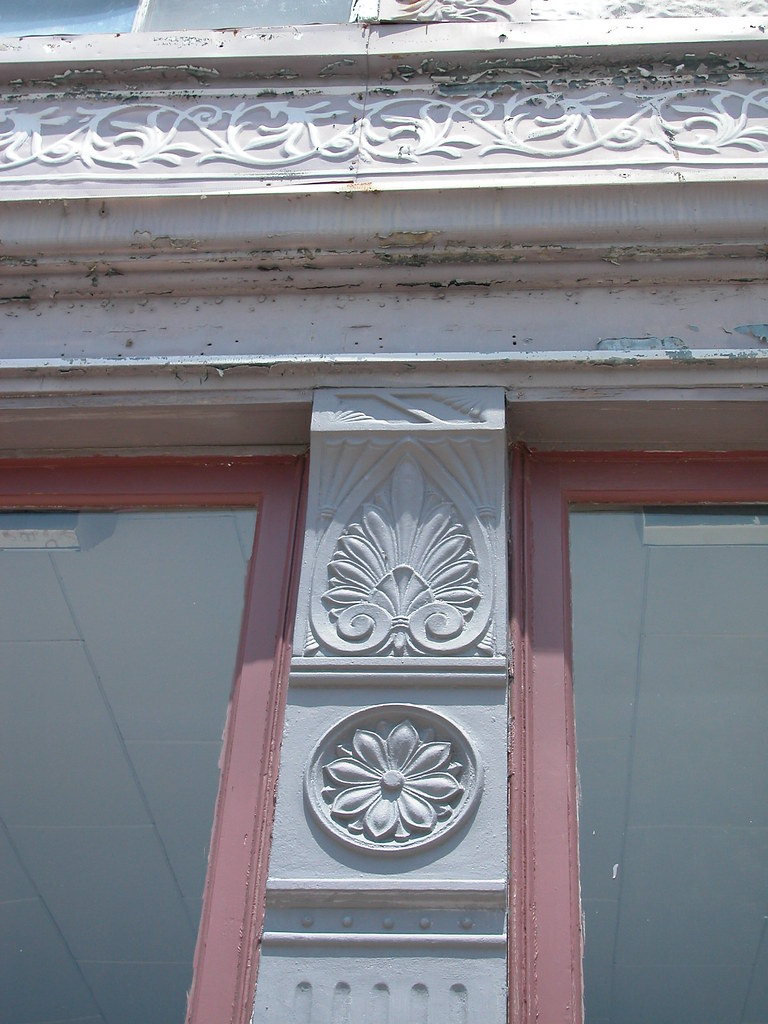
This particular storefront is the work of George L. Mesker & Company. Acanthus-topped solid cast iron columns support a brick front wall hidden under sheet metal. The sheet metal is cored to resemble concrete blocks, and is adorned with continuous foliage-inspired elements at the window surrounds, above the storefront, above the second floor windows and at the cornice line.
Akin to the ornament of Louis Sullivan, the Mesker work references prairie nature. Classical details are minimal, while abstract and direct natural patterns dominate the composition. The belts of vines emphasize the horizontal nature of the wide front, echoing the rugged flat land of southeastern Illinois. Yet the metal front is obviously a modern thing — at least, it was distinctly modern for its time. The design draws together the eager commercial of spirit mass manufacturing (sheet metal ordered by mail, near-uniform concrete blocks) with romantic tinges of natural beauty (conjuring infinite variety and difference).
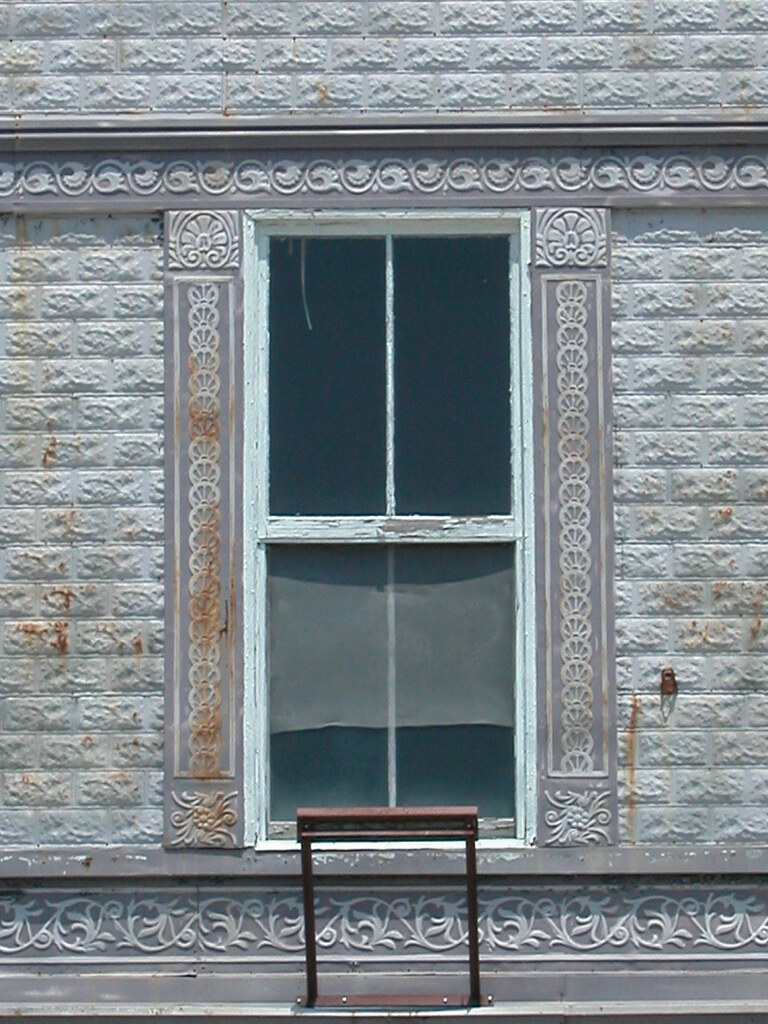
These fine lines remain a testament to the once-promising outlook of the small towns of the Midwest. The Mesker front in Crossville isn’t a Waiwright Building or a Rookery, but it somehow seems as much a true expression of time, place and modernity as those progressive urban buildings. The storefront building seemed vacant, and the sheet metal was peeling back on one end to reveal backing lath over the plain brick body of the building.
Yet the front is essentially good repair, retaining almost every original piece — the end columns on the storefront probably weren’t originally bare brick — and even its original window sash. There’s only a bit of rust. The building offers itself as a worthy part of the future of Crossville, whatever that may be.
by Michael R. Allen
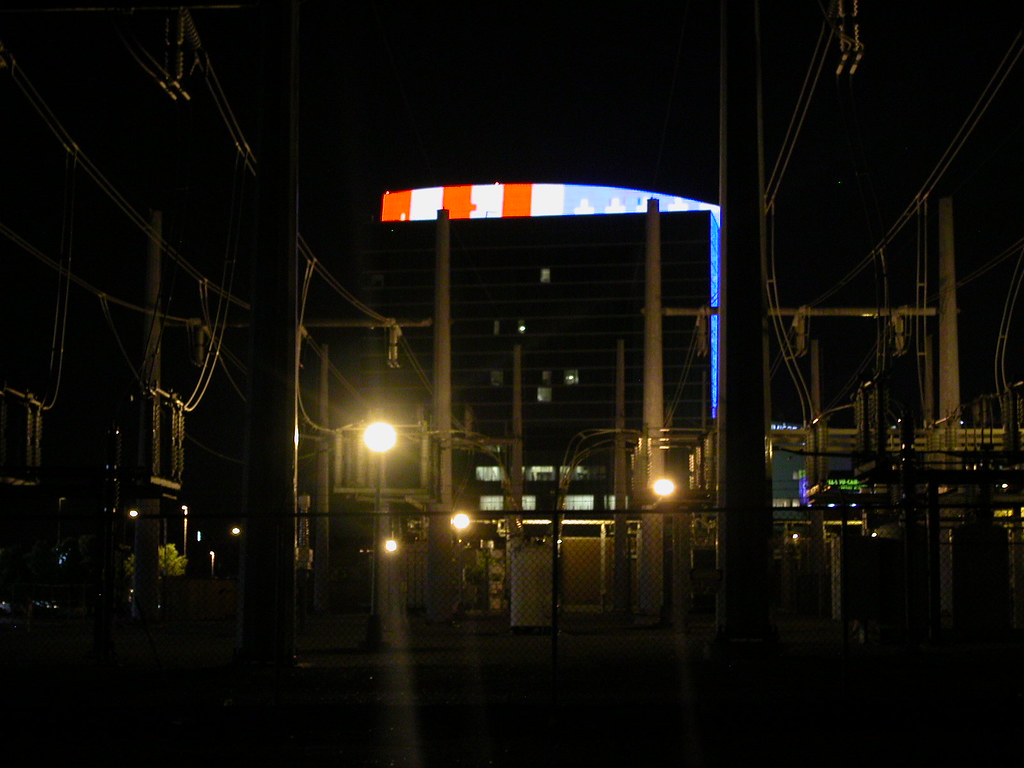
Dressed up for Memorial Day and viewed through the infrastructure of an electrical transformer station, the hotel tower at Lumiere Place serves its purpose well: to draw as much attention toward itself as possible, away from everything else. Even that shiny arch thing just south. Can that arch do this? Can the American flag glow? Come, moths, and bake in ecstasy!
by Michael R. Allen
A KMOX radio story that aired yesterday, “Developer Paul McKee — Target of City Hall Protest”, dropped a pretty big bomb: developer Paul J. McKee, Jr. met with some residents of his north city project area last year and refused to assure them that their homes could remain.
Mary Meachum Freedom Crossing CELEBRATION!
Saturday May 24th 12-5pm
Missouri’s First Nationally Recognized Underground Railroad Site, by the Riverfront Trail on the banks of the Mississippi River.
Gospel Music, Art Exhibit, Food Vendors, Historical Exhibits, OtherCultural Acts
“A Tale of an Urban Slave Escape,” a fully-costumed 1855 reenactment at 3pm.
Directions: Take I-70 to Grand Ave, go East toward the Mississippi River to HallSt., continue 1/4 mile to Prairie St., look for a large RiverfrontTrail sign, turn right on Prairie St. to parking area.
This event is organized by the Grace Hill Settlement House. For more information, contact Doug Eller 314-584-6703.
by Michael R. Allen

Yesterday Missouri Preservation unveiled its 2008 Most Endangered Historic Places list (follow link for full list with information). President Jeff Brambila, pictured above, announced that the Mullanphy Emigrant Home in St. Louis was being held over from last year due to continued financial needs of the stabilization project. A new foundation and new block inside walls for the south and east sides of the building are complete, but the block work on the north wall, a new roof and brick exterior facing all remain to be started. The Mullanphy is not safe yet.
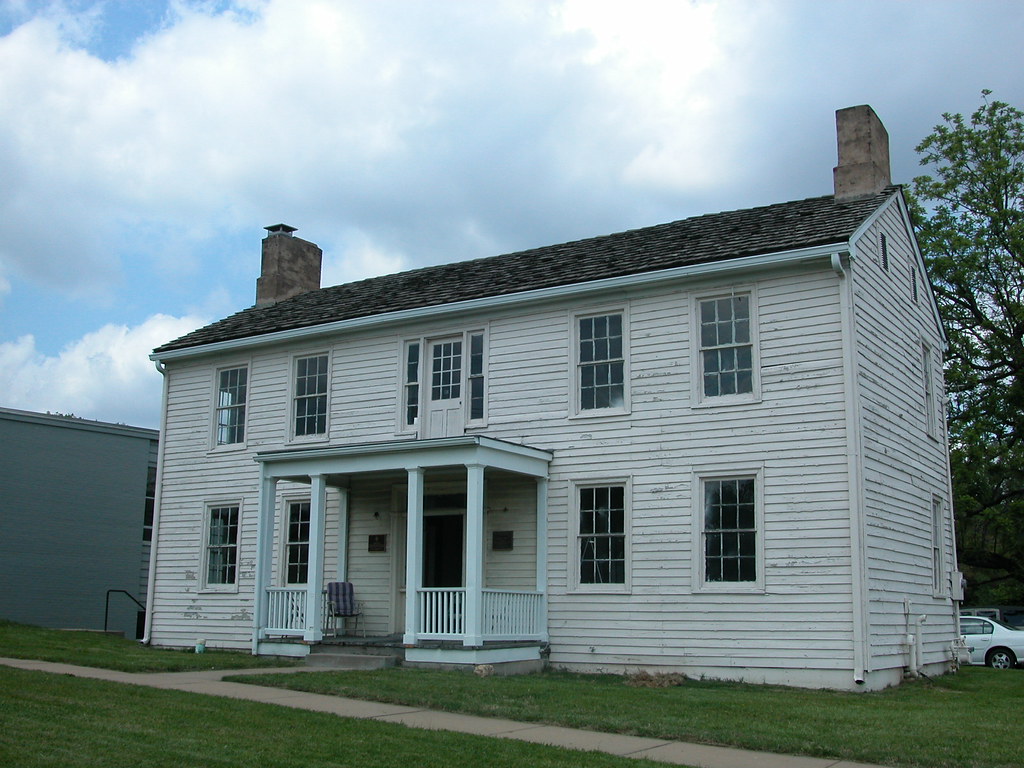
Also on this year’s list due to financial needs of repair is Fairfax, where the list was announced. Located on Manchester Road in Rock Hill, Fairfax is a minimally-detailed Greek Revival home built by James Collier Marshall in 1841. Out of tune with its auto-centric surroundings, the home was already moved twice to escape demolition. The owner is the City of Rock Hill, which lacks funds to repair the building. Those in attendance at the press conference saw the high level of disrepair on the interior, where holes abound in the plaster walls and ceilings and the original wooden floors are covered with decaying vinyl flooring.
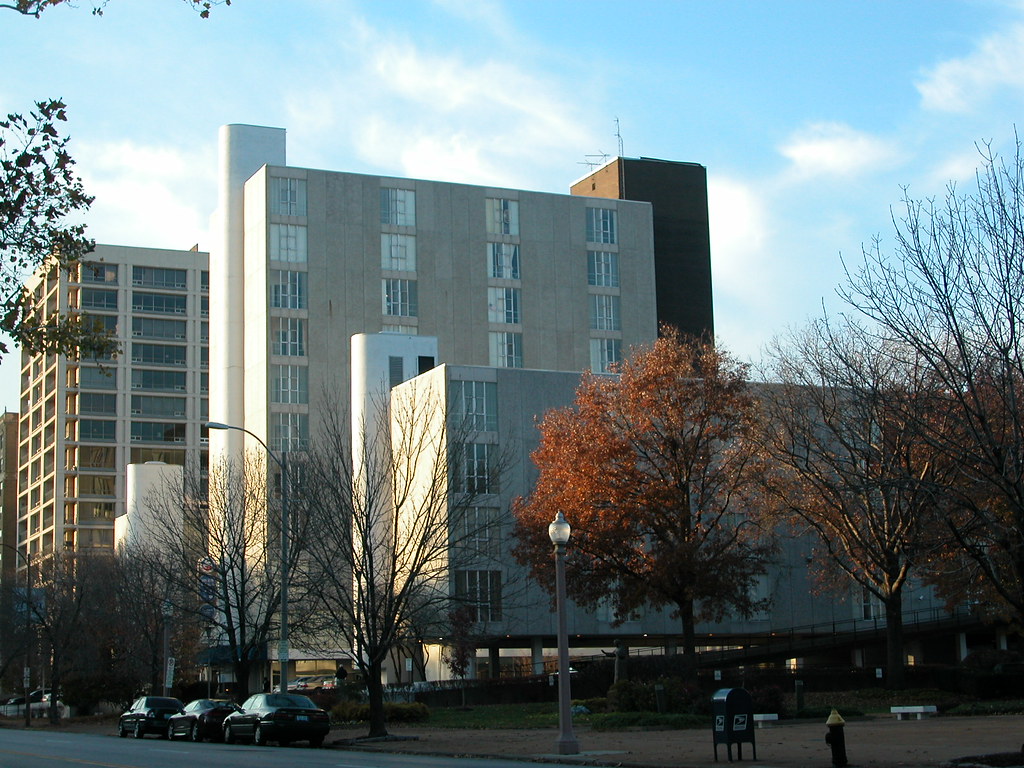 A third St. Louis are building on this year’s list is the DeVille Motor Hotel at 4483 Lindell Boulevard in the city’s Central West End. The modernist motor lodge is an elegant relic of urban renewal era, showing a sensitivity to site and neighborhood context rare for its period. Seems to this writer that the stark modernism of the DeVille shares at least a stylistic tendency with the much-earlier Greek Revival lines of Fairfax. Currently, the St. Louis Archdiocese continues to plan demolition of the hotel for a surface parking lot.
Missouri Preservation went beyond the endangered list and also announced a “watch list” of buildings from previous year’s lists still facing an uncertain future.
by Michael R. Allen
According to an article in Sunday’s St. Louis Post-Dispatch, McEagle Properties indicates that the chapel at the James Clemens House is safe from imminent destruction:
Dan Brungard, a spokesman for McEagle, a development company from O’Fallon, Mo., said a St. Louis inspector said the damage was weather-related. Brungard said that the property is under contract and that the damage would likely not affect that contract.
“We will do whatever repairs are necessary,” he vowed.
Again, McEagle mentions a sales contract. Who is the mystery party?
Speaking of McEagle getting serious about maintenance, Kathleen McLaughlin’s article from last week’s Riverfront Times, “Mow Your Lawn, Mister?”, reveals that a federally-funded job program will be used for grass cutting at the “Blairmont” properties this summer.
by Michael R. Allen
Although we are all exhausted as Historic Preservation Week winds down, let’s set sights on an important event next weekend.

Next Saturday, May 24 at 7:00 p.m. at Shaw’s Gallery (4065 Shaw at Thurman) is the Get on the Grid! benefit show for the St. Louis Building Arts Foundation. A $7 cover change and cash bar will go straight to helping the Foundation raise the money it needs to connect its facility to the electric grid.
The back story: The Foundation is the organization set up by Larry Giles to administer, conserve and interpret his collections of over 300,000 architectural artifacts and 100,000 books, trade journals, photographs and drawings. In 2005, the Foundation purchased a 12.5-acre, 14-building former steel foundry in Sauget, Illinois near downtown (the old home of Sterling Steel Casting) where the collections are being consolidated. Meantime, Larry was able to make his library available to researchers by appointment in a rented space in St. Louis.
As work at the foundry progressed, financial needs dictated moving the unique library to Sauget. Trouble is, the money for completing the library space was not in place and the library is now again in storage. The first need is completing the electrical service at the foundry so that lighting and climate controls are possible. Hence, the need for the show.
Yes, there are many worthy causes but none with an appeal so direct and compelling as this. Get on the grid. Pay at the door and the Foundation might hook up the power. With power, researchers can again access one of the nation’s most important collections of literature and documents related to architectural materials. Good research will lead to information we need to restore historic buildings, interpret and defend those we have and inspire people to care about our built heritage.
Your seven dollars will go a long way, but the starting point is clear.
Those who can’t attend can send donations to:
St. Louis Building Arts Foundation
2412 Menard Street
St. Louis, MO 63104
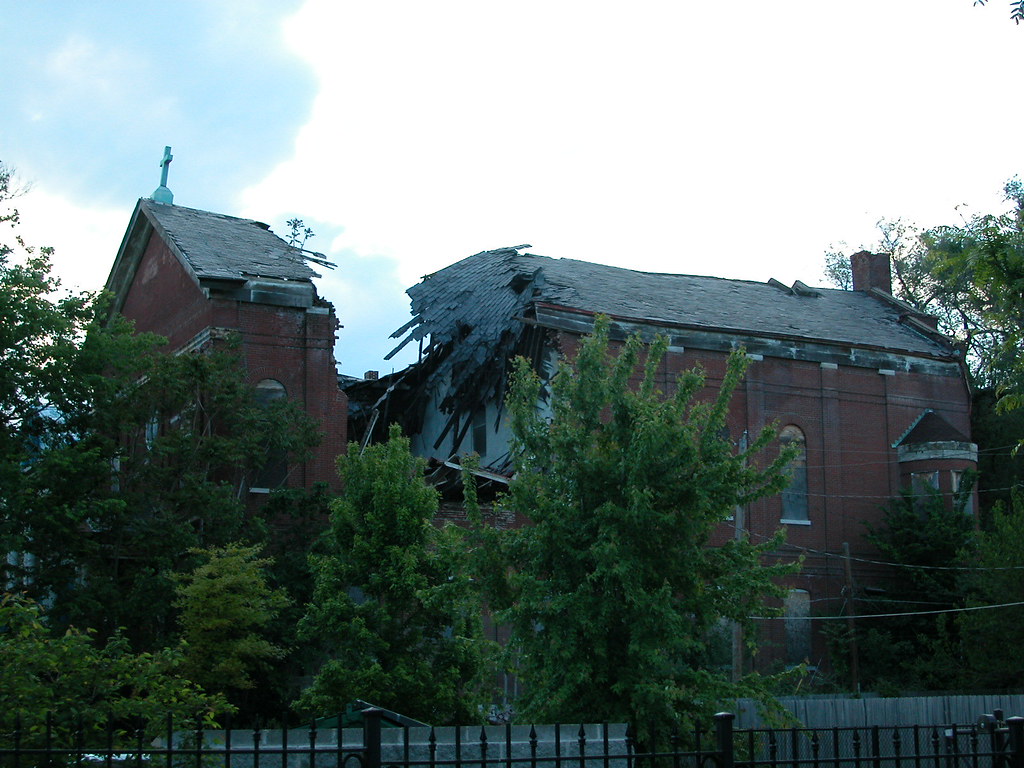
In a move unsurprising to long-time observers, a section of the roof and the eastern wall of the chapel wing at the James Clemens House collapsed in heavy rains yesterday. The collapse took down a section of roof that was sagging severely in recent months and three bays of the east wall above the first floor. The section that collapsed ran between two interior partitions that prevented further roof damage by supporting additional weight and tying the side walls together.
The roof had demonstrated severe local failure, and the western wall had substantially bowed outward in just the least year under pressure from the failing roof trusses. Recent observation showed imminent failure.
However, the chapel shows few signs of further immediate danger. The Building Division may swoop in soon to demolish the chapel, but that would be hasty. Here’s why:
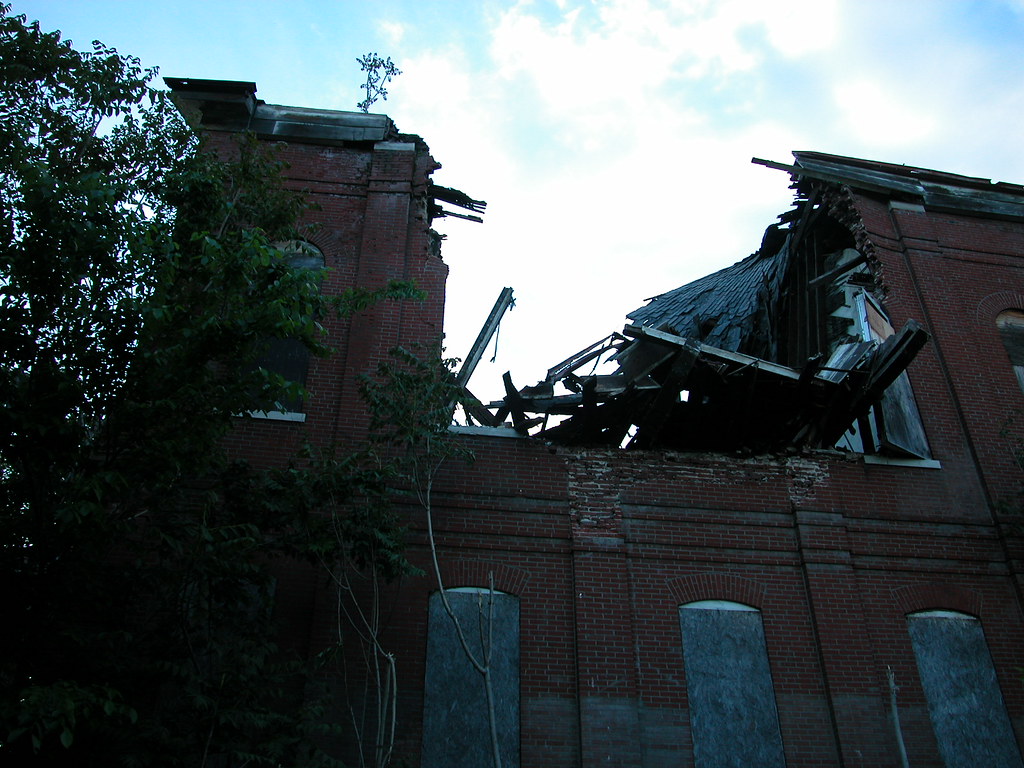
Built in 1896, the chapel was designed by Carondelet resident Aloysius Gillick, architect of several other Archdiocese buildings including the 1889 St. Mary’s Infirmary. The Sisters of St. Joseph built the chapel after taking ownership of the Clemens House earlier, in 1888. The front-gabled brick building features red sandstone ornament and sills, an ornate front porch and a high body visible from long distances to the east and north. The chapel itself is located on the second floor, and featured a suspended vaulted ceiling (mostly collapsed). The ornate marble altar and stained glass windows are both nearly completely missing.
Still, preservation of the chapel is important in retaining the historic integrity of the complex. The current configuration reflects the House’s years of religious service rather than its original mansion life, and any restoration should retain the evolved form to show the layers of historic presence.
Now is the time for the owner of the Clemens House, Paul McKee, to come forward and announce his intention. Inaction will mean certain loss of the chapel and further deterioration of the Clemens House buildings. Immediate stabilization should commence. If McKee is unwilling to do that, he should say so and offer others a chance.
Television stations KSDK and KTVI (oddly speculating that the chapel was a cathedral) covered the collapse.