Categories
Alton, Illinois Theaters

Alton Considers Landmark Designation for the Grand Theater

by Michael R. Allen

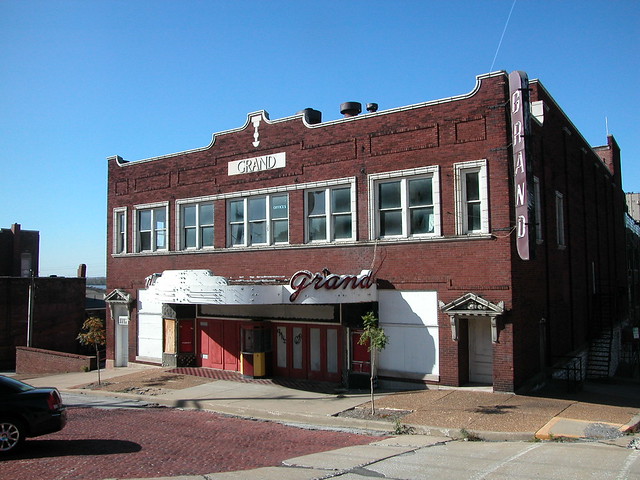
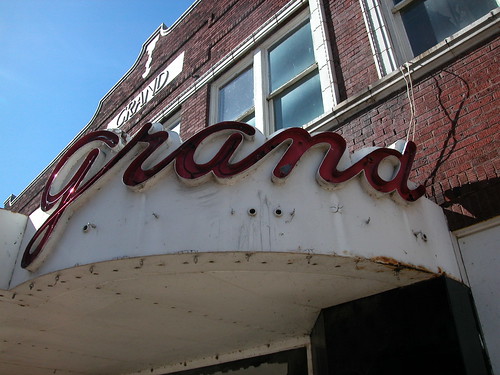
Earlier this week, the Alton Historical Commission heard testimony on an application to designate the Grand Theater (1920) at 230 Market Street as a city landmark. This application is controversial because the application is opposed by the building’s owner — and because the status would create public review of demolition. City landmark designation is always the highest form of building protection. Bill McKenzie, head of a citizens group that wants to find a new use for the theater, made the application. Owner Ed McPike opposes the designation and thinks the building is unworthy. Beyond structural problems he admits have developed during his ownership, McPike assets that the theater — refaced in the 1930s — is not architecturally distinguished. McPike purchased the Grand to rehabilitate it but has given up his efforts.

The Commission has a month to make a decision. From an Alton Telegraph story by Linda Weller, “Panel to decide if old Grand Theatre is landmark”:

City ordinance allows 30 days for commissioners to make a decision, which can be appealed to the City Council. Commission Chairman Doug Bader said he does not know when the commission will convene for the vote.

At stake is that anyone wanting to renovate, add on to or demolish a city landmark must submit the plans to the city’s Building and Zoning Department. The commission would review the plans and must recommend that Alton issue a certificate of compliance before work can begin.

Categories
Abandonment East St. Louis, Illinois Fire

Suspicious Fires, Crisis in East St. Louis

by Michael R. Allen

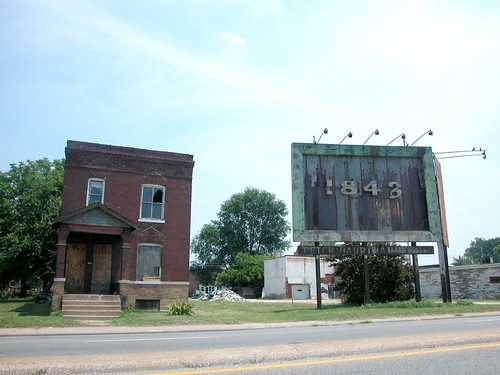
The Arch design competition winner has leaked this week, and that means we have some glimpse at what the East St. Louis waterfront could look like in five years.  Yet more immediate, less hopeful news arrived this week too: KTVI television reports that there have been three suspicious fires at abandoned buildings in East St. Louis in a two-hour span early today. The fires were at a house the 600 block of 22nd Street, a building at 14th and Cleveland and a building in the 12-hundred block of Missouri burned.

The house in the 1200 block of Missouri Avenue is at left in the following photograph.
Meanwhile, back at the start of this month, the state Financial Advisory Authority voted unanimously to seize all state revenues in East St. Louis. Such revenues include all of the state gambling taxes from the Casino Queen, which comprise 50% of the revenues of the city. The Authority will now control at least half of the city’s budget, a move some say has long been needed. Whatever the politics, the effect is that a struggling city government is put further at risk of not being able to survive.

Yet amid this period of turmoil, a major design competition concluded that had half of its land area inside of East St. Louis. Even submissions that did not address the urbanized parts of East St. Louis all had elaborate plans for the east riverfront. Whatever gets built will be a bigger moment for East St. Louis in some ways, because it will be create a master plan for the riverfront and a totally new major metropolitan park.

What does that park mean for an East St. Louis with struggling finances, arrested revenue and massive abandonment? We will find out. If it means that a new park isolated from the city is built and business as usual continues to push the historic second city of the metropolitan area into the ground of history, then the region will be worse off. We can ignore East St. Louis at our own risk, and at the risk of the forthcoming investment in the riverfront.

As for the spate of fires, I can think of nothing more sad for the city at this time. The television report quotes from a neighbor of one of the burned abandoned houses, who says the house needed to go. He reported that bodies had been dumped there. That opinion is a micro version of the regional attitude toward the physical fabric of East St. Louis, and is based in despair. A hopeful mind could envision something greater than removal of the city bit by bit, or in large swaths. East St. Louis residents have more of a right than St. Louisans to see despair in the old great city, but neither of us should let the hope extinguish. The design competition and the radical change to city government ought to spark a revolution in East St. Louis.

One more reason — and a big one at that — for a revolution: next year, 2011, is the 150th anniversary of the incorporation of East St. Louis.  In 1861, dusty Illinoistown grew up and became East St. Louis.  The new name started a period of explosive growth and massive industrial development.  St. Louis would never have become the major city that it did without the workshops of its neighbor across the river.  East St. Louis would reach a population over 82,000 in 1960 before beginning massive decline, but it retains a central position in the region.  Its anniversary provides a crucial occasion to imagine its next life.  The entire region should seize the opportunity.  After all, never was East St. Louis fully a creature of Illinois, and never will it be again.  At the least, the City+Arch+River 2015 Foundation does not think so.

Categories
Demolition Downtown

Good Riddance, Locust Street Sky Bridge

by Michael R. Allen

This video — I apologize for the shakiness — captures what I hope is my last walk under the Locust Street sky bridge at St. Louis Centre. I can think of no place downtown that fills me with greater dread, and I am anticipating the demolition of the bridge here more than the bridge over Washington. While the Washington bridge blocked the more prominent and cohesive view, it also crossed a street with enough existing pedestrian traffic to absorb some of its ill effects. The Locust bridge may well have been a wall to grade level for its chilling effect on downtown. With the Railway Exchange Building sale closed, the demolition of this bridge is now ready to go.

Of course, the shift in obscenities from an enclosed downtown mall to a parking garage is a downward fall. Any grace in the loss of the sky bridges is at least partly mitigated by the unimaginative new use of St. Louis Centre. I know it took some imagination for the city to extricate itself from the Pyramid’s tax increment financing program for the One City Center tower, a truly atrocious deal, but better solutions may have been at hand. What’s done is done, and with the heavy, ugly bridges both gone, downtown will be much improved. A garage at the mall can — and should — be undone.

Categories
Events Mid-Century Modern St. Louis County

Next Sunday: Lecture on Samuel Marx’s Morton May House

View of the Morton D. May House south elevation. Photograph by Hedrich-Blessing courtesy of the Chicago Historical Society.

Next Sunday, architect and architectural historian Andrew Raimist will be offering the next lecture in Landmarks Association of St. Louis‘ Modern Masters lecture series. Anyone who has attended one of Andy’s insightful talks on Harris Armstrong will know to expect something equally enlightening and joyful. By the way: Recently, P.R.O. was fortunate to collaborate with Andy on the National Register of Historic Places nomination for Armstrong’s Stonebrook (1959) in Jefferson County.  Details to come. – Michael R. Allen

Samuel Marx’s Morton May House: Design Innovation and Tragic Loss

Sunday, September 26 at 3:00 p.m.
Architecture St. Louis, 911 Washington Avenue
Free, but reservations required

Andrew Raimist examines the innovative modernist home designed by Samuel Marx for Morton D. May in Ladue. This fascinating presentation will include historic published images, architectural documentation and recent photographs. Raimist will discuss the unnecessary and tragic destruction of this modernist masterpiece.

The lecture will begin at 3:00 PM in the classroom at Architecture St. Louis at 911 Washington Avenue, Suite 170. Seating is limited to 50 people. We strongly encourage reservations as we cannot guarantee seating without one. To reserve a seat, please call 314.421.6474 or e-mail: landmarks@stlouis.missouri.org.

Categories
Bridges Missouri St. Louis County

Route 66 Bridge at Times Beach Needs Your Help Now

Historic photograph of the bridge at Times Beach from the Missouri Department of Transportation.

From the Missouri Route 66 Association

Please take the time to send your comments to MoDOT concerning the future of a bridge at Route 66 State Park. The bridge is scheduled for demolition in February 2012 and no replacement of any kind is currently planned. Comments MUST be sent before September 30th to be included in MoDOT’s file on this issue.

Send your email comments to: andrew.gates@modot.mo.gov

Follow these links to MoDOTs website:

Route 66 Meramec River Bridge Virtual Public Meeting

This MoDOT website shows the results of the years of NO maintenance on the bridge since Times Beach was dis-incorporated in 1982:

Route 66 State Park Bridge

Other websites with information about the bridge:

Meramec River US 66 Bridge

Missouri holds new meeting for Route 66 bridge

Friends of the Meramec River Route 66 Bridge (Facebook)

Categories
Housing National Register Vandeventer

4011 Delmar Apartment Building For Sale

by Michael R. Allen

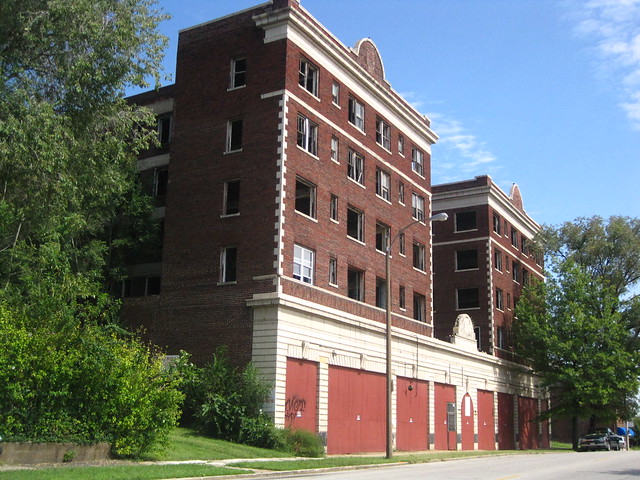
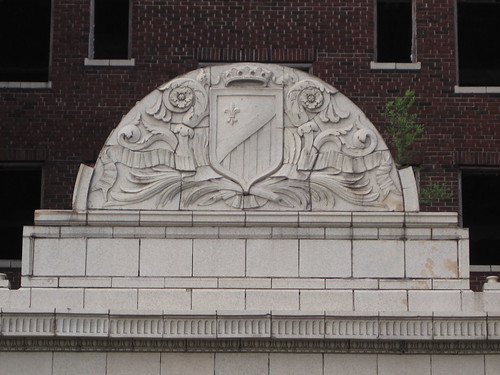
At 4011 Delmar Boulevard in the Vandeventer neighborhood stands a massive abandoned apartment building. The first floor base, clad in buff terra cotta, supports a H-shaped upper section of red brick with terra cotta quoins, string course under the top floor and cornice.  The side and rear walls have an exposed concrete structural grid.  The building is noteworthy because it is one of the few large apartment buildings in the vicinity — it truly is at a scale that is unusual for this location.

However, when construction began in 1927, the building was part of an anticipated boom of such construction following the tornado of September 1927.  The site of the 4011 Delmar Apartments, as the building was originally known, was cleared after the tornado destroyed the buildings on the site.  After the tornado, some developers thought there was potential to build up the neighborhood at greater density with modern fireproof multi-proof buildings.  The Great Depression shot down that notion, but not before the 4011 was completed in 1928.  Designed by obscure architect Marion Garrison, the 4011 remains an unusual post-tornado achievement.

Now, the 4011 is ripe for development once more.  A sign on the exterior proclaims that it is for sale and includes the number of Frank Ploch, St. Louis Premier Realtors, 314-378-8016.  Gutted down to the shell, the sturdy 72,000 square foot apartment building is ready for renewal at a location that is within short distance from the cultural institutions of Midtown and the street life of the Central West End. The potential of this building to shine again can be witnessed in the revival of another singular large apartment building that fell down on its luck, the Winston Churchill Apartments at Belt and Cabanne in the West End.

The 4011 Delmar is listed in the National Register of Historic Places, and thus is eligible for historic rehabilitation tax credits.  (Read the excellent nomination by Ruth Keenoy, Karen Baxter and Allison Brown here.)

Some photographs of the 4011 in darker days can be found on Sonic Atrophy.

Categories
Missouri Public Policy

Act Now to Protect the Missouri Historic Tax Credit

From the National Trust for Historic Preservation

The Missouri Historic Tax Credit is under review. Governor Nixon’s Tax Credit Review Commission (TCRC) has begun its review of Missouri’s tax credit programs. In addition to the full TCRC meeting which was held September 8, 2010 to debrief the Commission members on all of the tax credit programs, there are several smaller regional meetings to be scheduled throughout the State, at which time public testimony will be taken.

The Missouri State Historic Tax Credit program is under scrutiny by the commission. It is critically important at each of these public hearings for commission members to understand the great benefit of the historic tax credit to the state of Missouri!

So how can you help? The National Trust for Historic Preservation is urging you to attend the upcoming regional TCRC meetings to voice that more cuts to the existing Historic Tax Credit Program will only reduce state revenues and kill more jobs, and that surrounding states are increasing their historic tax credit caps to create jobs.

Upcoming TCRC Meetings:

Cape Girardeau
Monday, September 20th
John and Betty Glenn Convocation Center
Southeast Missouri State University, River Campus
One University Plaza
Cape Girardeau, MO 63701
3:00 p.m. – 9:00 p.m.

St. Louis
Tuesday, September 21st
Missouri Court of Appeals, Eastern District
En Banc Courtroom
One Post Office Square
815 Olive Street
St. Louis, MO 63101
3:00 p.m. – 9:00 p.m.

Please send an e-mail encouraging the continuation of the Missouri Historic Tax Credit. Write to the Tax Credit Review Commission today!

Categories
Art

S.P.O.R.E. Projects Call for Collaborators

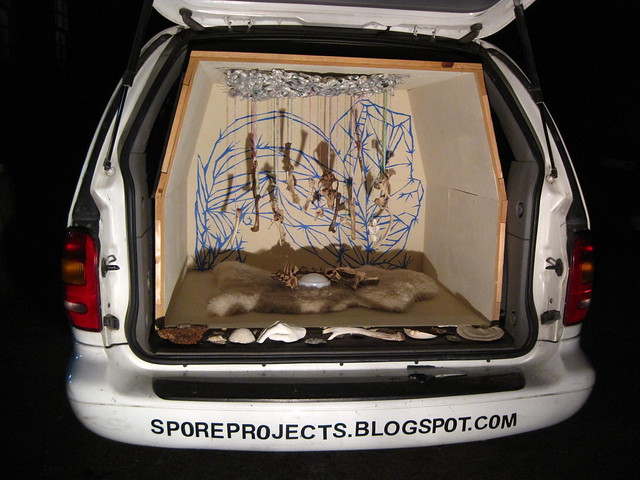
S.P.O.R.E. Projects, sponsor of the mobile gallery pictured above, is the brainchild of the amazing and talented Emily Hemeyer. Emily is one of those people who makes things happen anywhere she goes, and the mobile gallery — a repurposed white minivan — potentially has extended her reach across the entire nation.  The thought of Emily reaching the entire nation is intriguing.  There are so many connections to make in St. Louis, between St. Louis and other places, and between people in other places –  and it seems that Emily is going to make as many of these happen as possible.   –Michael R. Allen

Send proposal to Emily at ghostsihavebeen@gmail.com

Include in your proposal:
1. 3-5 jpegs of past work or website link
2. Concept outline. Including writing, drawings, video, and/or images.
3. List materials. These should be found, constructed or recycled.
4. Q- How the project will engage the community?

LOCATION: SPORE is presently located in St Louis, Missouri.

GALLERY MONTHS: Aug, Sept, Oct, Nov, Feb, March, April, May (off months- Dec, Jan, June, and July).

ARTIST RESIDENCY: We offer a communal 1-week residency w/ an “opening”, community share and/or performance for out-of-town artists and musicians. This includes studio access, housing, general materials, and use of a bike. Sliding scale donation of $50-$100 covers food, studio and housing costs.

MOBILE COLLABORATION: SPORE relishes collaborations in other communities. Exchanges can range from a weekend to short residencies.

NEEDS: Always accepting gifts of gas, maintenance, money, materials, and art for the archive. Currently looking for a projector and amplifier.

Categories
Belleville, Illinois Best Practices Chicago Illinois

Two Wayfinding Ideas from Illinois

by Michael R. Allen

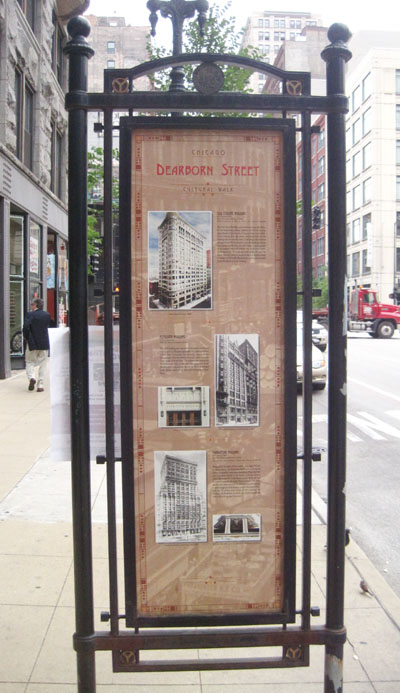
On a recent trip to Chicago, I came across the wonderful “Dearborn Avenue Cultural Walk.”  The “walk” is a self-guided architectural and cultural tour with information placed on illustrated signs along Dearborn.

Each sign contains information and historic photographs about the architecture and history of buildings on that block. Dearborn is one of Chicago’s most storied streets, so there is plenty of information. The photographs make it clear which building is which and what buildings looked like at other times (or what lost buildings looked like).

The elaborate sign boards could not have been cheap, but they are an excellent amenity. They are as easy to use for those seeking to take the whole “tour” as for someone just walking to work. The signs bring out more color from a very colorful street. St. Louis could stand to implement something similar. Downtown’s Olive Street would be a good test, because it is largely intact and still very densely built up. Washington Avenue would also be a good choice. Of course, both (and more) would be a good first choice, but cost certainly is a factor. Anyone interested?

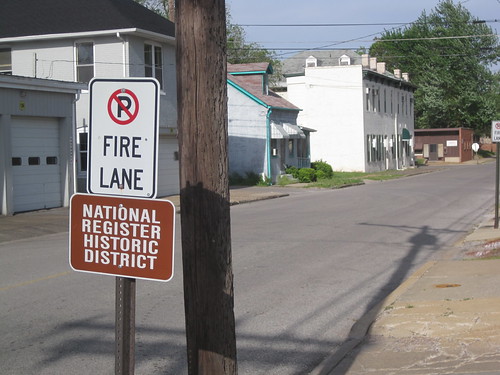
Closer to home, Belleville, Illinois has placed steel signs at the boundaries of the downtown area historic districts that read simply “National Register Historic District.”  The brown signs are placed near other road signs and thus underscore their recognition of what is an official status.

The Belleville signs do not include the historic district name or any other information, but they are a relatively economical, easy way of marking the special status of the city’s historic districts. These signs won’t guide tourists, but they do impress upon passers-by that there is something special about the neighborhood. Perhaps the signs instill some neighborhood pride in the status, too. Again, St. Louis might do well to grab this idea in some way. Anything that draws attention to our rich architectural heritage is good for cultural tourism and economic development — and we could use more of both.

Categories
North St. Louis Northside Regeneration

Hearing on Northside Regeneration Retrial Motion on September 24

Judge Robert Dierker, Jr. has set a hearing on Northside Regeneration’s motion for a new trial in Bonzella Smith et al. v. City of St. Louis et. al. for 9:00 a.m. on Friday, September 24 in Division 1.  Dierker issued his ruling in the case on July 2.  The ruling invalidated Ordinances 68484 and 68485 that gave Northside Regeneration LLC redevelopment rights and authorized issuance of tax increment financing for the company’ s proposed project.