by Michael R. Allen
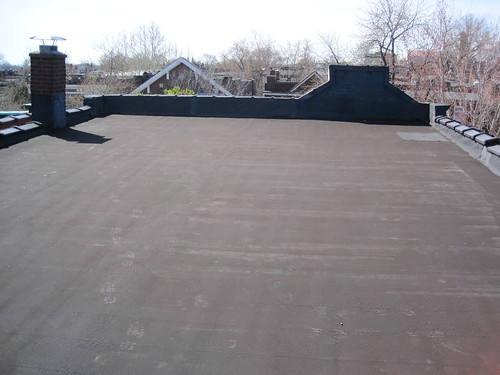
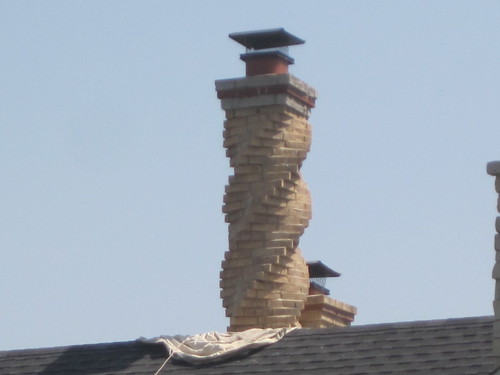
After completing major tuckpointing and chimney rebuilding, we decided to apply a white elastomeric coat to our flat roof this month. This roof was a three-ply modified bitumen roof with a black, heat-trapping emulsion overcoat. The roof was old enough to coat but certainly not getting younger under the toll of ultraviolet rays. A mod-bit roof needs about one year to leech out oils before coating, and ours was well past that mark. Time to coat!
Now why would we go through the trouble of applying a white coat? There are two major reasons:
Energy efficiency and global warming. A white coat can reflect up to 80 percent of solar radiation, reducing overall planet temperature but more immediately reducing building, neighborhood and city temperature. One white roof is small local block against the urban “heat island” effect and many of them can have wide impact. The white roof will reduce the internal temperature and the need for air conditioning, which in turn reduces the electricity usage and so forth. (There is some question about possible heat loss effect of a white roof in winter. At St. Louis’ latitude the sun’s rays are vertical in the summer and at a low slant in the winter, so the available winter solar heat is much less than the summer heat. At other latitudes, a white roof might not be of such benefit as here and points southward.)
Longevity of the roof. An elastomeric coat will block ultraviolet rays that slowly break down asphalt roofing. Coats should be reapplied every 10 years or sooner if needed. With timely reapplication, the coverage can extend the life of the roof to 40-50 years, reducing cost as well as waste of nonrenewable roofing materials.
While the mason had the scaffolding set up, we used his pulley to hoist up the 5 gallon buckets of coating. We used five $72 buckets of Henry Solarflex 287, which completely covered our 1300 square foot roof. When the scaffolding was down, we used a tall ladder for travel to the roof.
Working with a friend, we spent about eight hours washing the roof and applying the coat. Since we had just had masonry work, the roof was dirty and required over two hours of scrubbing. The mod-bit roof dried quickly, however. We applied the coat with a 4″ brush on the parapet sides and 9″ rough rollers on the roof. We avoided a few new flashing repairs made around the rebuilt chimneys.
 Most of the roof was covered with two coats, but some areas required three coats. (A one year old roof won’t take this much work). We left a spot near the ladder for exit and came back to finish in a half-hour a day later. Now the roof is too bright to look at, just in time for summer. We’re not big air conditioning users — it’s expensive and not very sustainable, although certainly necessary for a few weeks — so we definitely look forward to the building heat reduction.