Categories
Academy Neighborhood Historic Preservation North St. Louis Preservation Board

Fate of Building at Page and Union Deferred Again

by Michael R. Allen


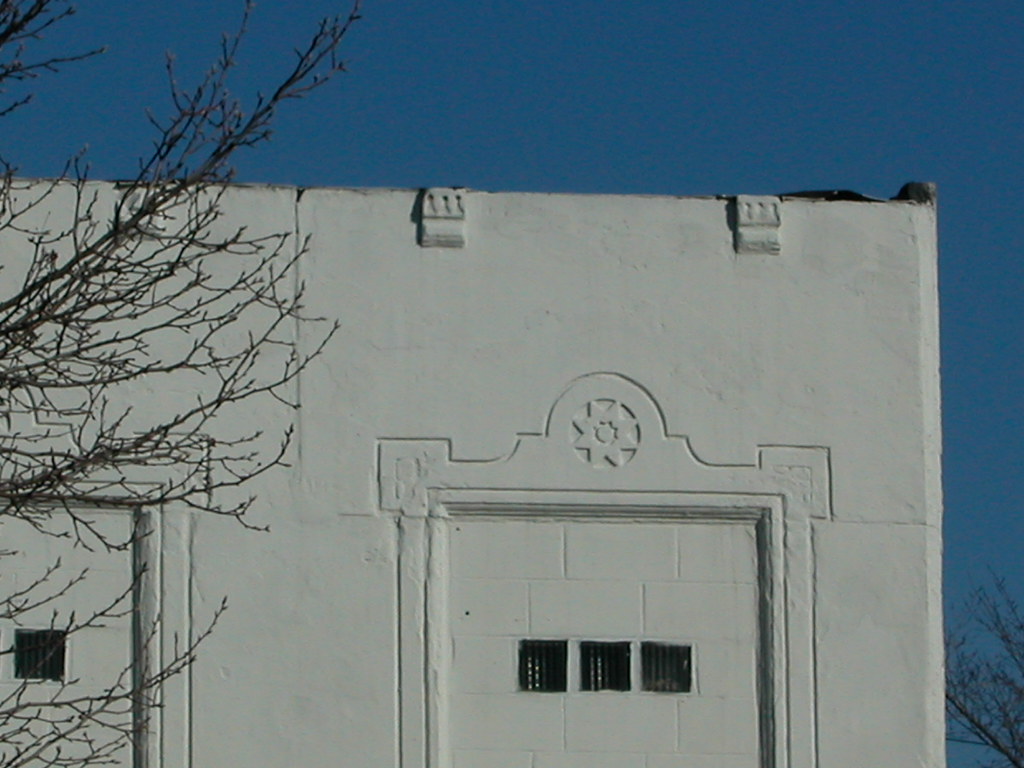
At Monday’s meeting of the St. Louis Preservation Board, the Board voted 3-2 to defer consideration of an appeal of the staff denial of a demolition permit for the building at 5286-92 Page Boulevard. The applicant is the Berean Seventh Day Adventist Church; background on the permit can be found in a post that I made in November. While the November meeting of the Board that considered the matter was packed with congregation members, this month only attorneys William Kuehling and Robert Kinney from Polsinelli Shalton Flanigan Suelthaus appeared to present the church’s case — and yet another rendering of a supposed new building that will replace the existing building (but for which no funds or construction blueprints exist).

Voting to defer the matter were Anthony Robinson, who wanted to hear from the Academy Neighborhood neighborhood association on the proposed new building, Mary Johnson and Alderman Terry Kennedy. Voting against deferral were Mike Killeen and David Richardson. Consideration of the new building is not germane to the Preservation Board’s consideration, which legally applies only to the demolition itself. The building is not located in a local historic district with design guidelines. Instead, it is part of a national historic district where the Board can review demolition permits alone.

Among those who testified in opposition to the demolition was historian Lynn Josse, who wrote the National Register nomination for the Mount Cabanne-Raymond Place Historic District in which this building is a contributing resource and visual anchor. Her words appear here:

By way of background: In 2000, the City of St. Louis funded a National Register nomination in order to protect the Mount Cabanne/Raymond Place Historic District and to encourage the reuse of its valuable historic buildings. The district is listed not only for its architectural merit, which is obvious in this building, but as an example of a compact walkable neighborhood with a distinctly Orthodox Jewish character. The congregation of the B’Nai Amoona synagogue at Academy and Vernon had to live within walking distance of where they worshipped because of Sabbath restrictions, so there was a higher than average concentration of Jewish households and businesses. In most ways though, the neighborhood was like other streetcar neighborhoods of the time. Raymond Place had most of the amenities families needed for daily life within easy walking distance. The building that you’re considering today, by the 1920s was the home of grocery stores, drug stores, a medical office, and a delicatessen – all of which would be vital to the daily life of the neighborhood.

In a district like Mount Cabanne-Raymond Place, it is all too easy to allow the commercial edges to erode and slip away. In this district, we’ve lost at least one of the commercial buildings on Delmar since the listing in 2002. But historically, it is the commercial buildings like this one that made the residential life in the center of the neighborhood possible. Raymond Place boasts a really great collection of architecturally interesting houses, but without the context provided by important commercial buildings like this one, it is just that: a collection of dwellings. Cities are more than that; they are a complex system of people and jobs and transit and housing and recreation and institutions and services and retail. We are doing a good job encouraging reuse of housing, but the neighborhood doesn’t make historic sense and may be less sustainable in the future if you allow the destruction of the small-scale retail spaces that historically have connected people.

Part of what the ordinance directs you to consider is the contribution to the streetscape. This building is the streetscape. For over a hundred years it has defined the corner of Page and Union. Its loss would cause a major gap at the northwest corner of the historic district. Replacing this building with a surface parking lot would be a terrible disservice to the neighborhood. It’s a bad use of land and a terrible waste of an important building that should, according to all of your legal criteria, be preserved.
Categories
DALATC North St. Louis Northside Regeneration Public Policy

McKee’s Holding Companies May Be Preparing for Tax Credits

by Michael R. Allen

There may be movement afoot on the part of developer Paul J. McKee, Jr. to get ready for an application for Missouri’s Distressed Areas Land Assemblage Tax Credit. On October 26, four holding companies owning land in north St. Louis — Blairmont Associates, VHS Partners, Noble Development Company and N & G Ventures — each filed deeds of trust covering all property purchases made before 2006, when McKee’s holding companies began filing individual deeds of trust for each property.

Each company’s deed is for the same amount, $3 million and granted by the Corn Belt Bank & Trust Company of Pittsfield, Illinois. Two years ago, Corn Belt granted a loan of $2.8 million to McKee’s Allston Alliance for the purchase of the vacant Cass Avenue Schnucks store.

Each company’s deed was signed by Paul J. McKee, Jr. in capacity as manager of the other limited liability companies that act as sole members of the holding companies. Blairmont Associates’s sole member is BMA Partners, VHS Partners’ is Vashon Developers, Noble Development Company’s is NDC Venturers and N & G Ventures’ is NGV Partners.

Under the terms of the Distressed Areas Land Assemblage Tax Credit Act, a land assembler is eligible for up to 50 percent of the purchase costs of land. At the maximum eligible amount, these recent deeds of trust would entitle McKee’s companies to $6 million in tax credits.

Categories
People South St. Louis

Another Chance to Help Make the Marti Frumhoff Memorial Garden Reality

by Michael R. Allen

Christian Herman, author of the delightful St. Louis Brick blog, is the visible shepherd of the plan to build the Marti Frumhoff Memorial Garden. Christian continues to raise funds and awareness for this important memorial to Marti Frumhoff, one of the city’s biggest champions who unexpectedly passed away last May.

Christian’s latest effort is an online auction of books to benefit the garden project; check it out here. Right now, there are some cool cookbooks and even some cooking accessories up for grabs. Bid now, and keep checking back for new books to be added. Out-of-print art and gardening books will be auctioned in the next few weeks.

Categories
Downtown Historic Preservation North St. Louis Preservation Board

Preservation Board Meets Monday, Demolition Permits on Page and Olive Return

by Michael R. Allen

Since the St. Louis Preservation Board did not have a physical meeting last month, this month it will meet twice. The first meeting is Monday, January 7 at 4:00 p.m.

Two of the agenda items are repeats of demolition permits:

– 5286 Page Boulevard. The Berean Seventh Day Adventists’ appeal of staff denial of a demolition permit for this two-story commercial building was continued due to the church’s presentation of new evidence in November. The Board continued the hearing of the appeal in order to afford Board members and Cultural Resources Office staff more time to review the evidence. (Read more here.) Staff still recommends upholding the denial. The church has no good case for removing the last historic building at the important intersection of Page and Union — a building structurally sound and listed as a contributing part of a National Register historic district.

– 2217-19 Olive Street. The owners of this building want to demolish it for a parking lot. The two-story commercial building is a contributing part of the newly-listed National Register district called the Olive and Locust Historic Business District. In September 2007, the Preservation Board unanimously rejected the appeal of a staff denial of a demolition permit. (Read more here.) Now the matter is back as a “New Application” because the applicant is not the owner but the Building Division, which claims that building is in danger of collapse. Swayed by the evidence, the Cultural Resources Office is recommending approval of the demolition permit.

The agenda begins with three preliminary reviews of new construction in the Benton Park and Lafayette Square local historic districts.

The meeting takes place on the 12th floor of the Locust Building, 1015 Locust Street downtown. Testimony may be submitted in writing via email to Adonna Buford at BufordA@stlouicity.com.

Categories
Abandonment Art Metro East

Take a Trip With Cindy Tower

by Michael R. Allen

Those who frequently haunt abandoned places around St. Louis may have run into painter Cindy Tower, a dynamo who paints scenes from abandoned places — on site, not from photographs! This video shows here in action.

Categories
Architecture Gate District Housing South St. Louis

Vivienne on Lafayette Advances Infill Housing Design

by Michael R. Allen

The 2800 block of Lafayette Avenue, between California and Nebraska in the so-called Gate District, is a mixed bag of a street scape. Gone is the continuity of historic brick buildings. There are vacant buildings, heavily altered buildings (see last month’s post on 2831 Lafayette) and the graceful corner commercial building at the northeast corner of Nebraska and Lafayette that bears the colorful enamel sign board of the shuttered Garavaglia Market. Most notable, though, there are vacant lots.

This is the diminished state that has led developers to take other blocks in the Gate District and transform them into unrecognizable mixes of old buildings and large platform-framed homes that seem more appropriate to Wildwood than the near south side. Without any historic districts in the Gate District, there is neither incentive for historic rehabilitation work nor mandates for new construction. The area reflects its lack of any legal design framework. Fortunately, on the 2800 block of Lafayette, developer Cheryl Walker of Obasi Enterprises is taking vacant land and doing something that provides new market-rate homes while adding a new and compatible character to the neighborhood.


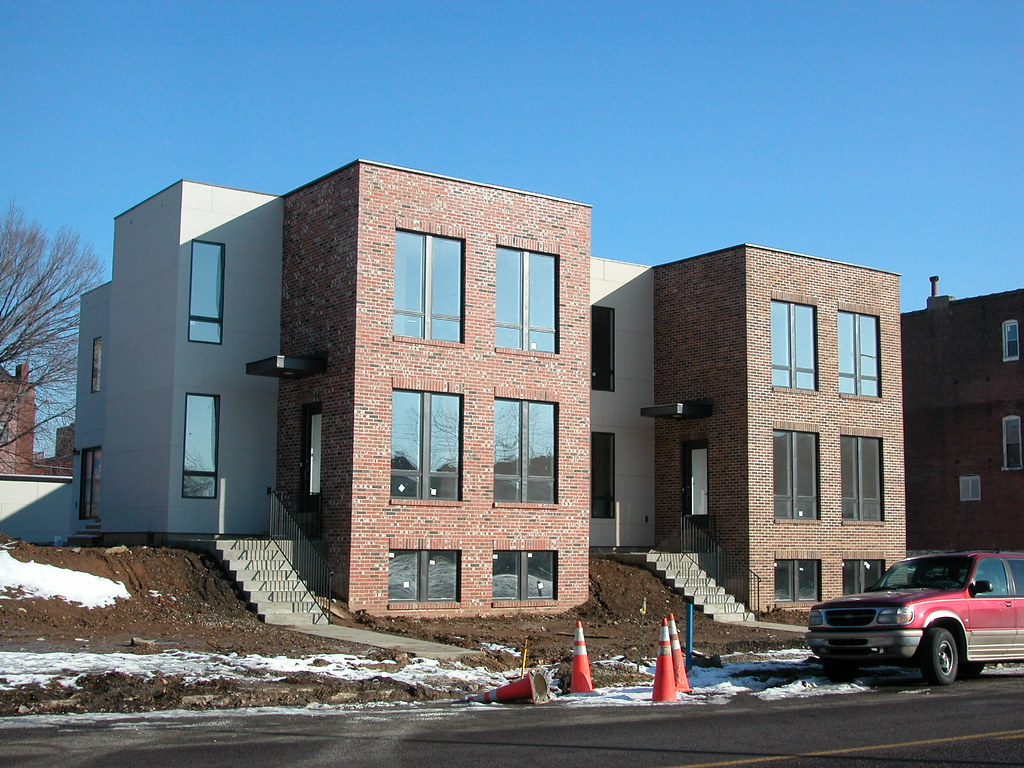
The project is called Vivienne on Lafayette, and it entails the construction of four adjacent homes. The two that are complete are show here. HKW Architects designed the homes; that firm has done extensive design work for Restoration St. Louis including the rehabilitation of the Moolah Theater building.

One is immediately struck by how different Vivienne is from its contemporaries. The houses actually look like original designs! There is absolutely no quotation of historic architectural styles here. Nor is there imitation of historic styles of cornices, brackets, balustrades, window sills or other building parts. The designers instead very earnestly engaged the project location and standard available materials to produce homes that are urban and attractive.

The front walls of these homes are brick, with some rowlock courses as sills and headers on each metal-framed window. The basements are high, which is one nod to historic tradition that make the homes taller than other new infill houses. The side walls are clad in stucco, indicative of the fact that these are not authentic masonry buildings. The builders could have used some sort of vinyl or board siding, but chose something more compatible with brick. The roofs are flat — something that minimizes the home volume and allows for potential greening.


The homes are not quite perfect in design; I think that a monotone brick color would have made each better, and that the stucco color is a bit bland. Some more play with masonry details could have added interest. The homes could be placed closer together. Still, such concerns are minor. The homes at Vivienne Place offer sorely-needed innovation in infill housing in St. Louis, where too often we have settled on worse than mediocre design that offers an unpleasant contrast with our excellent historic building stock.

In neighborhoods with challenging conditions, where historic fabric is spotty, homes like these make a lot of sense. They maintain the traditions of density and best use of widely available materials that typifies our neighborhoods without denying us the chance to leave our own mark in time.

Categories
Mid-Century Modern National Register St. Louis County The Ville

National Register News

Wagoner Place in the Ville is now listed on the National Register of Historic Places. More at MayorSlay.com here.

Meanwhile, Landmarks Association reports on its pending nominations of the Saratoga Lanes building in Maplewood and the Usonian Harry Hammerman House in Ladue. More here.

Categories
Demolition Grand Center LRA Midtown

Grand Center and the Central Apartments

by Michael R. Allen


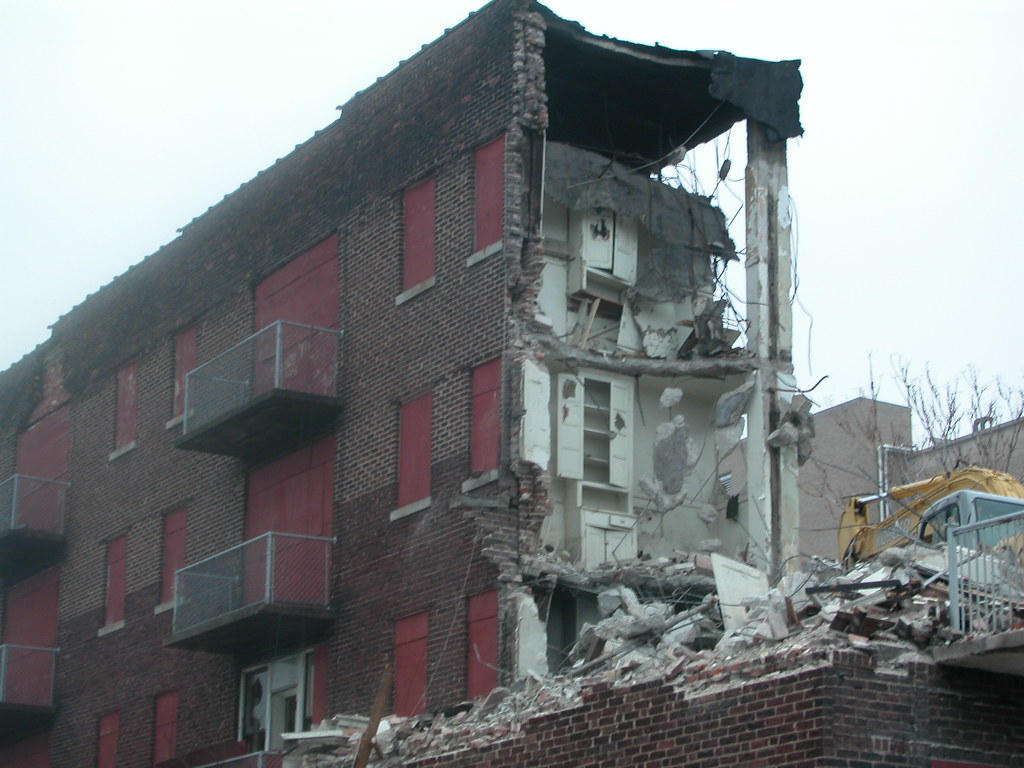
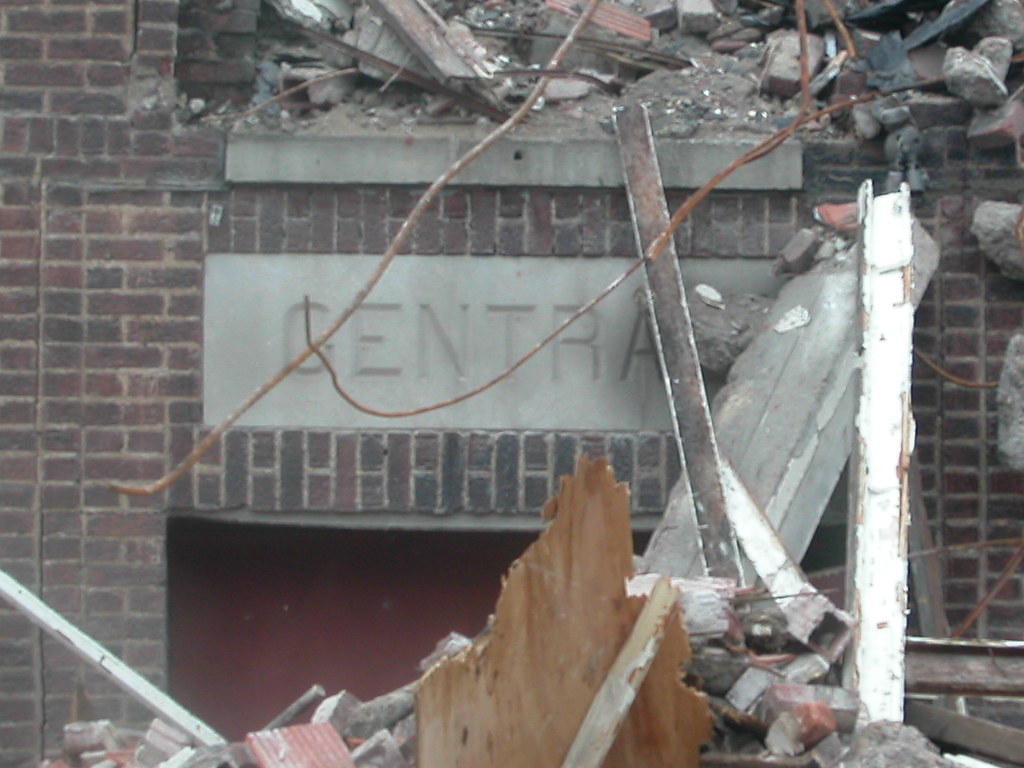
Demolition is nearly complete on the Central Apartments at 3727 Olive Street in Midtown, and there is still no answer to the big question: What were they thinking?

The better question seems to be: Were they thinking?

Central Apartments in 2005.

The graceful apartment building is the latest victim of the indecision of Grand Center, Inc., the redevelopment corporation charged with revitalizing the midtown area. While the Central Apartments has been owned by the city’s Land Reutilization Authority since 2001, its fate has been under the control of Grand Center. Since the apartment building fell empty in 2001 — it was partly occupied with storefront tenants up to the time of closing — Grand Center has failed to articulate a vision for its reuse or demolition. After languishing for several years boarded and deteriorating, the building fell to wreckers in December apparently at Grand Center’s request.

The Building Division considered the demolition an emergency, and some reports of brick loss on the west wall circulated. However, the brick loss was spalling of face brick, and the concrete structure of the building was as solid before wrecking began as it was when people were living there just six years prior.


Alas, the potential for reuse in December 2007 was perhaps greater than ever. Thanks to the work of Restoration St. Louis, Steve Trampe and other developers, there finally is an apartment housing market in Midtown. These developers have seen the obvious need for off-campus housing for St. Louis University students and have rehabbed large historic buildings for housing. Two blocks from the Spring Avenue mall entrance to the SLU campus, the Central Apartments had an obvious market.

While the 3700-3800 block of Olive Street has long lost any semblance of cohesive historic character, and lies outside of the Midtown National Historic District, the block retains a few buildings and many lots the could be developed. The William Cuthbert Jones House and the former Lindell Exchange (later Wolfner memorial library) on the south side of the block were recently listed on the National Register of Historic Places. Historic rehabilitation and new construction could transform that block from its current dullness.

Built in 1916, the Central Apartments possessed an elegant front elevation adorned in the Renaissance Revival style. With a sound structure, mostly solid masonry and largely intact interiors — revealed when exterior walls were knocked off of the building — the building was in good shape. The building could have provided the high-density urban housing one would assume is needed to make a thriving arts and entertainment district function as a real neighborhood.

Why Grand Center did not make rehabilitation of the building a priority is a mystery. Too often, such a senseless demolition is the result of deliberate bad planning. Here, it seems the result of no planning and no deliberation whatsoever.

Categories
Architecture East St. Louis, Illinois South St. Louis St. Louis County

Gift Basket

by Michael R. Allen

There are now official Board of Public Service plans for the Marti Frumhoff Memorial Garden, which will be the triangle at the intersection of Utah and Morganford. See the plans here.

Meanwhile, Steve Smith has posted his video of an August 2007 trip into the Spivey Building in downtown East St. Louis.

St. Louis Patina went in search of Edwin Lemp’s Cragwold estate.

Meanwhile, Lumiere Place opened in time for the holidays. Reviews by Urban St. Louis forum members start here.

Categories
Abandonment Architecture Gate District Historic Preservation South St. Louis Storefront Addition

Just Another Vacant Building?

by Michael R. Allen

I don’t think there is such a thing as an average run-of-the-mill vacant building in St. Louis. For instance, look at this building located at 2831 Lafayette Avenue:


On first glance, the yellow-toned plywood sheets and blue awning jump out from a nearly all-white building. Looking at the building longer, details emerge. Behind that projecting storefront is a different, older building. The building appears to be an old house. A close look brings out clues.

This two-story building has a pretty sandstone front; the large filled-in window openings must have been gorgeous when they were glazed. Underneath white paint and stucco repairs are fine carved details around the windows. The sunbursts centered over each window are impressive and typical of the finely detailed nineteenth century stone masonry we have in St. Louis. Right at the top are sill brackets, showing that the building once stood another story taller. The presence of such fine details, the use of sandstone and the style of the facade suggest a construction date in the 1880s. In fact, building permits show that this block face was built out with houses (mostly single-family and many with significant construction costs) between 1880 and 1895. There are three permits for three-story houses: in 1880, 1889 and 1894.

Owners added the storefront addition at 2831 Lafayette by the 1930s, although fire insurance maps show that the building retained its third story into the 1960s. The first floor of the building was in use a dry cleaners as soon as the storefront was finished. Apartments were above. Essentially, the building joined many others in the city located in well-to-do walking neighborhoods that changed dramatically in the early twentieth century as the upper and middle classes migrated west to quieter streets farther from downtown. The large houses of the migrating residents often were divided into rental housing or businesses; many were expanded, and altered and some were eventually demolished as new commercial uses moved into once-genteel neighborhoods. One under appreciated result of these changes was that population density increased. This building is a frank reminder of twentieth century changes in use and demographics on the near south side.

Deed research could clear up which one corresponds to this house. For now, I am glad to have given it a long look and learned that the old building tells an unexpected story. While the house has lost its third story and its original appearance, the remaining traces still provide beauty. There is no reason that future reuse of the building could not highlight the remaining traces and incorporate them into a new design. While the building is rendered ineligible for any landmark designation through loss of historic appearance, there are many futures for it beyond simply tearing it down.


All over our city are similar old houses — many with storefront additions, missing floors, mangled entrances and strange alterations. These are the buildings that cannot be considered contributing to historic districts but who still lend historic character to our streets. Historic rehabilitation tax credits will never be available for these buildings. Some would knock them over, because of the financial problems of rehabbing them without tax credits. Hopefully others will see that, however twisted or obscured, these buildings still have architectural potential — and still tell the stories of their construction and show the scars of changing use. This stretch of Lafayette Avenue gains far more character from 2831 Lafayette in its current state than from the new homes of the Gate District, or the Holiday Inn.