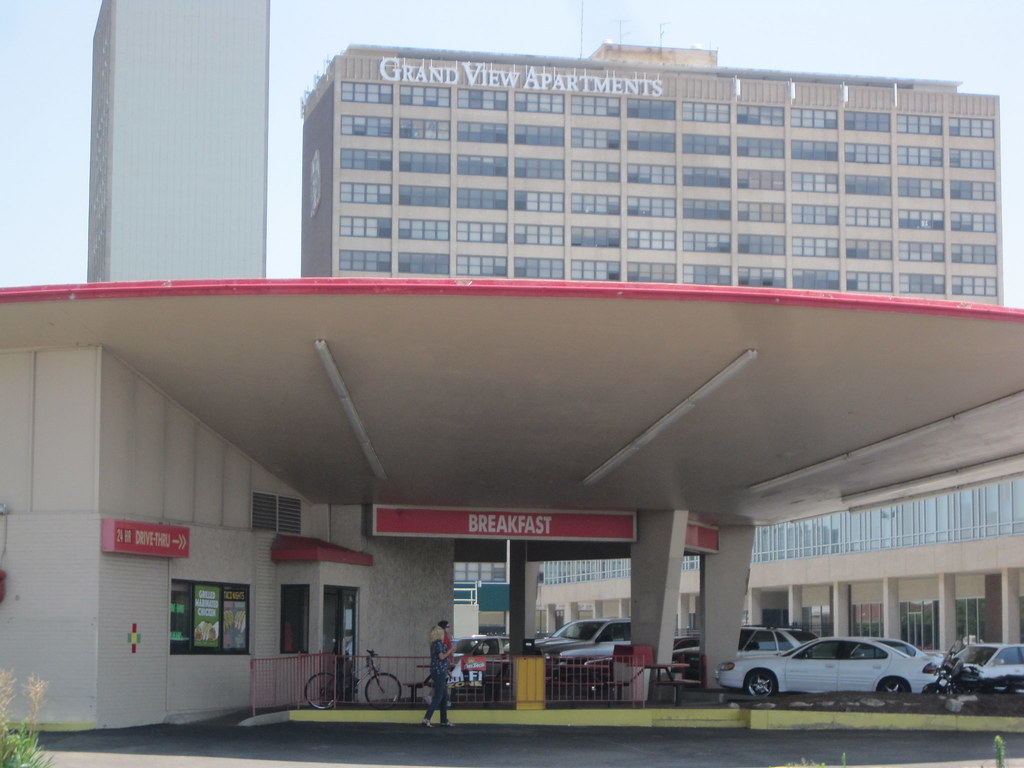
This morning Alderwoman Marlene Davis sent out a notice of a public meeting on the former Phillips 66 station at Council Plaza. The meeting, which will take place at the building (located at 212 S. Grand) will be this Wednesday, August 17, from 6:00 – 7:15 p.m. Davis and developer Rick Yackey will present an update on the building.
What that update shall be is unknown, but we take this announcement as a very good sign.
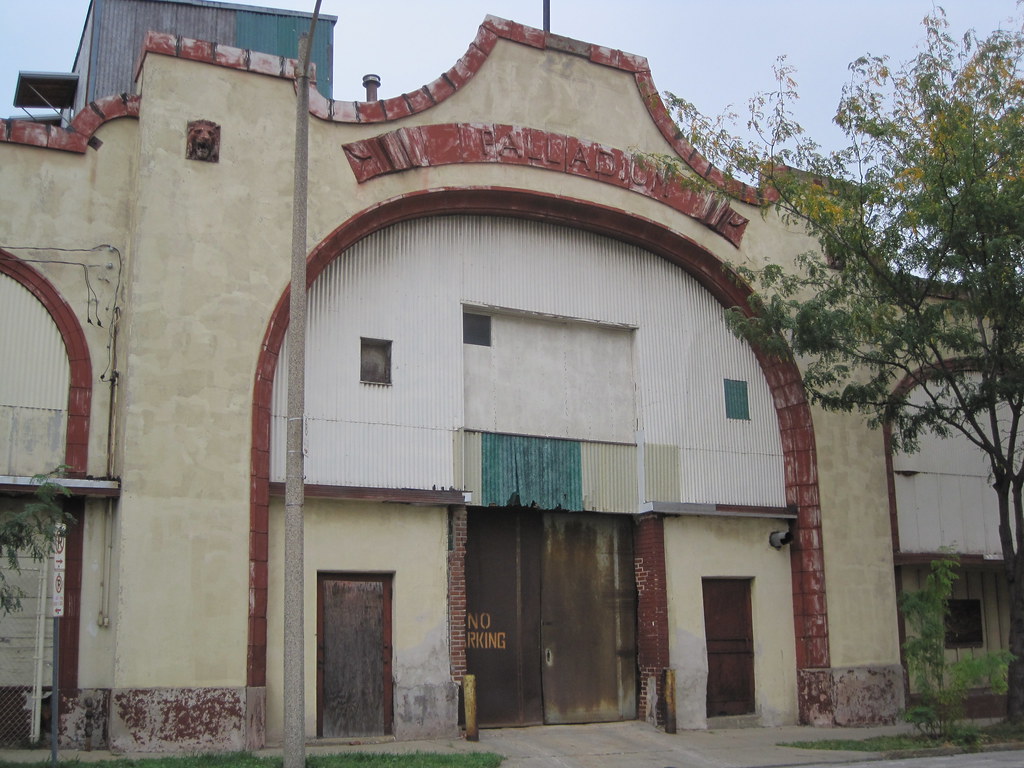
This post continues with the history of the Palladium Building/Club Plantation, and reveals the ownership and managers behind the famous St Louis nightclub. Like the stories and musicians in the book, Devil At The Confluence, this information has never been published before. Currently, the Palladium building may be sold and demolished like so many other lost historic landmarks, so this series of stories are being gathered and posted as quickly as possible so the important history of this legendary nightspot is available while the structure still stands. The inadequate historical record and disinterest for preservation of cultural landmarks by the alderman and governance of the city of St Louis does not reflect the pride that the citizens have of their city. But there is a new attitude of appreciation and preservation in the citizenry and it outnumbers the old. Even though the current office holders do not reflect that yet.
Al Capone may be one of America’s most well-known gangsters and a symbol of lawlessness in Chicago, yet his crimes are proudly exhibited in Chicago’s History Museum. There is no museum in St. Louis for the prohibition era gangsters of the city. While that may be due to, well let’s just say, an overly-sensitive inhibition concerning all facets of its history, the true fact why the Mob bosses in the Lou aren’t well known is a testament to how much better they were than Capone. After all, surely the main job of a good Mob boss is to keep everyone in the city from knowing you’re the Mob boss.
The St. Louis gangster, Tony Scarpelli owned the Club Plantation. The club operated as a set-ups nightclub, meaning they sold food and provided ice, soft drinks, and glasses and the customers brought their own liquor. This way they could stay open later than the 1 o’clock curfew for taverns. A liquor law work-around.
St. Louis has a long-held distaste for liquor laws. First, because beer and wine are a part of the traditions and culture for the St. Louis German, Irish and Italian immigrants, and second, because of the great brewing industry that employed many of the citizens. There’s also a long tradition of organized crime in St. Louis as well, including mobsters Dinty Colbeck and Buster Wortman, whose careers were also principally, well let’s just say, in the liquor and spirits trade. So St Louis had Jazz Age prohibition entertainment and nightlife as vibrant as Chicago, Los Angeles or Las Vegas, and they also had the same kind of prohibition trouble.
But the Club Plantation’s Tony Scarpelli was, it appears, nothing more than a minor hood with only minor liquor law violations on his record. But dig a bit deeper and you might find that his rap sheet included armed robbery and a file with the FBI. Most of the people in the city probably didn’t know about that. Sure, there was talk around but that was just rumor. Now Tony’s younger brother Jimmy’s rap sheet included bootlegging, robbery, gambling and a murder charge, so his involvement with the nightclub was kept on the QT. There was a lot about the Club Plantation that was on the QT. So maybe Tony was just good at, well let’s just say, keeping his nose clean.
Kevin Belford is author of Devil at the Confluence, a book about St. Louis’ pre-war blues music. Contact him at kevinbelford@gmail.com.
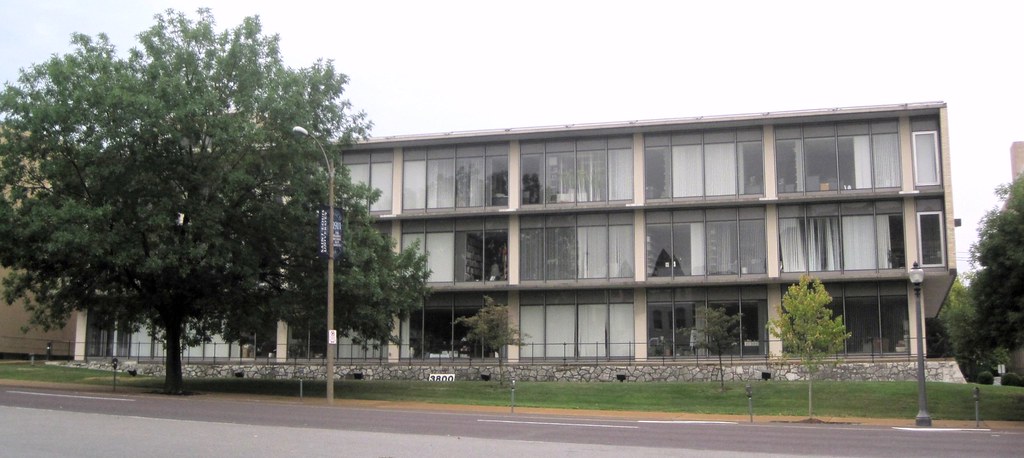
The IBM Building (Hellmuth, Obata & Kassabaum, 1959) at 3800 Lindell Boulevard.
The former IBM Building, now Adorjan Hall at St. Louis University, now stands fully shorn of its concrete block brise soleil. (See “Taking Care of HOK’s Works on Lindell,” July 12.)
Introduction to Historic Preservation at Washington University
“Introduction to Historic Preservation” will be taught again this fall at Washington University on Monday evenings. This class will give an overview of the theory and practice of historic preservation and is being taught by architect Jeff Brambila, former board president of Missouri Preservation. For further information go to http://ucollege.wustl.edu or contact Jeff Brambila at jbmp@brambilaarchitects.com.
American Architecture at University of Missouri-St. Louis
Lynn Josse of Preservation Research Office will be teaching “American Architecture” (ART HS 2279) this fall at the University of Missouri-St. Louis. the course is a survey overview of American architectural movements, styles and architects from 1600 to the present. Prerequisites: Art 1100 or consent of the instructor. For more information, go to http://umsl.edu/academics/index.html.
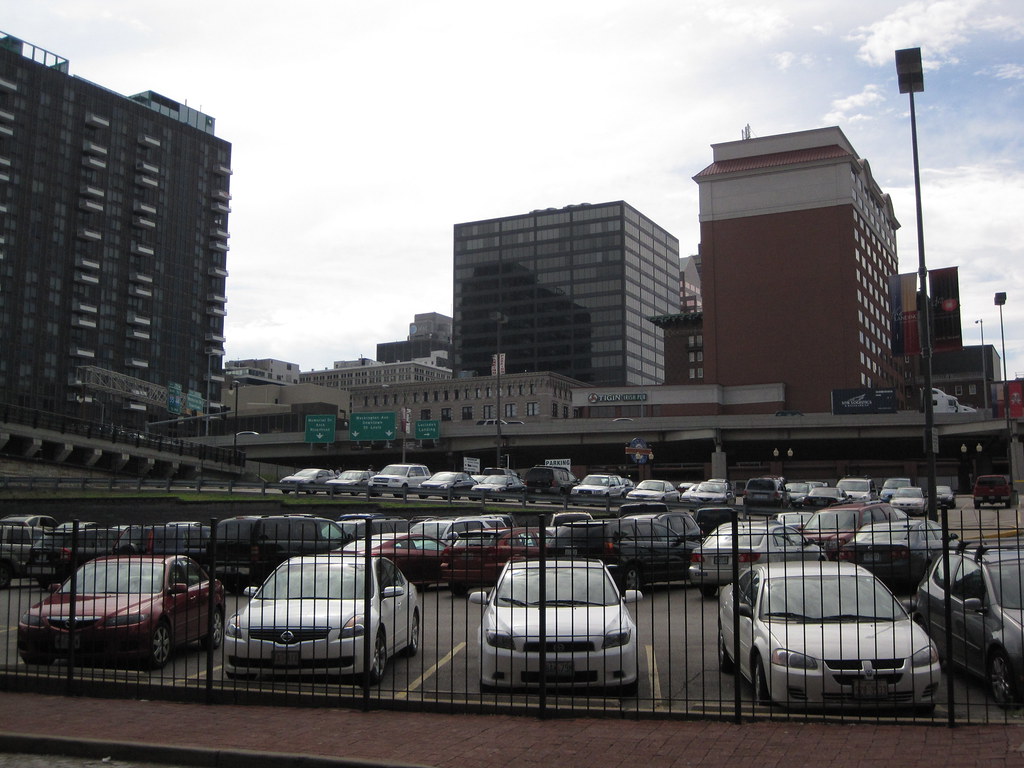
View southwest from Second Street at Lucas Avenue on "historic" Laclede's Landing. There's a National Historic Landmark in this photo -- can you spot it?
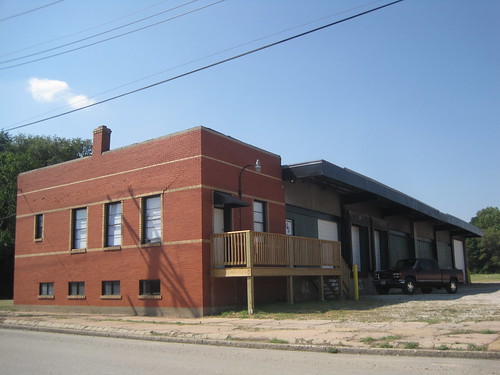
In the United States, historic preservation almost always is a function of property ownership. The agency of an owner to make choices can lead to some puzzling losses and some unlikely saves. Readers know that the historic preservation agenda of Northside Regeneration has been of great interest to this writer for years. Thus I was pleasantly surprised that the company chose to rehabilitate a pretty unremarkable — but solid and attractive — former truck transfer depot at Howard and in Old North as its field office.
NS = Northside.
The office is within the “Area A” of the larger redevelopment plan — an area that has a separate redevelopment ordinance still in effect unlike the vacated master ordinance. This area currently is mounded with a variegated array of crushed materials flowing to and from new river bridge. Here Northside Regeneration proposes a materials recycling center, and just behind the new field office is the landing of the old Illinois Terminal interurban trestle that Great Rivers Greenway will repurpose as a trail.
Will the little transfer depot — one of many built north of downtown in the 1930s in place of rows of tenement houses — survive the changes coming in this area? That is not certain, but for now Northside Regeneration has an unlikely first completed rehabilitation project.
After over a year of research, filming, interviews and editing, Bill Streeter is set to show the world his first feature film, Brick By Chance And Fortune. Bill’s film is a humane endeavor, starting with a very moving story of personal love for brick architecture from artist Sheila Harris and moving through topics as diverse as the history of St. Louis clay mining, the impact of hydraulic press brick production on vernacular architecture, historic preservation and — as sung out powerfully in the soundtrack by Pokey LaFarge — brick thieves.
Above all else, this film is a look at the human dimension — why we built such great architecture in fired clay, and why we so fiercely defend brick buildings today. Bill uses interviews to form a narrative arc that joins different voices that bring together the variable parts of our city’s indelible link to a seeming common building material.
Read more about the film at its website. The “brick film” debuts on Sunday, August 14 at 4:30 p.m. as part of the St. Louis Filmmakers Showcase at the Tivoli Theatre. Order tickets online here.
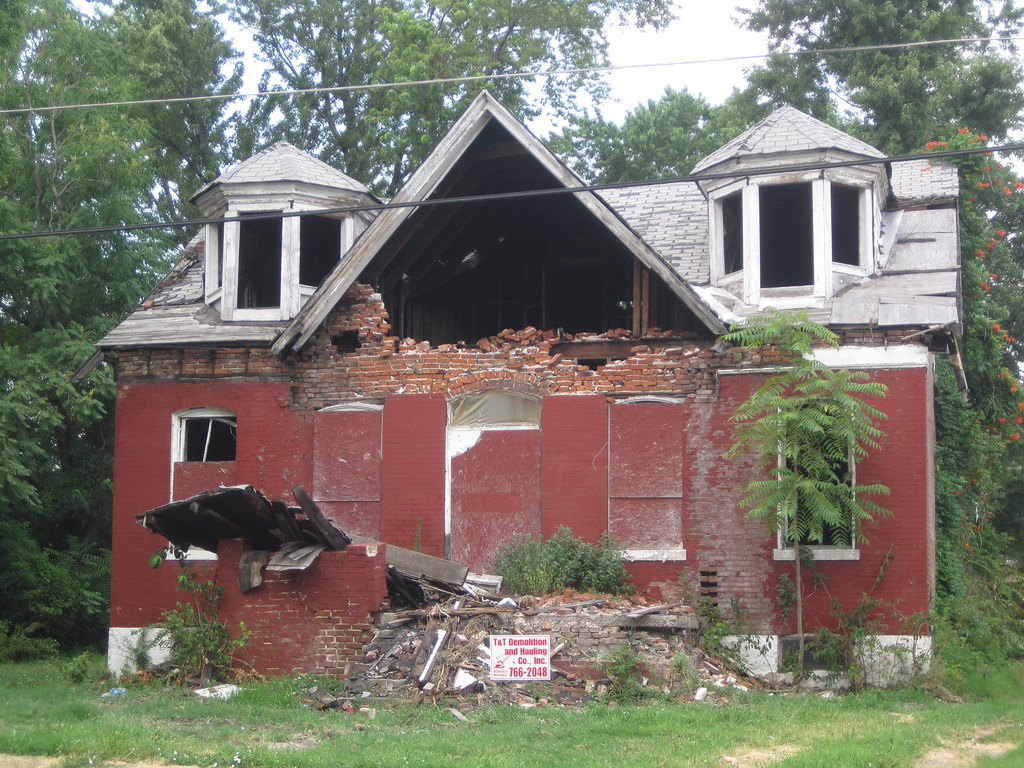
The house at 3839 Lee Avenue as it looked this afternoon.
This unusual cross-gabled house with striking dormers, located at 3839 Lee Avenue in the Fairground neighborhood, is about to be demolished. Once it is gone, an irreplaceable building — seriously, what else looks like this in the entire city? — will be lost and a predictable death pattern will conclude. Fairground and the Third Ward will lose yet another building that could house people, maintain surrounding property values and generate city revenues.
This particular house was first noted as vacant by the Building Division in 1989. The house returned to that status in 1998, and never was occupied again. The downward spiral is evident in the collapsed gable end and mess of bricks below, but also in the ownership. In 2001, after owner Albert Martin defaulted on real property taxes, the house was auctioned by the Sheriff. No one bid. The house reverted to the city’s Land Reutilization Authority (LRA), which did little except keep the plywood boards on. LRA’s lack of enterprise is somewhat understandable given the house’s condition at acceptance. On February 24, 2000, the Building Commissioner condemned the house for demolition. (Even a preservationist is baffled at how long it has taken to get this one down.)
The odd little house on Lee Avenue’s tale is not exceptional, although it should be. A negligent owner let the building fall into disrepair, stops paying taxes, lets it get condemned and then lets it lapse to city ownership. The city lacked the means to reverse long-term decay, and did no marketing of the house. By the time the wrecker put his sign in the front lawn, the story was written and only needed the detail of when demolition would start.
However, this easy and certain death could just as well have been an easy and certain rebirth. The Assessor’s Office shows that the assessed value of land and improvements at 3839 Lee Avenue were a mere $670 in 2000. Again, this is not exceptional. Many houses like this one across the city — but especially in north St. Louis — go to tax sale with low assessments and low tax liens. The economics of preservation of many of these buildings are pretty favorable to a buyer.
Where are the buyers? There are few smart people starting to use the tax auctions for preservation. For instance, artist Theaster Gates’ Rebuild Foundation has purchased at least one Hyde Park building at tax auction for rehabilitation projects. With a plentiful supply of great buildings, many of which could be eligible for historic tax credits, and few competing bidders, there seems to be a hidden buyers’ market in this city. Hidden for long, however, and we could lose quite a bit of St. Louis.
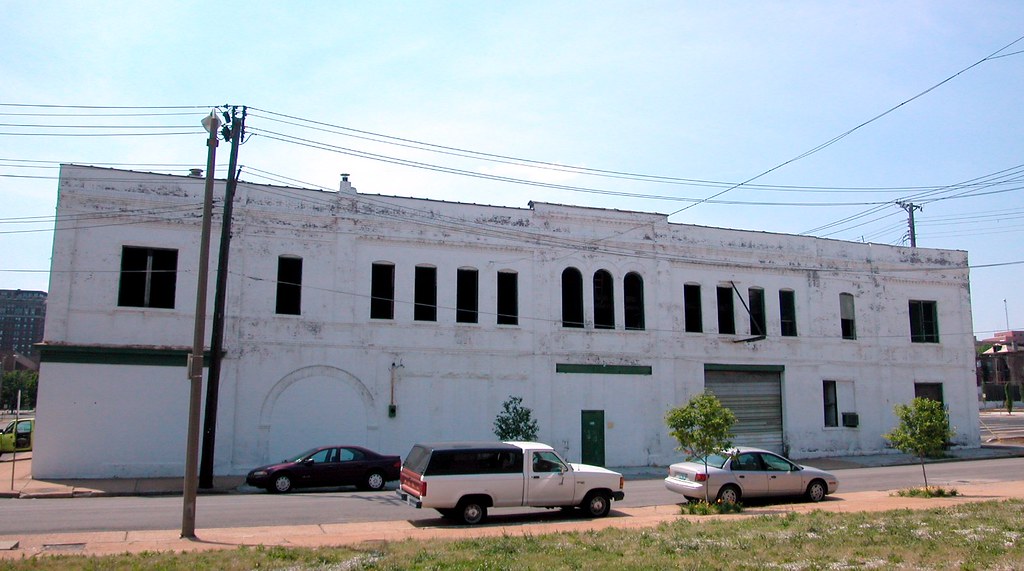
On land once part of a thoroughfare renamed for our native superstar Josephine Baker now rises a menagerie of sculptures. In 2007, the city closed this block and deeded the land to St. Louis University, which planted grass. The university had just demolished a historic livery stable building at the northwest corner of the intersection for yet another giant Grand Center surface parking lot used sporadically for special events. The demolition and the resulting gaping asphalt heat island dealt a blow to nascent renewal on Locust Street, but the area has recovered somewhat. The little strip of closed street has even begun to become something other than an unpleasant lawn.
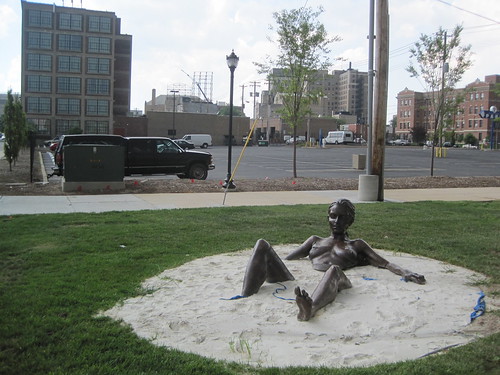
The maiden sits in the sun achieving a rather bronze tone.
The lawn now sports this sultry nude, whose most private parts are tastefully concealed by earth and sand — yet the shapely parts that identify her as woman are evident to freshman and Fox patron alike. The careless reviewers who call this statue a mere figural representation of a naked young woman in a wading pool are incorrect. The intent of the artist no doubt is complex, and I surely am stumbling in my interpretation. Still, the lady clearly represents fair beauty Grand Center, with one foot playfully set upward suggesting the whimsy of the performing arts. The sand, however, represents the ominous force of parking lots. Our damsel is smiling yet actually is in distress.
The livery stable before its demolition in 2007.
The paradox inscribed in a single statue is powerful, and far more useful to our citizens than any block of street or any nod to a long-gone banana-skirt-wearing dancer. Right?
The twists and turns of mid-century modern preservation in the last three weeks have been heartening. Let’s recap: since the end of June we have witnessed St. Louis University chipping away at Hellmuth Obata & Kassabaum’s IBM Building (1959) at 3800 Lindell, developers trying to green-light demolition of the old Schwarz & Van Hoefen-designed Phillips 66 gas station at 212 S. Grand (1967) and CVS quickly and almost quietly testing the waters of demolishing the W.A. Sarmiento-designed AAA Building (1977) at 3925 Lindell. The last two have generated a lot of public protest as well as the open concern of Mayor Francis Slay.
Left to right: The old Phillips 66 station, IBM Building and AAA Building.
Many preservationists have expressed some version of “they can’t do this” or “how could they even think about it”. Fortunately mid-century modernism has reached a level of wide acceptability that, even if the three aforementioned buildings fall, will save dozens in the long term. Yet things have not always been this way for modern architecture here, and St. Louis retains the burden of having one of its most indelible recent-past architectural events being the destruction of innovative modern architecture.
The blast at Pruitt-Igoe Building C-15 on April 21, 1972.
Whoa — this writer just heard the mad dash of his readers! Of course, the phrase “Pruitt Igoe” is not one that enters into the mid-century modern dialogue alongside mentions of pleasant-named ranch house subdivisions and Jetson-modern round commercial buildings. Hyphenated public housing names are more likely to be denigrated in preservationists’ discussions of postwar urban renewal policy. The homes, offices, gas stations and diners of the middle and upper classes get the praise, the scholarship and the activist defense that modernist dwellings for the poor may never get.