Categories
North St. Louis Pruitt Igoe St. Louis Place

Coming Soon

by Michael R. Allen

Coming Soon.

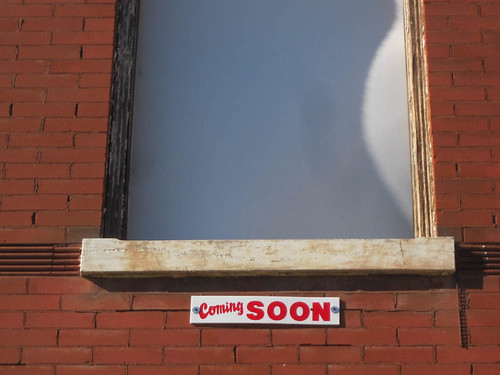
Coming Soon. So proclaims this small plastic sign, affixed by screws and washers to the front wall of a north St. Louis building.  There’s a dumpster out back, so the sign definitely is telling it straight.
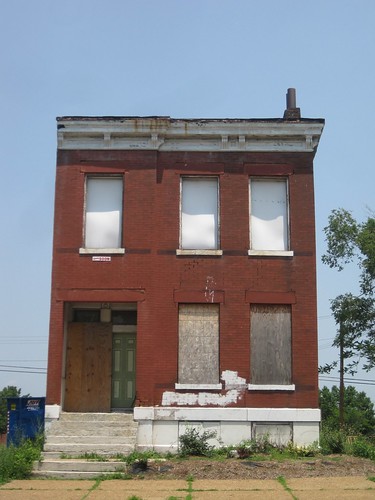
The house at 2417 Cass Avenue.

The building is a sturdy two-family with a lovely pressed-metal cornice. What makes the rehab so remarkable is the building’s location. This building stands at 2417 Cass Avenue, across the street from the untamed site of the Pruitt-Igoe housing project. There are only three buildings left on this block face, spaced out considerably. This block is one of ten that the city tried to clear completely in the late 1980s as part of the failed Commerce Business Park plan. Much of this pocket of St. Louis Place was removed, leaving just a handful of buildings and so much vacant land the area has been dubbed the “urban prairie.”

Amid these challenges, owner Grace Baptist Church, which occupies another building on the block face, is working to bring the building back to life. One of the incongruities of thinking about shrinking cities is the persistence of neighborhood economy and reuse demand in depleted neighborhoods. Where there’s a long-term store of value — a building — there may well be a will to make it into wealth. Basic market economics seem to be more enduring than cyclical urban planning interventions.
Categories
Historic Preservation Missouri

Missouri’s Most Endangered Historic Places Announced

Missouri Preservation announced its List of Most Endangered Historic Places for 2011 on Tuesday, June 7, 2011. The slate of endangered sites was unveiled at a Missouri Preservation Press Conference, held at the Oak Grove Mausoleum St. Louis County, which itself is on the 2011 List of Most Endangered Historic Places.

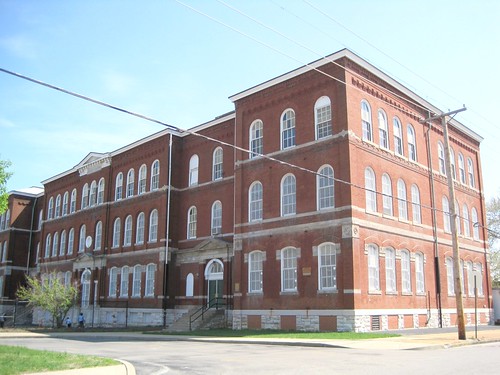
Hodgen School in St. Louis' Gate District neighborhood, nominated to the statewide endangered list by PRO's Michael Allen and Lindsey Derrington.

The Most Endangered Historic Places, one of Missouri Preservation’s most visible programs, calls much needed attention to threatened historic resources throughout the state. The Most Endangered Program annually highlights historic resources that are “at risk.” Each year Missouri Preservation solicits nominations from around the State, evaluates the merits of the submissions, and announces the “Most Endangered.” Throughout the year, Missouri Preservation provides technical assistance, advocacy, and planning support for the listed properties.

Missouri Preservation Board President Karen Bode Baxter, Penny Pitman, Chairperson of the Missouri Preservation’s Most Endangered Historic Places Committee and Bill Hart, Missouri Preservation’s Field Representative made the announcement.

Nine listings representing eleven buildings and structures were held over from the 2010 List, as they are still considered endangered and continue to need support to save them from deterioration or destruction. Six historic places are new to the 2011 list, including the Williams-Gierth House in Poplar Bluff, the Jefferson School in Cape Girardeau, the William P. Thompson House in the Trenton vicinity, the Delmo Community Center in Homestown, the Hodgen School Building in St. Louis City, and the Oak Grove Mausoleum and Chapel in St. Louis County. More detailed information about all endangered historic places is available here.

Categories
East St. Louis, Illinois Motels

East St. Louis Holiday Inn

by Michael R. Allen

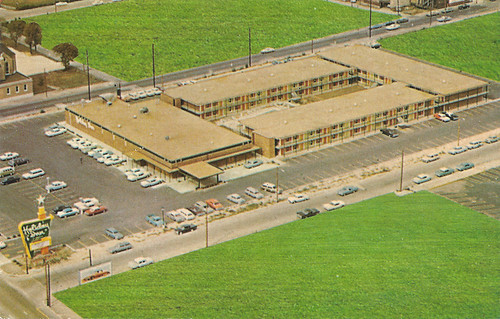
Scan of postcard of the East St. Louis Holiday Inn at 657 E. Broadway. Source: Collection of the Preservation Research Office.

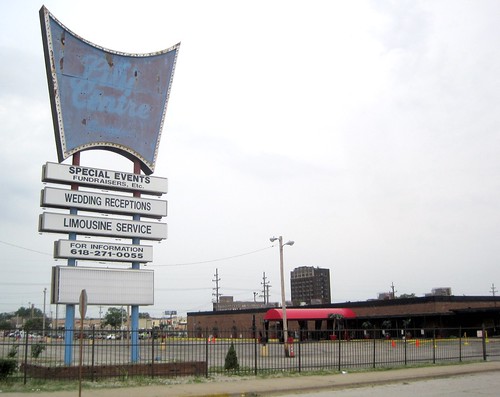
Following up on my article “Motels in the City of St. Louis”, I briefly wanted to show the largest motel built in our neignbor to the east, East St. Louis. The Holiday Inn at 657 E. Broadway, located just east of the seven-story Broadview Hotel of 1927, was built in the late 1960s. The motel’s amenities included a swimming pool and restaurant with cocktail lounge, in addition to close proximity to the cluster of interstates 55, 64 and 70 around downtown East St. Louis.  This modern motel was built amid Model Cities-funded redevelopment of the central city.  The large-scale building removal that was part of East St. Louis’ redevelopment efforts is evident in the above postcard view’s capture of large swaths of verdant green grass.

The remaining section of the Holiday Inn today.

The Holiday Inn’s two-story, U-shaped mass of hotel rooms stood until a decade ago. By then, the motel’s last owner had closed up shop, and the place was an abandoned curiosity. However, the one-story, brick-faced and largely windowless restaurant building remains standing and in use as a banquet center.  The trademark Holiday Inn sign’s twisted trapezoid replacement is as memorable as its predecessor.

Categories
Central West End Downtown Mid-Century Modern Midtown Motels North St. Louis South St. Louis

Motels in the City of St. Louis

by Michael R. Allen

A version of this article first appeared in the Winter 2009 NewsLetter of the St. Louis Chapter of the Society Architectural Historians.

There is ample recognition of the significance of mid-century motels along roadsides across America, where motels used colorful signage and design to beckon to weary Americans enjoying their automotive freedom. Perhaps because of nostalgic idealization of the motor court and the “open road” and perhaps because of the stigma that postwar urban renewal efforts have attained, local history overlooks the significant wave of urban motel construction that took place in St. Louis between 1958 and 1970.

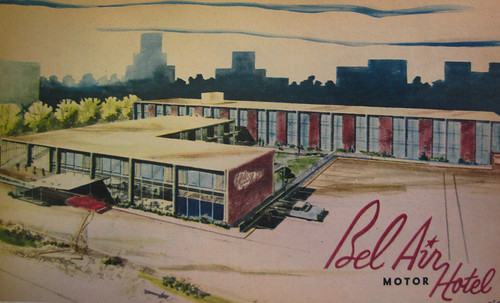
Advertisement for the Bel Air Motel. Note that the front wing does not yet have the third story addition.

The 1958 opening of the Bel Air Motel on Lindell Boulevard renewed the building of lodging in the City of St. Louis while introducing a hotel form new to the city, the motel. St. Louis’ last new hotel before that was the nearby Park Plaza Hotel (1930), a soaring, elegant Art Deco tower built on the cusp of the Great Depression. However, another hotel built before the Depression was more indicative of future trends than the Park Plaza. In 1928, Texas developer and automobile travel enthusiast Percy Tyrell opened the Robert E. Lee Hotel at 205 N. 18th Street in downtown St. Louis (listed in the National Register on February 7, 2007), designed by Kansas City architect Alonzo Gentry. While the 14-story Renaissance Revival hotel was stylistically similar to contemporary hotels, it introduced the chain economy hotel to St. Louis.

Categories
Housing North St. Louis Pruitt Igoe

The Spectre of Pruitt-Igoe

by Michael R. Allen

In May 2010, U.S. Secretary of Housing and Urban Development Shaun Donovan visited the site of the former Pruitt-Igoe housing project. Afterward, he shared his thoughts with St. Louis Post-Dispatch editorial writer Eddie Roth. Roth produced a lovely short video combining many striking images from the Post archive with Donovan’s comments. Donovan’s statements about the Pruitt-Igoe legacy are smart and eloquent, although his insistence on the wisdom of demolishing all American high-rise public housing is questionable.

One thing that all interpreters seem to agree upon is the complexity of Pruitt-Igoe’s legacy. The differences lie in whether the design itself could have been salvaged and made to work. Rampant dismissal of the design has led to a strong and largely unquestioned narrative about the causal relationship between high-rise apartment buildings and the conditions of poverty. With almost all of the towers in this nation gone, we seem to be faced with a culture of poverty only stronger and wider than when Pruitt-Igoe’s last tower was opened in February 1956.


To learn more about the history of Pruitt-Igoe, attend one of the upcoming screenings of the wonderful documentary The Pruitt-Igoe Myth. Screenings are scheduled for Thursday, June 2nd at 7:00 p.m. and Saturday, June 4th at 12:00 noon, both at the Tivoli Theatre.

Categories
Historic Preservation

What Preservation Month Is About

As Preservation Month draws to a close, the St. Louis Beacon has a published a story by intern reporter Erika Miller: “National Preservation Month aims to make preservation a year-round priority”

Categories
National Register North St. Louis St. Louis Place

Early Irish Influence in St. Louis Place

by Lindsey Derrington

Working in conjunction with 5th Ward Alderwoman April Ford-Griffin and the non-profit group Community Renewal and Development, Inc, the Preservation Research Office submitted a National Register nomination for the St. Louis Place Historic District earlier this year. We are happy to report that the document was approved by the Missouri Advisory Council on Historic Preservation this past Friday, May 20th, paving the way for its review by the National Park Service and its ultimate listing on the National Register of Historic Places.

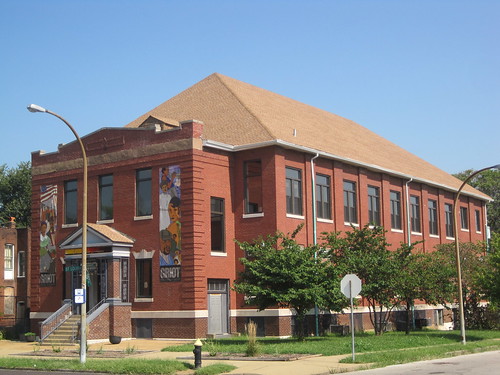
The Griot Museum of Black History occupies the former Sacred Heart Parish School at 25th and St. Louis (1906).

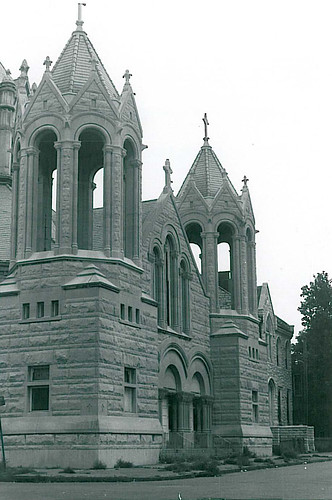
This process often involves streamlining nomination drafts in cooperation with the State Historic Preservation Office (SHPO) in order to more effectively illustrate a district’s significance. We originally argued that St. Louis Place was significant as an example of mid-19th century community planning and as a north-side hub of German and Irish immigrant cultures. However, SHPO staff found that evidence of the Irish presence in the neighborhood has been so drastically diminished that it should be cut from the nomination. In light of the tragic 1986 demolition of the Church of the Sacred Heart, the focal point of St. Louis Place’s Irish community, we have to agree. Yet many landmarks do remain, from the Sacred Heart School (now the Black World History Museum) to the grand mansions along St. Louis Avenue built by some of the city’s most prominent Irish citizens.

Sacred Heart Church, 25th and University Avenue, as it appeared around 1971. Photograph from the Heritage/St. Louis Collection, Landmarks Association of St. Louis.
Categories
Gate District South St. Louis

Buildings on Chouteau Avenue Will Fall

by Michael R. Allen

Looking southwest along Chouteau Avenue just west of Jefferson Avenue.

Yesterday, the Preservation Board unanimously approved demolition of four buildings on the south side of Chouteau Avenue just west of Jefferson Avenue. Last April, the Board had unanimously denied demolition to owner Crown Mart 40 (See “Preservation Board Spares Chouteau Avenue Buildings; Now What?”, April 30, 2010.) The meager silver lining here is that the Cultural Resources Office, whose staff recommended denial of the permits, gets to approve a landscaping and fencing plan for the site before a demolition plan goes through.

Landmarks Association placed the buildings on its 2010 Most Endangered Places list with the strong statement that “the idea that rows of historic buildings can be plowed under as collateral damage in a short-term cat and mouse game between business competitors, is treated with the contempt that it deserves.” However not one person testified against demolition yesterday, nor did any person send a letter. two Gate District residents and a neighboring business owner either testified or sent letters supporting demolition, and Alderwoman Kacie Starr Triplett (D-6th) made a personal appearance supporting demolition.

The larger issue for time-ravaged Chouteau Avenue is that there is precious little historic context left, and many vacant lots. While these buildings are lost, the character of the street will remain inconsistent and graceless. Perhaps Chouteau between Broadway and Grand Avenue needs a zoning overlay to guide future development. A major artery running alongside densely-populated neighborhoods south of downtown ought to look a lot better that Chouteau does.

Categories
JeffVanderLou North St. Louis

Sportsman’s Park, 1931

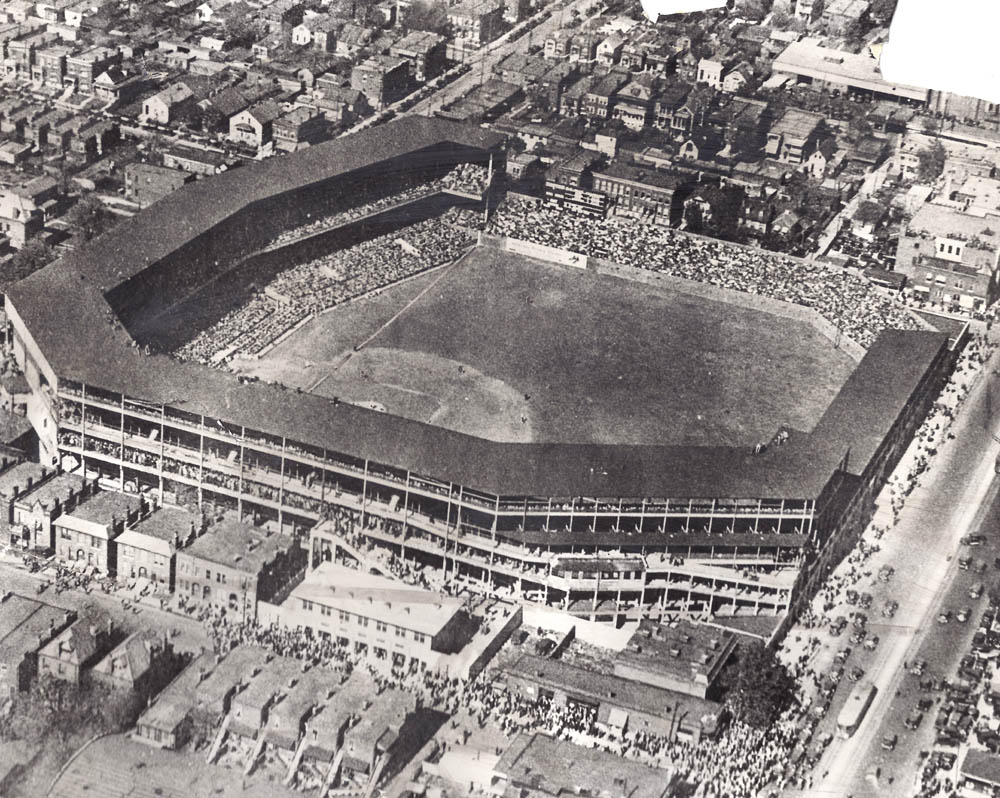
Sportsman's Park photograph dated October 1, 1931.

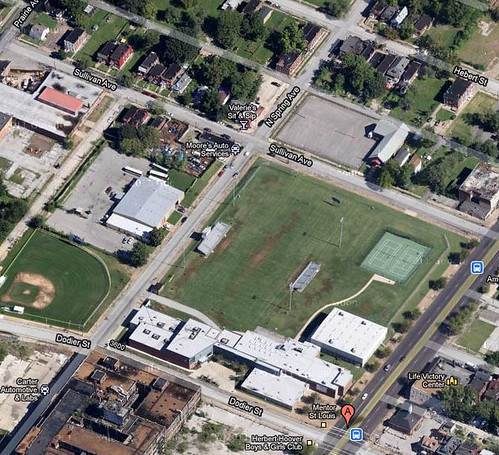
A new arrival in our photographic collection is this 1931 photograph of Sportsman’s Park at 2911 North Grand Avenue (at Dodier Avenue, visible at the bottom of the photograph). The grandstand structure shown here dated to 1909 and was demolished in 1966. Much has been written about Sportsman’s Park itself, but what interests us most about this image is the density of the built environment around the ball park.

The Sportsman's Park site, now occupied by the Herbert Hoover Boys and Girls Club, as it appears on Google maps today.

Here’s a similar view today.

Categories
Abandonment LRA Midtown Theaters

Bright Days Ahead for the Sun Theater?

by Michael R. Allen

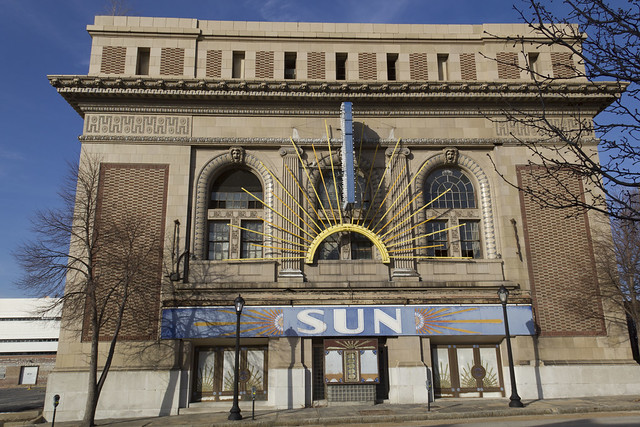
The front elevation of the Sun Theater. Photograph by Michaela Burwell-Taylor.

There seems to be some confusion as to the fate of the elegant, vacant Sun Theater at 3627 Grandel Square in midtown. The sumptuously-ornamented theater has been owned by the Land Reutilization Authority since 2009, when long-time owner Grand Center, Inc. conveyed the theater to the city. Before and after that transaction, news about the theater has ranged from an absurd plan to dismantle the front elevation and rebuild it on Grand Avenue adjacent to Powell Hall to a promising but unsuccessful effort by KDHX to convert the building to its studios. The Sun was on Landmarks Association’s 2007 Most Endangered Places list.

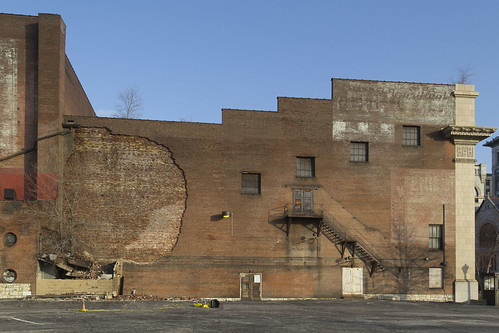
The western wall. Photograph by Michaela Burwell-Taylor.

Currently, according to Grand Center, Inc., the nearly-completed rehab of the Pythian Building to the east for the Grand Center Arts Academy will be followed by rehabilitation of the Sun Theater into the school’s auditorium and performance space. Yet after a storm in late February caused masonry damage to the western wall of the Sun, the LRA issued a request for proposals (RFP) to demolition contractors for demolishing the venerable theater. One demolition contractor reports that LRA would not allow interior access to prospective bidders.