Categories
Demolition Historic Preservation North St. Louis The Ville

Some Frame Houses in the Ville

by Michael R. Allen

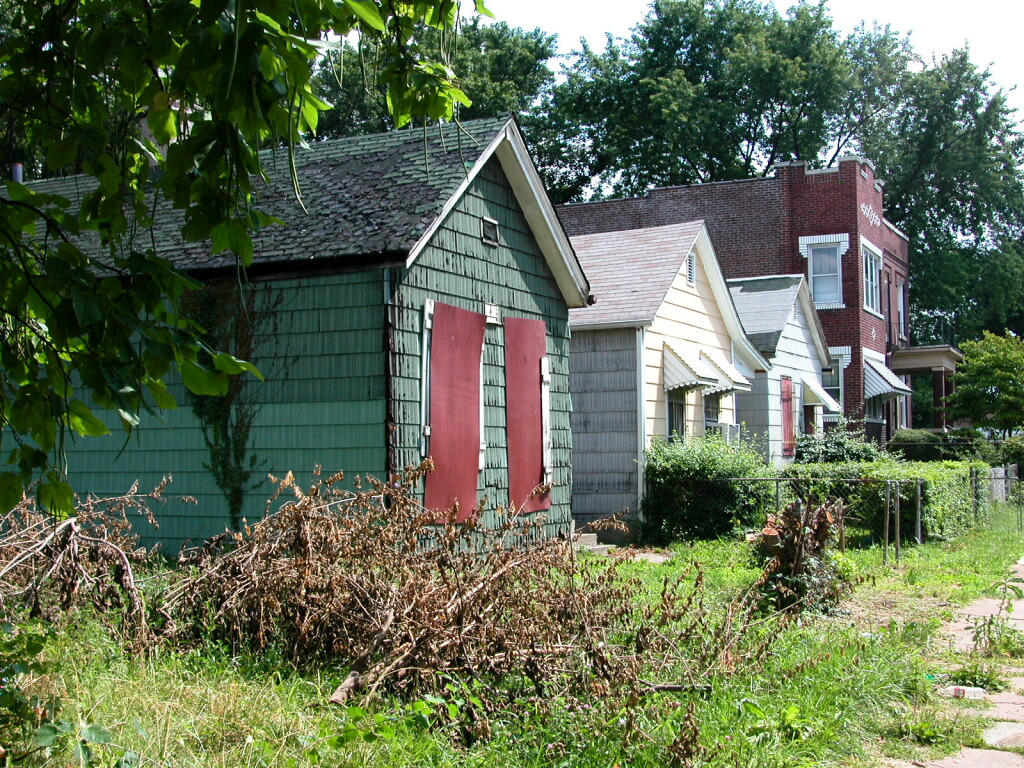
The Ville has lost plenty of buildings in the last fifty years, but remarkably many frame houses remain from early development. Still, the frame houses don’t last long when abandoned. The photograph above shows three similar frame houses in the 2500 block of Whittier (across from the old Homer G. Phillips Hospital) back in 2004.

The house at 2420 Whittier dated to 1885 and was built by James Chadwick, an active developer in what was then known as Elleardsville. This house was for sale in 2004. The original clapboard siding was still in place under later asbestos tile siding. Now it is a burned out pile of building debris. The fire revealed that the original wooden shingles were still present under layers of newer roofing!

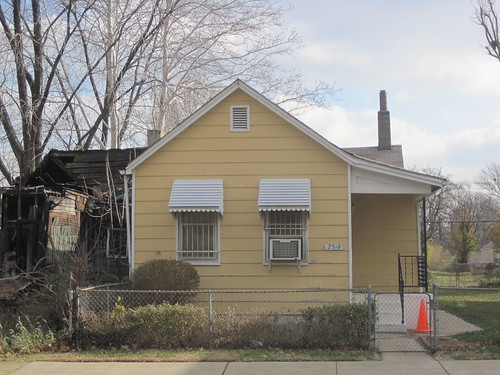
The only house remaining from the group of three that I photographed in 2004 is the house in the middle at 2518 Whittier. The date of construction is unknown, but it was probably built around 1885 too. In 1906, it was moved to this site. Today it is well-kept (although the original siding is either missing or covered) and occupied. The house at 2518 Whittier is included in an architectural survey of the Ville neighborhood conducted by Lynn Josse and myself under the supervision of the city’s Cultural Resources Office.

Categories
James Clemens House North St. Louis Northside Regeneration St. Louis Place

A (Legitimate) Look Inside of the Clemens House

by Michael R. Allen

On Sunday, Landmarks Association of St. Louis wrapped up its annual Preservation Week with a tour of the James Clemens, Jr. House at 1849 Cass Avenue in St. Louis Place. That’s right — Landmarks offered a tour of a vacant building! While there have been many “before” tours of historic St. Louis buildings, none has offered a look at such an early phase of a rehabilitation project.
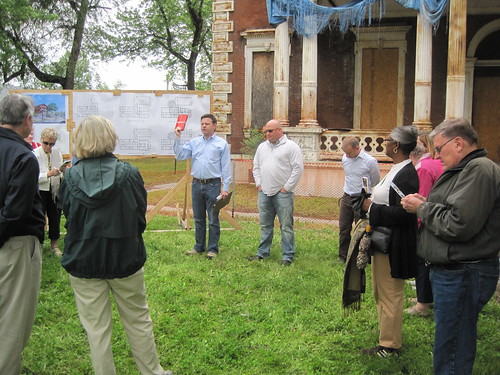
Landmarks Association Executive Director Jeff Mansell welcomes the crowd along with Dan Holak of Robert Wood Realty and David Lorentz of Klitzing Welsh.

Developers Robert Wood Realty and McEagle along with architects Klitzing Welsh Associates bravely threw open the door (okay, unscrewed the plywood) to the James Clemens House to the public for Landmarks. There was a small charge, a limited number of tour spots and a mandatory liability waiver, but all of those were necessary to make the tour work. Hopefully it can be offered again!

The developers started the tour by explaining the redevelopment plan, which calls for senior apartments in the mansion, dormitory and first floor of the chapel with an educational use in the chapel space. Nothing has been firmed up about the chapel use yet, but the original volume of the space will be restored for the first time in generations. The use of the chapel will allow for public access to the grounds, which will be opened up by removing the brick wall (built in 1887 and somewhat removed now) and building an iron fence similar to the original long lost fence on Cass Avenue. The Clemens House complex will again be easy to locate, and will open up a relationship with its neighborhood once more.

The apartment use precludes public access to the mansion and its lavish interior, and will entail some tricky accommodations like kitchenettes and bathrooms in the first floor parlors. (The dormitory is a perfect fit.) However, the project will follow the Secretary of the Interior’s standards for historic rehabilitation, and all original fabric will be retained. The extensive cast iron work will be refurbished and missing parts replicated (albeit probably in a fiberglass-based casts). I have yet to thoroughly study the details of the rehabilitation, and will continue to observe.
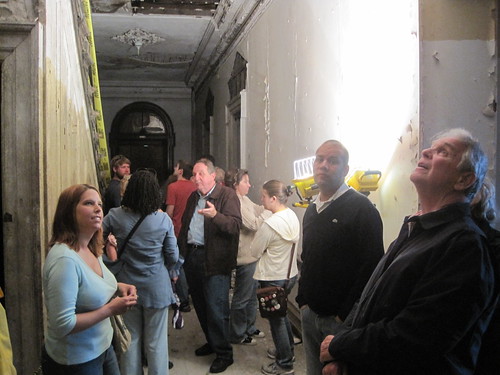
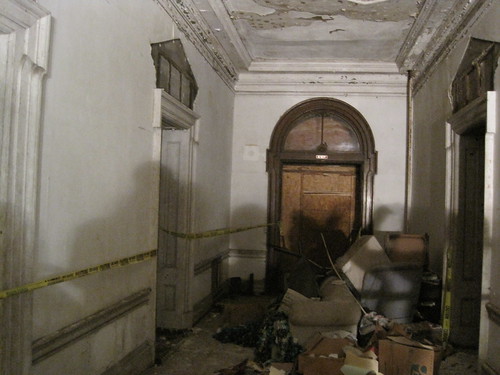
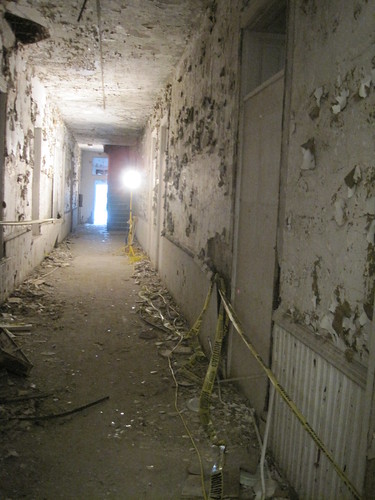
The tour offered a very limited view inside. Visitors entered at the rear of the dormitory and proceeded about fifteen feet from the front door. Structural problems in the partly-collapsed chapel and the house itself precluded further adventure. Still, what was open was lit up brightly than ever. This photographer was able to re-do some old clandestine photography!
Paul J. McKee, Jr. was prominent in the group, and was freely talking with guests. There is a long road ahead for the developer’s Northside Regeneration project, and many unanswered questions. (This post is not about them.) Yet the one certain fact is that McKee is starting the project with rescuing the James Clemens House, and that has become the early symbol of the project. It’s easy to point out how much this move benefits McKee — but easy to guess that it’s not necessarily the first move he wanted to make.

The truth is that those who benefit the most from the rehabilitation of the Clemens House, however, are residents of surrounding St. Louis Place who have long suffered from the abandonment in the heart of a largely stable area. Oh — and everyone who wants St. Louis to have an indelible, storied historic character benefits from saving this city’s most architecturally significant pre-Civil War mansion. There are eternal essences that make this city what it is, and their defense should be more fiercely and continually waged than momentary battles. After all, brick walls last longer than fleeting political maneuvers.

As an aside, Landmarks Association of St. Louis is at its best when it offers the community the chance to directly interact with historic architecture in unexpected ways. While its board has spent considerable time, effort and money on the Architecture St. Louis space downtown, the organization’s most unique strength remains the ability to forge connections out in the places where we live. Kudos to current Executive Director Jeff Mansell for doing just that with this tour!

Categories
Events

Saturday: Preservation Month Party

As this year’s Historic Preservation Month winds down, it’s time to celebrate!
What: Anti-Wrecking Ball: Soulard Stable Hootenanny
Where: Stahl Stable, 2412 Menard Street
When: 8:00 p.m. this Saturday, May 22

Cost: $10 benefits the Friends of the San Luis and the St. Louis Building Arts Foundation

What’s this all about? Well, for those new to the story, the Friends of the San Luis went to court to try to stop the demolition of the mid-century San Luis Apartments on Lindell Boulevard. The effort was slapped down by a circuit court judge who ruled not only to allow demolition to proceed but that no citizen has a right to appeal a St. Louis Preservation Board decision without a direct financial interest in a property.

The Friends could have stopped right there, since they lost their beloved space-age building. Instead, they filed an appeal to challenge the basis of the judge’s ruling for the benefit of all future preservation efforts. On May 5, the Missouri Court of Appeals heard the case. During arguments that day, we received more favorable consideration than expected, so we are confident that the ruling will benefit future preservation efforts.

This effort was not free, and attorneys Jonathan Beck and Ian Simmons have shown themselves well worth our expenses. With the matter past us, it’s time to toast preservation efforts past, present and future and make a little money to pay off those legal bills. (If you cannot attend but want to help that cause, send me a note at michael@preservationresearch.com).

The St. Louis Building Arts Foundation is on the bill as well, for providing an amazing historic space for the event and for efforts to preserve our architectural heritage more enduring than the soon-to-sunset Friends of the San Luis. There is a link between the long-term visionary efforts of the Foundation and the take-action single-mission Friends of the San Luis. We need both levels of action to make historic preservation matter in St. Louis. (This is not to slight all of the other worthy organizations that compose the effort here — these two are far from the only organizations in town doing this hard work well.)

On Saturday, let’s celebrate a strong preservation effort and look toward the future!

Categories
Detroit Events Mass Transit

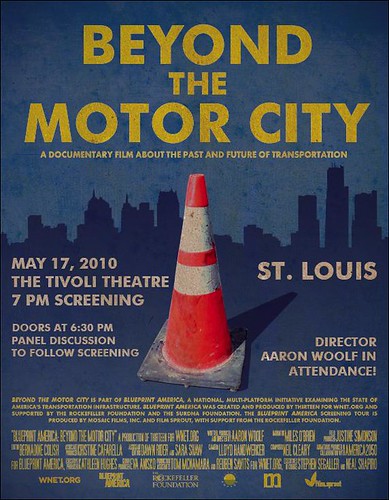
Free Screening of "Beyond the Motor City" on Monday

“The old system hasn’t died, and the new system hasn’t been born yet,” says one of the subjects in Beyond the Motor City. He’s talking about urban transportation.

Beyond the Motor City is a critical look at the intersection between mass transit and the renewal of post-industrial Detroit. Director Aaron Wolf is best known for his documentary King Corn, which examined the terrible impact of federal agricultural policy on the American diet and on the small farm.

Thanks to the sponsorship of Citizens for Modern Transit, St. Louis is fortunate to be one of eight cities where Beyond the Motor City is being screened free — Monday, May 17th at 7:00 p.m. at the Tivoli. Appropriately, this event falls in Historic Preservation Month. The role of public transportation in cities is often left out of the historic preservation discussion.


From the film’s website:

Beyond the Motor City examines how Detroit, a grim symbol of America’s diminishing status in the world, may come to represent the future of transportation and progress in this country. The film explores Detroit’s historic investments in infrastructure—from early 19th-century canals to the urban freeways that gave The Motor City its name and made America’s transportation system the envy of the world. But it also reveals that over the last 30 years, much of the world has left Detroit—and America—behind, choosing faster, cleaner, more modern transportation.

In a journey that takes us into the neighborhoods of Detroit and then beyond to Spain, California, and our nation’s capital, Beyond the Motor City urges us to ask how a symbol of America’s urban decay might transform itself into a model of urban revitalization. Can we finally push America’s transit system into the 21st century?

Immediately following the film, there will be a panel discussion moderated by KETC’s Patrick Murphy with Congressman Russ Carnahan, director Woolf, and Citizen for Modern Transit’s Tom Shrout.

Categories
Missouri Public Policy

Tax Credit Battle Almost Over — For Now

The Missouri General Assembly’s session ends on Friday. So far, no proposals to change tax credit programs have been taken up this week in the Senate or House. There may be a last-minute push in the Senate to pass a bill that would include the following changes:

Capping historic tax credits at $75 million per year but retaining the exemption for projects with under $1.1 million in qualified rehabilitation expenditures (the “small deal” exemption);

Create legislative appropriation of funding in future years.

Observers do not expect this measure to make it out of the Senate. If it does, the House Republican leadership has pledged to kill it.

There is no doubt, however, that the reprieve is momentary. Next session Governor Jay Nixon and his allies will get an earlier start on pushing reform, in the sense that they started next session’s fight in this session.

Categories
Collinsville, Illinois Metro East Mid-Century Modern Signs

Bert’s Chuck Wagon in Collinsville to Fall for Highway Widening

by Michael R. Allen

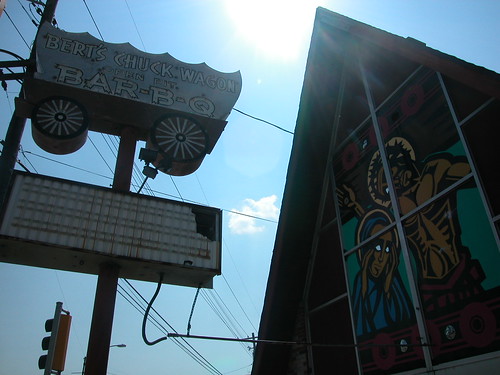
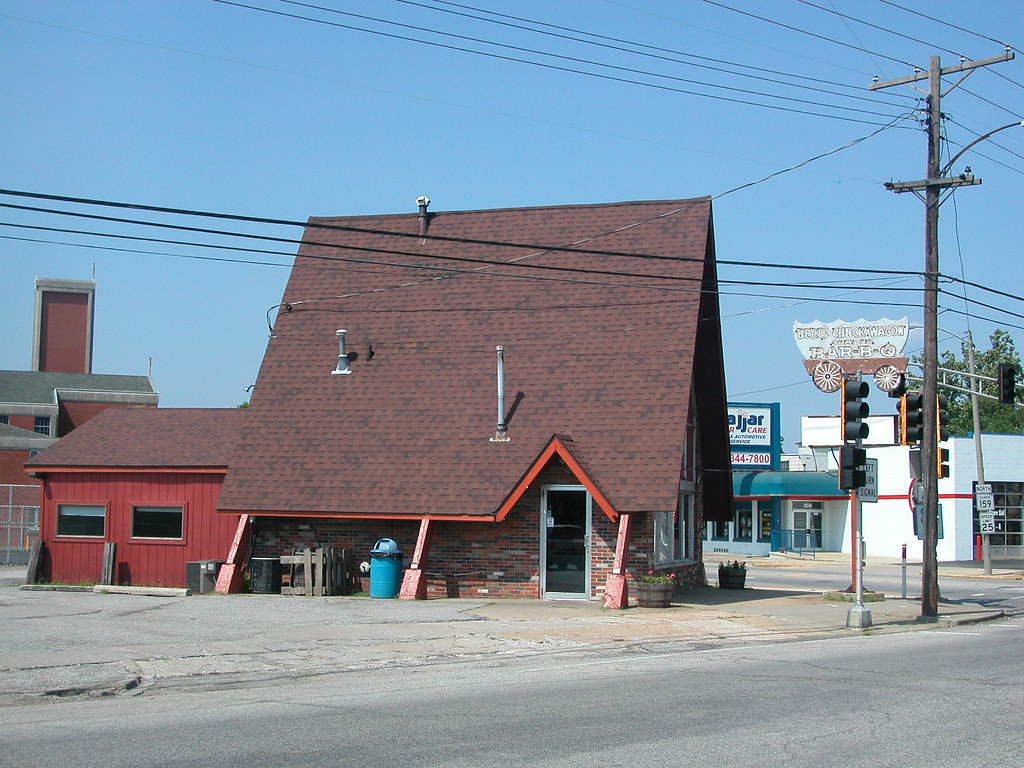
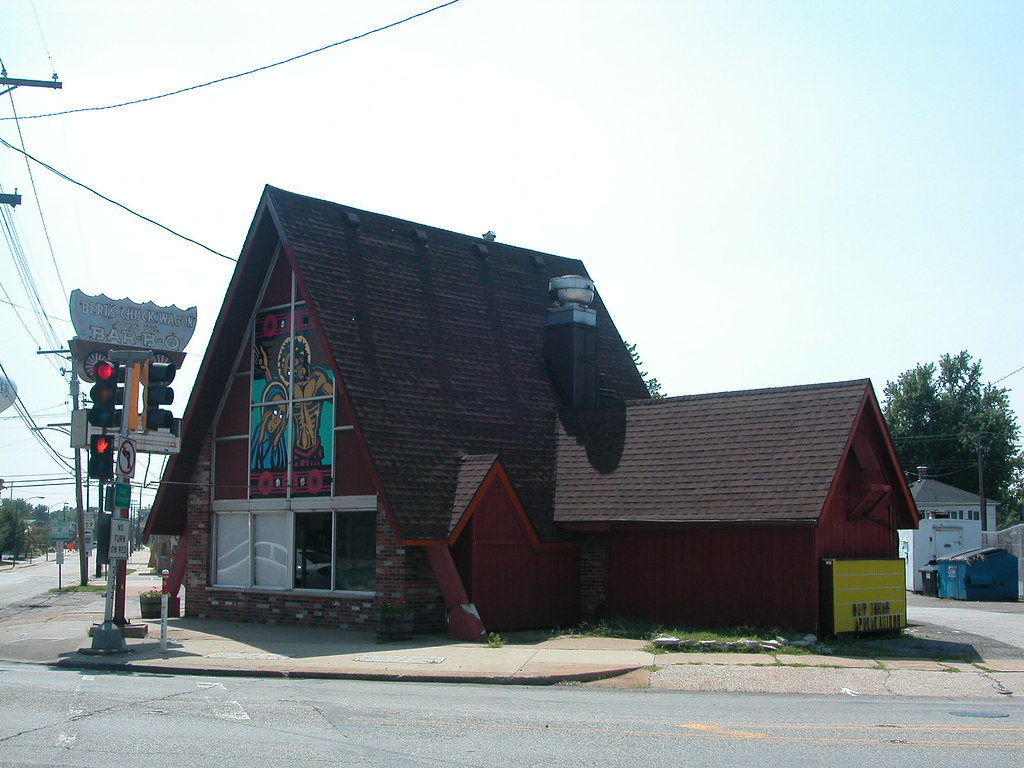
The Madison County Journal reports that Collinsville mid-century landmark Bert’s Chuck Wagon Bar-B-Q (see “Heavenly Bar-B-Q” will be demolished soon for widening of Illinois Highway 159. Bert’s Chuck Wagon will relocate to a nearby location on Main Street and move the fine conestoga sign to the new location. The A-frame building with the vivid religious scenes painted in its gable end windows, however, will be history.

The widening of Illinois 159 costs the state $56 million, and the sites of several tax-paying small businesses — not to mention at least one landmark mid-century building. Such an expensive project in recession may very well take away more economic activity over the long run than it generates.

See also “Mid-Century Modernism in Collinsville” (August 8, 2008).

Categories
Demolition Fountain Park North St. Louis

Bye-Bye, Corner Commercial

by Michael R. Allen

Today I saw that the two-story brick corner commercial building at Page and Walton avenues in Fountain Park was mostly gone, and I snapped this sad scene. The heartbeat of the city always grows a little more faint whenever a corner store gets wrecked. Gone is a point of exchange — a point for drawing people together, for employment, for tax revenue generation and for provision of goods near people’s houses.

St. Louis remains far outside of the relevance of the recently-publicized writings by economist Edward Glaeser. In the New York Times yesterday, Glaeser argued against hard-line preservation: “[i]f a successful city doesn’t build, its prices will skyrocket and it can turn into an exclusive, elite enclave.”

Perhaps true, but too often in St. Louis we never get to that conundrum. We take down a building and leave its site empty for generations. Not only are we not building, but we are not preserving. Often, physical condition of buildings demands demolition, and I can assent to protecting public safety. Yet the building at Page and Walton was in fine shape. Located in the 18th ward outside of preservation review, however, there was not even a moment’s deliberation once the owner applied to take it down. And I don’t know the circumstances — perhaps there is a good reason for demolition.

Yet as I passed the largely intact residential block to the east — the 4700 block of Page Boulevard — I thought about how many people would be able to walk to that corner storefront easily. I also thought about how there are no storefronts on the other end of that block. This has been the case for some time, of course, since the corner building was vacant for over 20 years. Yet the past could have been rendered future with rehabilitation. A blocked network of social relations, between residents of Page and that corner store, is now effectively dead.

Preservation here would not have raised prices, but maintained the potential for recreating a beneficial pedestrian experience. The lost building reinforces the high prices in other neighborhood, like the nearby Central West End, that retain their density, walkability and their commercial activity. Also reinforced are prices in other cities where preservation has indeed led to excessively high real estate prices — but you can read about those in the New York Times.

Categories
Abandonment Fountain Park North St. Louis Urban Assets LLC

Harvey Noble Buys Again

by Michael R. Allen

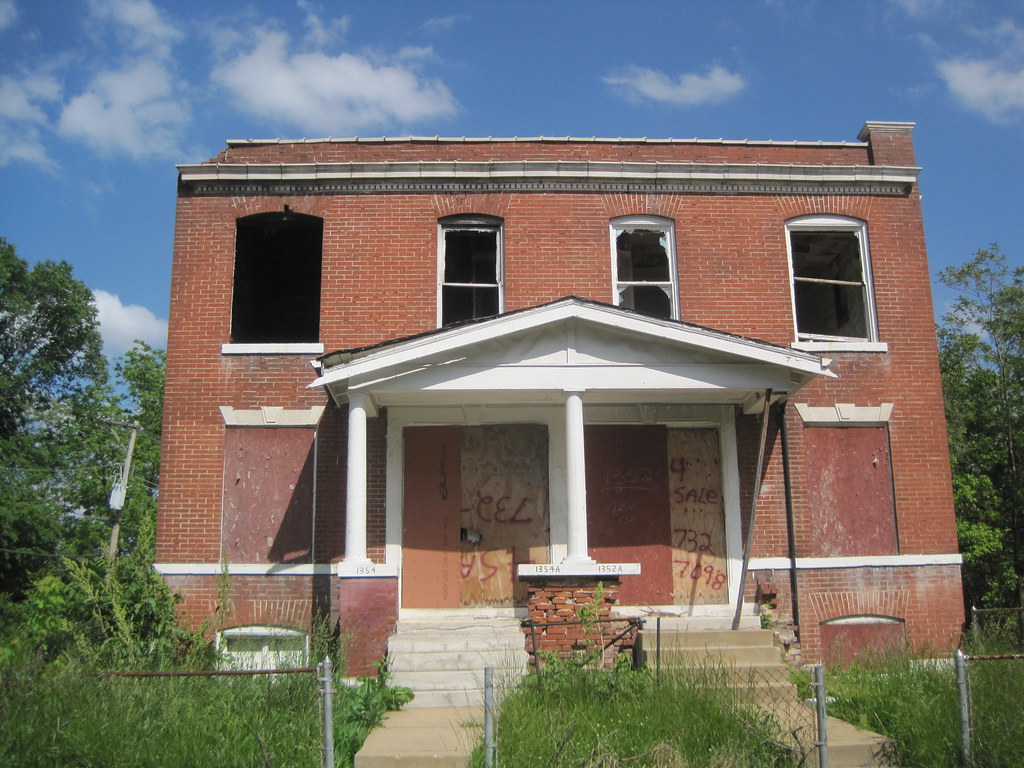
The house at 1352-4 Bayard Avenue on May 11, 2010.

Harvey Noble, Vice President of Eagle Realty Company and agent for many of the holding companies used by Paul J. McKee Jr. for his Northside Regeneration project, is back in action. On May 4th, Noble used his shell company Feasible Projects LLC to acquire the house pictured above, located at 1352-4 Bayard Avenue in Fountain Park (18th Ward). After McKee went public with his project, Noble emerged again as the agent for a holding company called Urban Assets LLC as well as six new companies incorporated in February 2009. Those companies are Diligent Property LLC, Feasible Projects LLC, Incentive Properties LLC, Marketable Property LLC, Premises Property LLC and Prudent Investor LLC.

As of last July, Urban Assets owned 230 properties, Diligent Property owned three properties and Prudent Investor owned one. No purchased had been made since then until last week. The properties owned by these companies are located in a wide swath of north city that includes wards 1, 3, 4, 5, 18, 19, 21, 22 and 26. McKee as well as Michael Roberts have denied to reporters having any involvement with the operation fronted by Noble.

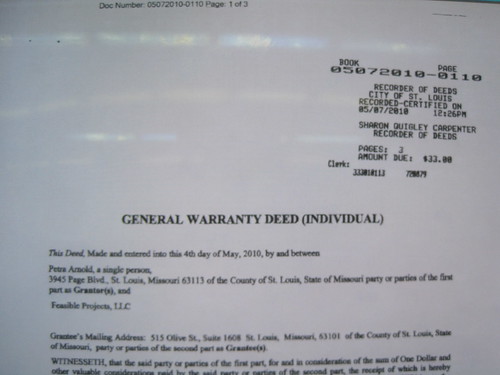
The most recent deed reveals little information except that one of the dormant shell company names is now being used. Here’s a look at the top of the first page:

And here is Noble’s signature on the last page:

The signature line states that Noble personally is the sole member of Feasible Projects LLC. That could be true. Although Eagle Realty is best known as a broker/agent and appraiser used by city development agencies, its officers — Noble and President Steve Goldman — have owned property in north St. Louis since the 1950s under various company names. On deeds for McKee’s holding companies, Noble signed as “Manager” rather than “Member” of the shell companies.

Categories
Cherokee Street Events

People’s Joy Parade

by Michael R. Allen

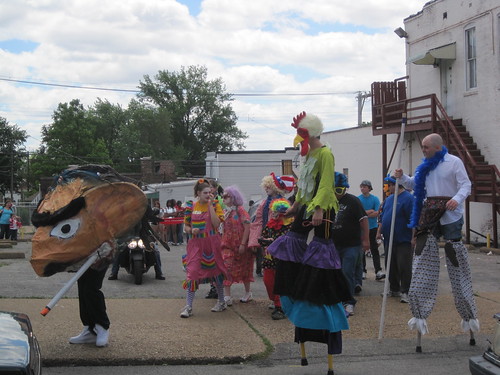
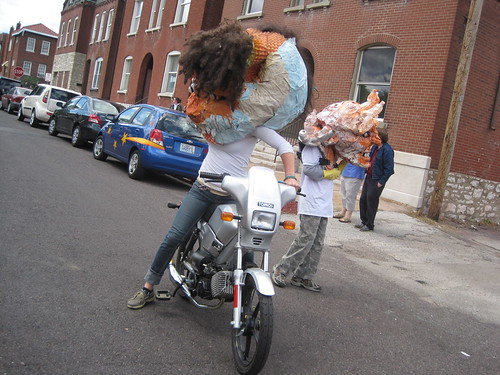
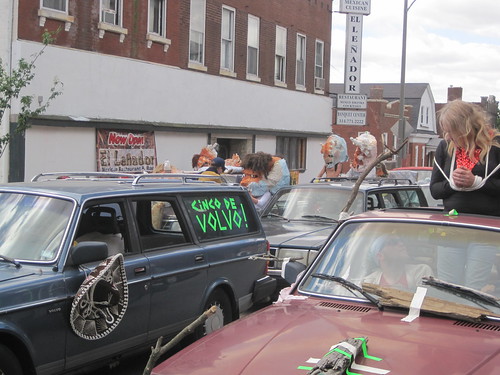
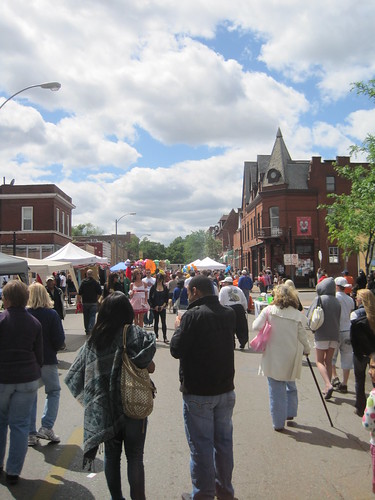
I missed much of the People’s Joy Parade on Saturday by driving in the Cinco de Volvo contingent. Yet finding myself on a Monday morning wanting the parade to be never-ending, I am going to share a few photographs that I managed to take during the amazing event.

One of the best things about the People’s Joy Parade was the route. We started on Cherokee, but with two blocks closed for the Cinco de Mayo program, we had to head north on Nebraska to Utah and then came back down Iowa. That means we went straight in front of the houses of many people who simply came out to the front porch with neighbors and friends to watch the madness. If only thsi could happen every weekend, all over the city!

There are more photographs here and I am sure more will be posted. But if all you have are photographs to show you what happened, you need to find a stoop or a curb next year and see the People’s Joy Parade for yourself.

Categories
Benton Park West Historic Preservation Housing LRA

Last Chance for 3244 Iowa Street

by Michael R. Allen

This week I received an e-mail about 3244 Iowa Avenue (pictured above) from JoAnn Vatcha, Housing Analyst for the Community Development Administration. The email stated that the city was issuing a “last chance” call to respond to a Request for Proposals issued last year for the beleaguered property.

The diminutive 19th century alley house — 600 square feet — in Benton Park West is owned by the city’s Land Reutilization Authority and has been considered a vacant building by the Building Division since 2003. The citizen complaints on the house keep coming, and the front wall has suffered spalling. Still, the house is in sound shape and is just a block off of Cherokee Street. This block is intact with historic buildings lining both sides of the street, and its loss would create a hole. The small size is perfect for a single person or couple wanting to be close to the buzz of Cherokee.

Hopefully a developer will answer the call. Meanwhile, some cities have historic preservation organizations that buy, rehab and sell houses that are facing the “last chance.” Should St. Louis follow suit?

(The city has posted all residential building RFPs here.)