Categories
Demolition Fire Historic Preservation Shaw South St. Louis

Lost Chance on Shenandoah

by Michael R. Allen

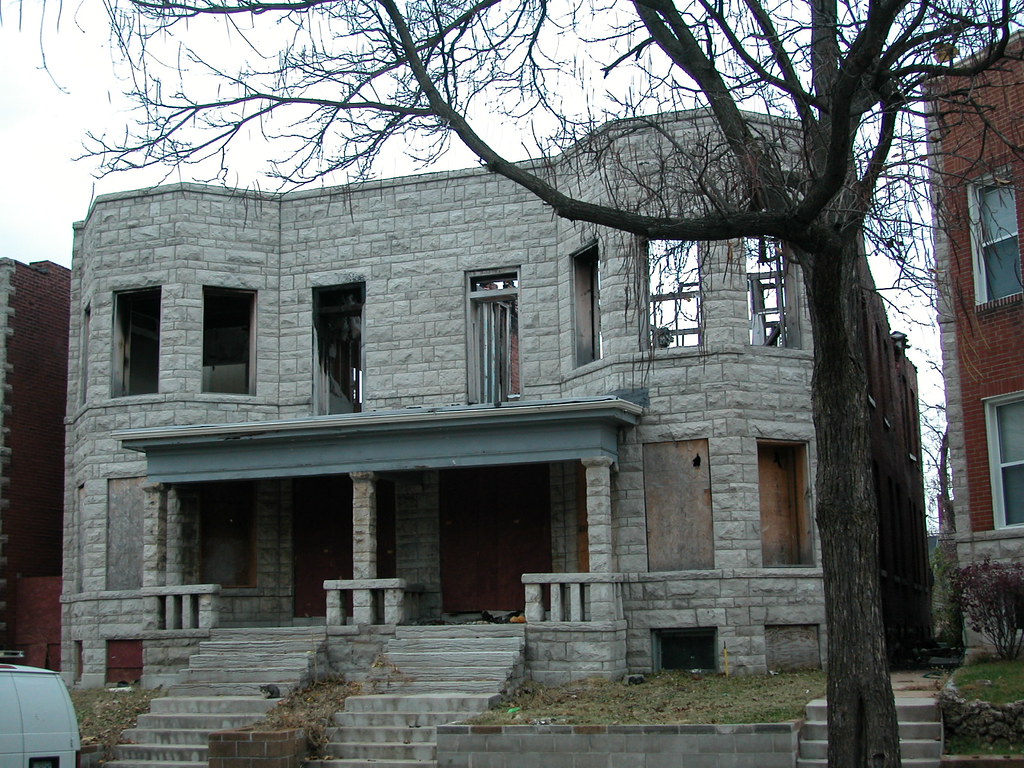
The 2007 fire that struck the four-flat at 3927-29 Shenandoah Avenue in the Shaw neighborhood eventually proved fatal. The building had been under rehabilitation when fire struck. The owners stopped paying taxes and mortgage payments, and ownership somehow split between Heartland Bank and the Land Reutilization Authority (the building straddles a lot line).

Obviously, the building was struck severely by the fire. Like most house fires, the fire spread upward and consumed the roof and second floor worst. Most of the roof sheathing was lost in the fire, leaving the building open to the elements. However, the walls had been tuckpointed and remained solid until the last days.

In October 2008, the Building Division condemned the building for demolition and sought demolition. Neighbors had filed many complaints on the condition of the house. Immediately to the west, a developer is rehabbing a similar building using historic rehab tax credits and understandably did not want a big question-mark next door.

After first being placed on the November 2008 agenda of the Preservation Board, the demolition shifted into high gear. Suddenly, the Building Division issued an emergency demolition order and paid to wreck the building. By the middle of December, it was gone. (Wonder if owner Heartland Bank got a bill for half of the cost?)

While the condition of the building was extreme, it was far from being a total loss. With solid masonry, the building was in no danger of immediate collapse. This could have been a great reconstruction project. Instead, the house went through the motions of our failed public safety laws: damage and abandonment, citizen complaints, emergency tear-down order. As the developers next door show, there is more than one way to fix a broken building, but the Building Division never seems to grasp that fact. Nor does the Cultural Resources Office (CRO) possess sufficient legal authority to prevent a senseless demolition like this one; the office and the Preservation Board were at the mercy of the Building Division, which controls what matters reach consideration of our preservation agency and its citizen commission. The CRO cannot override an emergency order, no matter how silly it is (and many are).

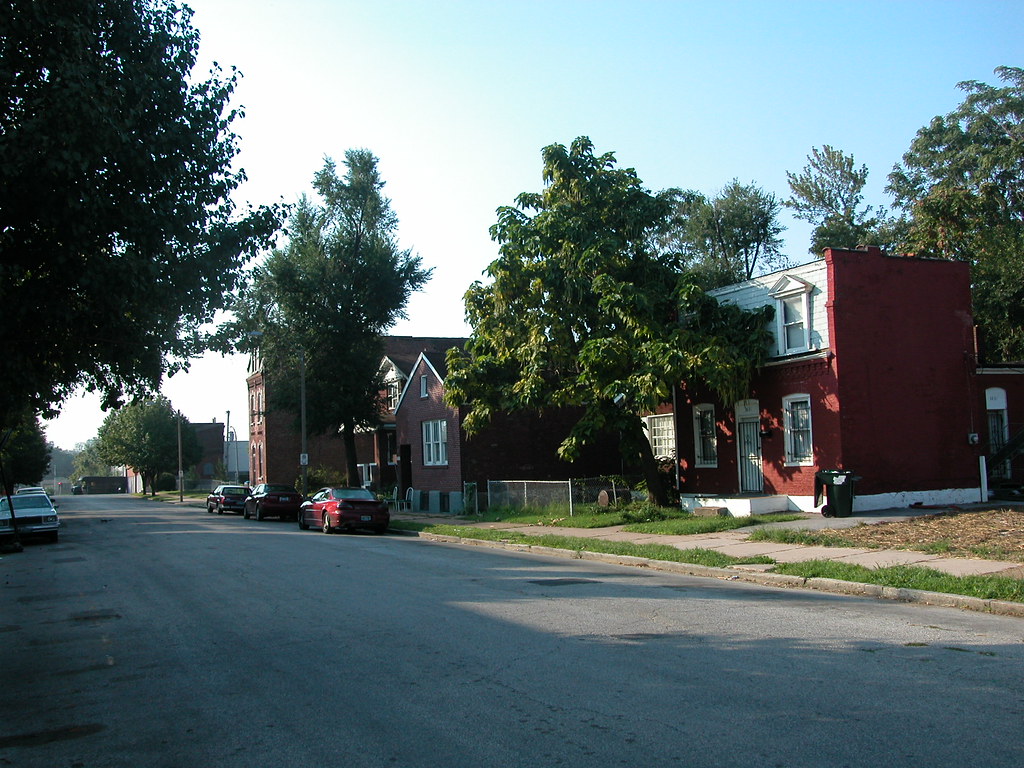
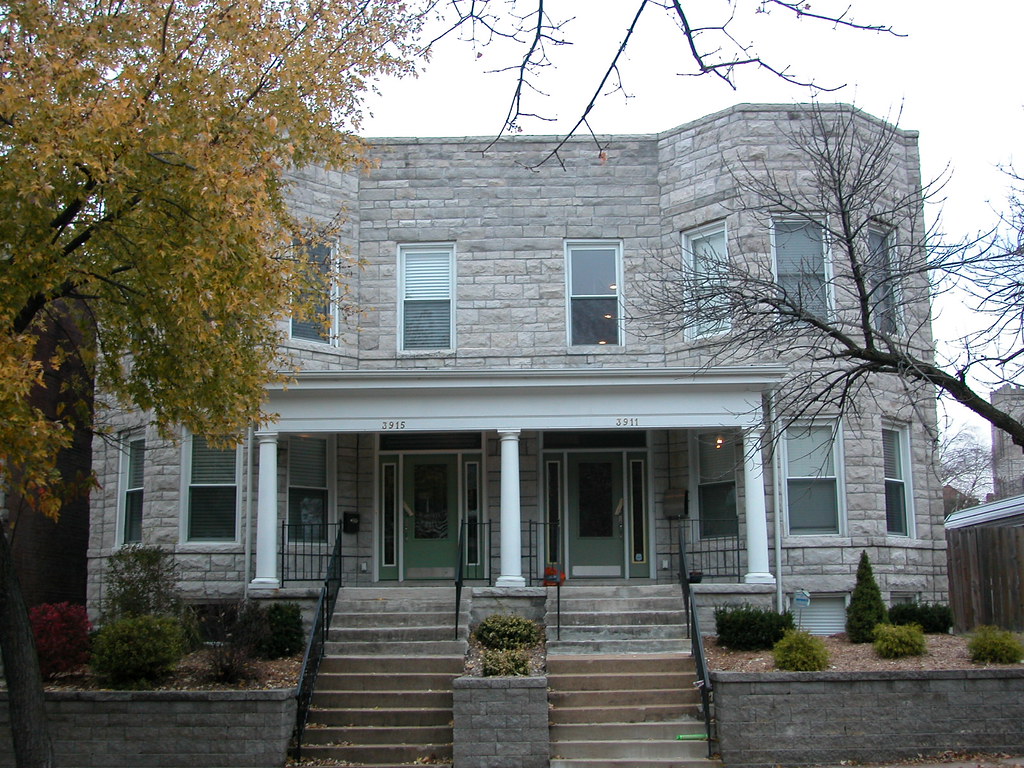
The neighbors’ momentary complaints are addressed, but they ultimately lose a remarkable street scape. On a block with only two gaps in continuous historic building line, both across the street, this demolition stands out. The demolition stands out even more since the demolished house is one of a row of five near-copies of the same plan built in 1903. defined by rusticated limestone front elevations, central porches and projecting bays on each end, the row was a handsome group.
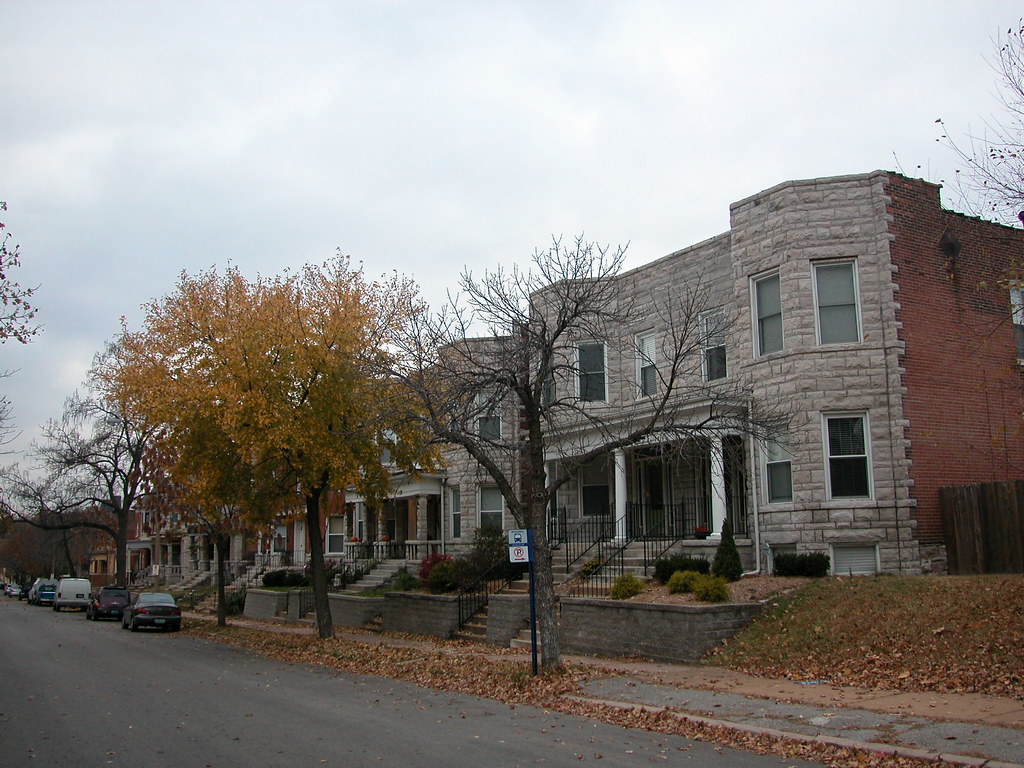
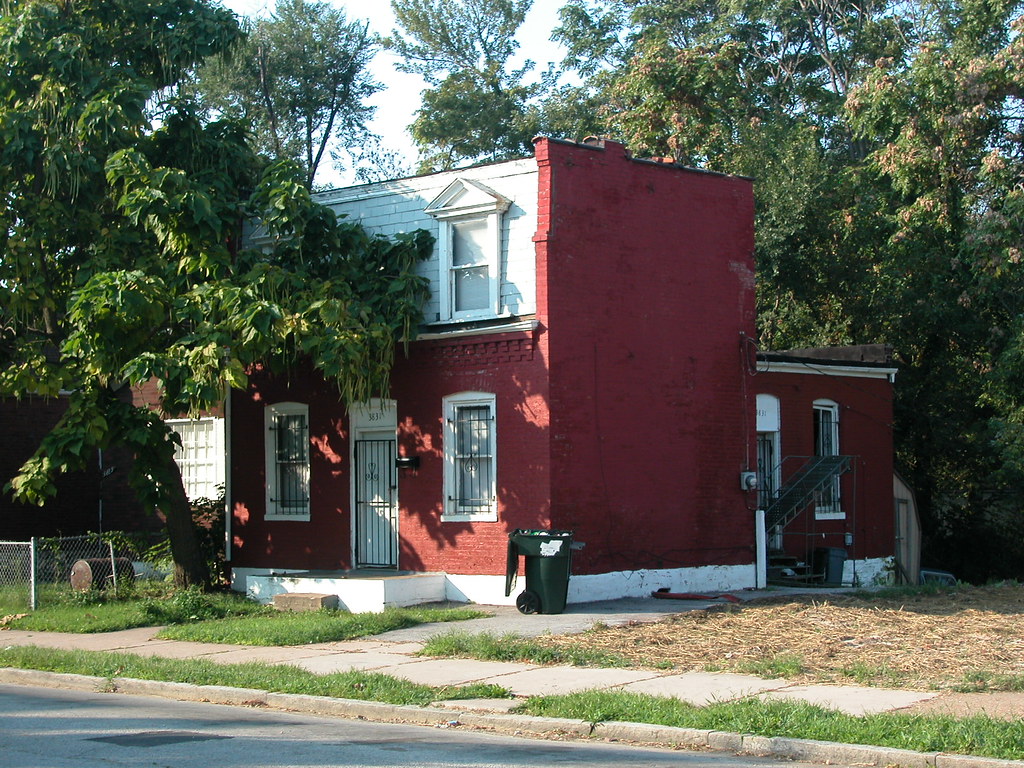
Looking at one of the extant members of this group, one sees the potential that the house at 3927-29 Shenandoah Avenue had, even in its fire-damaged state.
Demolition matters as much in a neighborhood as dense as Shaw as it does in a ravaged built environment like Old North. I would write that the only difference is why the buildings matter, but that would be false. The reason senseless demolitions harm our neighborhoods is because they erode the sense of place. Take away the last two buildings on a north side block, and the last vestige of the block’s urban character is gone forever. Take away one house on an intact block face in Shaw, and that block face is no longer intact. That brings a difference as big as taking down the last building standing. Besides, it’s not just a matter of blocks or neighborhoods but ultimately a matter of stewardship of this interconnected mass of resources we call St. Louis.
Categories
Housing Hyde Park Infrastructure North St. Louis Urbanism

Cut Off From Hyde Park

by Michael R. Allen

Eleventh Street continues north of Branch Street for two blocks, abruptly dead-ending where it meets the embankment of I-70. I-70 hems in the street and the pocket of residential Hyde Park that remains severed from the neighborhood. The city furthered this severance by officially drawing the Hyde Park boundary at I-70, which is certainly a barrier but nothing that defines any boundary of a neighborhood that has always started at the Mississippi River.

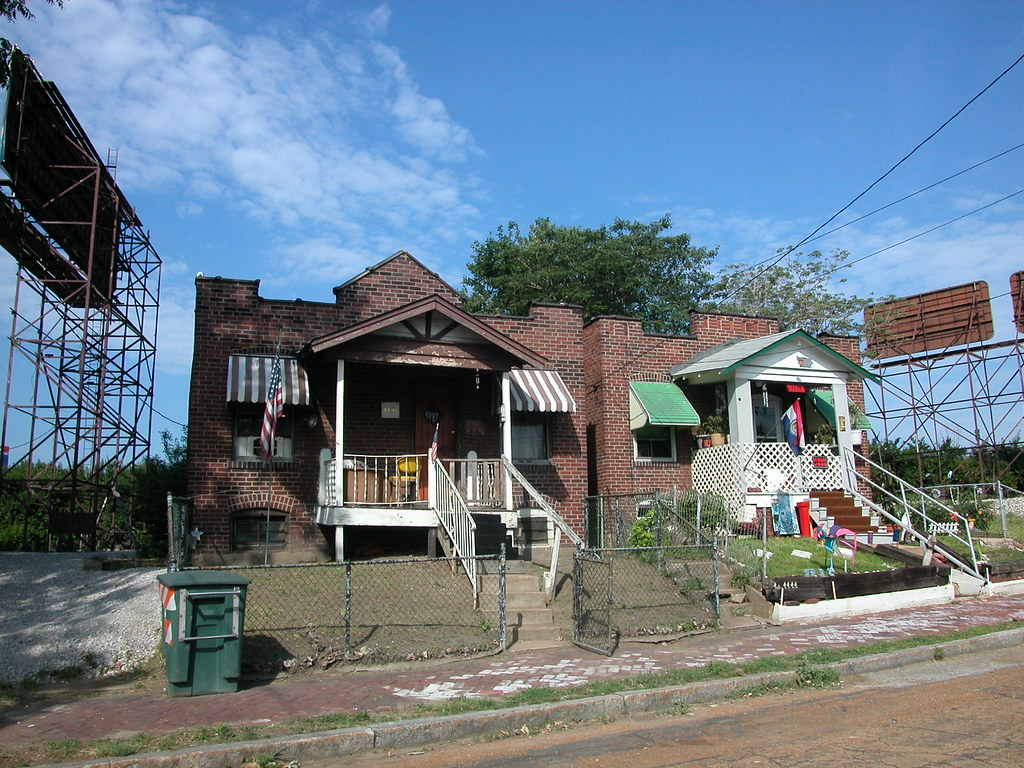
I love these two houses on the west side of Eleventh Street north of Branch. There are many small shaped-parapet bungalows in Hyde Park, built of pressed brick with wooden front porches. Houses like these line Agnes and Destrehan streets back in official Hyde Park. These homes date to the 1920s, when they went up en masse on undeveloped sites in the south end of the neighborhood. Few of those houses enjoy as dramatic a setting as these two now do. The highway in the back yard, giant billboards on each side — the only comfort found in one of these houses is its well-kept neighbor. The brick sidewalk in front adds another reminder of the lost connection with the historic world of Hyde Park.

Categories
Architecture Events

Celebrate Obama Inauguration with Esley Hamilton

On January 20th, the day Barack Obama will be inaugurated as President of the United States, area residents will have the opportunity to consider his predecessors at a talk in University City.

Esley Hamilton, Preservation Historian with the St. Louis County Department of Parks and Recreation, will present his talk Front Porch and Log Cabin: Presidential Homes and the Presidential Image at the Annual Meeting of the Sutter-Meyer Society. “The United States is unique among modern democracies in enshrining the homes of so many of its presidents,” says Hamilton. “These building have been used to shape the public’s perception of the president’s character both during and after the president’s lifetime.” The talk will explain how the homes are used and present a colorful tour of presidential sites all over the country.

The presentation on presidential homes will take place at the Annual Meeting of the Sutter-Meyer Society on Tuesday, January 20th at the Julia Goldstein Early Childhood Education Center at 737 Kingsland Avenue in University City. The short Annual Meeting will start at 6:30 p.m. The presentation on presidential homes will begin at
7:00 p.m.

The Sutter-Meyer Society (SMS) is a non-profit organization working to renovate the oldest building in University City to become a small community museum and educational facility, which will focus on the history of University City, St. Louis County and the greater St. Louis region.

The SMS “Radishes-to-Riches” Raffle will also take place at the Annual Meeting. Anyone interested in purchasing raffle ticket can send $20.00 per ticket to the Sutter-Meyer Society at 7141 Delmar Boulevard, St. Louis, Missouri 63130. The grand prize is $1,873, an amount that commemorates the year the Sutter-Meyer farmhouse was built.

FOR MORE INFORMATION: Shelley Welsch / 314-727-6852 / suttermeyersociety@ucitymo.com

Categories
Demolition North St. Louis Storefront Addition

Storefront Addition: Delmar Foods

by Michael R. Allen

The bow-front, limestone house at 4171 Delmar Boulevard was once an elegant home in the Queen Anne style. Later, it became the backdrop for a one-story commercial bump-out that ended its days as Delmar Foods. Like many homes on the Delmar streetcar line, this one let traffic and density guide the way to a storefront addition during the peak years of St. Louis population boom. the house was empty by 1994, but the storefront remained occupied for another decade. Demolition of both came in 2007. The photograph above dates to November 2006.

Categories
Flounder House Housing Hyde Park North St. Louis

Small Houses on Vest Avenue

by Michael R. Allen

This house stands in Hyde Park on the west side of Vest Avenue just north of Bremen Avenue. Despite some obvious maintenance needs, the house is a treasure. This is one of the small houses that have a front-gabled salt box roof profile. I think of these houses as cousins to our city’s flounder houses, whose roofs make a slope from one side to the other. The salt box variation has a roof profile common around the country, but the basic form and size of the house is akin to the small flounder houses that one still finds all over the city east of Grand Avenue.

On the next block of Vest to the south stands another small house. This one is of a different but common type, that of the two-story mansard-roofed home in which the mansard roof forms the second floor. These houses are more common than either the flounder or the saltbox, but typically are also small in size.

Taking the wide view of this block, we see two other small houses and some vacant lots. Some two-story houses are down the block and across the street.

Looking up to the next block north, we find vacant land and the one-story salt box house. Some two-story houses are down the block and across the street.

This west end of Hyde Park developed slowly in the 19th and early 20th centuries, and the results are neither as consistent or as dense as the eastern part of the neighborhood. The west end was far less desirable as a place to live due to the presence of the meat packing industry, which was centered on Florissant Avenue. The Krey’s Packing plant and a few other packing-related buildings stand, but much of the rest is gone. The packing industry was largely lost to the National City Stockyards in Illinois by the early 20th century, so later residential development in western Hyde Park produced larger buildings. The early houses were modest in scale, many only one story tall. The residents worked nearby at the packing houses or the Hyde Park brewery.

The 1909 Sanborn fire insurance map shows over a dozen one-story houses on the two blocks of Vest Avenue profiled here. Less than six remain. The remaining small houses point to a residential economy lost to rising Gilded Age fortunes. Nowadays, in the wake of the McMansion glut and with the American economy on the brink of collapse, small houses do not seem so bad. Necessity led to construction of the small houses on Vest, and necessity may make them attractive 21st century housing options.

A new ballpark is proposed east of here on Florissant Avenue, and revitalization efforts around Bethlehem Lutheran Church and Irving School have changed this west end of the neighborhood into a livable place. New housing has gone up on 22nd and 25th streets, but the larger market-rate homes have limited demand. Perhaps an alternative market-rate infill project is in order on Vest Avenue. The vacant lots offer the opportunity to again build small houses there to create affordable, low-energy houses. Small houses already cost less to heat and cool, and are easier to make passive than larger homes. The size makes them more affordable, and also expandable. The first home shown above has an addition on its south side, and others shown on the Sanborn map have one or two rear additions. Such flexible, small houses are in short supply in St. Louis. Development of more needs to happen.

Categories
Architecture Historic Preservation North St. Louis

Art Deco on Natural Bridge

by Michael R. Allen

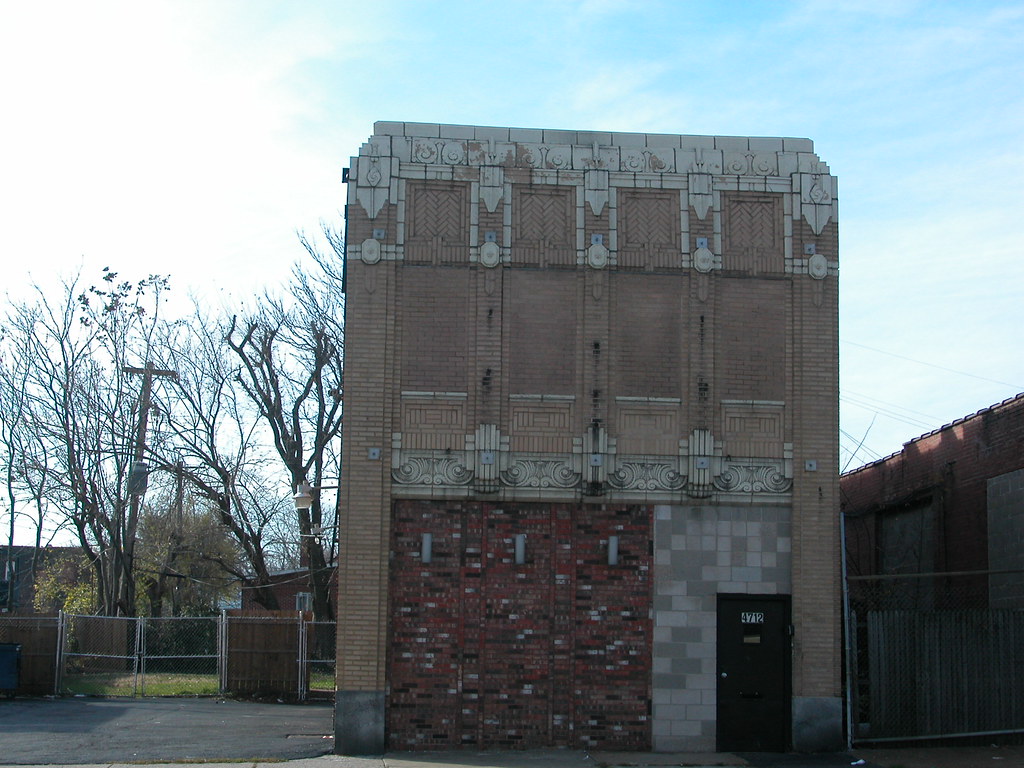
The narrow two-story commercial building located at 4712 Natural Bridge Avenue in north St. Louis sports exquisite terra cotta in the art deco style. While the smooth buff glazing is eroding, the terra cotta’s fine, curved abstract foliage and geometric patterns are intact. These form an integral part of the chamber drama of the building — pronounced piers define the four second story windows, which are topped by herringbone brickwork in the upper spandrel areas. These windows sit above a storefront that may have stretched the entire width between the building’s outer piers. Up above, the step in at each side of the parapet is a deft touch.

Of course, we don’t know much about that first floor storefront since the owners have bricked it in with a motley tapestry as well as concrete block surrounding a plain steel door. At least the filler brick in the second floor matches the buff color of the original face stock, because that first floor grabs the eye and tried to keep it from finding the beauty here. We do know that the buidling dates to 1929, and its first tenant was Peter Blumenschein’s shoe repair shop.


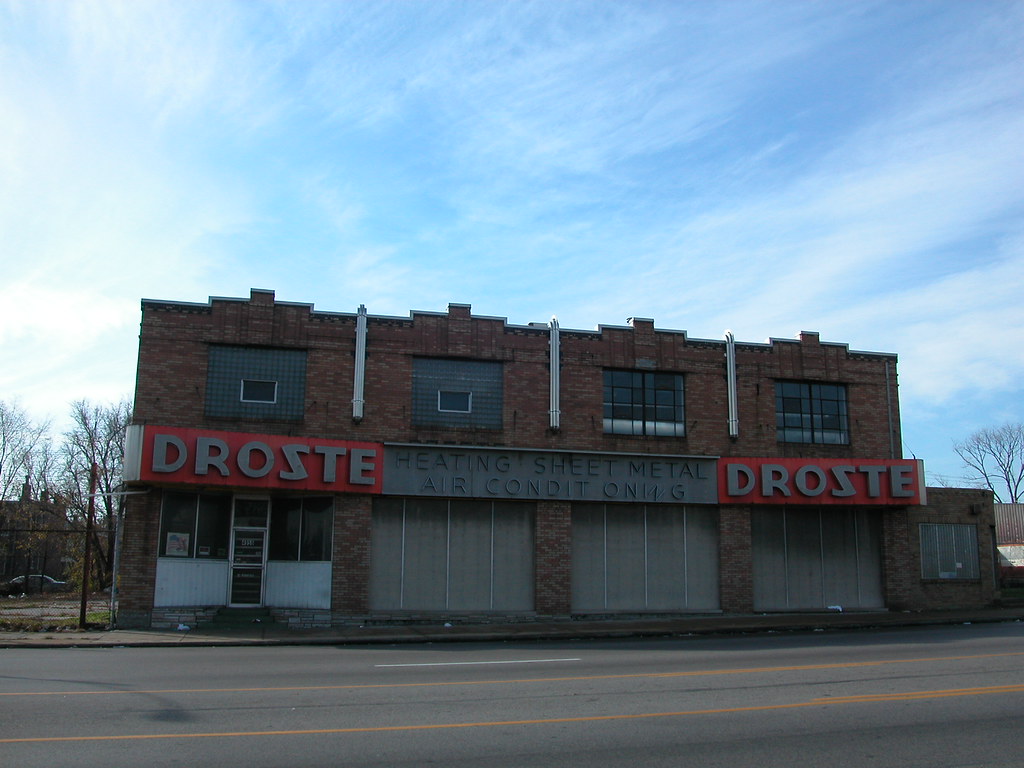
The blunders down the street are nearly forgiven two (long) blocks west of the old Blumenschein shop at the home of Droste Heating, Sheet Metal and Air Conditioning at 4956 Natural Bridge. Sure, the storefront openings have been changed, and two of the four upper windows have lost original steel sash for glass block, but at least the openings aren’t closed up to light completely. Of course, the big draw here is the stylized sheet metal sign, with its delightful fonts. Droste and Rockel, tinners, built the building in 1937 and have remained here ever since. Apparently the company is proud of its presence on Natural Bridge, a commercial thoroughfare that can take every bit of pep that old sign provides.

Categories
East St. Louis, Illinois Ghost Signs Metro East

1843

by Michael R. Allen

On Missouri Avenue in East St. Louis stands a forlorn billboard amid many forlorn buildings. The west face of the ancient-looking, rusty and crusty two-sided board bears the numbers “1843.” The 3 is a bit crooked, and there is only the faintest outline of explanatory clues. A name plaque at the base of the sign reads “Peter Hauptmann Company,” the defunct owner of the sign.

Some people think that the numbers are the declaration of a year, which they are, but not of any year particularly momentous in the life of the city of East St. Louis. The sign, after all is an advertisement for David Nicholson 1843 Bonded Whiskey. I am amazed that a billboard would go unused anywhere. Missouri Avenue is not a slow street, since it co-exists as Illinois State Highway 15, a major path between Belleville and St. Louis. The billboard advertisement is the lowest form of commercial activity that often co-exists peacefully with prostitution and drug dealing as the last-ditch attempt to make money in a place. Why didn’t a cell phone ad replace the old whiskey sign years ago?

Categories
Industrial Buildings Infrastructure Mississippi River North St. Louis

Joseph F. Wangler Boiler & Sheet Metal Works

by Michael R. Allen

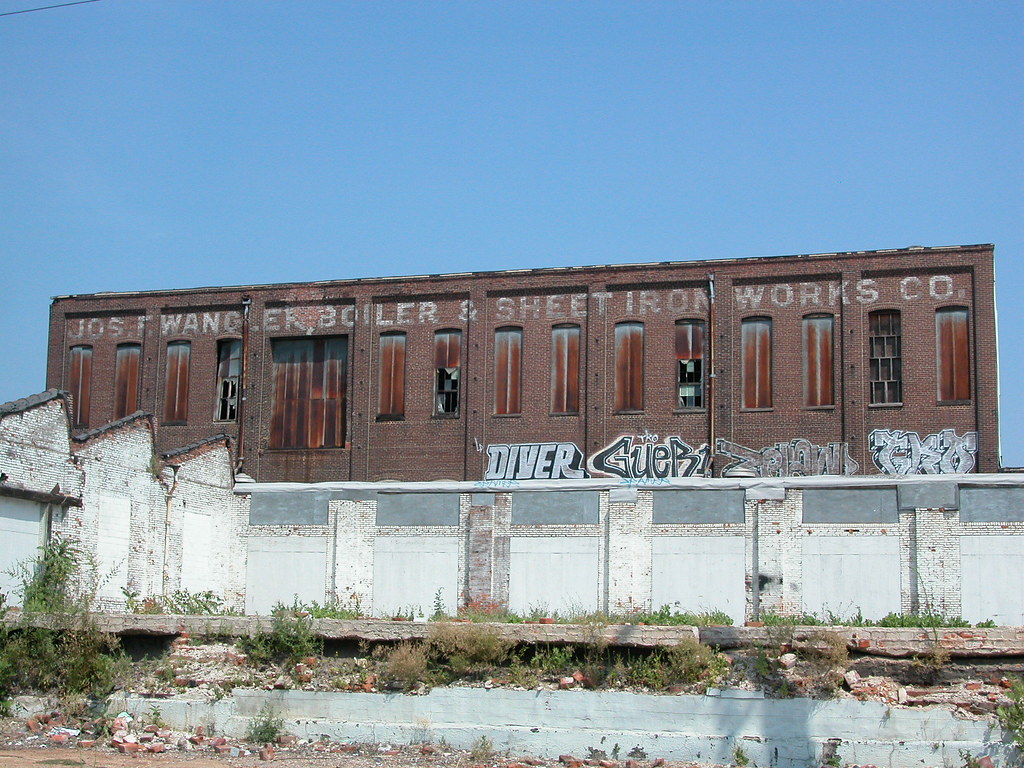
I report with relief that the latest footprint of the proposed Mississippi River Bridge at St. Louis reduces the number of historic buildings proposed for demolition to less than six. (Alas, the footprint will cover the site of the “big mound” at Broadway and Mound streets, which is potentially one of the city’s most significant Native American archeological sites.) One of the buidlings in the path of the ramps connecting the bridge to Cass Avenue is the complex once occupied by the Joseph F. Wangler Boiler & Sheet Metal Works Company, located on the superblock (Mullanphy is closed) bounded by 10th, Howard, 9th and Cass. Much of the complex dates to mid-20th-century expansion, but at the core is a taller 19th-century brick building bearing the name of the company.

The Wangler works warranted a mention in E.D. Kargau’s 1893 Mercantile, Industrial and Professional St. Louis. Kargau noted that among St. Louis’ many industrial concerns are but a few boiler makers, Wangler being one. The Wangler works started in 1864 as Cantwell & Wangler before falling under control of Joseph F. Wangler, a Pittsburgh native. The first location was at 1019-23 Main Street, but the firm need space and moved west to the block where its name can still be read.

According to Kargau, the Wangler shops “are equipped with the most approved and modern machinery and the work turned out from them is unsurpassed in exact workmanship, durability and quality of material and are always closely examined before being sent out” (page 295). Among these renowned works were, of course, boilers as well as sheet iron work, storage tanks and tanks for ice machines.

Kargau had much praise for Wangler and his sons as business leaders, stating that they “are at all times ready to participate in every movement for the welfare and in the interest of the community” (page 296). Long gone are these men, their company and the spirit of enlightened civic business culture. We have only a few buildings from the boiler works to remind us of the Wanglers’ good work, and not for more than another decade. Some may find a new bridge to be a work in the interest of popular welfare, but the fruits of employment found at the boiler works provided more bread to the common person than the new bridge ever will.

Categories
Architecture Lindell Park North St. Louis

The Egyptian Temple in North City

by Michael R. Allen

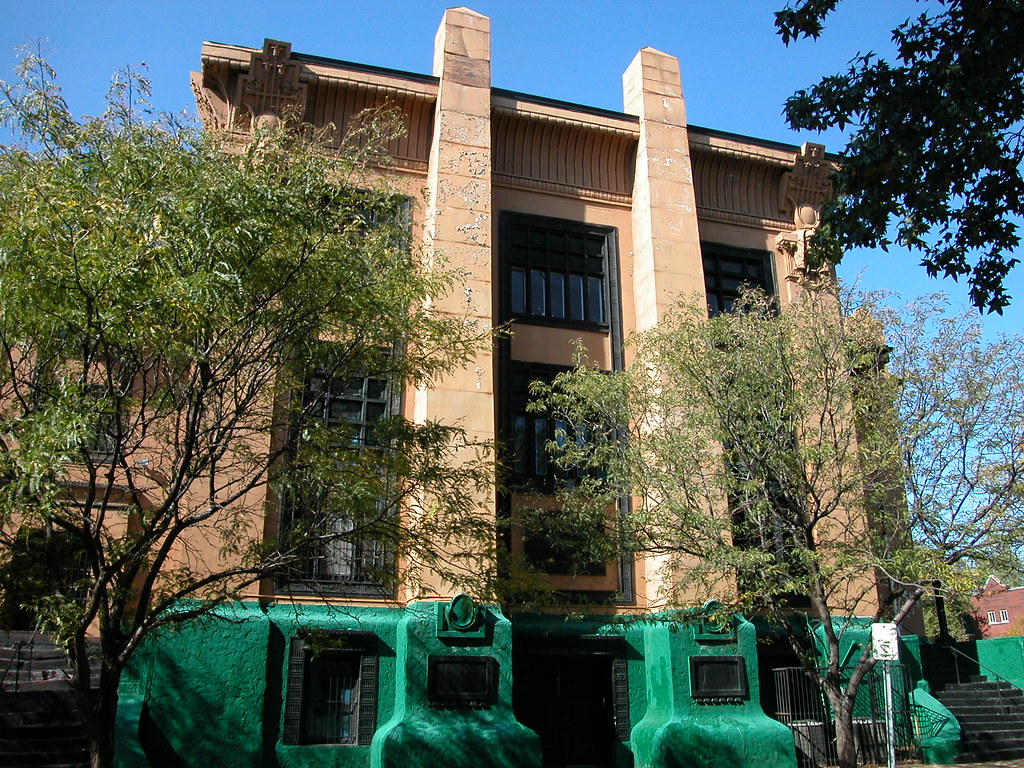
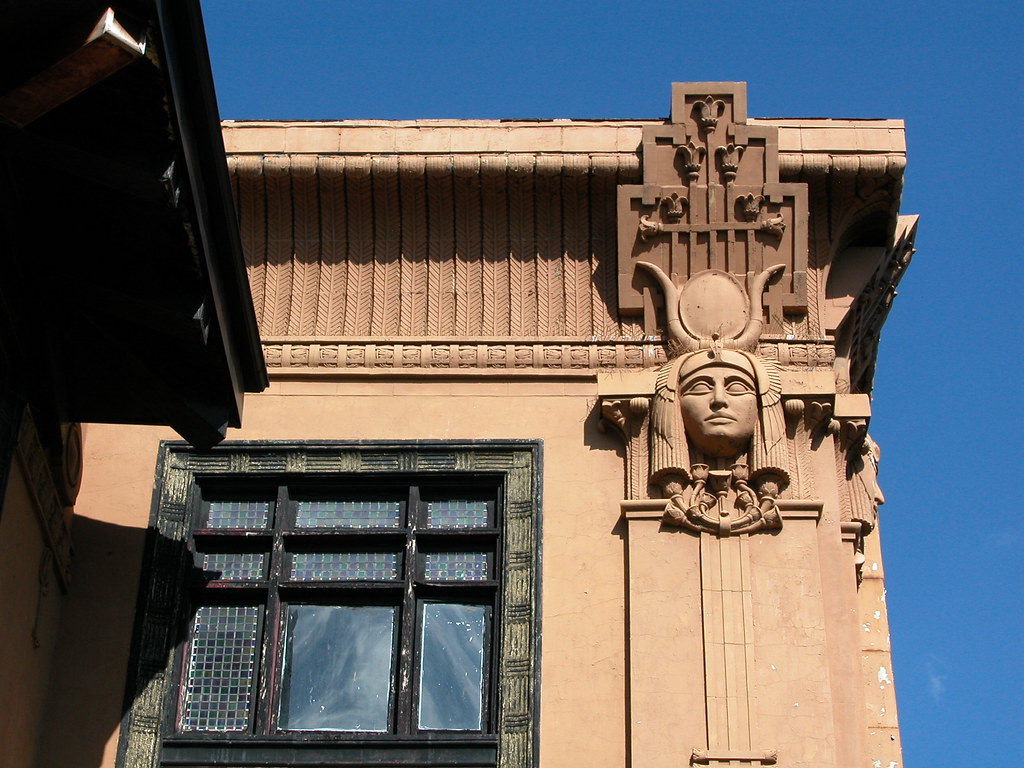
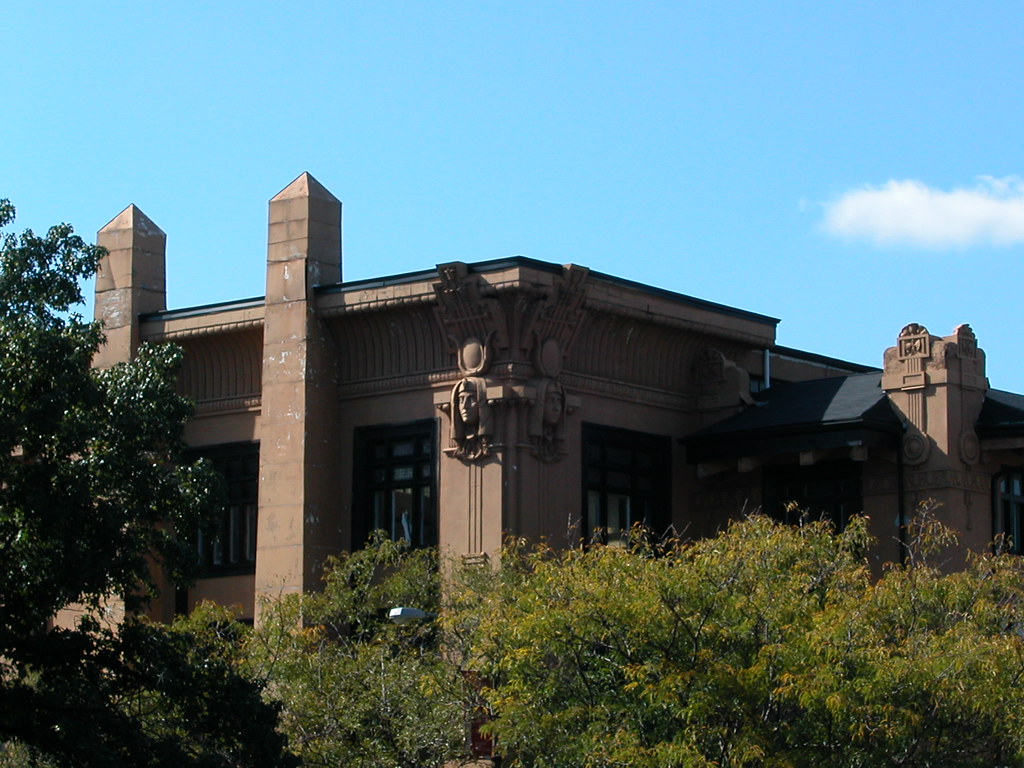
Those who use Natural Bridge Road know that St. Louis has an Egyptian temple, adorned with obelisks, cartouche-style medallions and pagan female figures in relief. Standing out even among the showy architecture of north St. Louis — Central High School stands immediately across the street, after all — the temple at the southwest corner of Natural Bridge and Garrison avenues in Lindell Park never fails to catch the eye of those who pass by.

Now used as the Muhammad Islam Academy, the building at 3625 N. Garrison Avenue has housed many different churches, including the Martin’s Temple Church of God in Christ. However, the builder and original occupant was not a religious order but a fraternal one: the Mt. Moriah Temple Association, an order of Masons. In 1913, the Association hired Charles Brunk, a contractor and Republican politician, to build a large and exotic Mt. Moriah Temple . Whether or not Brunk himself designed the building is questionable, since he has no comparable work to his credit and a building permit record for the Mt. Moriah Temple does not exist. The temple shows a deft and creative hand, with a stylistic program that is heavily influenced by the Viennese Secessionist movement as well as works of Egyptian antiquity.


What is not questionable is that the Mt. Moriah Temple is one of the great eclectic treasures of the city. Application of Egyptian elements in American architecture grew in the early twentieth century with the rise of Art Nouveau, Secessionist and other avant-garde influences, which coincided with American archaeological interest in ancient Egypt. However, in the early nineteenth century, architects had also developed a “Egyptian Revival” style, evident in such works as William Strickland’s Downtown Presbyterian Church in Nashville, Tennessee (1848). Such overt Egyptian inspiration is rare in St. Louis.

Categories
Adaptive Reuse Historic Preservation Housing North St. Louis SLPS

Harrison School Slated for Rehabilitation

by Michael R. Allen

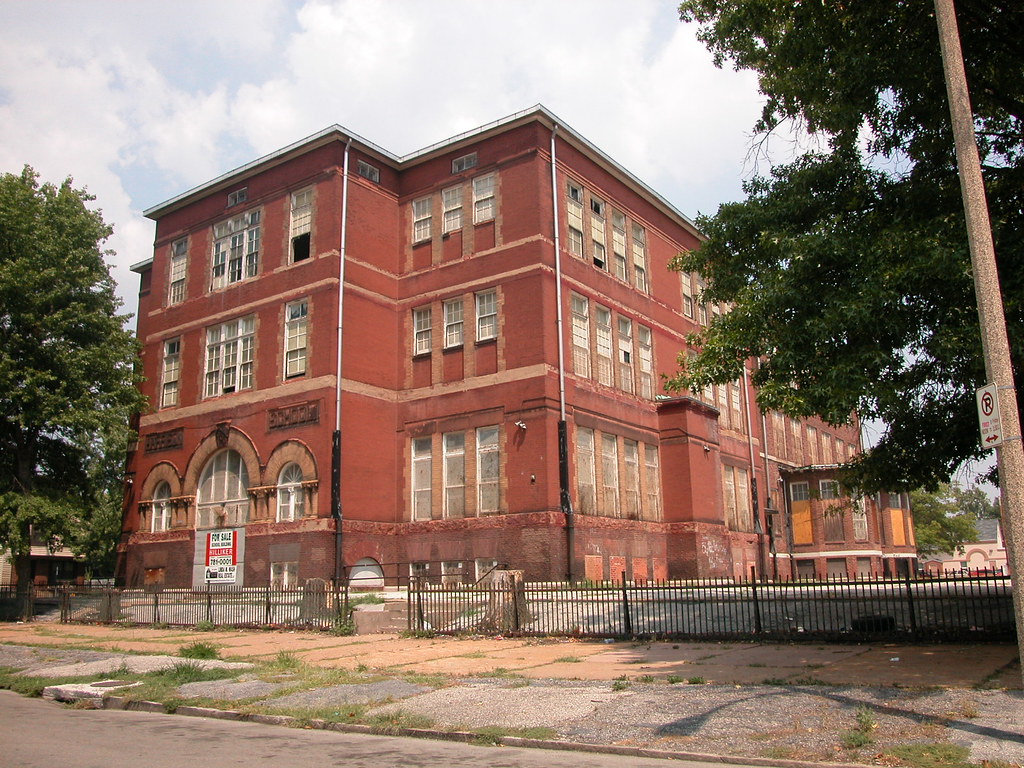
On December 12, the Missouri Housing Development Commission approved issuance of 4% low income housing tax credits to the Harrison School Apartments project. Developer George Kruntchev’s North Tower Group plans to rehabilitate the historic Harrison School at 4163 Green Lea Place in the Fairground neighborhood as affordable rental apartments.

Harrison School has sat vacant since its closure by the St. Louis Public Schools in 1996. In 2003, the building was finally put up for sale at the behest of a new majority on the Board of Education that sought to lower the district inventory. In 2007, after sitting nearly four years on the market, a developer purchased the school and secured listing in the National Register of Historic Places before selling the school to North Tower Group.

Benjamin Harrison School is a magnificent example of the earlier St. Louis Public School buildings. The basic plan comes from architect August H. Kirchner, who designed the original 1895 section of the building. (Coincidentally, Kruntchev’s other school project, Grant School in Tower Grove East, also involved a Kirchner school.) That one-story, four-room section was designed for expansion. After all, the city and the Fairgrounds neighborhood were growing rapidly, and until construction of Harrison the only other school in the vicinity was Ashland School, first opened in 1870. Kirchner made attempts to overcome the limitations of previous school buildings, which were dour, crowded and devoid of proper ventilation and light. Kirchner made the classrooms large with substantial windows for light and air. His ideas would influence his successor as district architect, William B. Ittner, who expanded Harrison School with additions in both 1899 (adding additional floors to the 1895 section) and 1909 (adding the north wing).

The result of the architectural evolution is an imposing Romanesque Revival school whose brick body is articulated through buff brick and red Iowa sandstone. The design is very similar to other Kirchner schools later expanded by Ittner, including Adams and Euclid schools. One of the striking features of Harrison is a kindergarten in the 1909 addition that placed two trapezoidal bay windows on either side of a hearth, an Ittner innovation that was not repeated.

Now, over twelve years since closing, the school finally is finding a new life. That’s a cautionary lesson to the Special Administrative Board (SAB) governing the St. Louis Public Schools. The SAB will be approving a facilities management plan early in the new year that will include what is anticipated as as substantial round of schools closings. Hopefully successful conversion projects like the one at Harrison will convince the board that there are many possibilities other than demolition or abandonment. I remain impressed by the wide array of adaptive reuse plans that developers have found for St. Louis schools. The again, the architecture itself, with its spaciousness and care for natural light, is hospitable to almost any human activity.