Categories
Downtown Infrastructure North St. Louis Streets Transportation

Time is Right for Making Changes to New Mississippi River Bridge

by Michael R. Allen

On February 28, outgoing Missouri Governor Matt Blunt announced that Illinois and Missouri had reached a final agreement for construction of the new Mississippi River Bridge. While actual construction remains a few years away, the agreement brings back to the forefront concerns about the bridge’s impact on the urban fabric of north St. Louis.

While officials long ago shelved a highly destructive initial bridge concept that included a local traffic connector from the bridge to 14th street, the current plan leaves much to be desired. There are many problems

Clearance. The bridge plan still entails clearance of historic buildings and existing business. While the path of the bridge itself is actually one of the least invasive paths possible, the affiliated roadway projects will entail demolition of dozens of buildings. Particularly troubling is the plan to wipe out all of the buildings remaining on the east side of 10th Street north of Hempstead Street. There are many occupied buildings and houses in that stretch. Most important, the part of Old North St. Louis east of I-70 is integral to connecting Old North to the emerging North Broadway corridor.

Bridge planners are more concerned with traffic efficiency than creating infrastructure that respects settlement patterns. While I-70 has some maddening issues related to placing exit ramps in odd spots due to existing buildings, those issues are small concessions to reality. Reality is that cities are what bind people together, and highways are but a means to that bind. Reconfiguring the St. Louis Avenue interchange is economically profligate; the plan entails spending millions on a road project with no economic return. Reconnecting Old North and North Broadway will cost less and maintain an existing building stock with the potential for high real estate values.

A corollary is that the presence of highway noise and pollution lowers real estate values. Why on earth political leaders would want to champion anything that lowers real estate values amid a recession is beyond my comprehension.

Connectivity. The plan still entails closure of north-south streets like 10th Street. Northside residents use these streets to get downtown. Closing the connections will stall pedestrians and add time to drivers’ commutes. Closing the connections could isolate Old North from downtown. There is natural synergy between Old North and downtown, but there are physical impediments caused by a belt of vacant land, industrial uses and monolithic public housing complexes. The bridge exploits that belt, and tightens it.

Short-Sightedness. The new bridge does not address the terrible congestion caused by the poor configuration of ramps on the Poplar Street Bridge. Would the bridge even be needed if the Poplar Street’s problems were fixed? No.

The bridge plan does not include any allowance for public transit. There is no space on the bridge for a street car line. That’s going to seem silly in 25 years when our automobile lifestyle will be in crisis. Oh, well — at least we can still walk across the bridge then.

Avoidance. The bridge path funnels I-70 traffic out of East St. Louis and away from downtown St. Louis. This path is a boon to people wanting to live in far-off Illinois suburbs like Highland but work in St. Louis or St. Charles counties. Sure, long-distance traffic will be well-served by a new bridge, but so will exurb-to-exurb commuters.

The bridge itself seems every bit a done deal. But are the details cast in concrete? No. There is still space to mitigate the bridge’s impact on the urban fabric of the near north side. Since almost every change for the better involves reducing the project cost, changes are not only logical but prudent. In the wake of the agreement, it’s time to make the best of the bridge.

Categories
Architecture Historic Preservation Illinois Peoria

Concrete Block Flatiron in Peoria Gone

by Michael R. Allen

When I went to Peoria over the weekend, this building was gone. (This photograph dates to June 2005.) The commercial building stood on Martin Luther King Boulevard just east of Western Avenue, on the south side of the street. Several characteristics were remarkable:

– The building was built entirely of concrete block made to look like rusticated limestone.

– The building formed a flatiron shape even though it did not sit on a flatiron lot. The shape was necessitated instead by topography. Behind the building, the land dropped off so severely that the flatiron was about all that could be built on this site. as the raised sidewalk suggests, things aren’t so great on the other side.

I liked this building because it defied the odds. This site is not “buildable” by contemporary standards; it may not have been even back in the early twentieth century when the building was built. Yet someone wanted to develop this lot, probably spurred on by Peoria’s density. When a city has a strong downtown, people build anywhere they can get in and around that downtown. Even odd lots get built out. Contrast that with today’s American urban environments, where many developers won’t even build on lots 25 feet wide by 120 feet deep. Once, land was scarce and building space abundant — now the formula is inverted. It seems that along with abdundant building space went abundant civic pride. People who don’t value land and make the most of its scarcity don’t build — or steward — great cities.

No doubt the little concrete flatiron fell prey to our perverse size mentality. People probably considered it too small for commercial use, and lacking the “yard” needed for residential. The building went empty and then it was demolished. I’ll bet that the lot remains vacant forever.

Categories
Architecture Chicago Historic Preservation Illinois

Under the Layers

by Michael R. Allen

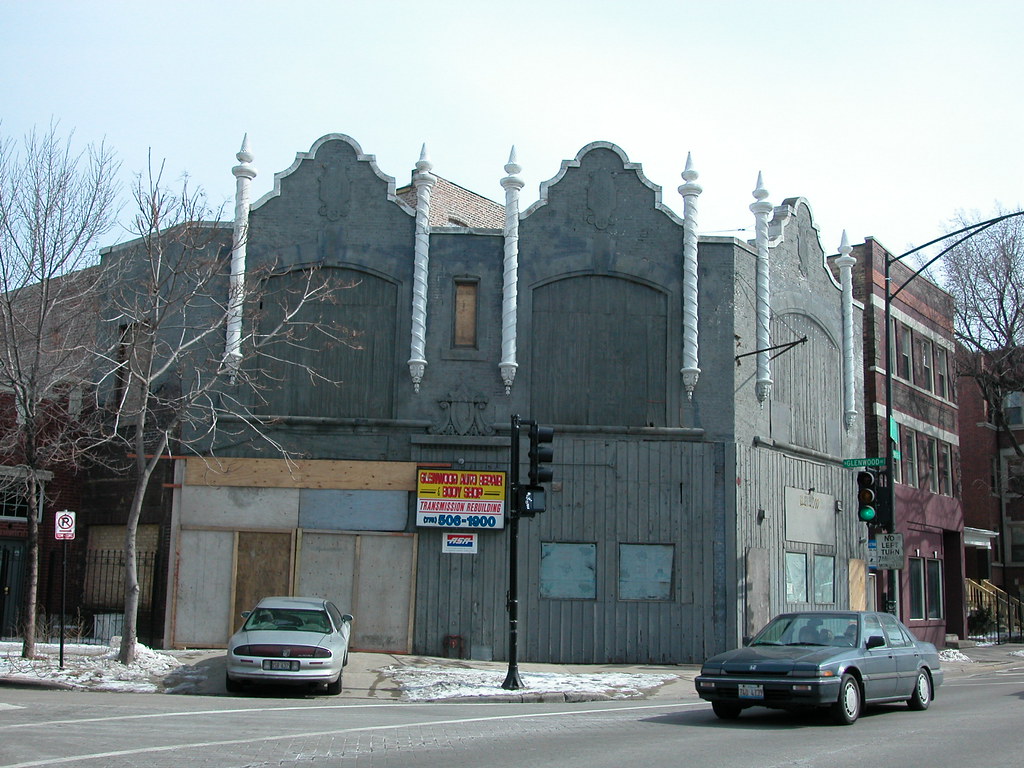
While driving on Ridge Avenue in Chicago over the weekend, I spotted this building. Look at it! We have a Spanish Revival gem hiding out under wooden siding and a coating of gray paint. I like how the owners painted the braided terra cotta finials white to make them stand out. Apparently, the building is in use by an automobile repair shop. Perhaps some day the owner will take off the siding and strip the paint to reveal the full glory of the building. For now, though, the building’s soul still manages to whisper through the layers.

Categories
Abandonment Architecture North St. Louis Northside Regeneration Old North

How Not to Board Up a Broken Window

by Michael R. Allen

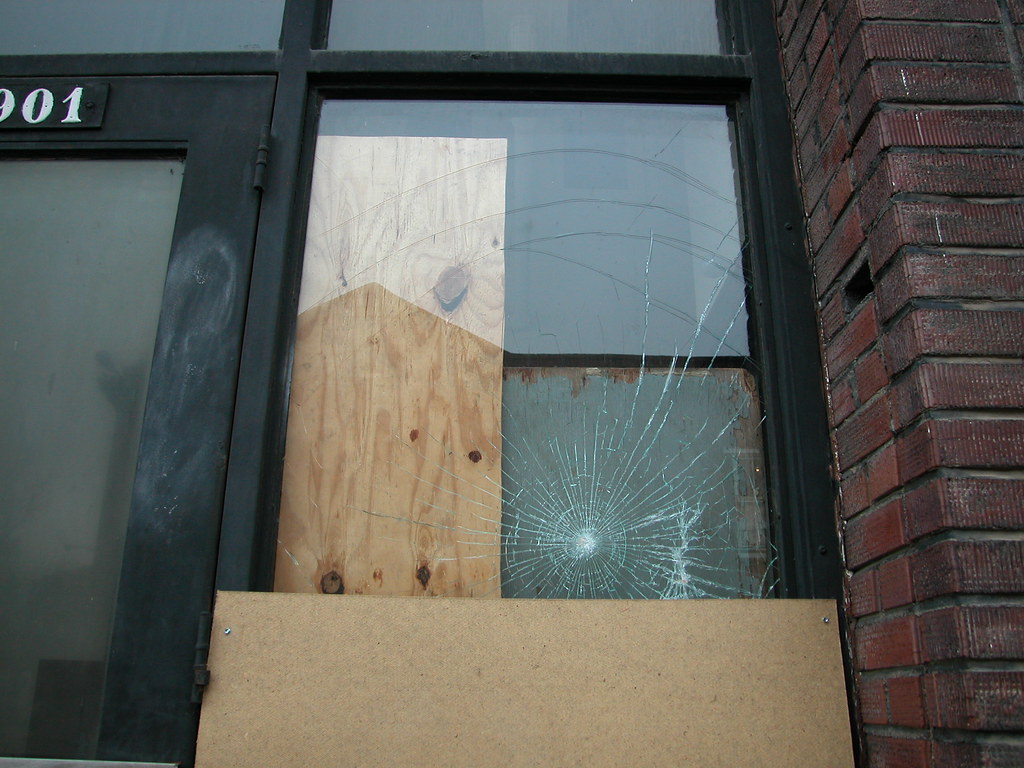
Here is the entrance to the Fourth Baptist Church at 13th and Sullivan in Old North St. Louis. You can see that someone has broken the window at right, and that someone has very poorly attempted to board over the damage. Hint: If the broken area still shows, you haven’t boarded over the damage.

In August 2007, someone threw a rock at the window and caused the spider-web-like broken lines. Neighbors tried to get the owner, a nearly-defunct congregation, to board up the broken window. I cut my hand taping the damage to stabilize the glass. Several Citizens’ Service Bureau complaints led to the congregation’s finally boarding up the broken glass. Then, this December, the other side of the doorway gets the same treatment — from vandal and owner. Neighbors still haven’t seen a full repair.

The church building itself is an important landmark, and deserves better treatment. The congregation does not have the funds to maintain the building; they vacated in 2002. Meanwhile, the building has become a nuisance to neighbors as the congregation refuses to commit to selling and won’t make even small efforts to stay abreast of vandalism.  Hopefully Fourth Baptist will board up the broken window and sell their church to someone who will invest in the future of the church and the neighborhood.

Categories
DALATC Illinois landbanking Public Policy Southern Illinois

Illinois Seeks to Get in on the Distressed Areas Land Assemblage Tax Credit Action

by Michael R. Allen

On February 14, Illinois State Representative Jay C. Hoffman (D-112th), introduced a bill in the Illinois General Assembly to create a Distressed Area Land Assemblage Tax Credit for Illinois. The bill, HB 5153, takes verbatim the enacted text of the Missouri Distressed Areas Land Assemblage Tax Credit Act.

Hoffman represents a district that includes the Metro East cities of Collinsville, Edwardsville, Maryville and Fairview Heights.

Categories
Architecture Central West End Demolition Historic Preservation Mid-Century Modern

The Doctors Building: An Obituary

by Michael R. Allen

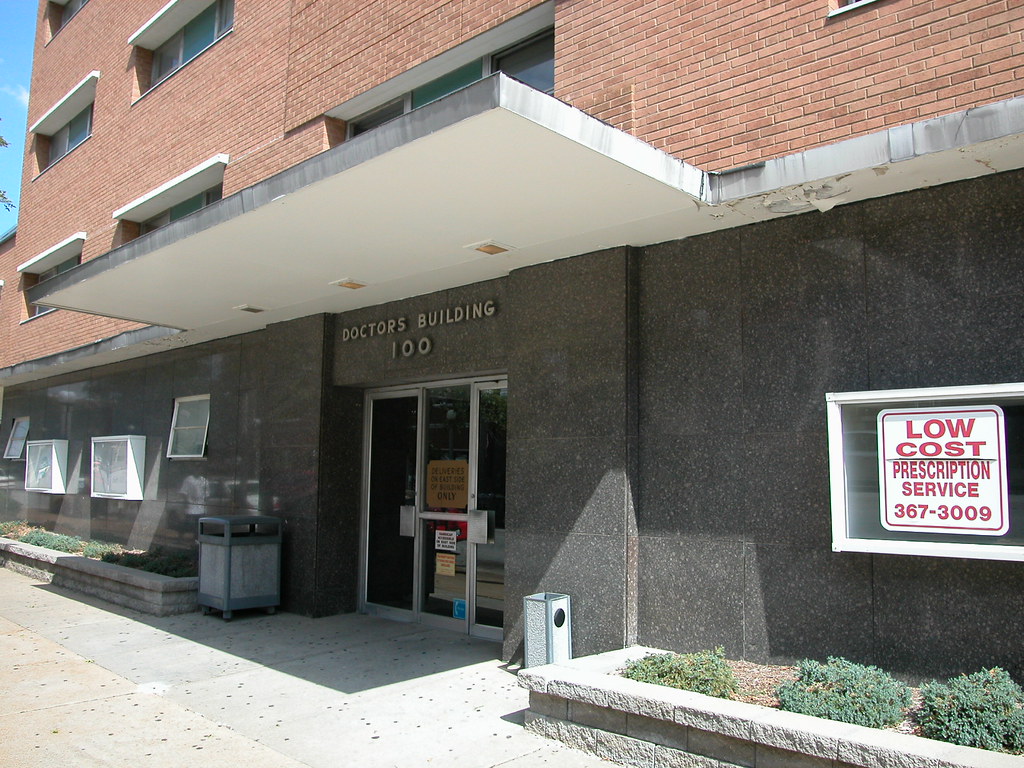
Streamlined and sleek, sophisticated and subtle – these are attributes of the Doctors Building at the northeast corner or Euclid and West Pine. The Modern Movement medical office building has offered a hint of space age glamor to the Central West End for nearly fifty years. Nestled among elegant Renaissance Revival apartment buildings, art deco storefronts and minimalist contemporary condominium buildings, the modernist tower provided just the right balance to the mix of jazz age architecture. Think of the Doctors Building as a minor bop number in a sea of buildings that span a range of jazz period from ragtime to tonal. The Doctors Building is that smooth, modern breakthrough that plays back to its predecessors without upstaging them and that teaches its successors a thing or two.

Too bad that’s all ending before our eyes. The Doctors Building is under demolition as I type. I wish I could report that the proposed replacement is worth the urbane environment of the Central West End, but that simply is not the case. We’re discarding modern jazz for contemporary pop drivel.

We are losing a building that is almost a time capsule from our recent past. Some would assert that the 1950s was an age of conservatism, forced conformity or destructive Cold War politics, but that view neglects to account for the cultural production of the era. How did the Beats, jazz music, streamlined industrial design and modernist architecture fit into the rubric of Joseph McCarthy and Leave It To Beaver? The answer is “not well.” More surely, the arts that persisted in the 1950s were cool and subversive of other tendencies. Artists were taking the tools of regimentation — the straight line, the machine — and turning them into expressive instruments. The best work of the 1950s plays on the tension between conformity and rebellion.


The Doctors Building straddles that fine line itself. After all, this is a medical office building — a tool of discipline and science. Yet the envelope is almost sensual — warm orange brick, window groups punctuated by aqua aluminum panels, a shiny granite base with quintessentially modern anodized aluminum details including an upward-curved canopy. Each elevation of the building is different, and on the east side wide projecting bands of brick that wrap the corners makes the wall plane sculptural. The pattern runs down the center of the Euclid Avenue elevation, marking the entrance. The tall form of the building gives way to two-story sections on the east and north, providing contrasting elements at different scales.


Of course, however attractive, the Doctors Building is no master work. It’s a minor modernist accomplishment that benefits greatly from its context. As the only tall mid-century building on Euclid, the building stands out in ways it might not had further development occurred in the 1950s and 1960s. The building avoids the swagger of Miles Davis or Thelonious Monk, falling into the background. It’s a really cool but not very showy B-side from an artist no one remembers no matter how many times they hear the name.

The building permit for the building is dated January 1955, with cost of the 11-story building estimated at $900,000. The architect was a little-known designer named Paul Valenti, who taught in the School of Architecture at Washington University from the 1940s into the 1960s. This author knows of no other work by Valenti, and has searched mostly in vain to glean biographical details. The two-story section on Euclid dates to a permit issued in July 1955; Wells and Wells, Inc. is listed as engineer on this section as well as the tower. The two-story section to the east corresponds to a permit issued in August 1961; E. Donald Goret was the architect. Erstwhile Millstone Corporation was the developer and builder of the building and its additions.


The building originally had that one distinguishing mid-century flaw: adjacent parking as part of the building design. The original adjacent small surface lot on West Pine took on its own life and grew as the owners tore down a few houses to make an unsightly large lot that inadvertently created a wonderful view in which one can see both the Doctors Building and that 1929 art deco landmark, the Park Plaza Hotel.

With the huge parking lot, the Doctors Building site proved irresistible to developers during the recent hyperactive swing in the market. The Mills Group proposed demolishing the elegant building and replacing it with twin 30-story towers of ridiculous bulk and exaggerated detail. Jazz would have been replaced with buildings that reminded me of overwrought sappy love ballads. Then the market downturn set in and the project fell apart. Unfortunately, another plan emerged – demolish the building and replace it with a shorter new building. The new building is best left without description — its designers’ strained attempts at referencing historic details like quoins and a clock tower would only be remarkable if not already tried on thousands of suburban branch banks around the country. Alas, we lose the Doctors Building for something that doesn’t even forge a relationship with the Central West End. Sophistication falls to smugness. A minor pleasure gives way to a minor travesty. Hopefully the jazzy architecture around the new building will be enough to drown out the intrusion.

Categories
Architecture Fire Historic Preservation Missouri

Inn St. Gemme Beauvais Survives Fire

by Michael R. Allen


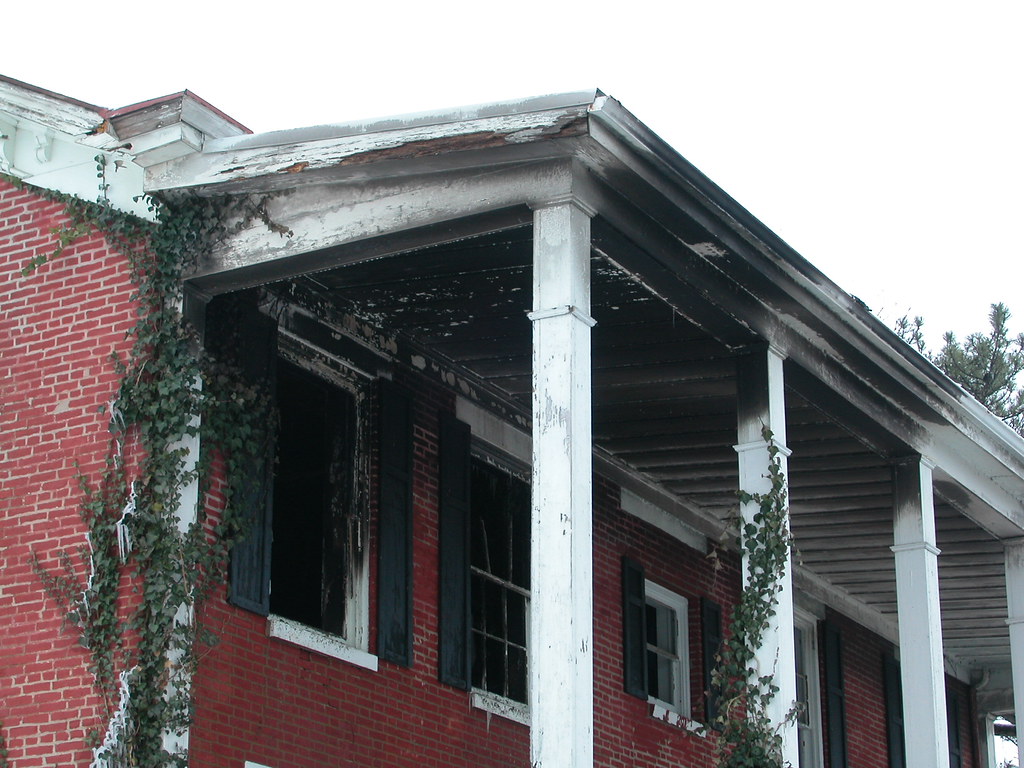
News of the demise of the Inn St. Gemme Beauvais on Main Street in Ste. Genevieve, Missouri, was premature. The historic home was severely damaged by an electrical fire on February 22, leading to reports of total destruction. However, the fire seems to have hit the interior hard but spared the shell of the building. The brick walls are intact, without any collapses, and most of the roof is intact. Windows and doors are charred or stained, and much glass has been broken, but only a few were lost completely. Overall, the exterior is remarkably intact.

The worst damage is on the rear section of the home, where it appears that the roof has partly collapsed.

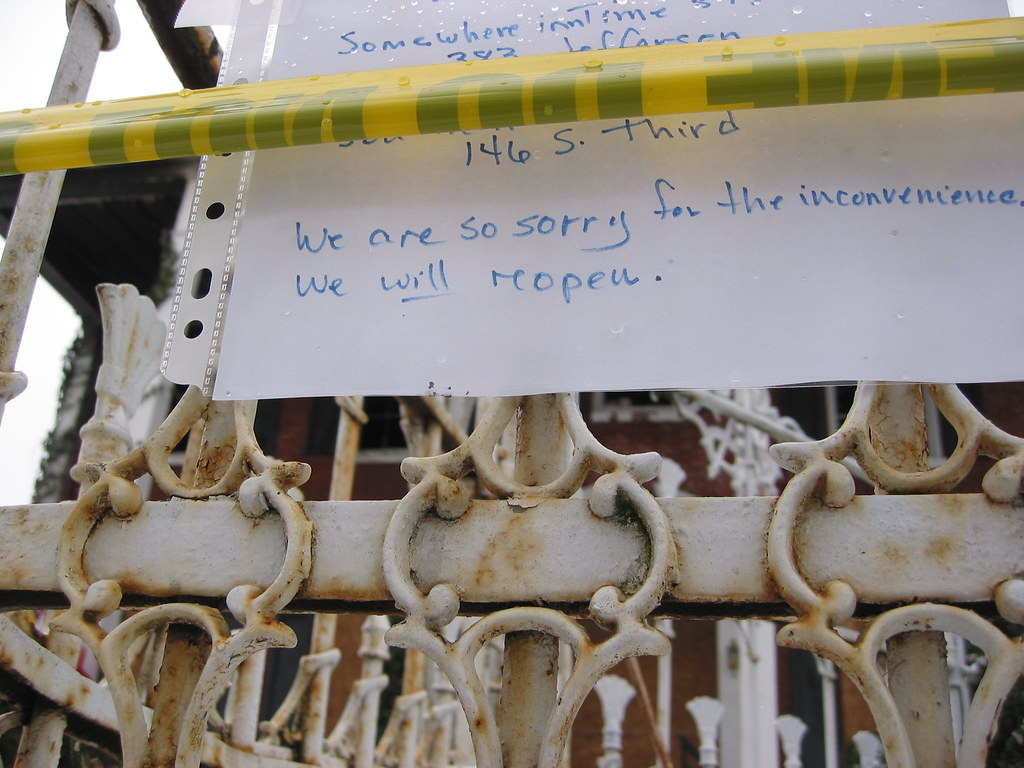
After the fire, the Colonial Revival style building was boarded up. The roof condition will prevent thorough water infiltration as the owners’ insurance claim is processed. The owner, Janet Joggerst, plans to rebuild and reopen the bed and breakfast.

The Inn St. Gemme Beauvais was built in 1848 by prominent citizen Felix Rozier as his mansion. The home’s rear faced the Mississippi River, and the front faced to the town. Over time, this section of Main Street became commercial in character and the house remained as a counterpoint to the surrounding storefronts, shops and apartment houses.

Photograph by Lynn Josse.
Categories
Architecture Demolition Fountain Park Historic Preservation North St. Louis

Demolition Imminent at Page and Kingshighway?

by Michael R. Allen


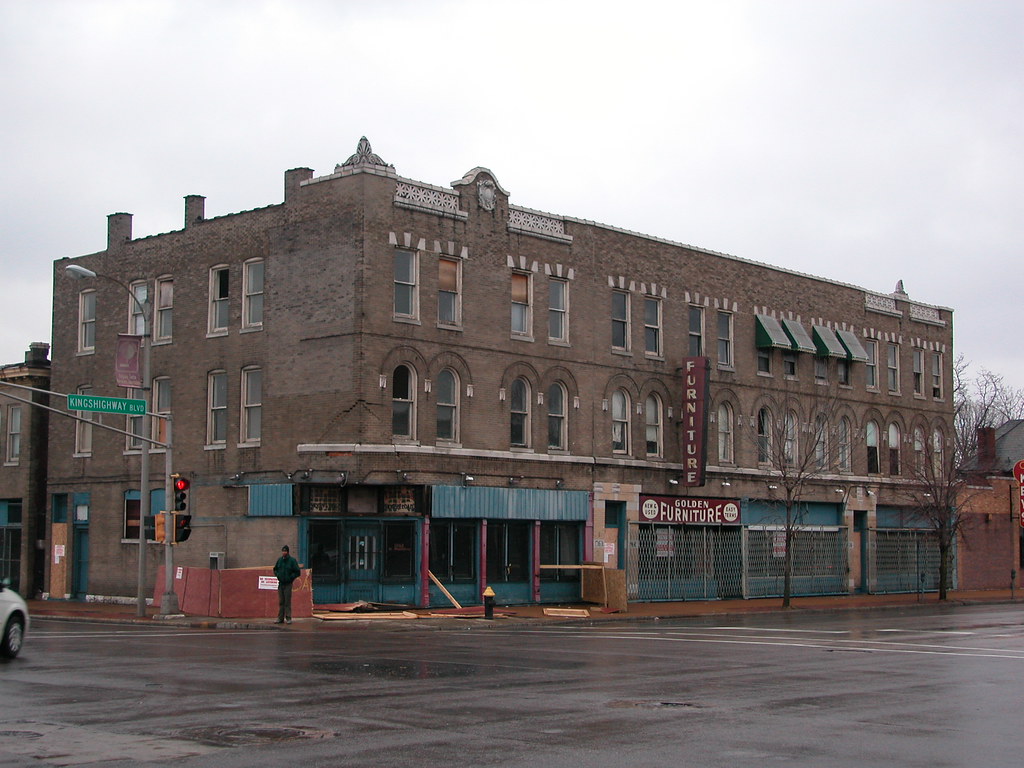
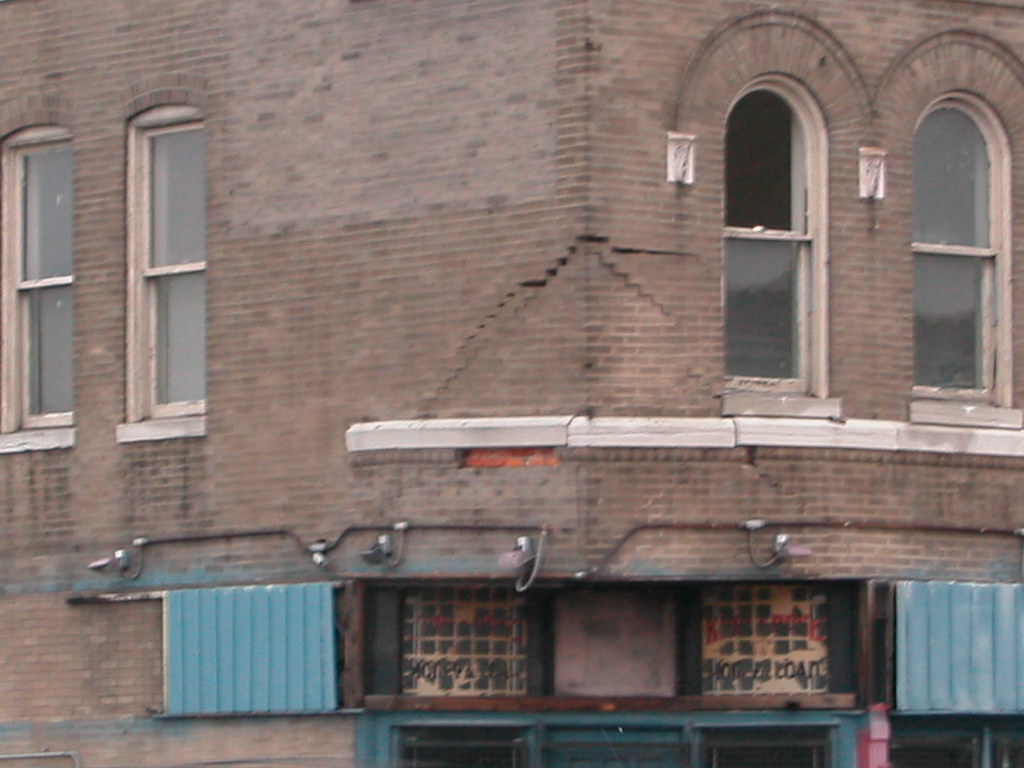
On January 10, the city’s Building Division issued emergency condemnation (for demolition) of the landmark building at the southeast corner of Page and Kingshighway boulevards. The Roberts Brothers Properties LLC owns the building and two adjacent two-story commercial buildings. A motorist struck and toppled the corner iron column on the building, which has been vacant for a year or two since Golden Furniture moved out. The Building Division has not yet followed up with any emergency demolition permit, although such action is almost certain. (Curious Feet St. Louis reported the news awhile ago.)

The loss of the corner column has already led to significant shifting of the building’s weight downward at the corner. The brick wall shows how the bottom of the second floor is pulling downward. At the moment, this is a problem that can be corrected with a jack or another iron column. (What happened to the building’s original column? Why not just re-install it?)

The situation has become one of those self-fulfilling prophecies that dampens one’s attempt to be hopeful for the commercial buildings of north St. Louis. Here we have beautiful commercial buildings that define a major intersection, and which were in use until recently. A big-time owner lets leases lapse, perhaps plotting demolition for replacement with some silly strip mall like the owner’s project across Page. Then, an accident happens. The Building Division steps in, goes through its procedures, while the owner does nothing. The owner does not jack up the corner with a support, which would avert further damage. The corner pulls down, triggering a major collapse. The Building Division rushes in to get demolition started. The owner sits back and lets events unfold, while hatching plans for new development. Preservation and minimal code enforcement never had chances.

This is frustrating because the building is elegant and obviously in decent shape. The Roberts brothers could view ownership of these buildings as great fortune — they get to possess unique historic buildings at a major intersection. They get to take a step to ensure that north city retains the level of historic character that makes real estate in south city so valuable. They could renew a cultural resources and pave the way for long-term rising of real estate values in north city, instead of falling into the temptation to build a short-lived retail center with short-term pay-off.

The Building Division is not a preservation agency. Yet the Building Division could step in and make the owners put a support at the corner. After all, that’s stipulated by the building code. The owners’ intentions should not influence the Building Division’s enforcement. Whether or not the owners want to tear down the buildings is a moot point until there is a demolition permit. Up to that point, the division should seek to force the owners to make repairs of structural necessity.

Beyond code enforcement, preservation makes sense. Page Boulevard has many threats to corner commercial buildings at the moment, and has already lost several. Kingshighway north of Delmar is likewise losing its lines of commercial buildings. Presence of anchor landmarks sometimes makes the difference between people remembering having been to a neighborhood or not. These buildings are in Fountain Park, which possesses a memorable interior. Yet its perimeter would lose a little less character with the loss of these buildings. The oval park, the famous curved storefront, the historic homes, schools and churches present a distinct and impressive identity. A corner strip mall, festooned with a developer’s name, with litter blowing across black asphalt in front of squat little retail boxes demonstrates no distinct character and in fact could have a blighting effect on neighboring block that retain their character. Fountain Park is a little less remarkable with every lost landmark.

These buildings are inherently remarkable, too. Built between 1904 and 1908 from designs by architect Otto J. Wilhelmi, the group shows a mix of modern sensibility and Victorian-era stylishness. The two-story buildings are rather plain expressions of the commercial storefront form while three three-story building is a blend of stark iron storefronts, paired Romanesque windows with pronounced archivolts on the second floor and windows with terra cotta keystones and voussoirs that suggest the Georgia Revival style. Then there is the white glazed terra cotta ornament of the parapet, which draws upon Classical Revival styles and features a projecting acanthus and the corner and near the south end. The building permit for the building mentions a galvanized cornice, long-gone. All three buildings are clad in buff speckled brick prevalent in north city commercial architecture of the period. In all, the buildings are unusually eclectic for this part of north city — and that statement means a lot. If only the owners recognized the treasures that they already have.

Categories
Downtown Housing Media

The Mark Twain Hotel Fills Important Niche Downtown

by Michael R. Allen

The Mark Twain Hotel at 9th and Pine streets downtown opened in 1907 as the Maryland Hotel. Albert B. Groves was the architect.

A recent article in the St. Louis Post-Dispatch again raised complaints against downtown’s Mark Twain Hotel at the corner of Ninth and Pine streets. The article informed readers that the venerable residential hotel housed more registered sex offenders than any other downtown address. The old cries against the supposed degenerate effect of the Mark Twain emerged, despite the fact that the Post article itself quoted a downtown police officer who remarked on the lack of crime at the address.

The trouble with the rumors is there is almost nothing behind them. Downtown is not teeming with vice and crime, and neither is the Mark Twain. In fact, the most remarkable and least-mentioned aspect about the Mark Twain is it is the last single-room occupancy hotel east of Tucker Boulevard in the heart of downtown. That should trouble us.

The phrase “single room occupancy” (SRO) came into parlance in the 1930s in New York City. It describes a type of residential building, frequently a converted guest hotel, in which residents can rent single rooms on a weekly or monthly basis. These rooms may come with a private bath or small kitchen area, but most don’t. SROs became popular due to massive migration into cities. Workers new to a big city could procure lodging at an SRO while seeking employment or seizing a better opportunity elsewhere. Residents tended to be laborers at factories, railyards or docks. Many residents lived in an SRO for years or decades due to economic circumstance or because they enjoyed what the SRO offered: cheap living in the heart of downtown; with employment, entertainment and transportation literally outside of the front door.

The Mark Twain is located in the ornate former Maryland Hotel, built in 1907. The hotel became an SRO some time after World War II. As downtown areas in large American cities declined, SROs closed up. Urban renewal projects targeted legendary SRO districts in San Francisco and Chicago, while age of buildings, lack of employment and other factors spurred others to close. In downtown St. Louis, a few have held on into the modern era, but none as visible as the Mark Twain.

While the hotel deserved a sordid reputation by the 1980s, the Mark Twain was fully renovated by 1998. Amos Harris, a developer from New York City, bought the hotel in 1995 expressly to rehabilitate it for continued SRO use. Harris wisely reasoned that there was a need for such housing downtown, especially as economic prospects changed and downtown saw the creation of service jobs in hotels, restaurants and later casinos. Harris reformed the management, improved the rooms, cleaned the exterior and made the Mark Twain a decent, affordable place to live.

The hotel has since become a haven for people who would otherwise be left behind in downtown’s renaissance. Indeed, some of its residents have criminal records and can’t rent elsewhere. Others are disabled or elderly and need access to public transportation, social services and hospitals. Still others are just new to town. Some were recently homeless, and would be without the Mark Twain. One of the most important factors: Few residents own cars.

Negative publicity might blind us to the important role of the Mark Twain Hotel. Flexible in length of occupancy, affordable and small, SRO rooms are quintessentially urban. They offer a gateway into urban living outside of ownership and traditional renting. The Mark Twain is not incompatible with the expensive condominiums around it, but is a complement that ensures diversity in the downtown population and equal access to the amenities only downtown can provide. A downtown with too much of either type of housing would be segregated, monotonous and vulnerable to economic forces like the current recession.

We could probably use a few more SROs in St. Louis. In the meantime we are lucky to have the stable, affordable Mark Twain Hotel ensuring downtown can be a residential option for everyone

This article originally appeared in the February 22, 2008 issue of the Vital Voice

Categories
Demolition Flounder House Historic Preservation North St. Louis Preservation Board South St. Louis

Preservation Board Agenda Includes Demolitions of Flounder House, Building on Page

by Michael R. Allen

The St. Louis Preservation Board meets on Monday to consider a rather short agenda.

Notable items on the agenda include:

  • Preliminary review of an application by Alderwoman Kacie Starr Triplett (D-6th) to demolish a one-and-a-half-story flounder house at 2915 Minnesota Avenue. The house, built before 1884, is an example of a true flounder house. Flounder houses have half-gabled roofs with a slope from one side of the front wall to the other. Flounder houses were popular in nineteenth century St. Louis due to the speed of construction, but few survive. Many have been successfully rehabbed in recent years, and the smaller ones seem well-suited as economical alternatives to the glut of expensive, energy-inefficient multi-family conversions. Staff recommends denial of the permit.
  • Preliminary review for a new building at 1412 Mississippi Avenue in Lafayette Square. This building would occupy one of the last gaps in the street faces surrounding Lafayette Park — the vacant lot at the southeast corner of Park and Mississippi. The Lawrence Group proposes a three-story building with heavy Romanesque massing topped by a Mansard roof with numerous dormers. The building is reminiscent of the ungainly building that houses the Soda Fountain Square restaurant. Hopefully the board and staff will provide guidance to improve the design.
  • Appeal of staff denial of a demolition permit for the building at 5100-2 Page Boulevard, subject of an earlier post in this blog. Staff recommends upholding the denial. Alderman Frank Williamson (D-26th) supports demolition.