Categories
Events

This Weekend: Lucas Place, Modern Churches

Two events this weekend are worth your attendance:

Walking Tour of Lucas Place
Saturday, November 6 at 2:00 p.m.
Meet at the Campbell House Museum, 15th and Locust

Cambell House Museum Executive Director Andy Hahn leads a free walking tour of Lucas Place, now Locust Street, St. Louis’ most elite address in the middle 19th century.

Lecture: Faith’s Modern Forms: The 1950s Churches of Murphy and Mackey
Sunday, November 7 at 3:00 p.m.
Architecture St. Louis, 911 Washington #170

Mary Reid Brunstrom, Doctoral candidate in Art History and Archaeology at Washington University, will lecture on the architectural innovations in three churches designed for the Catholic Archdiocese by Murphy and Mackey. This lecture discusses significant architectural innovations in three churches built for the Catholic Archdiocese of St. Louis by Murphy and Mackey, Architects namely St. Ann Church in Normandy, St. Peter Catholic Church in Kirkwood and the Church of the Resurrection of Our Lord in South St. Louis. At the time of building, all three were recognized nationally and internationally for their imaginative new forms as well as the architects’ integration of art and architecture.

The Lecture will begin at 3:00 PM int he classroom at Architecture St. Louis at 911 Washington Avenue, Suite 170. Seating is limited to 50 people. We strongly encourage reservations as we cannot guarantee seating without one. To reserve a seat, please call 314.421.6474 or email: landmark@stlouis.missouri.org.

Categories
Clearance Downtown Mill Creek Valley PRO Collection

Parade in a Lost Neighborhood

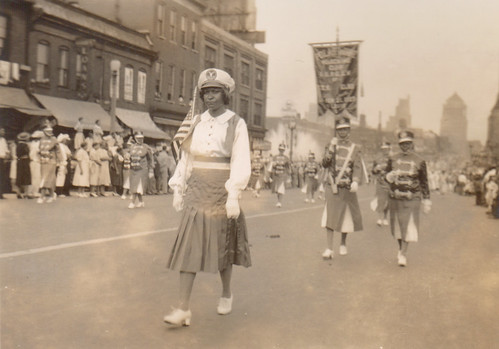
This parade shot was taken just west of Aloe Plaza near 21st and Market streets. The view is looking east toward the Civil Courts Building (at right in the background), and shows some of the Mill Creek Valley commercial district on Market Street.  The parade’s forward march follows the path of clearance that totally eradicated the African-American enclave around Union Station between 1928 and 1960.

Given the photographer’s other subjects, the date is likely after 1940.

From the Preservation Research Office Collection.

Categories
Alton, Illinois Historic Preservation

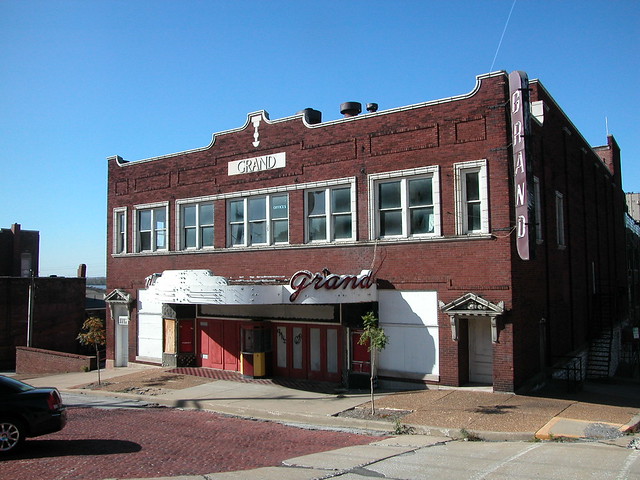
Alton City Council Reverses Grand Theater Landmark Designation

by Michael R. Allen

Yesterday, the Alton City Council voted 6-1 to overturn the city landmark designation recently conferred by the Historical Commission upon the Grand Theater. The theater, at the corner of Third and Market streets, has been owned by businessman Ed McPike since 1990. There is one tenant in a basement storefront on Third Street. McPike opposed the landmark nomination prepared by citizen Bill McKenzie.

After the Historical Commission voted 4-2 to confer designation, McPike appealed. Under Alton’s preservation ordinance, that appeal went to the City Council, which was then allowed to consider new evidence. Apparently, given yesterday’s decision, the council also has the authority to not only consider new evidence but also to impose a new standard of review.

Many concerned citizens, including McKenzie and Alton Area Landmarks Association President Terry Sharp, spoke in favor of upholding the Historical Commission’s brave decision. I spoke to clarify several points, including how — based on my St. Louis experience — landmark designation does not preclude reasonable alteration or even, if justified, demolition. In fact, the Alton Historical Commission recently granted demolition for the city’s oldest house, the Mansion House, after a devastating fire. Preservationists thought that the Mansion House could be saved, but the Historical Commission did not. Landmark designation simply ensures that the decision to demolish a historic building receives deliberation; it does not compel preservation in every case.

Alderman Mike Velloff, the lone dissenter, made the point that the level of review brought by the designation was no more arduous than what the Council would put in place for anyone seeking an official redevelopment plan. McPike’s attorney Jim Sinclair had called the landmark status a “taking” of the property.

While the Council overturned the landmark designation, the strong advocacy campaign for the Grand Theater has drawn a lot of attention to the long-vacant building. Hopefully that will lead McPike or a future owner to consider preservation.

Categories
Belleville, Illinois Demolition Fire Historic Preservation Mid-Century Modern

Opportunity Lost in Belleville

by Michael R. Allen

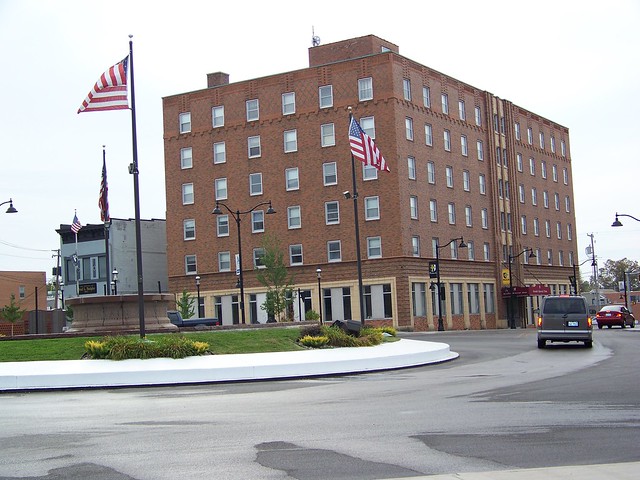
Photograph by Chad Briesacher.

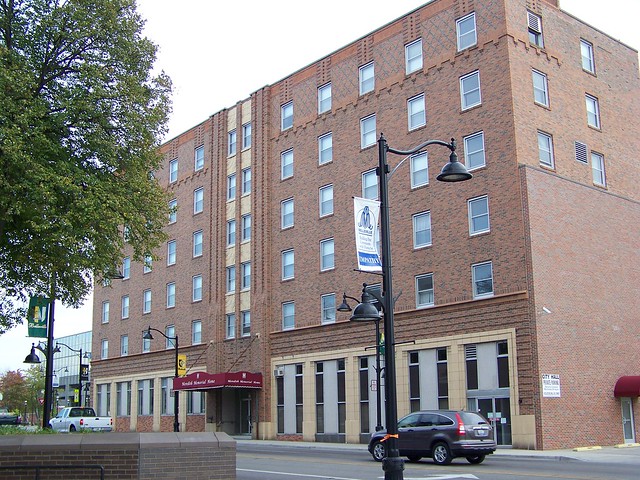
In a strange move, on October 19 the Belleville (Illinois) City Council voted 14-1 to approve a plan that would replace the former Meredith Home with a park. The Meredith Home is the six-story former Hotel Belleville at the southeast corner of Illinois and Main streets at the fountain circle. Built in 1931, the hotel has art deco stylistic elements expressed through brick and terra cotta. Between 1962 and earlier this year, the hotel served as retirement home operated by the Roman Catholic Diocese of Belleville.

How the City Council came to vote away the sales and property tax revenues the building might generate in the future is uncertain. Using a loan, the city purchased the occupied building for $487,500 in February when the Diocese placed the building for sale. The sale generated some raised eyebrows in light of how the city of Belleville has cited lack of funds as a reason for not assisting the effort to save the former Belleville Turner Hall.

Photograph by Chad Briesacher.

After discussing redevelopment with a boutique hotel developer from St. Louis, Belleville officials abruptly changed course. Suddenly, attorney Bruce Cook stepped forward with an offer to pay off the loan on the property if the old hotel were demolished and the site became a park memorial for his late daughter. The park plan — a noble purpose best suited for a site whose development would cost less — lacks funding for demolition and construction. Belleville Mayor Mark Eckert has stated that the city might help with the cost, even though it has steadfastly refused to help the citizens trying to turn the Turner Hall into an arts center.


Photograph by Chad Briesacher.

Downtown Belleville has many vacant lots and surface parking lots well suited for a small memorial park. The city could easily have helped Cook find another site, and just as easily not purchased a large building that private developers may have purchased. The city does not have another building like the Meredith Home, which has not generated revenues in nearly 40 years. Beyond the preservation issue, it is odd that the city — with its revenues strained like every city’s — would not have jumped at the chance to move a prominent downtown parcel from tax-exempt status to a taxable piece of land. Cities thrive when private initiative, not government control, is the driving force in commercial districts. Belleville has missed a big opportunity with the Meredith Home.


Photograph by Chad Briesacher.

Another Belleville opportunity that hopefully won’t be squandered is a few blocks east at the northeast corner of Main and Jackson streets. In May, a corner building and part of the slipcover-clad former Fellner’s Department Store were destroyed by fire. The taller, more stylized section of the Fellner’s building survives, to the delight of the region’s mid-century modern aficionados.  Hopefully the city of Belleville will support new urban infill on this prime corner.

Categories
Historic Boats Mid-Century Modern Riverfront

S.S. Admiral on the River in the 1940s

by Michael R. Allen


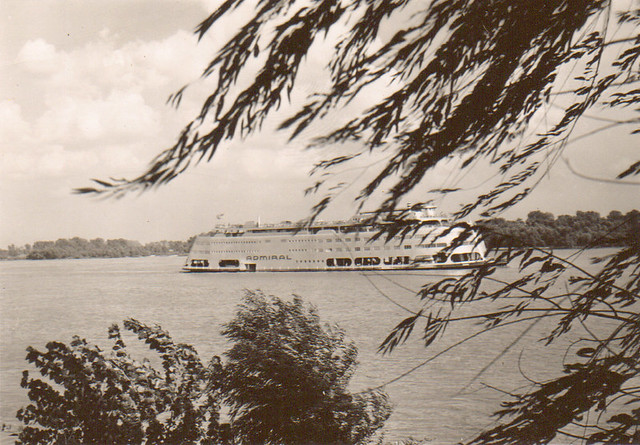
This photograph depicts the S.S. Admiral cruising the Mississippi River in the early 1940s, not long after its reconstruction.  Built first in 1907 as the S.S. Albatross, the rechristened Admiral had a capacity of 4,400 passengers and a palatial ball room on its five decks.  Streckfus Steamers commissioned fashion designer and illustrator Maizie Krebs to design the streamline, art deco-influenced superstructure.  Reconstruction cost $1 million and took place between 1938 and 1940. The Admiral has not cruised since its engines were removed in 1979.

Photograph from the Preservation Research Office Collection.

Categories
Historic Boats Mid-Century Modern Riverfront

S.S. Admiral Offered on eBay

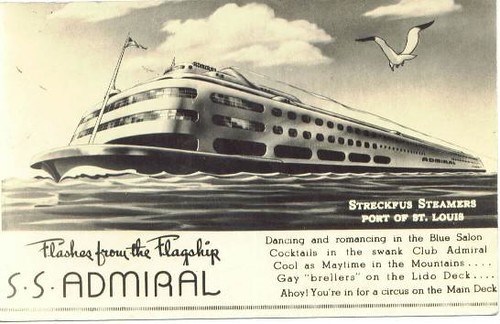
Vintage postcard view of the Admiral, which was rebuilt as an art deco entertainment palace around 1940.

The S.S. Admiral is being offered for sale via an eBay auction. The “buy it now” and starting bid price are the same: $1.5 million.  Pinnacle sold the Admiral to a new owner handling the auction, which ends November 10.

The price — which is a suggestion — seems like a bargain, but there is a catch: after the sale, the Admiral will have to be moved from its site on the St. Louis riverfront.  The new owner will have to be ready to moor the vessel somewhere else.

Categories
Missouri Public Policy

Tax Credit Commission Subcommittee Report on the Historic Tax Credit

From the Coalition for Historic Preservation and Economic Development

The report contains the Subcommittee’s recommendations to the TCRC. Per the final report, the Sub-Committee’s methodology used to come to the report conclusions were as follows:

Over the course of its meetings, the Subcommittee collected and considered a significant amount of testimony, facts, assertations, and reports from economists, national organizations, DED, members of the development community, private and public leaders and the public themselves. The Subcommittee submits this Report in part as a response to the fifteen questions posed by the Co-Chairmen of the Commission in their memorandum to the commission dated September 16, 2010. The Subcommittee has also chosen to supplement its response to the Commission’s questions with specific recommendations to the commission for proposals to modify the program.

The HTC Subcommittee’s Final Report identified seven recommendations for the Tax Credit Review Commission to consider for its final report to the Governor.

1. The Annual Cap placed on the credit in 2009 to remain in place
2. Revision to HTC Carry back/Carry forward provisions
3. Revision to Deferred Developer Fee methodology
4. Reductions of Percentage of Credit when combined with LIHTC
5. Owner Occupied Cap reduction
6. Cost Certification Review – Create more efficiencies and quicker turnaround time
7. Program Efficiencies – work to clarify DED interpretations of the law and to direct issuance fee back to support the program

The Tax Credit Review Commission will be meeting November 5th in Jefferson City, MO to review all reports from the various Tax Credit Subcommittees. Once all reports have been reviewed by the TCRC they will draft their final report about all of Missouri’s Tax Credit Programs for Governor Nixon to review.

Categories
Columbus Square Midtown National Register North St. Louis Northside Regeneration

Cass Bank, Castle Ballroom Nominated to National Register

by Michael R. Allen

On Monday, the St. Louis Preservation Board approved two National Register of Historic Places nominations of historic buildings.

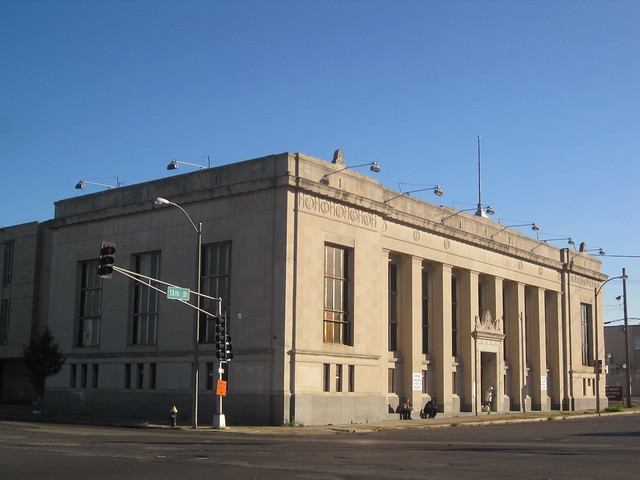
The first nomination is for the Cass Bank and Trust Company Building at 1450 N. 13th Street in the Columbus Square area. The building dates to 1927 and was designed by the prolific Bank Building and Equipment Company. In the last few years, after the departure of long-time tenant Greyhound Lines, the building has been vacant.  The neo-classical, Bedford limestone-clad building replaced the earlier Cass Avenue Bank building at 1501 Cass Avenue built in 1915 and designed by Wedmeyer & Stiegemeyer. One year after completion of the Cass Bank and Trust Company Building, the Chippewa Trust Company completed a similarly-styled two-story building at the southwest corner of Chippewa and Broadway streets also by the Bank Building and Equipment Company.

Melinda Winchester of Lafser & Associates wrote the nomination for Northside Regeneration LLC, but the building is owned by the city’s Land Reutilization Authority (LRA). The nomination states that Northside Regeneration has the building under contract.

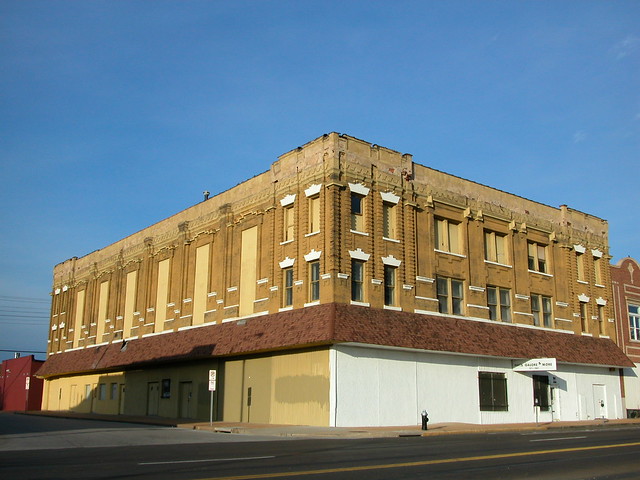
The second nomination is for the former Castle Ballroom at 2831-45 Olive Street in midtown. Prepared by PRO’s Lynn Josse, the nomination recognizes the social history of a building best known in recent years for its slather of goldenrod paint. The building was built in 1908 as Cave Hall, a dance hall that replaced popular Uhrig’s Cave when it was closed to build the Coliseum. Later it became the Castle Ballroom, which served African-Americans from the surrounding Mill Creek and Yeatman neighborhoods. When Mill Creek Valley was cleared up to the south side of Olive Street in the 1950s, the Castle Ballroom survived as one of the few remaining traces of the once-vibrant neighborhood.

As part of a Certified Local Government — a local government with a preservation ordinance certified by the State Historic Preservation Office — the board reviews National Register nominations and sends recommendations to the state Missouri Advisory Council on Historic Preservation (MOACHP). MOACHP will consider these nominations at a meeting on November 19, and forward approved nominations to the National Park Service for listing. The most extensive National Register nomination review takes place at the state level.

Categories
Historic Preservation Missouri

Missouri Preservation Honor Award Nominations Due November 11

From Missouri Preservation

Is there an exemplary preservationist in your area or a great historic project that has been completed in the past year? Do you know of a great book that has been published which promotes preservation of our built environment in Missouri? Make sure these contributions and achievements are publicly recognized by nominating them for a Preservation Honor Award.

Awards will be presented at the Capitol Rotunda in Jefferson City in March, 2011.

Past awards have recognized lifetime achievements of preservationists and projects which have run the gamut from historic filling stations to high-rise apartment buildings.

Download our nomination form by clicking here.

Categories
Historic Preservation Housing North St. Louis Old North

National Trust Honors Old North

by Michael R. Allen

In 1977, high of Model Cities euphoria, the City of St. Louis celebrated the new two-block 14th Street Mall in Old North St. Louis. Within two decades, the mall was bust and the twenty-odd buildings facing it were includes on Landmarks Association’s Most Endangered list. In 1998, the Old North St. Louis Restoration Group hosted a charrette to imagine the future of the old pedestrian mall. Some people thought the group was crazy to envision the two blocks returned to urban vitality, but they were proven wrong — over a decade later.

This Friday, the National Trust for Historic Preservation will present its National Trust/Department of Housing and Urban Development Secretary’s Award for Excellence in Historic Preservation to Old North St. Louis Restoration Group and the Regional Housing & Community Development Alliance for the reborn 14th Street area, called Crown Square Development . The project is one of 23 award winners to be honored by the National Trust next week during its 2010 National Preservation Conference in Austin, Texas.

Ah, the difference that 33 years has made is immeasurable. (The $35 million cost of physically reversing the mall’s impact on the built environment is a misleading figure that does not compensate hours of community brainstorming, vigilance and sweat equity.) The path of two blocks of a fragile near north neighborhood shows the pitfalls of urban planning trends and the power of collective action to turn around supposedly hopeless causes.
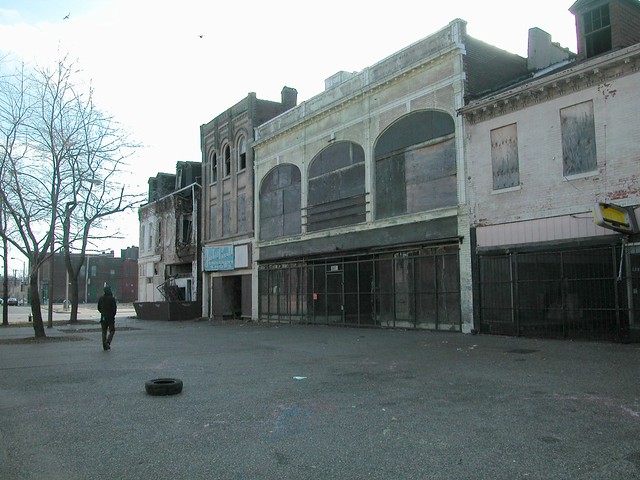
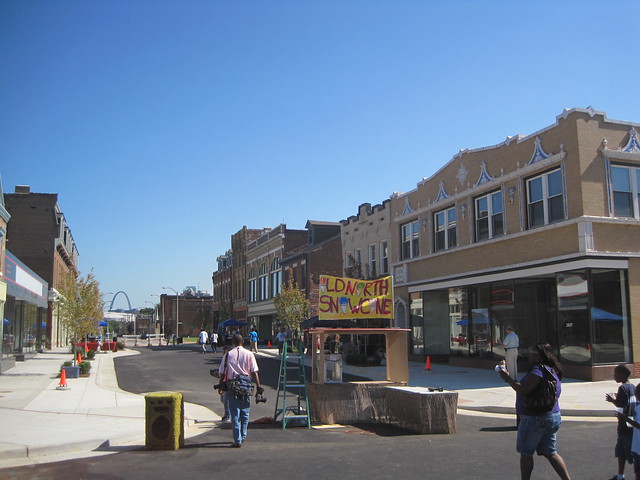
The west side of 14th Street between Montgomery and Benton Streets, December 2004 (top) and July 2010 (bottom).
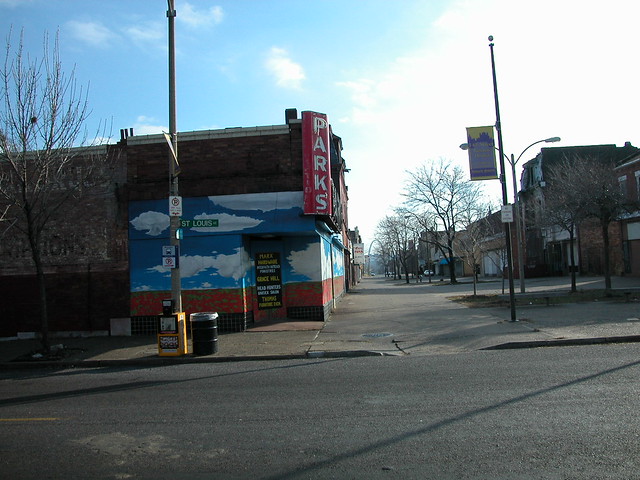
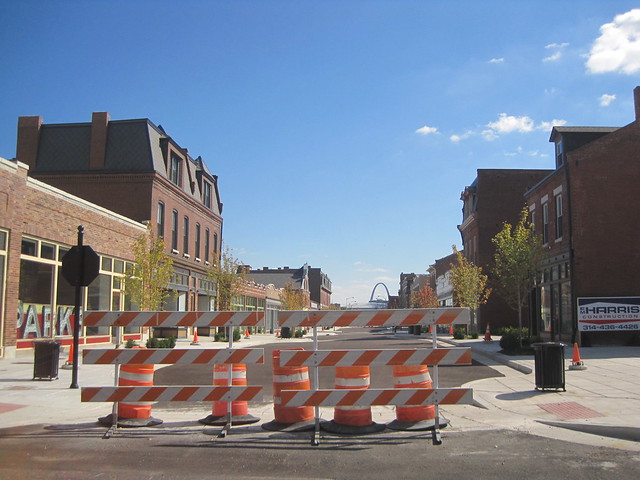
The view down 14th Street south from St. Louis Avenue in December 2004 (top) and July 2010 (bottom).
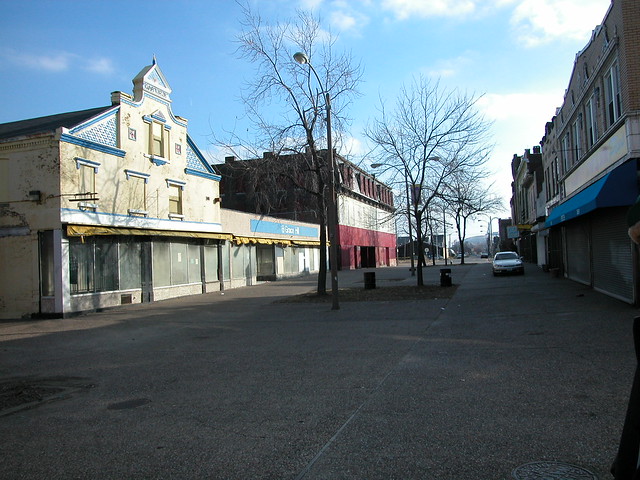
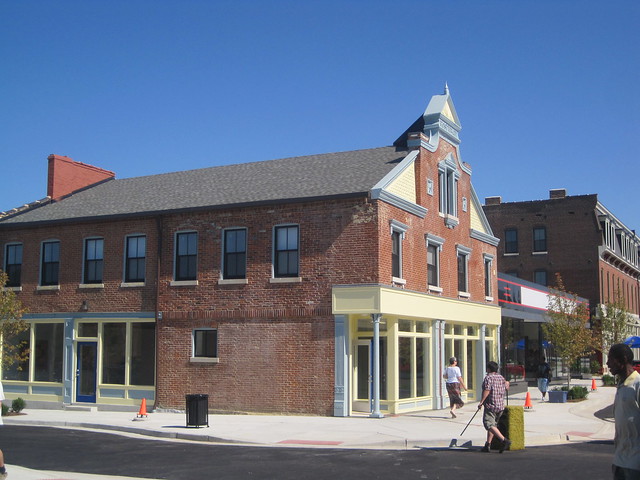
The view south down 14th Street from Montgomery Street in December 2004 (top) and July 2010 (bottom).

Some would say that bricks and mortar (and tax credits) alone don’t transform communities. In fact, I say that. The achievement with Crown Square to date is a miraculous preservation effort that safeguards historic buildings, reopens key streets, enhances the safety and appearance of Old North’s commercial center and provides new rental housing and commercial storefronts. Introducing 78 new housing units in a neighborhood can force a huge change, but toward a previous housing density that many current residents never knew. The social changes wrought by these physical transformations will be ongoing, and the outcome uncertain — but the pains mean that the neighborhood is growing once again.  For a neighborhood that had some 13,200 people sixty years ago and around 1,500 in 2000, growth is good.

For now, we can celebrate the effort of many long-time neighborhood residents who have never given up hope that two blocks of 14th Street would again be the center of neighborhood life.  This journey to restore the neighborhood commercial district began 33 years ago with a much different plan.  As impressive as the undoing of that plan is to see, even more impressive are the people who did not let the intervening years of abandonment deter their dreams and deeds.