Categories
Planning St. Louis Board of Aldermen

Mayor’s Budget Suggestions Include Planning Cut

by Michael R. Allen

On January 18, Mayor Francis Slay released a list of budget changes he is suggesting to the St. Louis Board of Aldermen to address this year’s shortfall. Neither any alderman or Comptroller Darlene Green released any ideas ahead of the mayor, and none has released any since. Hopefully, we won’t just see a round of orders from the mayor’s menu — take this, leave that. After all, we are not discussing mere numbers but actual functions of government. The budget debate is as much about public service priorities as it is about money.

Readers of this blog will be most interested in the suggestion that the city eliminate the $130,000 annual payment from general revenue to the city’s Planning and Urban Design Agency. According to the mayor’s proposal, eliminating that subsidy will remove two full-time positions from the agency. One of those might be the Preservation Planner position in the Cultural Resources Office created by the Board of Aldermen in 2007. The Planning and Urban Design Agency has not even had a permanent director since Rollin Stanley’s departure in December 2007.

If we actually wanted a strong, pro-active planning agency, we would need more than the current staff level. Cutting two positions to save money is a step in the wrong direction, and the savings realized minuscule. Scratch that one off the list.

Categories
Benton Park Events South St. Louis

Chatillon-DeMenil House Trivia Night, February 13th

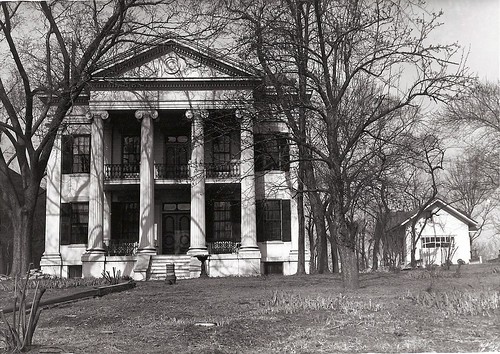
Undated photograph of the Chatillon-DeMenil House by Dr. William G. Swekosky, from the collection of Landmarks Association of St. Louis.

The October 1966 issue of the Landmarks Letter, newsletter of preservation group Landmarks Association of St. Louis, reports on notice of the newly-restored Chatillon-DeMenil House in the Chicago Tribune. The Tribune‘s feature article on St. Louis “glowingly described the Chatillon-DeMenil House.” Furthermore, “[t]hree recent out-of-town visitors to the house said they came to St. Louis to see it after reading the newspaper story.” Over forty years later, the Chatillon-DeMenil House continues to attract visitors from around the nation (although the house is closed for January).

Interior view of the Chatillon-DeMenil House in 1962 prior to restoration, from the collection of Landmarks Association of St. Louis.

St. Louis is very fortunate that the Chatillon-DeMenil House was spared from the path of I-55 through purchase by Landmarks Association of St. Louis (via a gift from Union Electric Company), and that the foundation that assumed ownership afterward has operated the house as a museum for over four decades. Thousands of people have been able to set foot in a fully restored 19th century Greek Revival mansion through tours and interesting programs. We could very well have had greater numbers hurtling over the site at 65 miles per hour if not for the swift, smart work of St. Louis’ early preservation leaders. We all should support the less dramatic stewardship that allows the house to remain an active part of St. Louis’ public life.

That is a roundabout prelude to announcing that the Chatillon-DeMenil House is having a trivia night fundraiser next month:

Trivia Night to Benefit the Chatillon-DeMenil House Foundation

Date: Saturday, February 13, 2010
Time: 6:30pm – 9:30pm
Location: St. Wenceslaus Parish Hall, 3014 Oregon Ave

Everyone’s an expert on something, and a little bit of everything (and anything) can be expected at our first trivia night. 80s TV shows? Come on down. St. Louis history? That could be useful too. Who knows?

Cost is $20 per person, 8 people to a table. Beer and soda provided. Come alone, come with 1 or 2 friends, come with a bunch of friends, just come! Don’t think you have to fill a table to attend!

Doors open at 6:30pm, trivia starts at 7 p.m. All proceeds from this event go to the historic Chatillon-DeMenil House. For more information or to make your reservation, please call Jim Hubbard at 314-578-0798.

Categories
Agriculture Historic Preservation Missouri

Missouri Rural Preservation Organization Launched

by Michael R. Allen

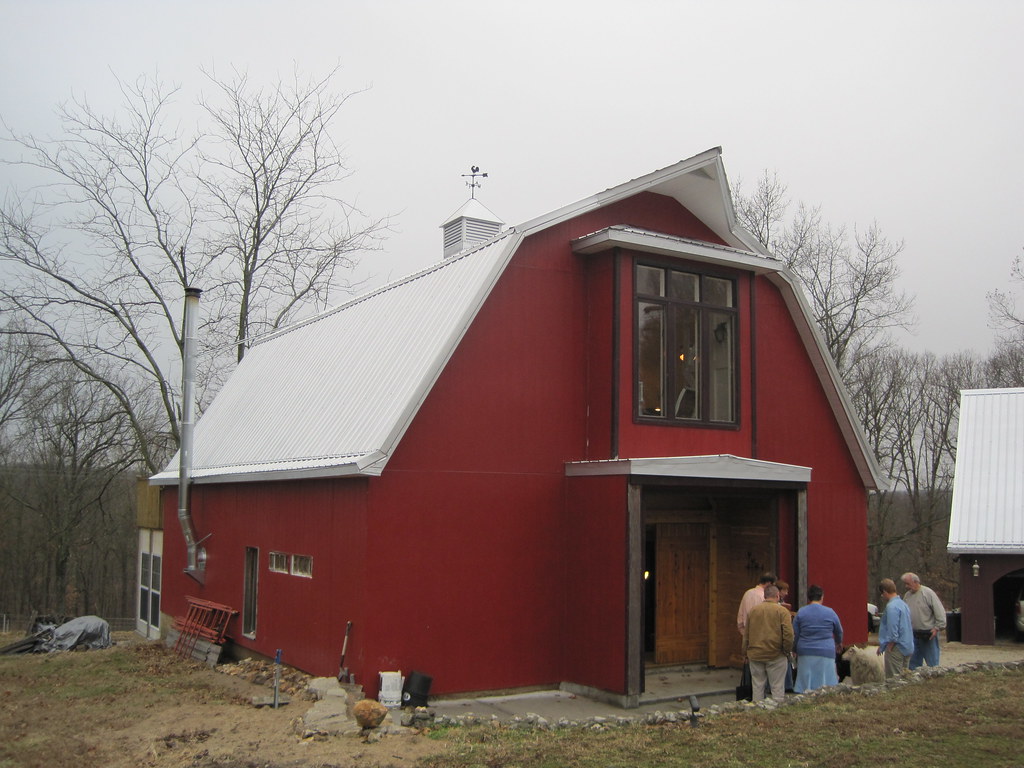
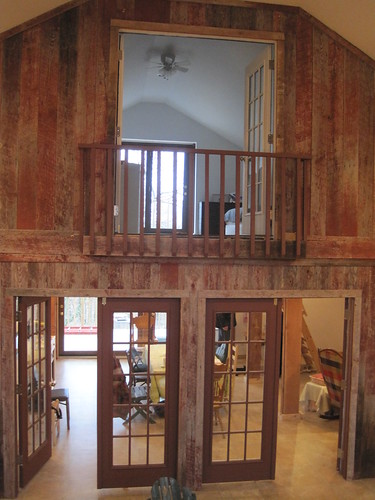
On Saturday, January 23, a group of barn owners, architectural historians and craftspeople met near New Bloomfield, Missouri, to discuss creating a new statewide preservation group focused on rural structures. Bill Hart, Field Representative for Missouri Preservation, called the meeting. Bill and Susan Miller graciously hosted the meeting at their home, a bright red barn that they have converted into a unique home. The group had the honor of the wise counsel of Osmund Overby, the dean of Missouri’s preservation movement, and farmer and humorist Lewis Baumgartner, the “World’s Worst Farmer.”

Meeting participants decided to launch a new organization, the Missouri Barn Alliance and Rural Network. Preliminary goals include a statewide survey of barns and farms, educational programs and development of a resource clearinghouse for owners of rural structures in need of technical assistance and skilled contractors.

The group will meet again in early May. Those wishing to participate should send an e-mail to Bill Hart at billhartxx@aol.com. Additionally, Bill will be discussing the new organization and its goals at a brown bag lunch talk at Architecture St. Louis, 911 Washington #170, starting at noon on Friday, March 12th.

Categories
Adaptive Reuse Mid-Century Modern South St. Louis

Bravo to SLU for Casa de Salud

by Michael R. Allen

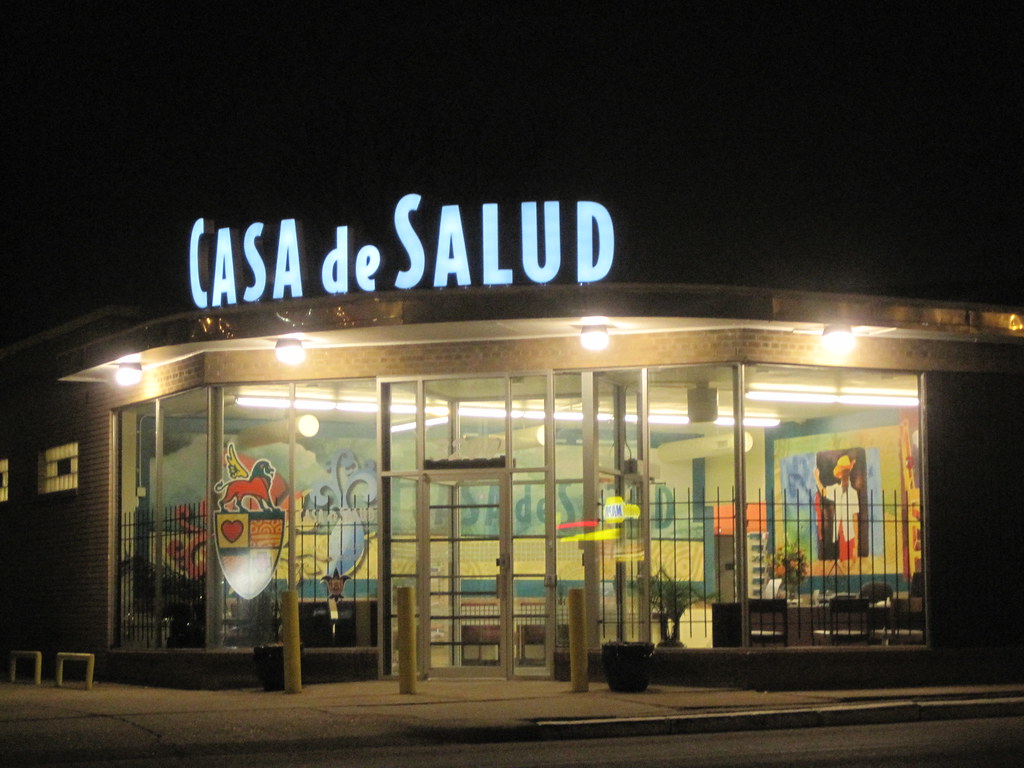
Late last year, St. Louis University opened the Casa de Salud (House of Health, more or less), a clinic aimed at the city’s Latino population. The university made a smart move, choosing to house the clinic in a modest former auto parts building at the southwest corner of Compton and Chouteau. The building dates to the 1950s and is quintessentially modern. SLU’s renovation was basic, and left all of the mid-century features intact. The new sign is stylistically appropriate and provides some night time interest to a fairly dormant intersection. The old aluminum storefront system’s ample windows open the building up to the sidewalk, and at night provide a bright, colorful view. SLU took an existing building, retained and enhanced its architectural features and converted it to a new use. Bravo!

Categories
St. Louis County

Big Plans for Jefferson Barracks

by Michael R. Allen

Friday’s South County Times carried the article “Plans In Place To Transform Jefferson Barracks Complex Into A National Tourist Destination”. The article reports that the St. Louis County Economic Council has developed a master plan for $68 million in improvements, including an interpretive center and a “presidential museum/library”:

According to the master plan, the complex would be transformed into a regional and national visitor attraction, done so in phases over the course of 20 years.

Jefferson Barracks is indeed an underutilized cultural asset to the region. Many other places have promoted military history, a substantial sector of American tourism. It’s about time that the county thought seriously about Jefferson Barracks. Still, it’s important to note that there are existing efforts to draw visitors to the historic barracks. For instance, the Missouri Civil War Museum has been feverishly working on renovating a building and is set to open soon.

There is a presentation on the master plan today:

The St. Louis County Economic Council will hold open house to unveil the master plan on Monday, Jan. 25, 4 to 7 p.m. at the Jefferson Barracks Visitor’s Center. A presentation will be held at 6 p.m. Jefferson Barracks County Park is located at the end of South Broadway.

Categories
Historic Preservation Public Policy

Federal Historic Preservation Fund Effort Continues

by Michael R. Allen

Efforts to secure Congressional passage of a fully funded Historic Preservation Fund have changed direction (see “More Federal Money for Historic Preservation Exists, Needs to be Appropriated”). Now that it is clear that the majority Democratic Party will not support full funding, the Coalition for Full Permanent Funding of the Historic Preservation Fund is pushing for annual allocation of the $50 million that Congress has appropriated to the fund since its creation.

Please contact your Congressperson today to state your support for full funding and urge as a minimum support for the same allocation level as last year.

Despite the impossibility, on January 22 the Coalition announced that the Coalition for Full Funding now has 111 members from 42 States and the District of Columbia. These preservation-related organizations and businesses are endorsing full funding. Perhaps in the future the Democratic majority will embrace funding the Historic Preservation Fund to the level authorized by the Reagan administration in 1982. The administration of President Barack Obama, who is a champion of public policy that encourages sustainability, would be the best time for full funding.

Categories
Media People

Untitled Saint Louis Brick Film

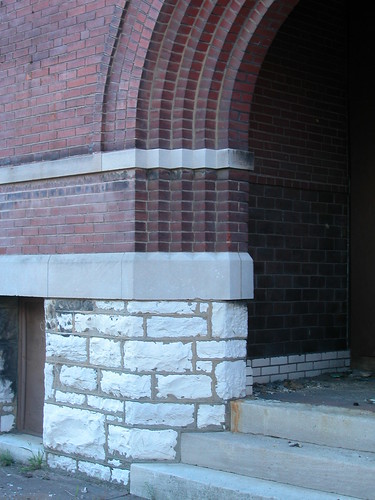
Detail of entrance to the Mullanphy Tenement, 2118 Mullanphy Street in St. Louis Place.

Bill Streeter, the video genius behind Lo-Fi St. Louis, is working on a documentary about St. Louis brick known for now as the “Untitled Saint Louis Brick Film”. The documentary is funded by the Commission for Access and Local Original Programming (CALOP), local funder of many worthwhile projects. According to the production notes blog, the crew includes Bill Streeter (Director/Producer/Editor), Jeannette Hoss (Managing Producer), Virginia Lee Hunter (Director of Photography) and Greer Lange (Assistant Editor).

Categories
Downtown Mid-Century Modern St. Louis County

"Up in the Air": A Shining Moment for St. Louis’ Modern Architecture

by Michael R. Allen

Finally seeing Up in the Air this week, I was able to relish a great moment for St. Louis modern architecture. Readers know that much of the film was shot in St. Louis, and the film rolls out familiar scenes: a street in Lafayette Square, Flora Place, the Cheshire Inn, the Gateway One building downtown, Mansion House and the interior of the General American Life Insurance Building are all spotted. Fans of local postmodern design no doubt took comfort in the fact that our downtown landmarks of the 1980s are so generic that they can double for Omaha’s. That placelessness is a triumph for the style, at least by Fredric Jameson’s measure.

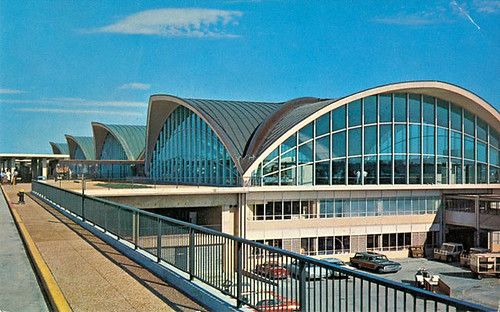
However, the actual shining moment for St. Louis was the prominent feature of the main terminal at Lambert International Airport (shown above unsullied in 1970). Lots of the film takes place inside of the airport — again, the triumph of place-erasing architecture — but there is a splendid moment in front. George Clooney’s character Ryan Bingham has to get a snapshot of a cut-out of his sister and her fiancee in St. Louis for a display board of such photos at their rehearsal dinner. Bingham selects Lambert Airport, a choice questioned by his colleague Natalie Keener (Anna Kendrick).

The doubt pulls from Bingham a soliloquy about the role of the Lambert terminal in the development of modern airport architecture. Of course the soon-to-be newlyweds would want their cut-out photographed in front of the Lambert terminal. After all, this is the first modern terminal that set the standard before JFK or DeGaulle were designed. Despite the clutter we have tacked onto Hellmuth, Yamasaki & Leinweber’s 1956 terminal, it looks great in this scene. The terminal’s modernity shines through, and provokes one of several moment in which Bingham seems to break from his detachment to show love.

Bingham basically reiterates the words of critic Robert W. Duffy, who wrote a few years back that the Lambert terminal was “the first airport building to make a formal statement about aviation and aerodynamics.” The thin-cast concrete shell demonstrated that architecture could respond to the curves and contours of industrial design in an original expression.

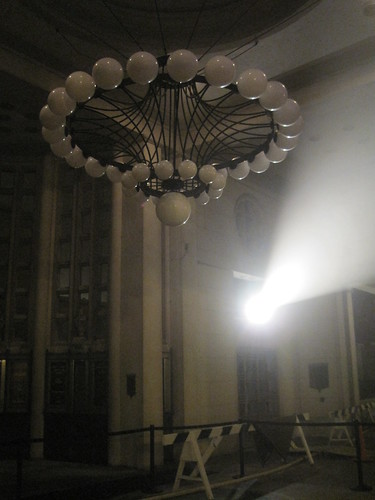
Coincidentally, St. Louis’ other great modernist temple of travel also had a moment of film fame. Schwarz and Van Hoefen’s Greyhound Terminal (1964) on Broadway (interior seen here), demolished for the domed stadium we seem posed to soon demolish, was used in Planes, Trains and Automobiles. John Hughes chose to shoot the interior scene elsewhere, but the exterior was projected onto thousands of screens around the nation.

To some, the idea that St. Louis and modern jet-set travel — of which I make no claim that Greyhound is a part — are intertwined would seem foolish. Yet how did a supposedly complacent region embrace and build one of the landmarks of postwar international travel, and a bus station finer than almost any other ever built? We had great designers whose wellspring of innovation was too great to be harnessed by innate local conservatism. That conservatism was as strong in 1956 as it is in 2009, too, so we don’t get to cop out and rest on our cynicism. If a place-loathing cynic like Ryan Bingham can show some love for St. Louis’ modern architecture, why can’t we?

Categories
Downtown Green Space I-70 Removal JNEM

Looking at the Original Plan for the Jefferson National Expansion Memorial

by Michael R. Allen

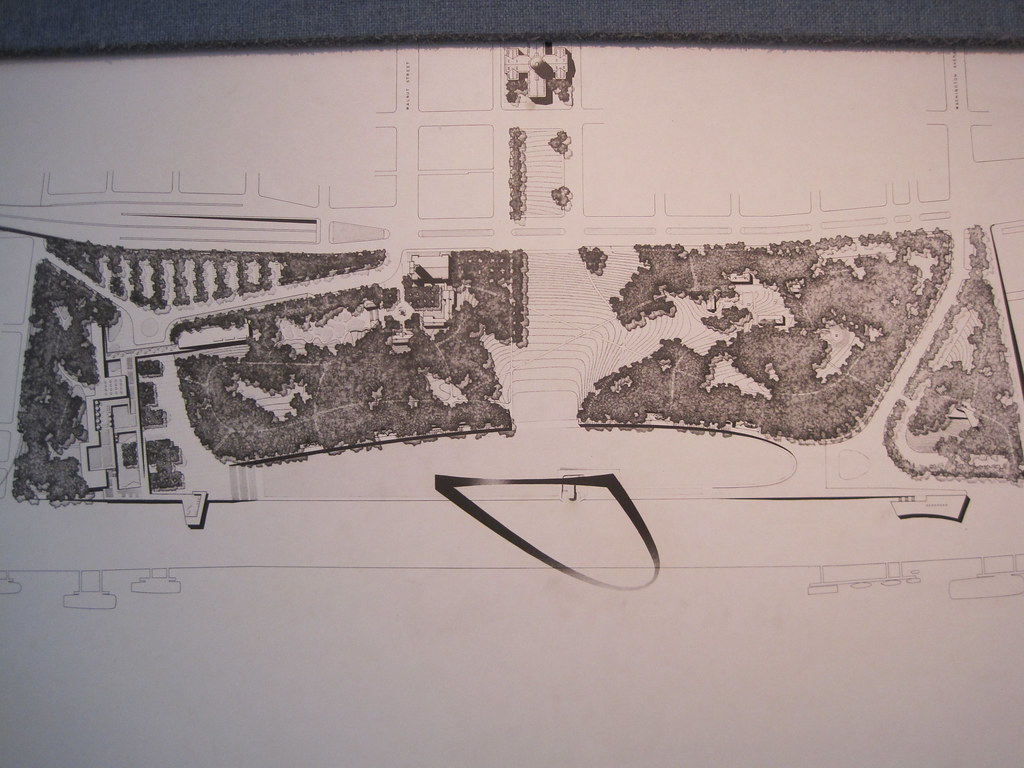
This snapshot from the Old Courthouse exhibit on the original Jefferson National Expansion Memorial design competition shows the winning site plan submitted by architect Eero Saarinen and landscape architect Dan Kiley in 1948. Below is an illustrated version of that plan.
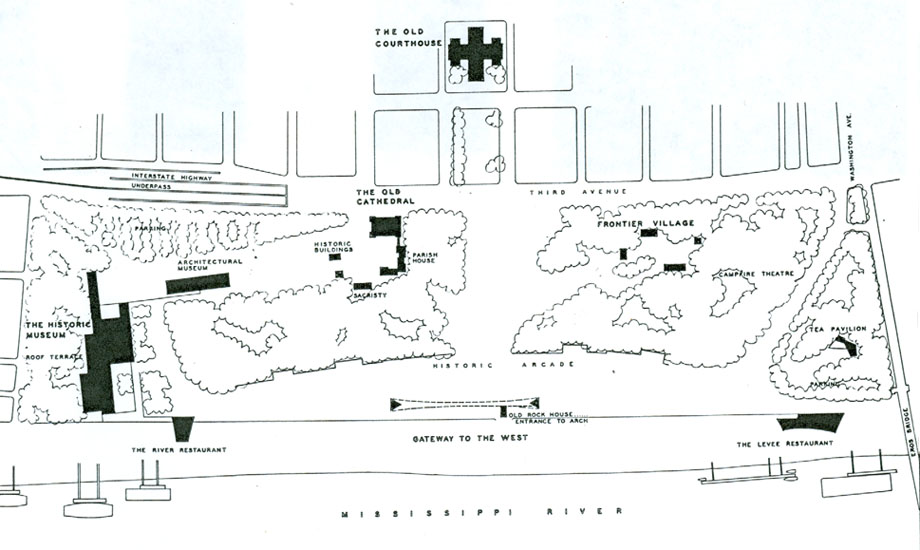
This site plan was not built due to programmatic changes by the architects and the National Park Service (NPS). Obstacles that forced site changes included the agreement between NPS and the Terminal Railroad Association to retain the railroad tracks through the site and the need to elevate I-70 over the tunnel at the Eads Bridge. The original design placed the Arch closer to the river in anticipation of railroad removal, and placed the interstate in a tunnel (shown at top) with a Third Avenue at grade above not unlike the one envisioned by advocates today.

Other changes from the original plan:

Kiley reoriented the layout of the Memorial for a nearly symmetrical plan.

The Campfire Theater was a programmatic requirement of all national parks when the competition was held, but dropped before completion of the Memorial.

Restaurants perched over the riverfront were never built due to the railroad issue. The tunnel required high flood walls that changed the east end of the site that was originally supposed to slope down to meet the levee.

The designers and NPS abandoned plans for an architectural museum on the grounds and placed the “Historic Museum” under ground (the Museum of Westward Expansion).

The designers and NPS abandoned plans for a “frontier village” of reconstructed French Colonial buildings in the northwest part of the site, as well as a group of such buildings around the Old Cathedral.

Entrance to the Arch trams would have been through the reconstructed Old Rock House, shown here between the Arch legs.

The park would have extended all of the way north to the Eads Bridge.

The final landscape work at the Memorial took place in 1982, nearly forty years after the selection of the plan by Saarinen and Kiley. Congressional funding delays are largely responsible for the slow implementation. The Gateway Arch was completed in 1965, after Saarinen’s death. This slow pace of development of one of the nation’s grandest integrated works of modern landscape and architecture no doubt was frustrating, but the result was worth the wait.

Preservation of the relatively young landscape is integral to the current design competition. Still, some of the early ideas of Saarinen and Kiley may be worth contemplation by designers in the current competition. Part of the Memorial enjoys the protection of the nation’s highest level of historic designation, that of the National Historic Landmark. The rest does not. That is not an invitation to alter the landscape, but a potential window for sensitive changes.

Any changes made will be interpretive, and interpreting what is authentic about the landscape is a huge challenge. Architects by nature wish to transform places, and that inclination must be tempered by understanding of Saarinen and Kiley’s plan and its evolution. That’s why the competition requires teams to include someone who understands federal preservation laws — laws that are not prohibitions on change but guiding restrictions.

Certainly, there are two parts of the Memorial that developed due to utilitarian need rather than architectural inspiration — the north and south nodes, where the hulking parking garage and the south maintenance building stand. The maintenance building and the parking garage should be moved off of the grounds, and those sites thrown open to new purposes. Many of us advised Senator John Danforth that should he wish to build a museum at either site, he would have faced little serious opposition. In fact, the south end was where Saarinen and Kiley placed their main museum building in the first plan. Removal of the garage would allow for another intriguing change — removal of the too-wide and underused extension of Washington Avenue on the north side of the Memorial.

Many of the needed changes that sponsors of the design competition seek — better connections, stronger link to river and programmatic venues that attract visitors — are in the original plan. Saarinen and Kiley’s original plan would have made moot any future design competition focused on activation and connectivity.

The inclusion of an architectural museum was prescient, given today’s St. Louis Building Arts Foundation effort. Retention of some sense of the historic riverfront buildings is in keeping with later preservation philosophy that holds that total destruction is never desirable, even in large-scale renewal. Most of all, the designers blended the landscape into the city by bridging the interstate and drawing the Memorial straight into the north riverfront we now call Laclede’s Landing. Eero Saarinen and Dan Kiley left a blueprint for a connected, active Memorial that the current design competition may realize. That blueprint was bestowed with genius and care for the site’s designed beauty. Before designers attempt to rise to that level of genius, they should take a look at the original winning entry.

Categories
Forest Park

Magic City

by Michael R. Allen

The translucent nature of all light that could penetrate the fog that descended over St. Louis last night illuminated one thousand dreams. The city’s landscape this year has been flooded with rain and buried under powdery snow, but the swift, balmy fog last night was the first weather of the year that truly made the city surreal. Here are a few images from Forest Park.