Categories
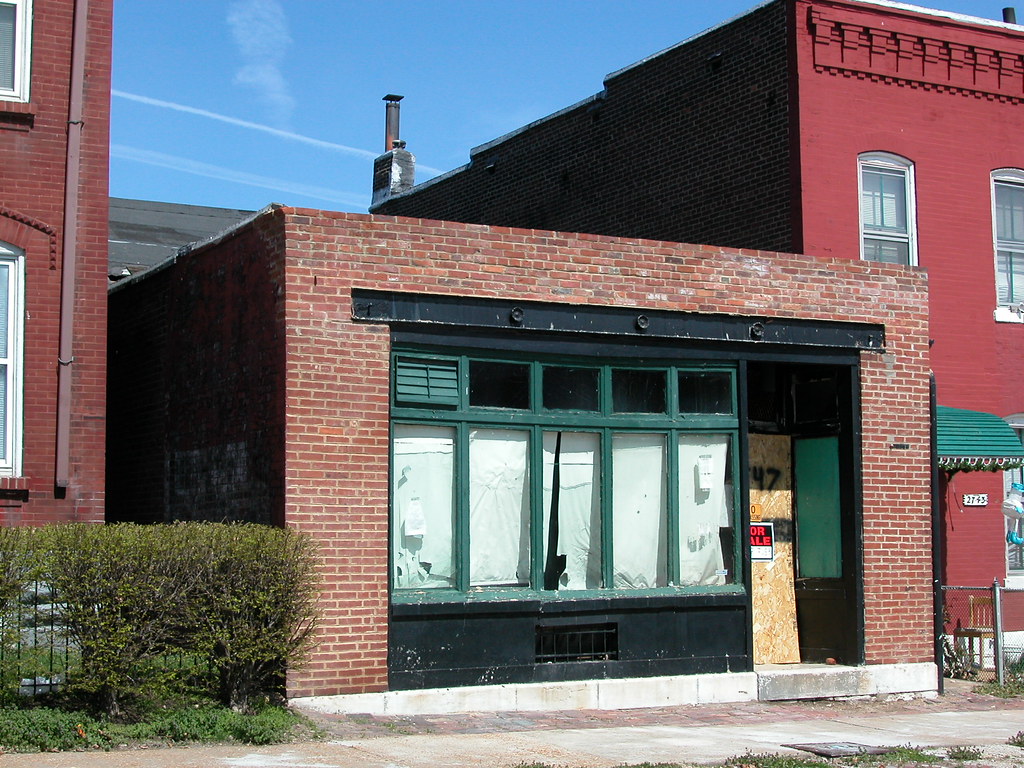
South St. Louis Storefront Addition

Storefront Addition: "Plumber"

by Michael R. Allen

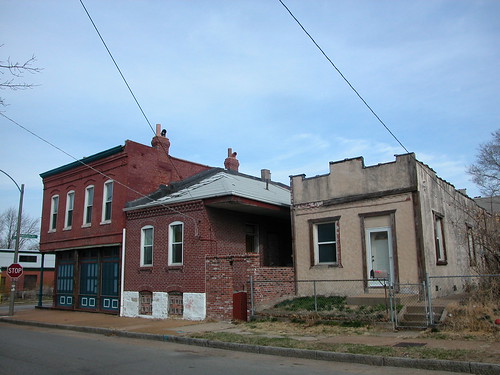
The storefront at 3747 Arsenal Street in Benton Park West is an addition to a small, two-room side-gabled brick house built in 1880. The 1903 Sanborn fire insurance map shows the storefront addition marked “plumber.” The storefront here is free of major changes, with its glazing in a historic (although not likely to be original) configuration. The building is now for sale.

Categories
Historic Preservation South St. Louis Southampton Tower Grove East

Saving a Sense of the City

If you haven’t seen it yet, last week’s South City Journal feature “Saving a sense of the city” offers an overview of endangered south city buildings, ranging from the Avalon Theater to the smokestack at the Carondelet Coke plant. Sean Clubb assembled the story and Erica Burrus photographed the sites.

Categories
Historic Preservation Hyde Park LRA North St. Louis

A Race With Gravity

by Michael R. Allen

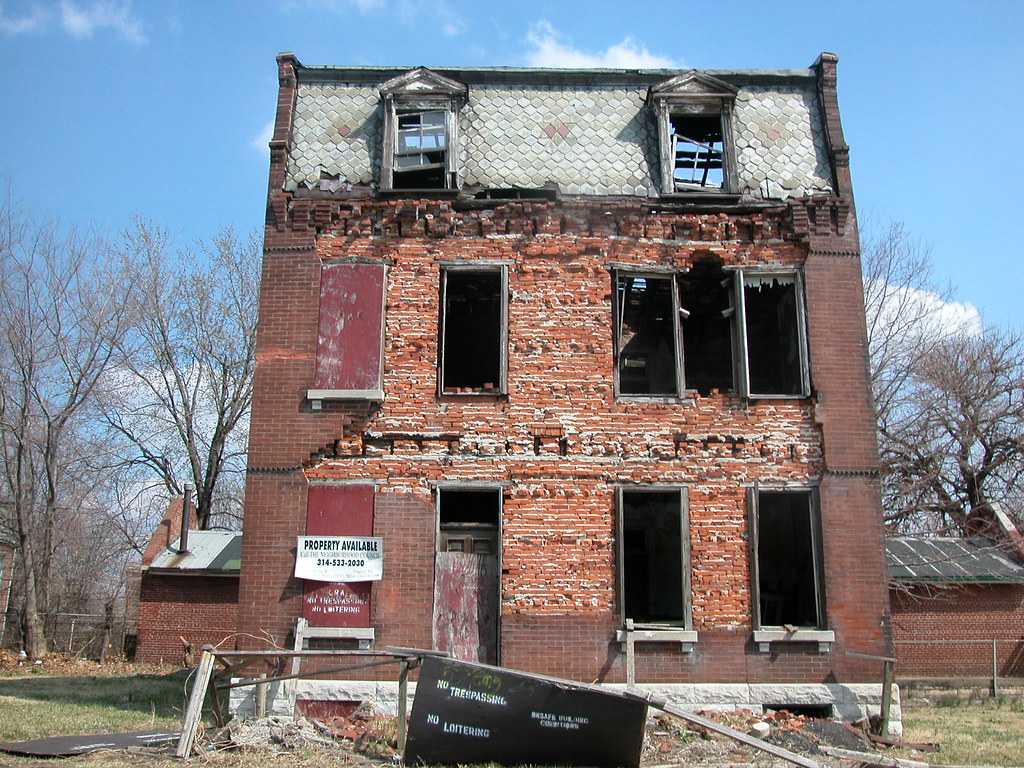
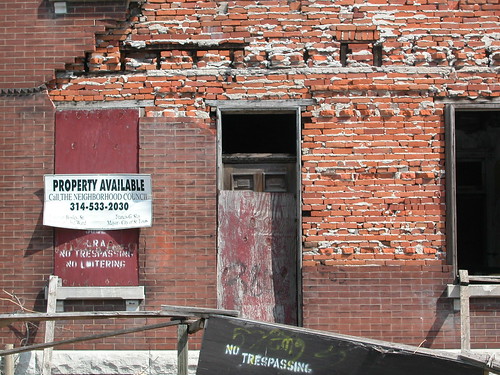
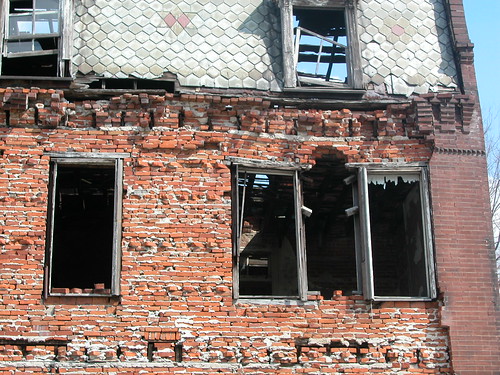
No building better captures the sense of nonchalant destruction that permeates Hyde Park than the house at 3802 Blair Avenue. Sitting alone after the deaths of its neighbors over the last thirty years, the building has put on a long, slow architectural striptease. First, its cornice started spalling. Bricks fell. Then, its front wall unzipped to reveal the stuffer brick behind the face brick. Then, off with most of the face brick. Last year, the Forestry Division came and cut down all of the ghetto palms in front to give us a nice clear view of the front wall. Now, the stuffer brick is starting to fall back into the house to reveal even more.

Not exactly sexy stuff.

The house is owned by the city’s Land Reutilization Authority and has been vacant for a generation. The brick loss started about a decade ago, and is reaching a finale. Why no one thought to stabilize or even demolish the house is a mystery. A wistful for-sale sign put up by the Neighborhood Council even hangs on the building. Then again, in Hyde Park, decline is nothing out of the ordinary.

Interesting that the side walls are intact and the building is relatively sound. Someone could even rebuild the front wall, although I doubt that simply relaying the face brick is possible at this point. The Neighborhood Council deserves credit for recognizing that the face brick loss was more cosmetic damage and that rehabilitation was not impossible. Some key details are still intact, like the mansard roof and dormers. There’s no push to demolish the house — just time to watch more pieces come off of the house. The house is well-paced in its race with gravity. There seems to always be more time for a vacant brick building to collapse — and always time to come to the rescue.

Categories
Historic Preservation Missouri Missouri Legislature Public Policy

Small Town Missouri Needs the Historic Tax Credit

by Michael R. Allen

The last time that I drove back from Jefferson City on Highway 94, I snapped this photograph of a historic store building in Tebbetts, Missouri. Who wants to be that this building will still be standing in ten years if Missouri greatly caps the state historic rehabilitation tax credit?

The real reason that Missouri senators should oppose the cap on historic tax credits proposed by Senator Brad Lager (R) is not because St. Louis’ “tall hogs” are hungry. The reason is because small towns across this state have only started figuring out how to use the tax credit to save their heritage and bring economic development to Main Street. In the past five years there has been a spate of tax credit activity outside of St. Louis and Kansas City. It’s not nearly as much as the activity in those big cities, but it will never grow if the credit is capped.

If the credit is capped, and the credit run through an appropriations process, issuance of the credit will become a political process. Currently, all one needs is a completed project and the right forms filled out — do the work, get the credit. A cap and appropriation will benefit the big developers who can afford to gain influence and work at getting credits full time. The Lager cap would end up benefiting those who are already good at using the credit (big cities) and stunt the growth of tax credit activity in small towns across Missouri.

I am a St. Louisan who knows this building in Tebbetts needs the historic tax credit just as much as the Mullanphy Emigrant Home, or houses in Benton Park. We can’t write off the rest of the state. Ironically, Lager’s proposal might do just that. Rural areas are always at a disadvantage when it comes to economic development. The historic tax credit is the antidote, and with time and training — would Lager support a state-funded tax credit training program? — the small towns will use this credit to remake themselves. All of the Lager changes work against small towns trying to survive, and play right into the hands of politically-connected developers.

Categories
Benton Park Collapse Flounder House South St. Louis

Benton Park Flounder Needs Repair After Collapse

by Michael R. Allen

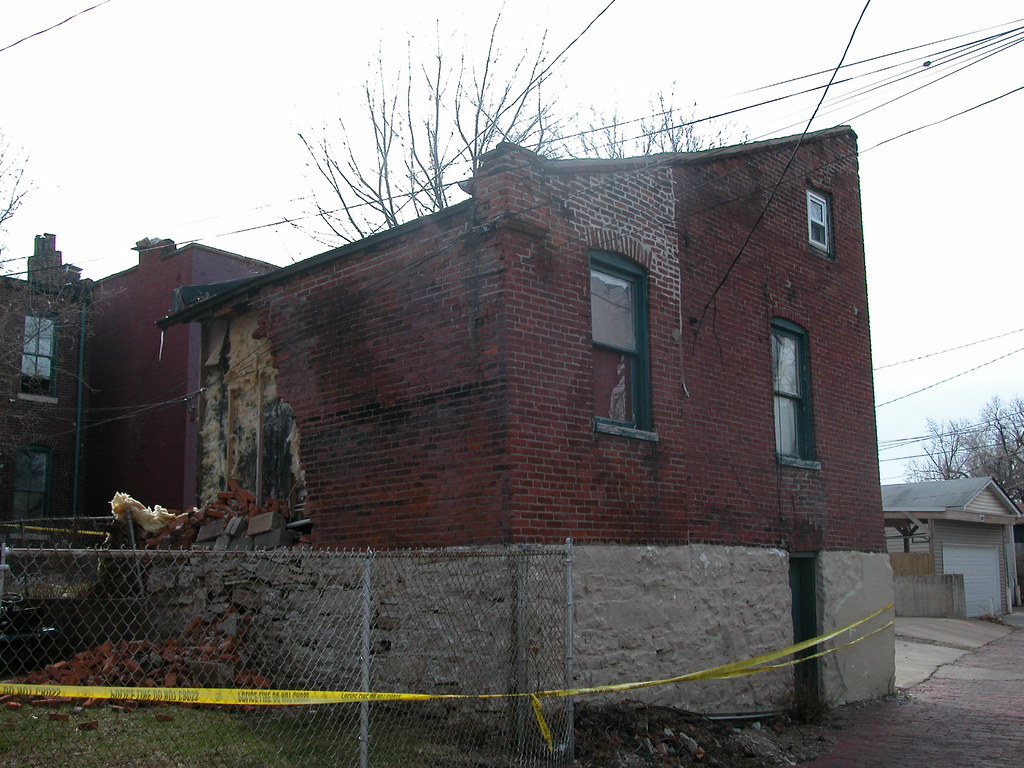
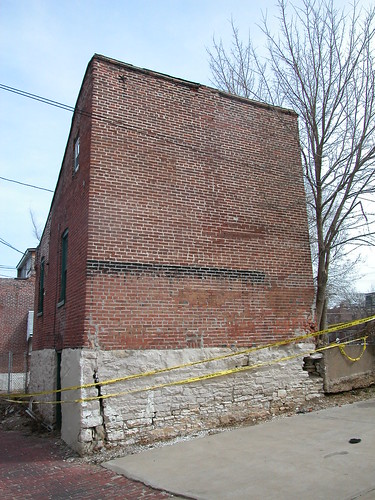
Earlier this month, the flounder house at 2809 McNair (Rear) in Benton Park endured a collapse of part of one of its side walls as well as part of a its front (east) wall. The damage is severe, but the condition is not beyond the reach of some temporary telescoping jacks. In fact, the side wall that bears the roof weight is studded out, so there is a wall in place holding that weight for now. Of course, that wall is made of new soft pine and is not a long-term guarantee of survival. The building needs the corner relayed. No big deal!

As the photograph shows, the flounder consists of an original one-and-a-half story section and an addition at the low end of the roof. Building permits date the original house to 1884, and the addition to before 1900. the house has been vacant for the past five years, with some deterioration and structural problems.

The south side of the buidling has prominent stress cracks, but shows no imminent danger. If the owner doesn’t have fund to repair the collapse, he could remove the addition and restore the original flounder house, which probably had a gallery porch in the spot wher ethe addition now stands. There are always so many solutions that are not total demolition. Will our Buidling Division urge one of these other solutions this time?

A short walk down the alley and back onto Lynch Street, one finds an intact and lived-in flounder house. This flounder has a front-hipped roof instead of the severe side slope seen on others. The group of buildings in which it plays a part is a great example of how diverse forms, styles, materials and setbacks can create a unique urban street face.

Categories
Missouri Legislature Public Policy

Senator Lager Introduces $75 Million Cap on Missouri Historic Rehab Tax Credit

by Michael R. Allen

At around 4:30 p.m., Senator Brad Lager (R) introduced a substitute to SB 45 that would cap the Missouri historic rehab tax credit at $75 million. Floor debate is proceeding with Senators Jeff Smith and Rita Days on the floor now speaking about the success of the program.

UPDATE at 5:50 p.m.: The Senate has moved on to the education bill. The majority pulled SB 45 from further consideration.

Listen to floor debate here here.

Categories
DALATC Missouri Legislature Public Policy

Anti-Historic Tax Credit Gang Lacking Consistent Records

by Michael R. Allen

Here’s what some Missouri state senators are saying about the successful state historic rehabilitation tax credit that they are trying to destroy (the Senate will take up one proposal today):

“Tall hogs don’t like to move off the trough. This process will move the tall hogs off the trough.” –Senator Matt Bartle (R) quoted in the Columbia Tribune (March 12, 2009)

“Why is it that tax credits only benefit big businesses when most Missourians work for small businesses?” –Senator Jason Crowell (R) quoted in the Kansas City Star (March 24, 2009)

Do they think we have short memories in Missouri?

The economic development bill (SB1) passed during the special session of the Missouri General Assembly in August 2007 contained many provisions. One of the most publicized new tax credit programs created by that bill was the Distressed Areas Land Assemblage Tax Credit (DALATC), a $95 million program with annual appropriations of no more than $12.5 million. DALATC is available to developers in economically depressed areas of the state who are assembling projects of more than 75 acres — i.e., big developers. The credit can be issued before development has started, and in fact contains few provisions to guarantee development would occur. The DALATC idea isn’t bad but the version that passed is weak public policy.

Senator Frank Barnitz (D) proposed an amendment to eliminate DALATC from HB1, and his amendment failed 8-25. Those supporting the amendment were Senators Barnitz, Maida Coleman (D), Joan Bray (D), Wes Shoemeyer (D), Chuck Purgason (R), Brad Lager (R), Matt Bartle (R) and Yvonne Wilson (D). All other Senators voted to retain the new program with an annual cost to the state of at least $12.5 million and provisions that all but state that the program would only benefit the city of St. Louis.

Among those who voted against removing this section were Senator Luann Ridgeway (R) and Sen. Jason Crowell (R), who are leading the current charge against the state historic rehabilitation tax credit along with their more consistent colleagues Lager, Bartle and Purgason. When Ridgeway and Crowell lecture us on the historic tax credit costing too much, benefiting the big cities and not producing enough economic return they aren’t explaining why less than two years ago they voted to create a new development tax credit with no guarantee for job creation that probably will be used exclusively in St. Louis and Kansas City.

When the final vote on HB 1 was taken, Bartle was the only member of the current gang pushing to cut the state historic rehab tax credit who voted “nay.” A lot of “tall hogs” were served up a big meal by HB 1, and Crowell, Purgason, Crowell, Ridgeway and Lager helped feed them. These senators voted in favor of a bill that dramatically increased the cost of tax credit programs to the state. Now they want us to forget that?

Categories
Collapse Fire Historic Preservation South St. Louis

Unknown Buyer of Pevely Dairy Complex May Back Off

by Michael R. Allen


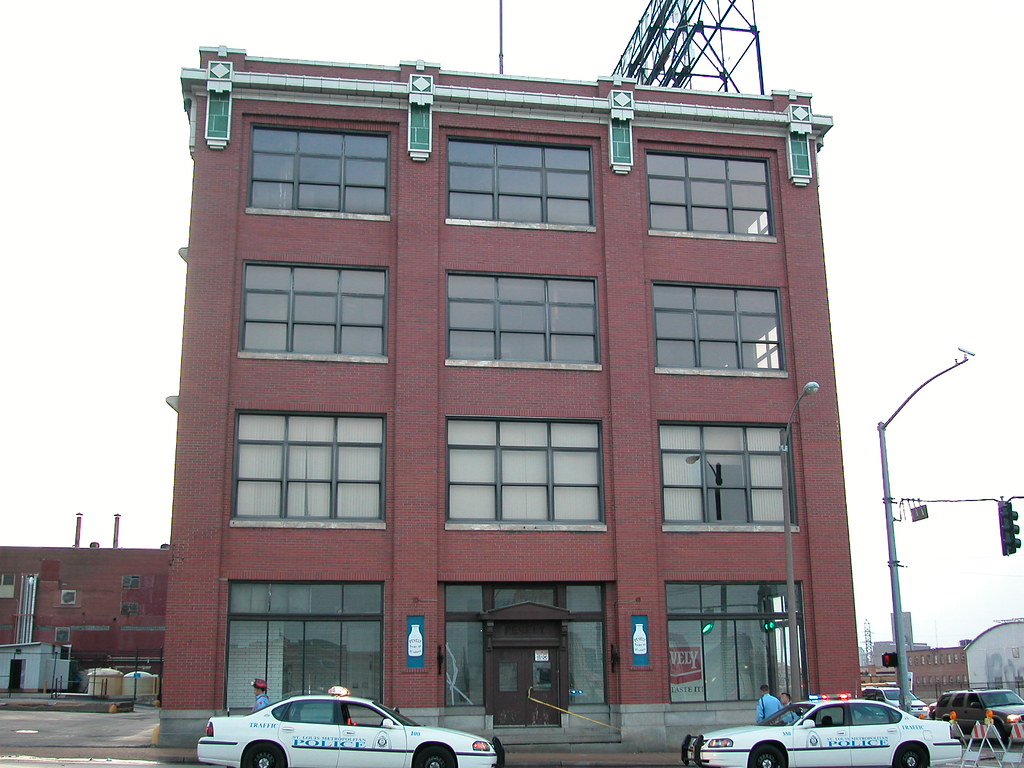
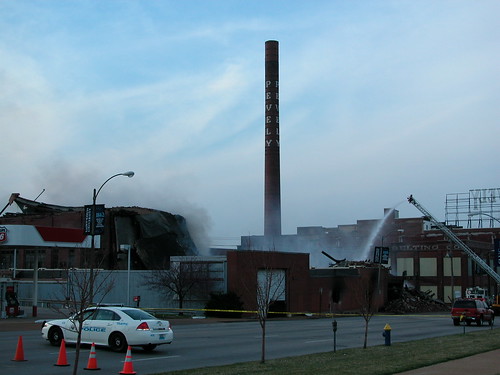
The Post-Dispatch reports that the pending Pevely Dairy complex sale may stall after the spectacular loss on Sunday of one of the largest buildings on the site to a fire. The fire destroyed one of the two nearly identical production buildings. The lost building dated to 1943 and copied the original 1917 building design by architect Leonard Hager.

A big question since the St. Louis Business Journal first reported news of the contract on the complex is who is the prospective buyer (logical buyer St. Louis University has been rumored to be the shadow party). Scratch that — the bigger question since the abrupt closure of the complex by Prairie Farms in October was whether there would be a buyer in the near future. The speed of a sales contract on a formidable development project amid a general recession was, until Sunday, a relief to those who would like to see the landmark buildings revitalized. Hopefully the deal is still on, because what is left is still eligible for National Register of Historic Places listing and ripe for redevelopment.

At any rate the size of the project suddenly has changed.

Categories
Collapse Fire South St. Louis

Pevely Dairy Collapse Video

by Michael R. Allen


(From YouTube user “ahoock” via Bill Michalski.)

Categories
Events North St. Louis Old North

See Cool Rehabs Underway in Old North Tomorrow

The Rehabbers Club is hosting a great Old North tour tomorrow — these are some of the most exciting projects in the neighborhood!

Saturday, March 21 at 9:30 AM
Meet at 1303 North Market

We’ll begin at 1303 North Market, 63106, the old 6,000 SF Ford Charcoal plant currently being renovated into a live/work space by sculptor Graham Lane and his wife Viveca; next we’ll get a behind-the-scenes peek at some of the $35 million Crown Square renovations [formerly the 14th Street Mall]; and finally we’ll take a look at Ben and Heidi Sever’s original three-wall LRA project, well on it’s way to being finished. Thankfully, it has four walls now, and much more!

Join us for a very interesting morning as we see these urban transformations take shape!

Consider staying in the area for lunch at Crown Candy at 1401 St. Louis Avenue, 63106 or Cornerstone Cafe at 1436 Salisbury Street, 63107.