Categories
Midtown People

Stanley Jones, Midtown Rehabber

by Michael R. Allen

Stanley Jones, owner of the Frederick Newton Judson House at 3733 Washington across the street from the Pulitzer, is quite a character. Currently serving as construction manager for the St. Louis Equity Fund and formerly owner of his own rehab company, Stan has worked on rehabbing buildings big and small all over the city. His own house has been his life’s work for the past decade and a half, as if his day job was not enough to put him at the heart of renewing his city. Stan is a local treasure, so I was delighted to find this video on the Pulitzer’s website, and wanted to share it immediately.

STAN from The Pulitzer on Vimeo.

Categories
Downtown Green Space JNEM

Design Competition Disclaimer

by Michael R. Allen

This Thursday, the nine design teams entered in the Framing a Modern Masterpiece competition (better known as the “Arch design competition”) held a public networking session at the Old Courthouse. The next day, one of the teams invited me to join, and I accepted.

I will be a member of the team including SOM, BIG, Hargreaves Associates, Jaume Plensa and URS. The next few months will be exciting and fast-paced, and I look forward to participating in the competition from inside. I remain stunned and grateful for the invitation!

Consequently, however, I will be unable to write about the process for the duration of the competition. If this blog is silent on the competition, there is a good excuse.

Categories
Downtown Green Space I-70 Removal JNEM Riverfront

A Grand Plan for Memorial Drive

by Michael R. Allen

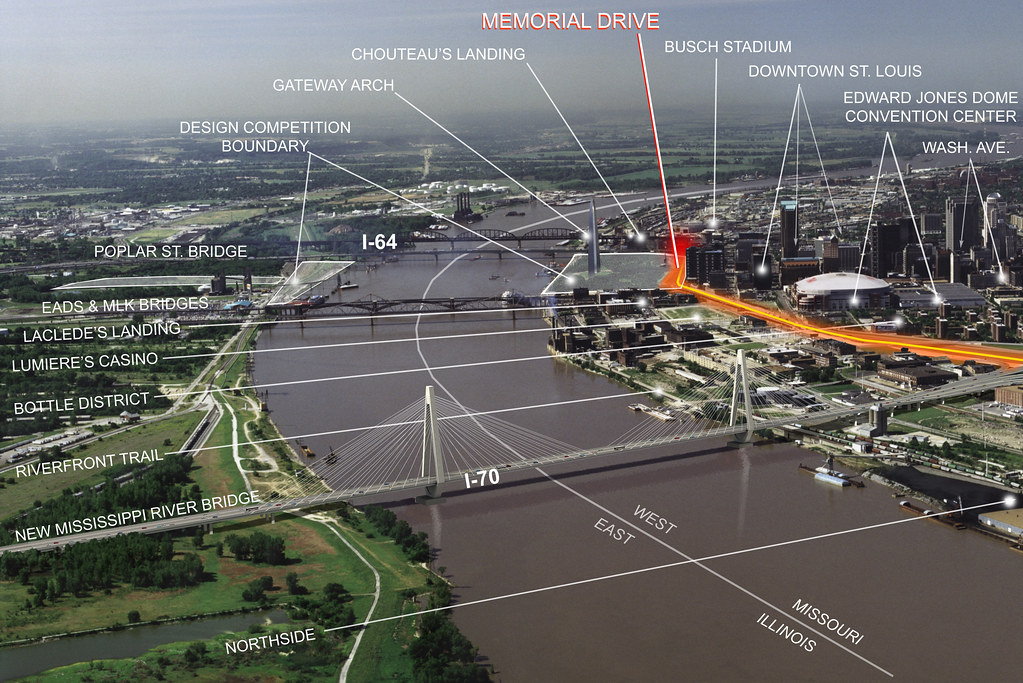
Image by Jeremy Clagett for City to River.

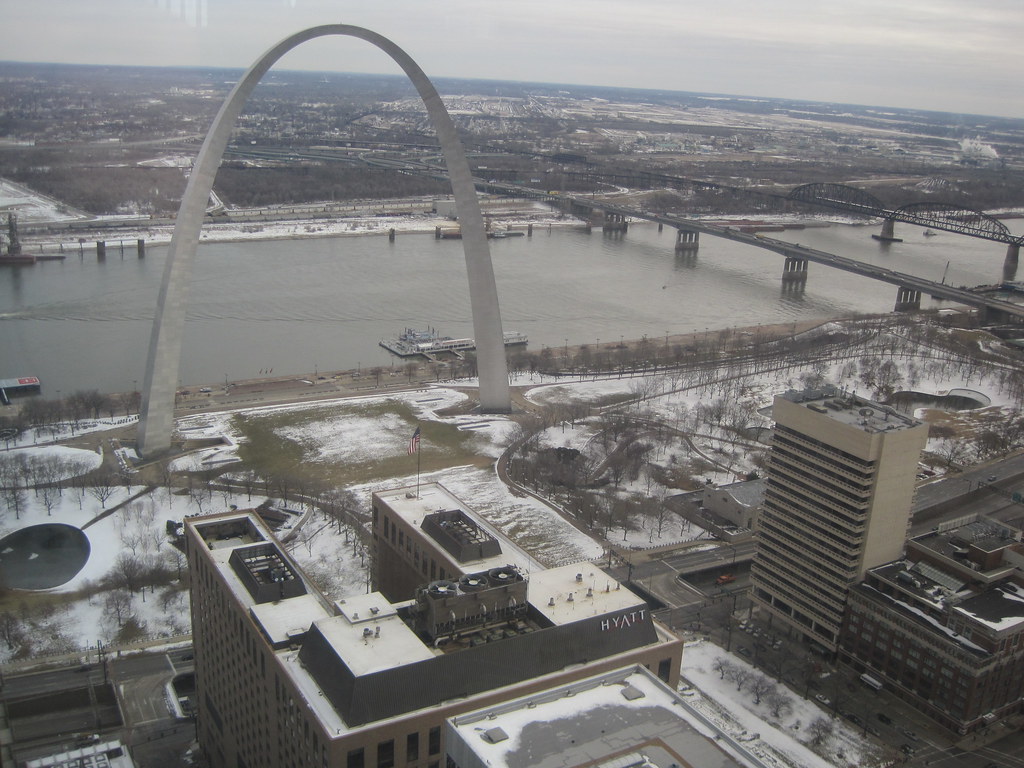
Readers of Ecology of Absence know that this author has long favored a holistic change to the current configuration of Memorial Drive and I-70 at the Jefferson National Expansion Memorial. The highway and the street together create a visual barrier and physical obstacle course between the downtown core and the lovely Arch grounds, and both need to be removed and replaced with a pedestrian-friendly at-grade thoroughfare.

Today, the citizen organization City to River launched its website that presents a thoughtful, creative approach toward building a new Memorial Drive. The analysis and imagery of the website come at a wonderful moment, right after the Framing a Modern Masterpiece design competition jury has chosen the nine design teams that will create full entries. May the design teams spend time contemplating the City to River proposal, and may the design competition’s sponsors keep the door open for any team that may wish to embrace a radical way to renew the riverfront connection.

Categories
North St. Louis Northside Regeneration

Who Are the Attorneys Involved in the Northside Trial?

by Michael R. Allen

This week’s Riverfront Times features an excellent feature article by Nicholas Phillips, “North Side Rancor: A quartet of legal eagles aim to shoot down Paul McKee’s grandiose vision to regenerate St. Louis” that is a good primer to this week’s action at the Civil Courts. Phillips focuses on Eric Vickers’ involvement but also gives readers a sense of who D.B. Amon, Bevis shock and Jim Schottel are and why they are involved in one of the most interesting development trials in recent years.

Categories
Fire Industrial Buildings North St. Louis

Old Factory in New Bridge Path Destroyed in Fire

by Michael R. Allen

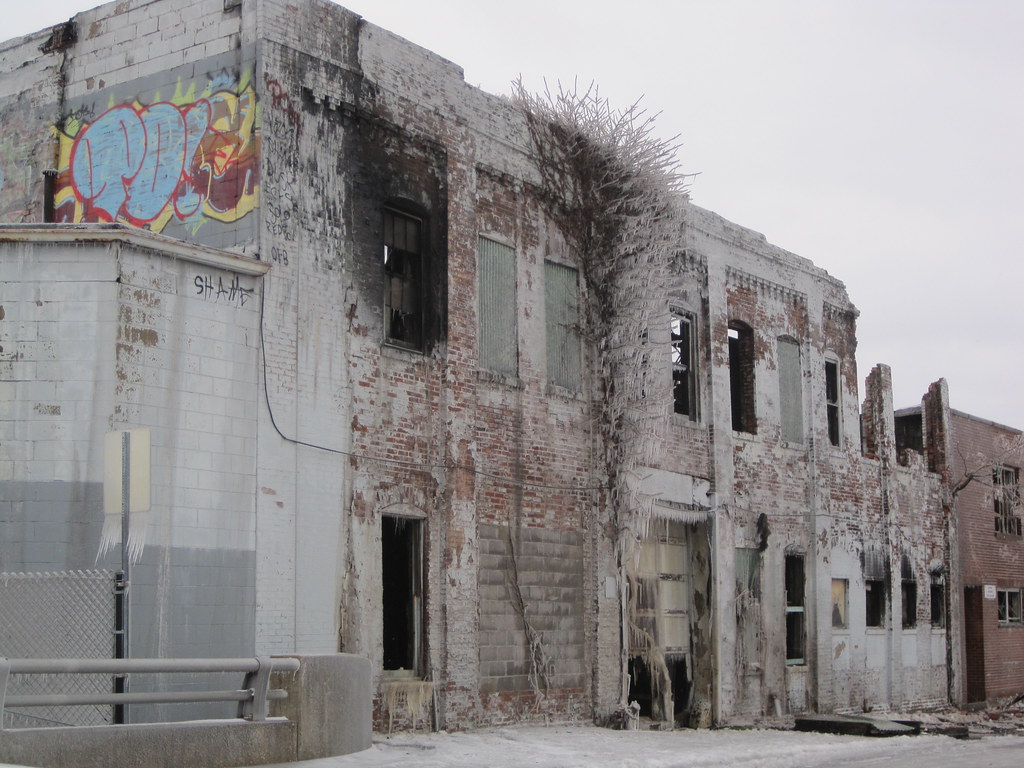
This morning, a huge blaze destroyed the oldest building remaining at the historic Nixdorff-Krein Company factory located at the southwest corner of 9th and Howard Streets just north of downtown. The destroyed building was slated to be demolished as part of construction of the new Mississippi River Bridge project. The building dates to the 1880s and was one of the remaining mill method buildings of the north riverfront industrial corridor.

Founded in the 1850s, he Nixdorff-Krein Company once manufactured wagon parts and chain. Many companies on Howard Street west of Broadway were involved in wagon manufacturing in the 19th century. Later, the company switched to basketball and sports gear and continues to exist. A subsidiary of the company still owned the vacant buildings on Howard Street.

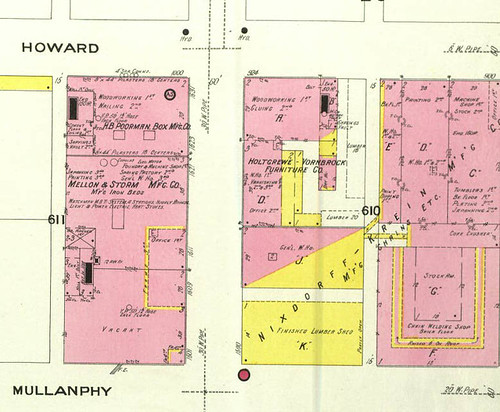
The 1903 Sanborn fire insurance map below shows the building (top right corner) that was destroyed today. Nixdorff-Krein added additional buildings throughout the 20th Century, and eventually expanded south by closing Mullanphy Street and connecting to the old Joseph Wangler Boiler and Sheet Metal Works.

Categories
Housing James Clemens House North St. Louis Northside Regeneration St. Louis Place

Clemens House Moves Closer to Rehabilitation

by Michael R. Allen

Rendering courtesy of Robert Wood Realty.

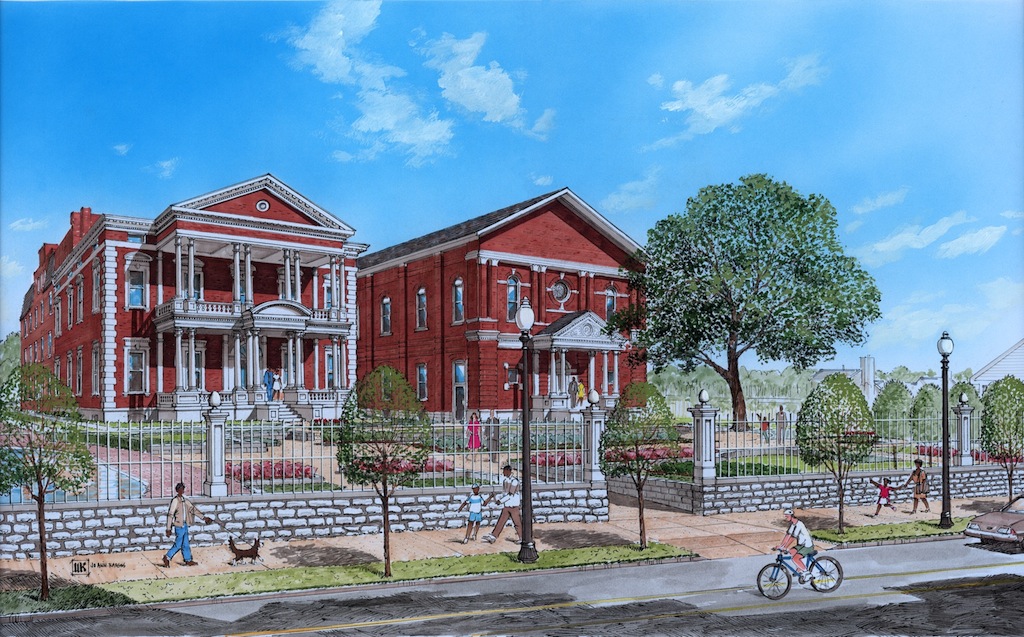
Developer Robert Wood’s $13 million plan to rehabilitate the long-beleaguered James Clemens House at 1849 Cass Avenue, illustrated above, is moving closer to reality. In collaboration with owner McEagle Properties, Wood proposes creating senior apartments in the historic mansion and dormitory wing, and a museum in the chapel wing.

The staff of the Missouri Housing Development Commission (MHDC) has recommended that the Commission approve the project for a combination of a 4% low-income housing tax credit ($828,000), gap financing ($4.5 million) and tax-exempt bonds ($7 million). Wood had sought 9% credits. The MHDC will meet on February 19 to allocate credits. The City of St. Louis made the Clemens House project its #1 priority for the 9% credit.

Strange that the Clemens House, the building that first piqued preservationist outrage at McEagle’s land assemblage, may become the first completed project of the NorthSide project? No. As we have been saying all along, the strongest factor in the NorthSide project is the existing fabric of the near north side.

Categories
Mid-Century Modern Neon Public Policy South St. Louis

That Donut Drive-In Sign

by Michael R. Allen

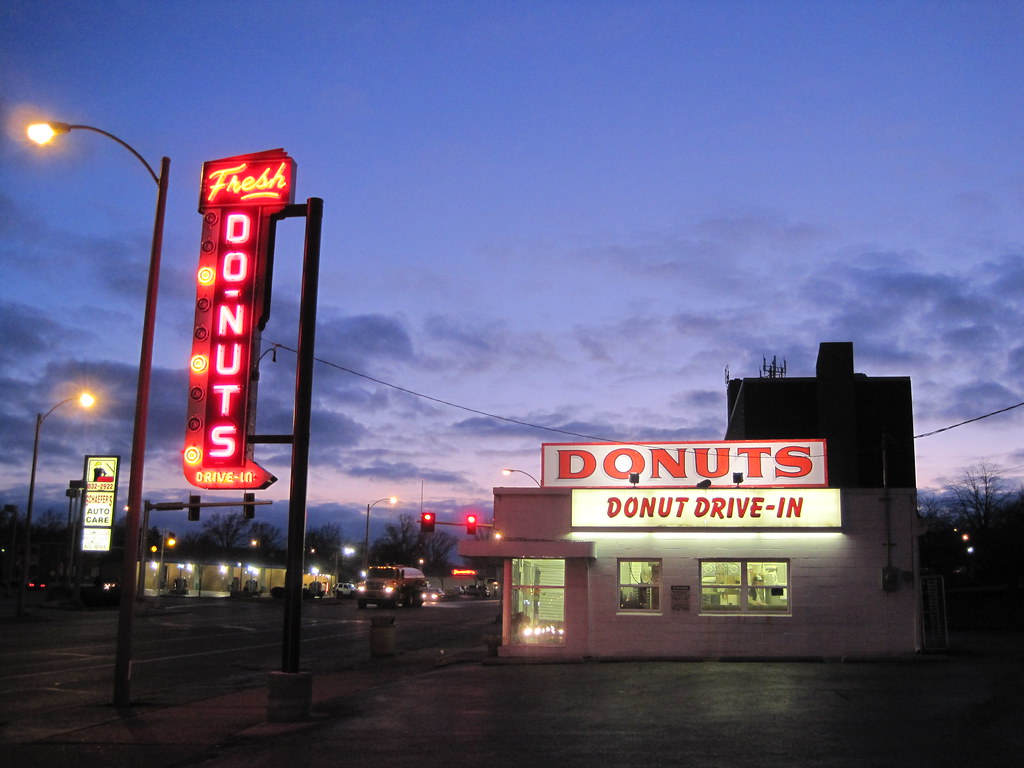
The animated neon sign at the Donut Drive-In, 6525 Chippewa Avenue in Lindenwood Park, returned to life on November 1, 2008. Donut Drive-In first opened in 1952 on what was then Route 66, the nation’s “Mother Road.” Many of the St. Louis stretch’s neon signs have disappeared, but not this one.

The owners of the donut shop could not afford to restore the Route 66 icon on their own, but were able to complete restoration using a matching grant from the the Route 66 Corridor Program administered by the National Park Service. The Missouri Route 66 Association was instrumental in assisting the owners with the grant process.

Since its creation by the National Park Service in 2001, the Route 66 Corridor Program has helped allow property owners to act in the public interest when otherwise unable. (Perhaps the National Park Service needs a name that tells people that its noble work is not limited to preserving open space.)

Categories
Missouri Legislature Public Policy

Crowell Bill Fails to Pass Committee

by Michael R. Allen

Today the Missouri Senate’s Government Accountability Committee deadlocked in a 3-3 vote on SB728, the bill introduced by Senator Jason Crowell (R-Cape Girardeau) that would subject all tax credits to appropriation by the legislature. Among the credits included would be the state historic rehabilitation tax credit, already reduced by a cap on large projects placed by the legislature last year. Crowell will now attempt to attach his proposal through amendment to other bills.

Categories
McRee Town Rehabbing South St. Louis

Rehabbing at McRee and Tower Grove

by Michael R. Allen

In 2004, the building at 4301 McRee Avenue (at Tower Grove Avenue) was vacant. The terra cotta wrapped double entrance surround at the corner attract many an eye due to its ornate pediments. The pediments feature a mortar and pestle at center that commemorates the building’s original drug store tenant. Yet the rest of the building was rough, with all second floor windows missing. The Garden District Commission had acquired the building, and its future was unknown.

The unknown future arrived through architects Brent Crittenden and Sara Gibson, who purchased the building in 2006. In 2008, the building was rehabilitated as the home for Crittenden and Gibson’s enterprises, Urban Improvement Construction and the Central Design Office.

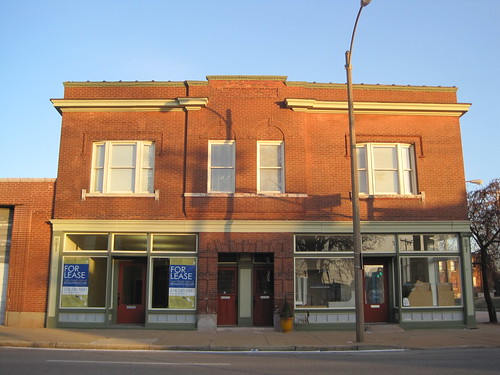
Crittenden and Gibson have a vision for a reborn Tower Grove Avenue in McRee Town, and the corner pharmacy is not their only finished project. When neighborhood anchor Tower Grove Hardware closed — and this writer was among those who did mourn the passing — the duo purchased the two-story store building at 1624 Tower Grove Avenue across the street from their offices. Rehabilitation was complete by the end of summer 2009. The large storefront openings now are inviting with large windows, after having been covered in boards for decades. Both this building and the corner building at 4301 McRee Avenue are now contributing resources to the Liggett and Myers Historic District.

Categories
McRee Town National Register South St. Louis

Hope for McRee Town

by Michael R. Allen

As part of the Garden District Commission’s Botanical Heights project, the six eastern blocks of the McRee Town neighborhood bounded by 39th, DeTonty, Thurman and Folsom streets was nearly completely demolished. The project required a Memorandum of Agreement with the State Historic Preservation Office due to the extensive demolition. Part of the agreement entailed removing McRee Town’s National Register of Historic Places listing, the Tiffany-Dundee Place Historic District, and then re-listing the Tiffany neighborhood east of 39th Street and McRee Town west of Thurman.

In 2007, the Garden District Commission hired Lynn Josse, the city’s leading expert on creating urban historic districts, to undertake the difficult task of trying to re-list the severed section of McRee Town. However, the resulting Liggett and Myers Historic District not only included all remaining previously-listed buildings west of Thurman but ended up including several buildings never before listed. The district listing certainly is encouraging to efforts to create historic districts in similarly-compromised sections of the city.
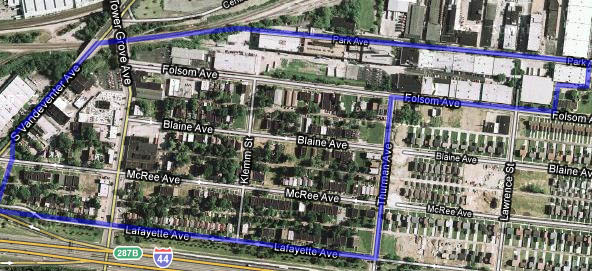
Boundaries of the Liggett and Myers Historic District

Josse’s district nomination establishes the significance of the former Liggett and Myers Tobacco plant (designed by Isaac Taylor and constructed starting in 1896) at the north end of the neighborhood, and ties many residents of the historic dwellings to the south to employment at Liggett and Myers.

The former Liggett and Myers Tobacco plant, looking northwest from Folsom Avenue.

The district includes a wide range of building types, with most buildings being residential buildings built between 1890 and 1930. There are a few storefront commercial buildings, a former synagogue and a booster station included as well. Some modern infill housing is also included, as well as a number of vacant lots. No form or style dominates. In short, this collection of buildings was not an easy one to list as a single, unitary historic district — but not an impossible one.
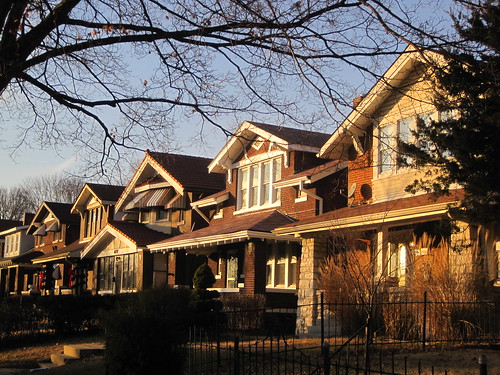
Many gorgeous Craftsman bungalows line Lafayette Avenue; this view shows Lafayette just west of Klemm.

This row on Blaine Avenue between Thurman and Klemm combines a Romanesque cornice replete with consoles and a frieze and cast iron lintels over the entrances more typical of earlier styles.
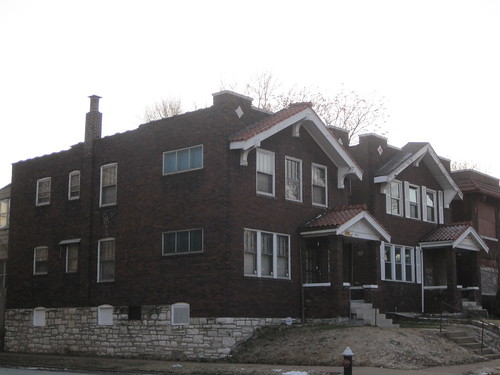
McRee Avenue west of Thurman is lined with many two- and four-flats in the Craftsman style.
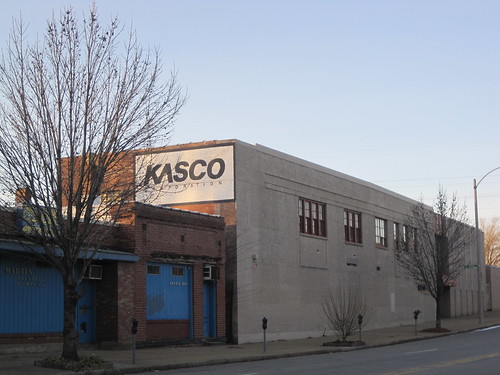
These industrial buildings on the west side of Tower Grove Avenue are included in the district.
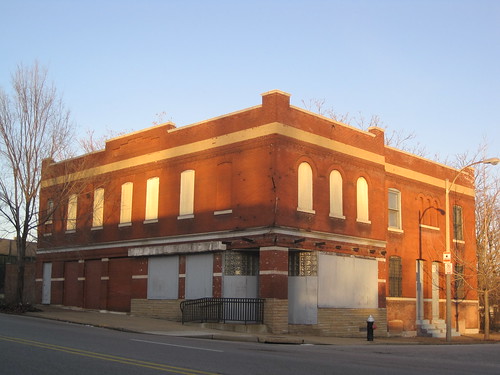
This corner commercial building at the northeast corner of Blaine and Tower Grove avenues is a rehab opportunity.

Some of the oldest buildings in the district are on the north side of McRee Avenue west of Tower Grove.
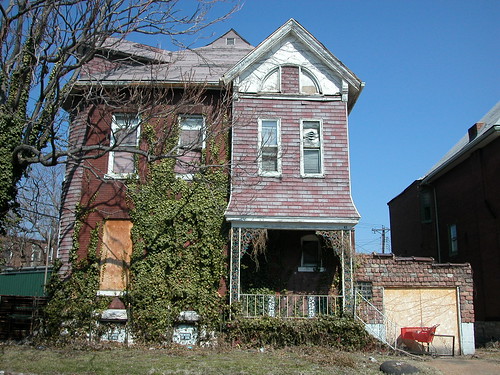
The Queen Ann style house at 4343 McRee Avenue sits on a diagonal alley line (left) and thus has an irregular shape. The Garden District Commission owns the house.

This L-shaped Italianate house is located at 4235 Blaine Avenue.

The new historic district demonstrates a commitment by the Garden District to a careful strategy of rehabilitation for the remaining section of McRee Town. This approach would have worked east of Thurman, in my opinion, but that chance was lost. Thankfully, the rest of the historic neighborhood has regained its historic district status and, with it, a powerful boost to its future endurance.